
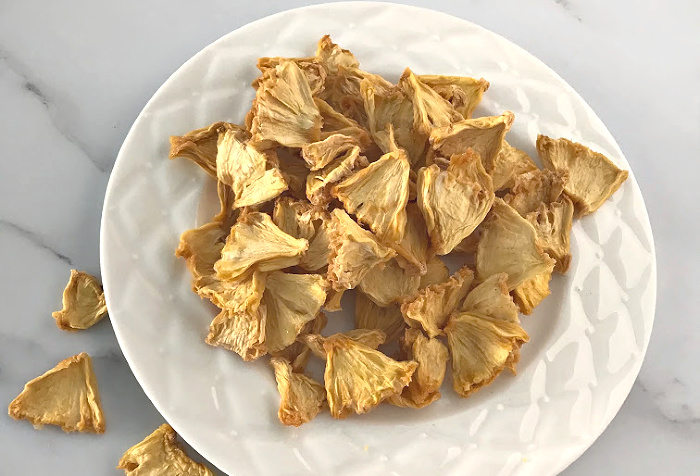
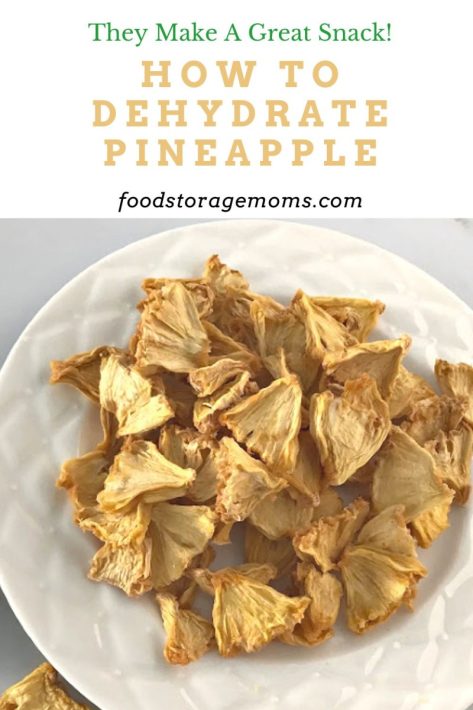
How to Dehydrate Pineapple
This post may contain affiliate links. We may earn a commission if you purchase via our links. See the disclosure page for more info.

It’s all about dehydrating pineapple when it’s fresh and juicy. You can see why I’ve been showing you different foods to dehydrate. I would love it if everyone could get a dehydrator of some kind. You’ll love knowing how to dehydrate pineapple!
This is probably my favorite fruit to dehydrate. My grandkids love freeze-dried pineapple. Of course, I can’t freeze-dry my stuff, so I dehydrate it.
I had purchased some pineapple from Costco, and I could see that my husband and I couldn’t eat it as quickly as I had thought we could. So I put the dehydrator on the counter and started slicing the spears on my cutting board with a sharp knife to make homemade dehydrated pineapple. You want to have fairly thin slices so they’ll fully dehydrate in a reasonable time.
It’s so easy! Here’s the deal: If you’ve any fruit you know you won’t be able to eat the next day, you can usually dehydrate it. I do bananas all the time. Dehydrated fruits take up less freezer or shelf space when stored in an airtight container and you can enjoy the dehydrated items for a longer period of time.
Is Pineapple Good For Me?
- Alleviates arthritis pain
- Helps with digestion
- It may boost immunity and suppress inflammation
- It may help speed recovery after surgery
- Contains disease-fighting antioxidants
- Possibly reduces the chance of cancer
How Can I Use Pineapple?
- Hamburgers with a pineapple ring
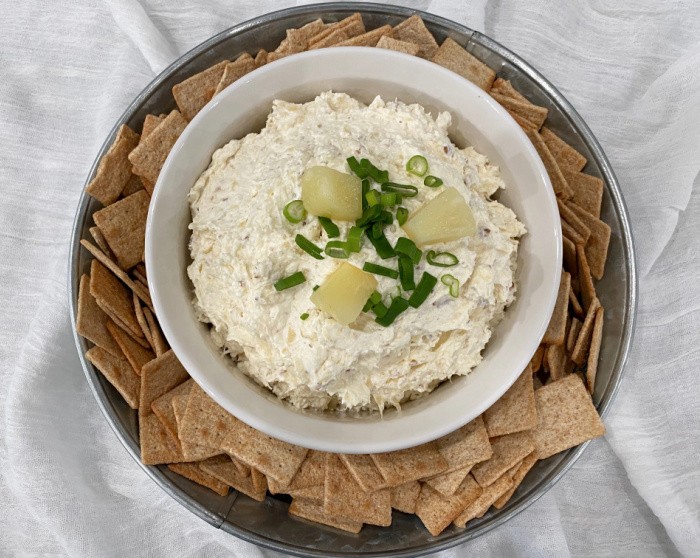
- Pineapple Cream Cheese Dip
- Watergate Salad
- Baked ham with pineapple slices
- Pineapple Fruit Salad
- Delicious in smoothies as a sweet treat
- Great snacks for lunch boxes
How To Dehydrate Pineapple
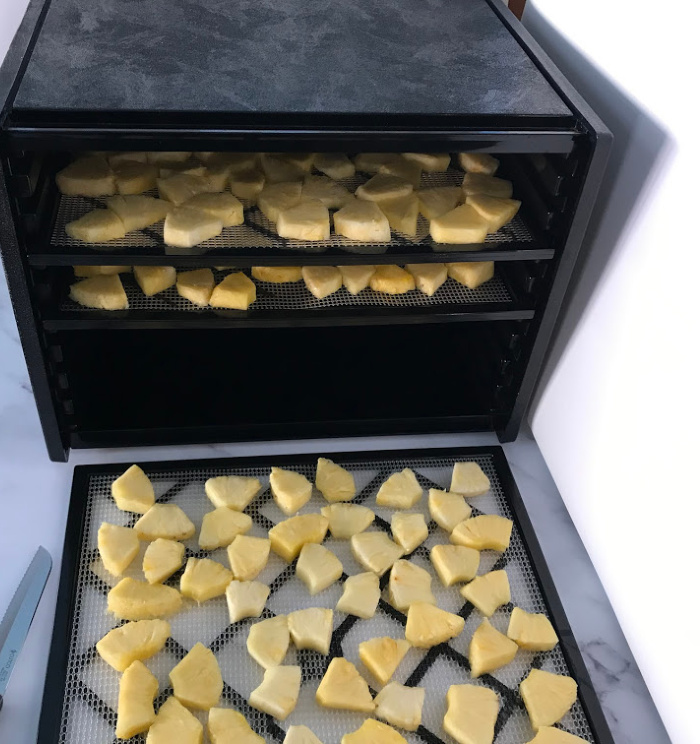
You can cut them into thin slices and then into pineapple chunks as shown. I like fresh pineapple, but you can use canned pineapple if you’re getting close to the expiration date and want more long-term storage options. Drain the pineapple chunks to remove as much moisture as possible. I’d probably prepare a meal from the canned fruit, but it’s an option.
Place the pineapple pieces on your dehydrator trays in a single layer to reduce drying time and prevent them from sticking together. Leave a little space between the pieces for proper airflow for each batch (see picture below).
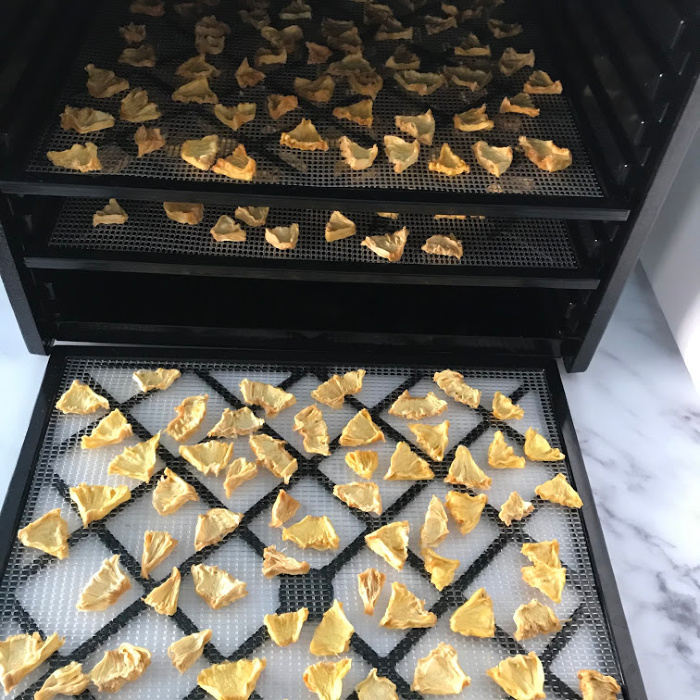
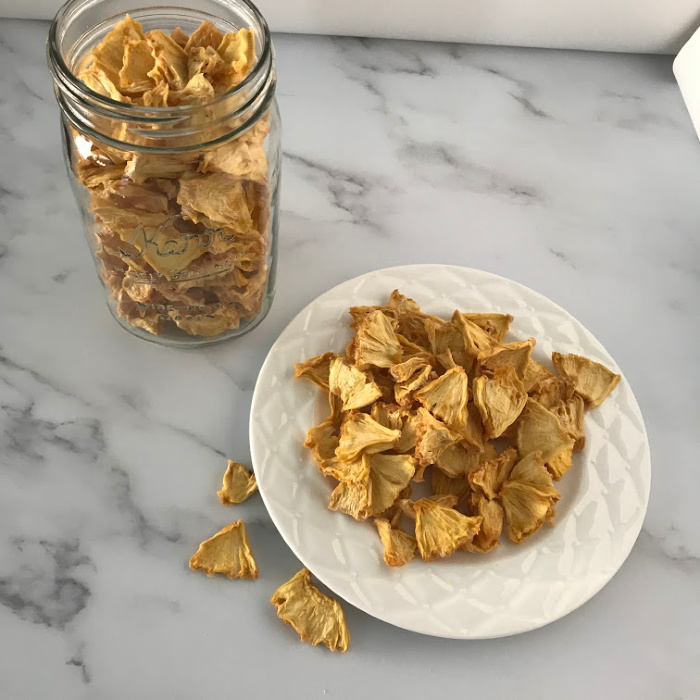
Here’s the finished product. These dehydrated pineapple pieces are ready for camping, hiking, or just snacking!
How Do I Store My Dehydrated Pineapple?
How To Condition Your Fruit or Vegetables
If you live where it’s HUMID: “To condition the fruit, take the cooled, dried fruit and pack it loosely in plastic or glass jars. Seal the containers and let them stand for 7 to 10 days. The excess moisture in some pieces will be absorbed by the drier pieces. Shake the jars daily to separate the pieces and check the moisture condensation.”
When I lived in Southern Utah, it was a DRY DESERT; I set my fruit and vegetables on my countertop for 5-7 days. Ten days is even better to ensure everything is dry before using your FoodSaver unit.
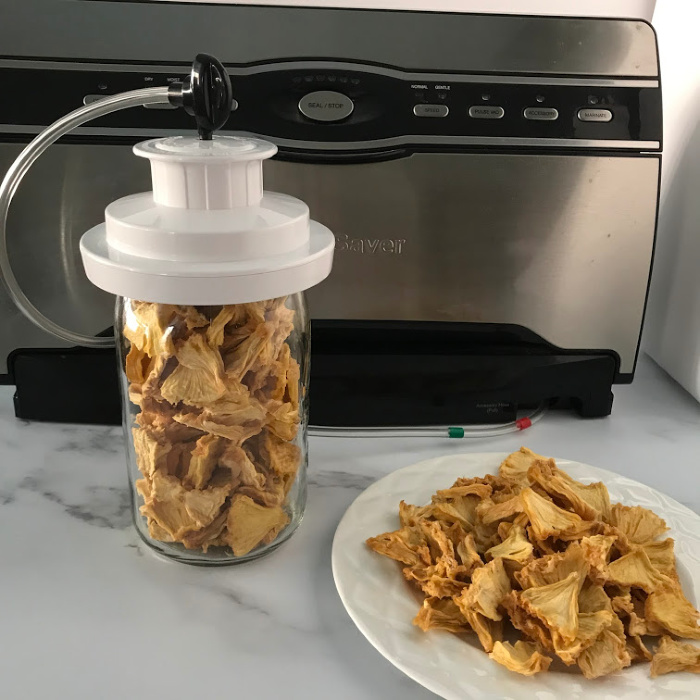
I use quart mason jars and seal them with my FoodSaver, as shown below. The FoodSaver provides a vacuum seal that helps protect the dehydrated fruit. These are my favorite storage container options.
Shelf-Life Of Home-Dehydrated Pineapple?
As a Master Canner Preserver, I can safely say they’ll store well for 1 year if properly dehydrated. They still taste good, retaining most of their original flavor and sweetness, yet don’t lose their nutritional value. I like having shelf-stable items in my pantry so they’re accessible when it’s time to prepare a family meal.
- 1-3 pineapples, cleaned and sliced 1/2 inch thick
-
Wash the outer rinds carefully and thoroughly. Cut the top off if using fresh pineapple.
-
You slice the spears into 1/4 to 1/2 inch pieces and place them on the dehydrator racks.
-
I set my Excalibur Dehydrator at 135°F (57°C)
-
Be sure to check your dehydrator's manual for the required temperature.
-
These took about 9 hours.
-
I like to dry mine so they are still a little pliable but not too crispy.
-
I place them in quart jars and use my FoodSaver to remove the air from the jars. These are a great healthy snack!
-
If you live where it is HUMID: “To condition the fruit, take the cooled, dried fruit and pack it loosely in plastic or glass jars. Seal the containers and let them stand for 7 to 10 days. The excess moisture in some pieces will be absorbed by the drier pieces. Shake the jars daily to separate the pieces and check the moisture condensation.”
When I lived in Southern Utah, the DRY DESERT: I set my fruit and vegetables on my countertop for 5-7 days. Ten days is even better to ensure everything is dry before using your FoodSaver unit.
Can I use my oven to dehydrate pineapple and other fruits?
People have been using their oven to dehydrate fruits, vegetables, and meats for decades. You need to set the oven to its lowest setting, place the sliced fruit on a baking sheet, and leave the oven door ajar with a wad of foil. You’ll need to check the dehydrating process often, since each oven’s low-temperature setting varies.
Why Dehydrating Food in Season Matters
If you have ever wondered why so many seasoned food storage folks get excited when certain fruits hit the grocery store at rock bottom prices, it comes down to one simple truth: buying in season and preserving it is one of the smartest things you can do for your family’s pantry and your budget. Pineapple is a perfect example. Fresh pineapple is usually at its best from March through July, when you will find the sweetest fruit at the lowest prices. Mark and I were surprised to see a large stack of pineapples in the produce department at Walmart last week, in the end of September, so I guess their fresh season is even longer than I thought!
Save Money on Your Grocery Bill
When fruit is in season, stores often have more supply than they can sell, so prices drop. That’s the time to stock up. Instead of paying top dollar for a pineapple in the middle of winter, you can buy several during peak season, dehydrate them, and enjoy that tropical sweetness all year long. Over time, this habit can make a real difference in your monthly food costs, and every dollar saved is a dollar you can put toward other preparedness goals.
Better Flavor and Nutrition
Fruit picked and sold in season is usually riper and more flavorful. A pineapple that ripened properly before harvest tastes sweeter and more tropical than one shipped early and stored for weeks. When you dehydrate fruit at its peak, you lock in that natural sweetness. Dehydrating also preserves much of the fiber and many of the minerals, giving your family a wholesome snack without added sugar or preservatives.
Build a Shelf-Stable Food Supply
Dehydrated food is lightweight, takes up very little space, and can last a long time when stored properly in airtight containers away from heat, light, and moisture. A few pineapples can shrink down to fit in a single quart jar. That makes dehydrated fruit a wonderful addition to your emergency food storage, your 72-hour kits, or your everyday pantry. If the power goes out or the grocery store shelves are bare, you’ll still have healthy snacks on hand.
Reduce Food Waste
We have all been there. You buy a beautiful pineapple with the best of intentions, and then life gets busy, and it starts to turn before you can use it. Dehydrating offers a simple way to preserve fruit before it spoils. Instead of tossing food in the trash, you’re turning it into something your family will enjoy for months to come.
Teach Your Children Valuable Skills
Dehydrating is a wonderful activity to do together as a family. Children can help wash, peel, and arrange slices on the trays, and they love checking on the progress. Along the way, they learn where their food comes from, why we plan ahead, and how to take care of what we’ve been given. These are lessons in gratitude and self-reliance that will serve them well for the rest of their lives.
Enjoy the Taste of Summer All Year Long
There’s something special about opening a jar of dried pineapple on a cold, snowy day and tasting a bit of sunshine. Preserving food in season connects us to the natural rhythm of the harvest and reminds us to be thankful for the abundance we have been blessed with. So the next time pineapple goes on sale, grab a few extra, fire up your dehydrator, and fill your pantry with something sweet.
Here are other Dehydrating Posts I Have Done:
- Dehydrating Apples
- Dehydrating Bananas
- Dehydrating Blackberries and Powder
- Dehydrating Blueberries and Powder
- Dehydrating Cilantro
- Dehydrating Cucumbers and Powder
- Dehydrating Ginger and Powder
- Dehydrating Green Onions and Powder
- Dehydrating Kale and Kale Powder
- Dehydrating Kiwi
- Dehydrating Lemons and Powder
- Dehydrating Marshmallows
- Dehydrating Peppermint Marshmallows and Powder
- Dehydrating Mushrooms and Mushroom Powder
- Dehydrating Onions and Powder
- Dehydrating Pears
- Dehydrating Pineapple
- Dehydrating Raspberries and Powder
- Dehydrating Spinach and Powder
- Dehydrating Strawberries
- Dehydrating Tomatoes and Powder
- Dehydrating Watermelon
Final Word
No preservatives or chemicals, just a healthy snack for our family! Have you tried to dehydrate pineapple? It’s one of my favorite ones! Be sure to give it a try now that you know how to do it. May God bless this world, Linda



Pineapples are one of the fruits I’d love to dehydrate!
I filled my dehyrator with fresh pineapple this morning before leaving for work. Yesterday it was bananas and the day before strawberry fruit leather. I think I’ll try snow peas tomorrow.
I love dehydrated Pineapples too. I have to try and make them in the oven, I don’t have a dehydrator yet. I will have to add freeze dried pineapples to my #10 stash, that would be wonderful to have in an emergency as a sweet treat.
I would love to learn how to dehydrate blueberries, blackberries, figs, mayhaws, and/or peaches. Our local fruit farm will soon be open for picking tons of delicious fruit. As a side note, I appreciate your previous post on tomatoes since I have five tomato plants producing.
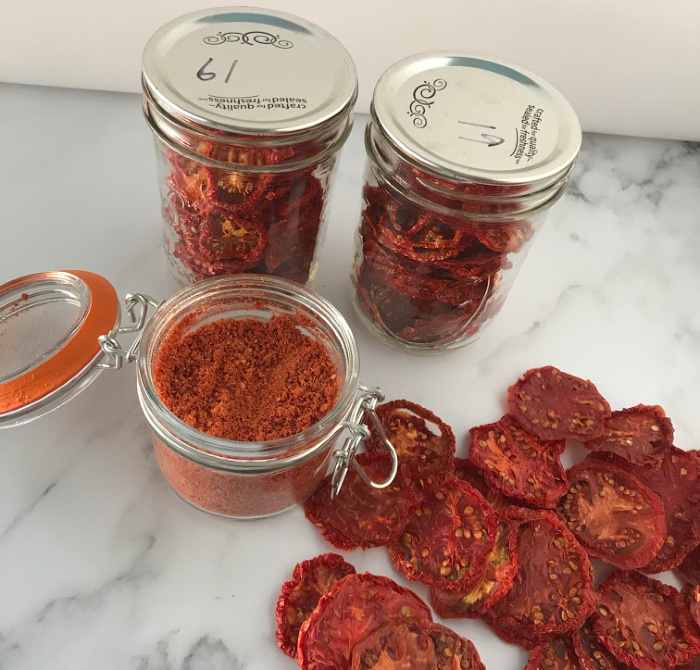
It is always easy to dehydrate fresh tomatoes when they come into season, especially if you grow them and it turns out you have too many. they can be stored and tossed into cooking pots or chopped up with sauce. love your ideas Linda. Lot’s of love.
vivian M
Cincinnati Oh
Hi Vivian, I think we all learn stuff from each other! I even freeze tomatoes, skins and all. But I hate to use my freezer in case of power outage. Using a dehydrator is safer for me as well! Lots of love! Linda
I dehydrate tomatoes then submerse them in olive oil with a clove or two of garlic that I have smashed a bit.
Then, when I want a pizza or pesto, I drain the tomato pieces and use them. I save the oil to use when making pasta or other “Italian” style dish that calls for olive oil and garlic. Yum!
Now I see why my pineapples took so long, cute too large of chunks. Thanks girl.
Hi, Judy, oh my gosh dehydrated pineapple is the best! Love it! Linda
Just about every week a local grocery store has prepped bowls of fruit – watermelon, honeydew and cantaloupe as well as fresh pineapple. I eliminate the waste of the rinds as I don’t have a garden to compost it nor chickens to enjoy the rinds. SO, getting precut/prepared bowls lets me get right down to business when I get home. I haven’t bothered with DH melons – I eat them too fast but the pineapple – well, I prefer pineapple dried rather than fresh anyway.
I love pineapple . It also has anti inflammatory properties. I wonder if you could dehydrate canned pineapple packed in water ? I just might have to try that. I have arthritis so I keep cans of pineapple on hand for when I can’t get fresh. Dehydrated would be easy to carry with me. I love your articles and always find something new.
Hi Judy, I think we all learn something new from one another. I love it! You can dehydrate canned pineapple, for sure. It’s a great snack! Linda
Hi Judy, I was wondering when you use you food saver is it with the bags or jars. Also if I use the bags how do you know if it’s dehydrated enough so it won’t spoil as I would love to fill my whole dehydrator with pineapples. I love then chewy.
Hi Beth, I personally use jars and you must be careful because if not dehydrated enough it will go bad. Moldy. Be safe, vegetables you can dry and cook them, they are hard. I eat my own dehydrated pineapple within a week and store it in the frig. Linda
Thank you for your reply to Beth about dehydrating canned pineapple. I just dehydrated Deluxe Gold canned pineapple, one can for starters and absolutely love it dried but still a little pliable. Now I put it in a mason jar in the fridge and . . . I don’t think it will last a week!!! Love these articles on dehydrating various things. Did celery last week and made powder to use with the mayo in small amounts of chicken salad.
Hi Carol, thank you for the 5 stars! Oh my gosh, I need to add some celery powder to my mayo!! Dehydrated pineapple, is the best!! Linda
Seeing this recipe brought back my childhood, and I swear I can taste that dehydrated pineapple we used to make when I was a kid. So good! I think it’s time to introduce it to my grandkids.
Hi Laura, My grandkids love my dehydrated pineapple. It’s so easy to make and they love it! Linda
Can you thaw frozen pineapple chunks and dehydrate them?
Hi Marg, I’m sure you could. I have done frozen berries, just let them thaw a bit on a cookie sheet to remove the excess juices or you will have a huge sticky mess in your dehydrator. Dehydrated pineapple is the best!!! Yum! Linda
On a cookie sheet, Linda
This may be a little off topic, but I just downloaded Linda’s book. It is very good. It’s well written and an easy read. I recommend it to anyone who wants to know more about prepping or who wants to give a gift to someone.
The price is very reasonable for either print or eBook.
https://link.amazon/B03RRPbDy
Hi CAddison, thank you for your kind words. I wish every family had the book in their possession. https://link.amazon/B03RRPbDy Linda