
What To Stock Up On In July
This post may contain affiliate links. We may earn a commission if you purchase via our links. See the disclosure page for more info.

It’s all about what to stock up on in July today. This post is part of my ongoing monthly savings plan. We can save money on those items we need, or want, if we’re aware of the month they are at the lowest price possible. I realize prices on everything are going sky-high right now, but we may still be able to watch for markdowns on these items as discussed.
Seasonal Fruits and Vegetables
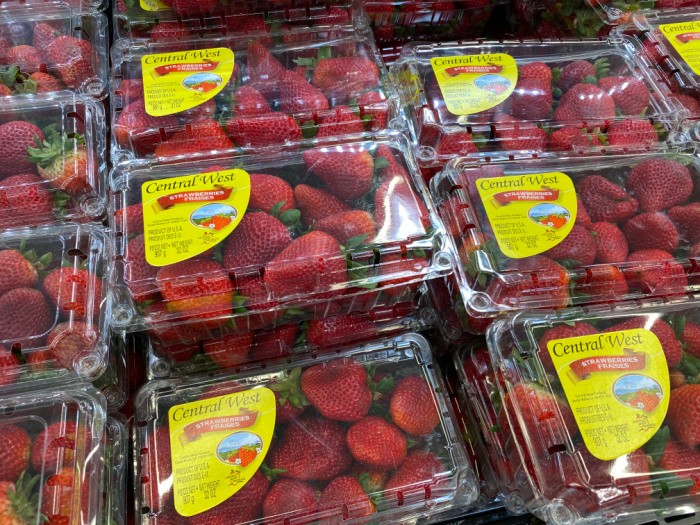
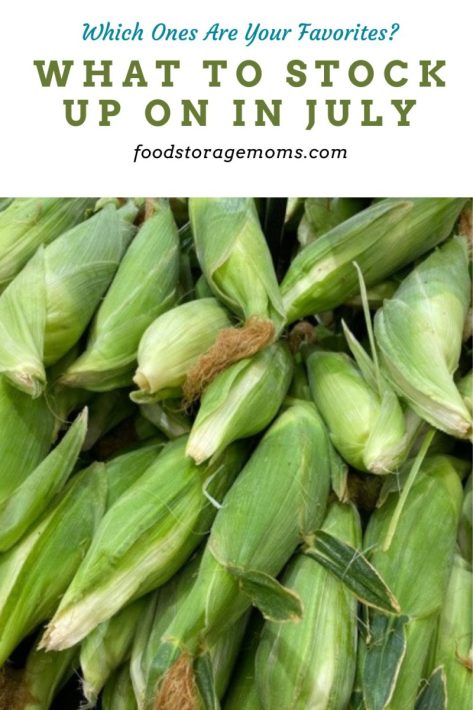
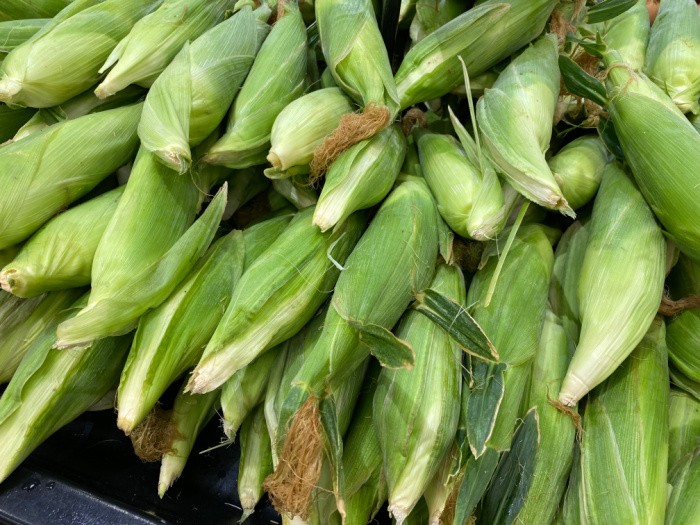
The summer is hot, and fruits and vegetables are plentiful this month. Corn, cantaloupe, blueberries, strawberries, plums, peaches, and watermelon are all in season right now.
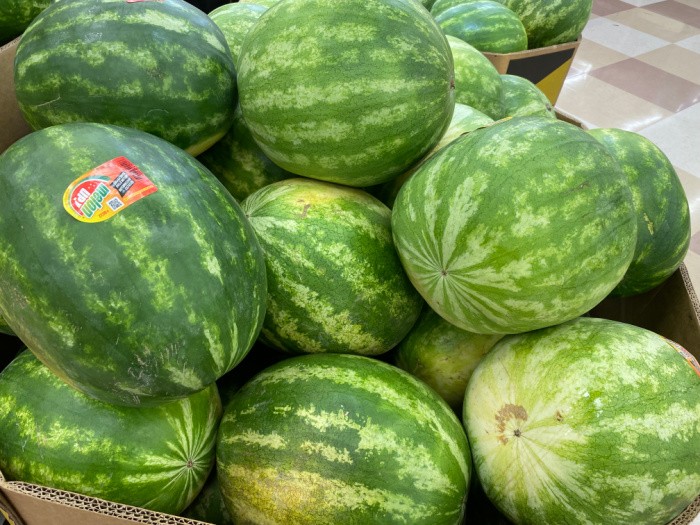
Watch for coupons and really good buys, even at stores like Target. I bet you can almost taste those fresh strawberries, right? Be sure and grab some whipping cream, and plan to make some shortcake! Watermelon slices are the best if the watermelon has been kept in the fridge!
Fireworks
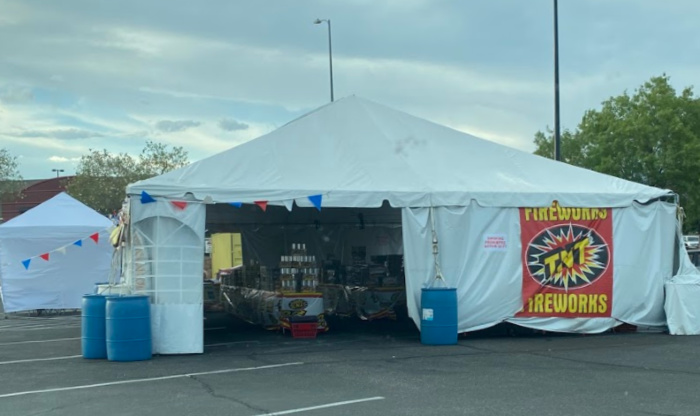
If your community allows fireworks, you already know July is the month to buy the leftover fireworks after the holiday to use for New Year’s celebrations, or to hold over until next year’s July 4th fun. If you live in Utah, you can use any leftovers to help celebrate the July 24th holiday, if fireworks aren’t restricted in your area. You can store fireworks in a safe, secure, and dry place and pull them out to welcome in the New Year or other holidays.
July 4th Decorations
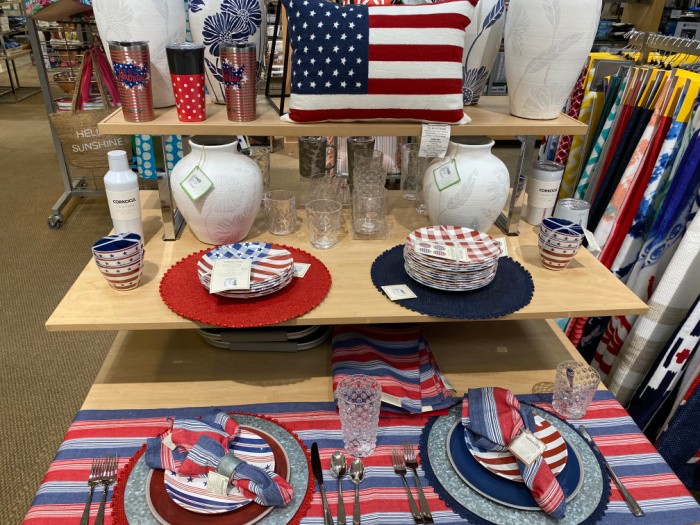
I love, love, love the colors, red, white, and blue. These colors bring out the best in everyone in the USA! I usually use plastic plates on July 4th, but this display at a local store caught my eye, so I took a picture of it. Life is so good!
Condiments for Barbecues
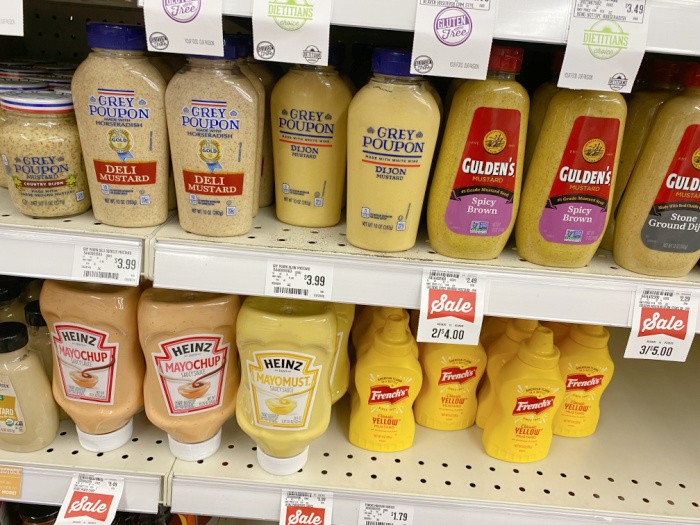
It’s a great month for stocking up on mustard, mayonnaise, and ketchup. Watch for your favorite barbecue sauce to be on sale as well. There may also be some savings on relish and pickles too.
Hot Dog and Hamburger Buns
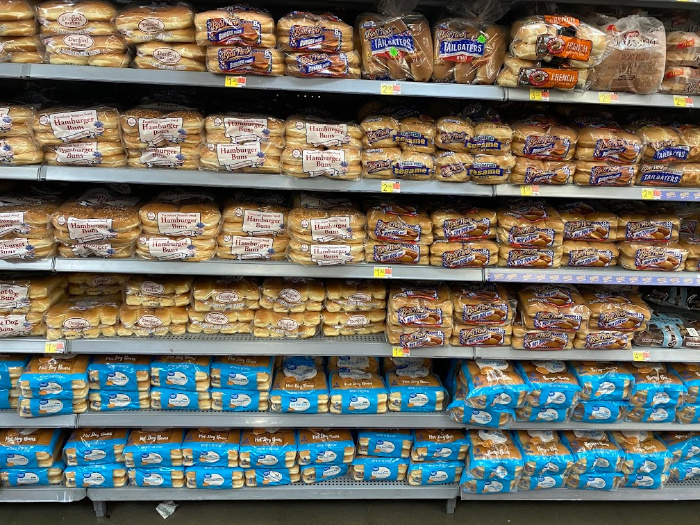
Most grocery stores stock up for that 4th of July barbecue, and they don’t want to run out of hot dog or hamburger buns. It’s a perfect time to stock your freezer with all kinds of buns for the fall and winter months. Condiments will be drastically reduced too. As mentioned above, it’s a great time to stock up on mayo, mustard, and other goodies to go along with the hot dogs and burgers. This is the month to stock up on paper plates, cups, and napkins for picnics and possible emergencies.
Meat To Barbecue
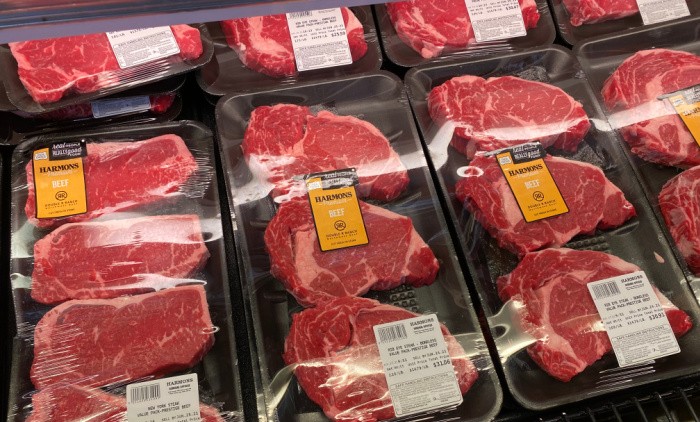
It’s a great month for having a barbecue! Watch for sales on hamburger meat, hot dogs, and steaks. Meat products as a group are pretty expensive right now. Consider trying other options like ground turkey or beef substitutes. Also, consider pork options; pork seems to be on the cheaper side.
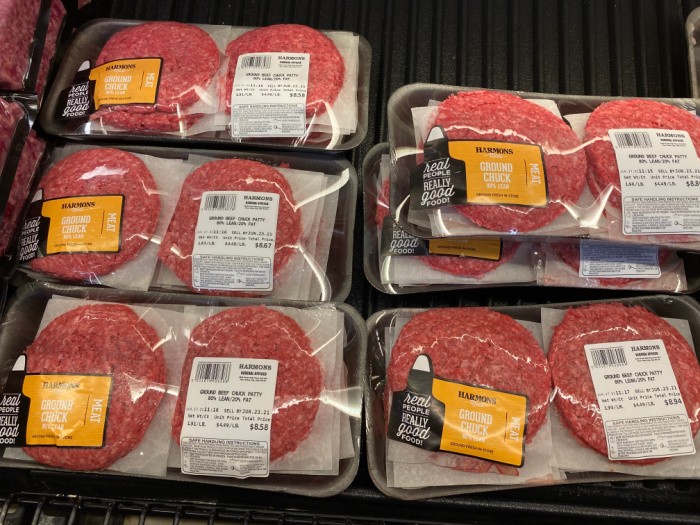
Can’t you just smell the barbecue right now?
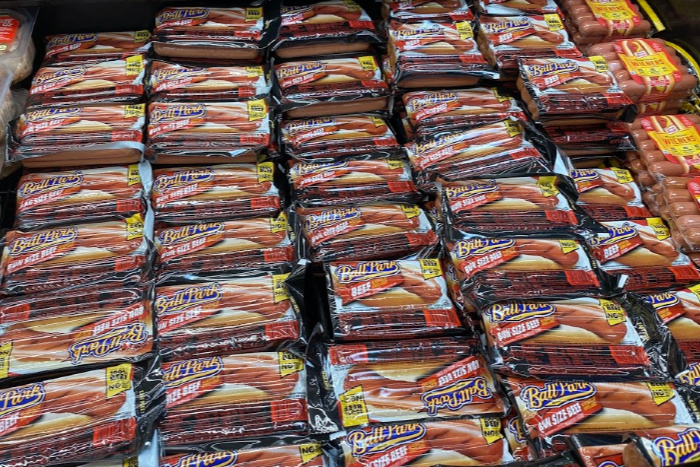
Here’s the deal with meat in the summertime: grocery stores stock up big time, hoping to sell a lot of meat for those barbecues! You’ll see some discounting, but don’t expect to see pricing as we’ve had in the past. If you do find some good buys, it could be the time to stock your freezer with hot dogs, hamburger meat, and steaks. As we’ve all seen, meat prices have continued going up over the past few months, so I’d suggest looking for deals during the holiday period now before you see them go up even more.
July Is National Ice Cream Month
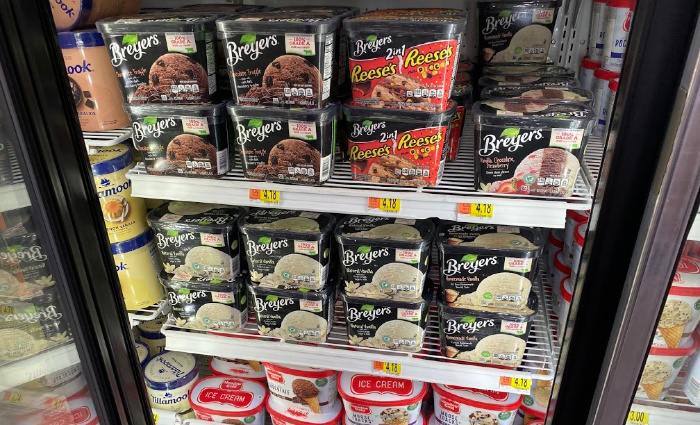
Ice cream in every form will be on sale this month. I have seen some significant discounts in July, and I stock up on all the ones we love the most. Don’t forget to watch for coupons at your local stores, and even the pharmacies. Our local Smith’s store often has great deals on various brands of ice cream, particularly their house brand. This week, they have their Kroger ice cream priced at two for $5.00, and that’s a great deal. What a fun way to help deal with those hot days and enjoy a treat at the same time!
Swimwear
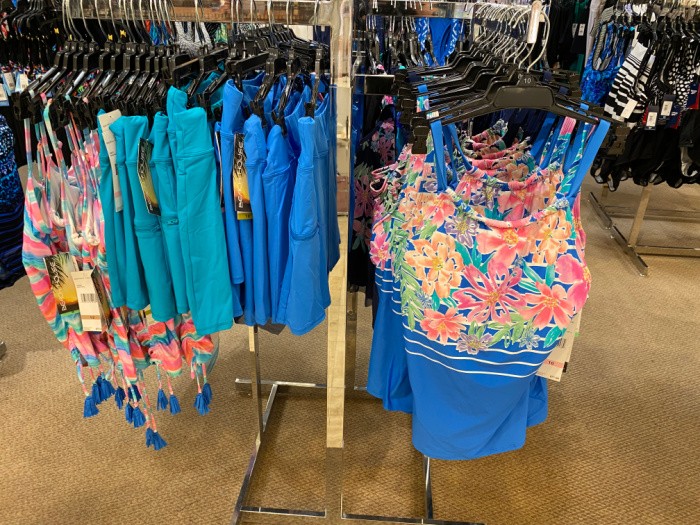
July is a great month to find that swimsuit you have been looking at that was maybe too pricey. I bet it is on sale, if it’s still available. You’ll see 40%-60% off swimsuits, beachwear, beach towels, floating devices, goggles, and pool toys.
Designer Clothing
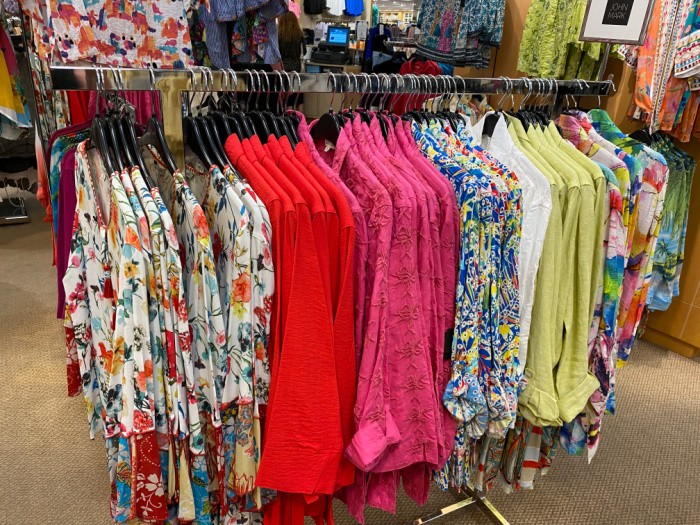
If you like to buy designer clothing, July is a great month because Nordstrom’s and Dillard’s typically have their half-year clearance sales going on with drastically reduced prices. Just be prepared to possibly stand in line, just giving you a heads-up.
The stores are gearing up for the fall clothing lines and back-to-school stuff coming in, and they need to unload their summer items. Don’t forget to look for great buys on sandals, summer shoes, and designer flip-flops.
Garden and Patio Items
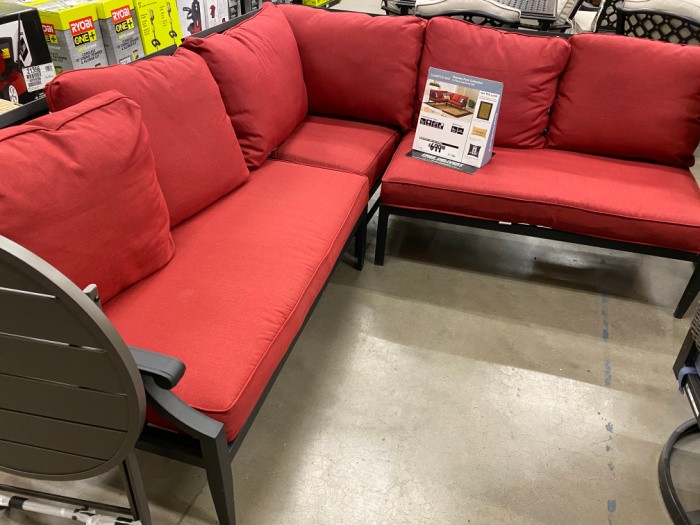
This is a great month to pick up a patio table and chairs set or those outside rocking chairs you’ve been wanting. These could be about 40%-50% off the original price. The stores are looking to clear out the summer fun items and are getting ready to stock space heaters and fireplace inserts.
Tools
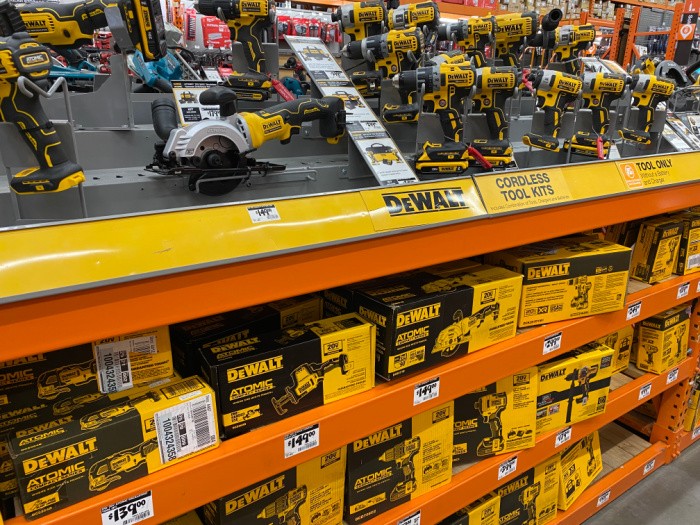
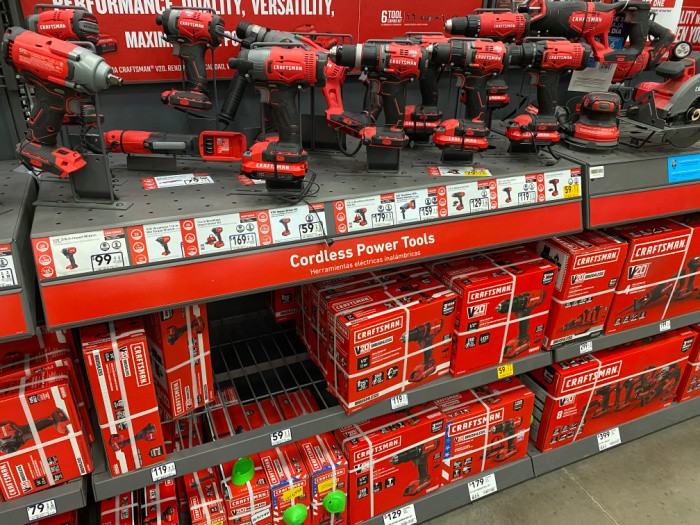
Because Father’s Day was in June, you’ll now see specials on the tools the stores have stocked up on and didn’t sell as expected. Grab those tools you need to start that project you’ve been needing to do. Mark and I saw the Craftsman tool display, boy did that bring back some good memories. We helped build out many basements for family and friends with Craftsman and DeWalt tools over the years.
Sunscreen
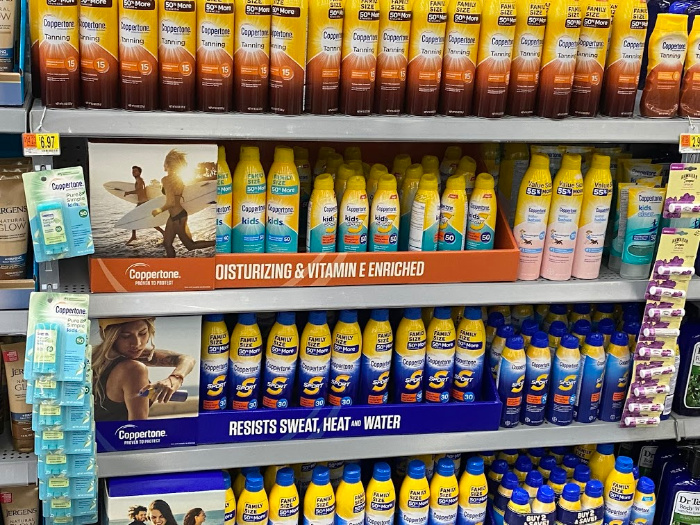
You probably know how expensive sunscreen can be. I stock my hall closet big time for family and guests. Every once in a while, I see it for 30%-50% off the retail price. Because we used to live in Southern Utah (the desert), I had plenty of sunscreen in my pantry since I didn’t want anyone getting sunburned. I’ve always felt it’s critical to have several containers on hand. Check your mailbox for coupons to Target and other local stores. My favorite brand is Aveeno 50 SPF. I go right to the section where it’s marked down every July.
School Supplies
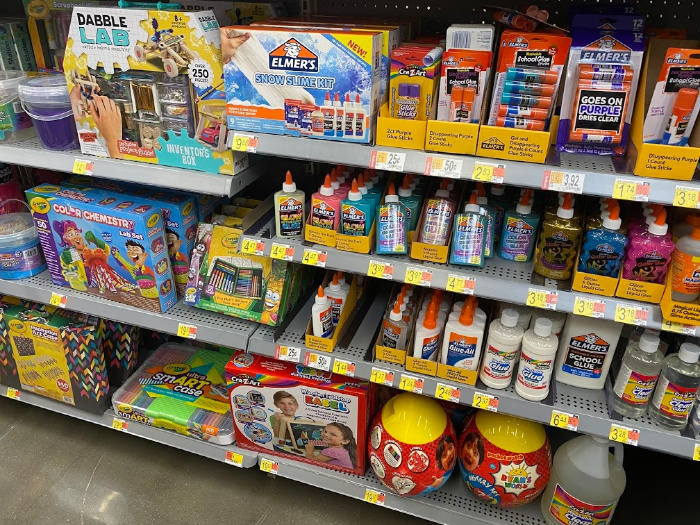
If you have kids going back to school, July is the first month to stock up, while supplies are still in full stock on store shelves. You will see rock-bottom prices on items you need to fill those backpacks. The prices will go back up the closer it gets to the first day of school because the supplies will be depleted. It’s all about supply and demand.
You’ll see binders, calculators, pencils, pens, paper, pencil boxes, etc. They’ll also have glue, glue sticks, and other necessary items on sale!
What to Stock Up On Each Month:
- What to Stock Up On In January
- What to Stock Up On In February
- What to Stock Up On In March
- What to Stock Up On In April
- What to Stock Up On In May
- What to Stock Up On In June
- What to Stock Up On In July
- What to Stock Up On In August
- What to Stock Up On In September
- What to Stock Up On In October
- What to Stock Up On In November
- What to Stock Up On In December
Unique July Holidays
- July 1: International Joke Day
- July 2: World UFO Day
- July 3: Eat Beans Day
- July 4: Independence Day
- July 5: National Apple Turnover Day
- July 6: International Kissing Day
- July 7: Chocolate Day
- July 8: National Blueberry Day
- July 9: National Sugar Cookie Day
- July 10: Teddy Bear Picnic Day
- July 11: National Blueberry Muffin Day
- July 12: Pecan Pie Day
- July 14: Shark Awareness Day
- July 15: Cow Appreciation Day
- July 16: Fresh Spinach Day
- July 17: Peach Ice Cream Day
- July 18: National Caviar Day
- July 19: National Daiquiri Day
- July 20: National Ice Cream Soda Day
- July 21: National Junk Food Day
- July 22: Hammock Day
- July 23: Vanilla Ice Cream Day
- July 24: Tell an Old Joke Day
- July 25: National Chili Dog Day
- July 26: All or Nothing Day
- July 27: Take Your Houseplants for a Walk
- July 28: National Milk Chocolate Day
- July 29: National Chicken Wing Day
- July 30: National Cheesecake Day
- July 31: National Avocado Day
Final Word
I hope today’s post helps you with what to stock up on in July. It’s a great time to buy those items we need at the very lowest price available this time of the year. May God bless this world, Linda
Copyright Images: Shopping Basket Deposit photos_51821091_xl-2015, Hands with pink piggy bank Deposit photos_32884157_s-2019













Linda,
I really enjoy your “What to stock up on” articles. This week ears of corn were going for five cents an ear (limit 6 ears), 80% ground chuck was on sale for $1.99 per pound, and Ball Park buns were two for five dollars. Needles to say I stocked up, especially on the beef–and will be busy vacuum sealing today. Jane and I will be having Goop (a macaroni, beef, tomato sauce, onion and cheese casserole) this evening. I’ll make a large batch and freeze a bunch for future meals. Been wondering if I could can any of it. What do you think?
Hi Ray, thank you for your kind words, my friend!! What a bargain one the corn!!! And the ground chuck, oh my gosh, this will be a great month for savings!! I would not pressure can the “Goop”, because of the cheese and the flour in the noodles. I love making a big batch and freezing meals for later! I love it!! I personally do not care for pressure canned ground chuck or beef. It’s too chewy! But, it’s a personal preference for sure. Wow, $1.99! I would freeze it, it’s just me. Linda
Linda,
Thanks for the advice on canning the Goop. I’ll give that a pass.
I break the ground meat into one pound and one and a half pound packages, vacuum seal them and freeze them after marking the contents and date on the package. The cheap corn I’ll just eat fresh as I LOVE it.
Hi Ray, smart move. I picked up some corn not as cheap as you purchased! I love corn this time of year! Linda
RAY,I have great results by cooking ground beef and dehydrating it, making it shelf stable.it i browned, drained, washed with warm water, drained and patted dry it does not take long to dehydrate the crumbles w/ regular dehydrator.I set my cooked meats at 145 degrees and usually takes about 2-3 hours depending on how deep i put on trays.i have a nesco and plastic mesh on top of the regular trays and can do 5 lbs on 4 trays. Cheese can be stored in jars..bought prepared in jars- cheese sauce or cheese dip., onion flakes or onion powder would be shelf stable. This makes this a recipe- SHELF STALE w/ oxygen absorber stored beef- you can put together on the fly in the length of time it takes to rehydrate the beef.( the smaller the crumble the faster it rehydrates.)
Denise,
Thanks for the advice about making Goop a dehydrated meal. I’ve considered it, but in the past I haven’t much cared for the taste and texture of rehydrated ground beef. Maybe I should try it again as I’m not sure I did it they way you said to do it.
I can also wax the Mild Cheddar to improve storage time outside the fridge. In fact, I prefer waxing cheese as a storage method over freezing it–which I also do.
Mixed in your recipe should be fine. cover with very warm water for 30-45 min.for 1 cup prepared ground beef . use just over 1/3 cup. fine crumbles.
I pack mine with a tamper in canning jar and add oxygen absorbers. I have used in pasta meals in past and Hubs could not tell the difference in dehydr/vs fresh.he is a food snob.
Linda,
Also July starts the months for Tax free holidays. there are three in Tn this year.If you need to know run a search on your states possible cuts…for dates and times of each one….i do know, One is for storage of protection items, the one last of July: school items( basic+ includes clothing and computers+, and all of August is a tax holiday on food.
HI Denise, great tip on the tax-free holidays! Linda
I am celebrating July 7, “Chocolate Day”. Is there any day that really isn’t Chocolate day?
Hi Janet, now we’re talking! I could have chocolate every single day as well! Love it! Linda
I was in Kohls today and bras are on the clearance racks. With all do respect to the men here……NOTHING is worse than bra shopping…. ok, maybe bathing suits are a close second….lol… so if you are in need of what my Grandmother called “flopper-stoppers”, maybe it’s time to hits the sales. Surprisingly, there are already signs of autumn products in some stores.
Hi Chris, oh you nailed it on the bras and the bathing suits. LOL! Oh my gosh, I have not heard of flopper-stoppers!! LOL! Linda
Corn here is $4 a dozen, some priced at $6 on CL.
Hi Judy, every city has different prices on corn, $4.00 a dozen is a good price here in Utah. I love fresh corn on the cob! Linda
Aldi always has strawberries for 1.49 during the summer months…..just picked up 4
Hi Sandra, oh that’s a good buy!!! Squeal! I love it! Linda
I’d love those, but gas is $3 here and nearest Aldi’s is 25 miles one way.
I’m now debating if I really want more corn for the freezer @ $4 a dozen…I might get Piggly Wiggly’s and save gas money…farm I use is 17 miles away–34 round trip.
This year corn has not been cheap, but we just harvested our small corn crop. Got a full bushel basket of ears–most of which are being eaten as corn on the cob (with pretty much every meal). We also harvested two bushels of peaches from our single dwarf peach tree, and another bushel of nectarines from our full size nectarine tree. Our neighbors are loving the free fruit and we are freezing the extra peaches we keep (and there are still a few left on the tree that weren’t ripe yet).
We have a second corn crop coming but I don’t know how well it will do in this heat–the ears are small and I’m having to do manual pollination. We’ll see. First time I’ve tried succession planting for corn.
The good news is that now that the ears have been picked it’s letting more light through to the pole beans that are growing up the stalks. Before the ears were picked it was so shady the beans weren’t doing well. Soon I’ll be planting squash in that bed too.
Hi Ray, oh you know I love hearing about your garden! I can almost taste the corn!! There is nothing better than fresh corn or fresh tomatoes! You are blessed with fruit again this year, that is so awesome! Linda
In case anyone is interested, the first week of July, Lodge Cast Iron (on the website at least), they are having a sale, I think 20% reduction in prices. I just ordered 8 inch and 10 inch Dutch ovens. I’d consider that a “stock up” item, wouldn’t you? Local strawberries are done here in NJ but it’s blueberry season and the wild Wineberries are starting to ripen. Foraging at its best!
Hi Carol, oh yes, that good to know about the 20% off Dutch ovens, I love it! I have never heard of wineberries, but they sure sound good! You are so lucky to forage for those fruits! Linda
Carol et al.: (granted this is July 1st, 2026…..)HOLY SMOKES! I just took Carol’s advice and took at look at Lodgecastironmalls.com. They have most of their cast iron sets and pans at SEVENTY PERCENT OFF!!! For example, their 5 Qt. that usually sells for $69.95 is sitting at $20.98!! AND their 5-piece seasoned Cast Iron Set that retails for $119.95 is selling for $35.98!! Linda, THANK YOU FOR ALWAYS LISTING what to buy when, This is an extraordinary sale and I’m going to buy the 5 piece set right now! What a deal with free shipping, too!!! Oh, my gosh! I just discovered their 10″ grill pan is selling for $8.98!
LOVE IT!!
JESS
Hi Jess, is that place legit? Here is the Lodge site, I found. https://www.lodgecastiron.com/collections/on-sale. Linda
Hi Jess, please read this: No, Lodgecastironmalls.com is not a legit website. It is a fraudulent, imposter site attempting to scam customers by advertising Lodge cast iron cookware at steep discounts. Linda
Hi, Linda: Thank you! YES, I just called the actual Lodge Cast Iron customer service and they did say the Lodgecastionmalls.com is fraudulent! SO SORRY!! Please disregard my earlier message! This has never happened to me before….YIKES!
Thanks for your patience, I am totally embarrassed and bummed about this situation…
JESS
Hi Jess, no worries. There is so much SPAM out there. When the prices seem to good to be true, I investigate. Hopefully you can stop your payment. Linda
Yes Linda: I had to call both creditcards I tried to use, just in case. No orders actually went in, but when one card did not seem to work, I entered a 2nd one like a crazy person. In the end, I am now getting 2 new creditcards and will have to wait for probably 10 days+ for either or them to arrive. I am sick about this whole circumstance, cause, honestly, I usually am very good about avoiding/detecting scams and fraud. This fraudulent one at Lodgecastironmall.com really caught me by surprise! BUMMER!!
JESS
HI Jess, I have worked personally with the Lodge company since 2012. When you wold me the prices, I checked Amazon, same price as the REAL Lodge store. I’m glad you are getting new credit cards. It looked legitimate to me. The url was different so I put in the one I always use. THEN I suspected fraud. Glad you caught it. Linda
Not shopping this week. It’s just too hot to be outside. Fresh local strawberries are on my list to freeze next week.
Hi Chris, oh freezing strawberries sounds great!! I love it! Linda