How To Build A Food Storage Supply You’ll Use
This post may contain affiliate links. We may earn a commission if you purchase via our links. See the disclosure page for more info.

A few days ago, I was criticized on Facebook for teaching panic. Panic, really? That’s not in my vocabulary when it comes to food storage. Having a solid food storage supply is one of the most practical things you can do for your household. Not because the world is ending, but because life is unpredictable, a job loss, a winter storm, a sick week when grocery runs aren’t happening, or simply an unusually busy month. Let’s get started with how to build a food storage supply you’ll use.
A well-stocked pantry means you’re ready for all of it without a second thought. This post walks you through building a food storage system that’s realistic, affordable, and tailored to how your family actually eats. No catastrophizing required.
Why Food Storage Makes Everyday Sense
People often picture doomsday bunkers when they hear “food storage,” but the reality is far more ordinary. Families who keep a three-month supply of food on hand save money by buying in bulk during sales, waste less because they rotate stock, and experience a quiet financial cushion that’s easy to overlook until you actually need it.
Think of food storage the same way you think about a savings account. You’re not stashing cash because you expect disaster; you’re building a buffer because it gives you options and flexibility. The same logic applies to your pantry.
Real-world disruptions that food storage helps with include extended illness or injury, job transitions, supply chain hiccups at your local store, natural weather events, or simply a chaotic season of life when cooking from scratch is the last thing on your mind.
How Much Food Do You Actually Need?
Most preparedness resources recommend working toward a three-month supply of food that your household regularly eats. That said, even two weeks of extra food in the pantry puts you well ahead of the average household, and that’s a completely reasonable place to start.
A straightforward way to calculate your needs: write down what your family eats in a typical week. Multiply that by the number of weeks you want to cover. You now have your shopping target. No complicated formulas needed.
Keep in mind that “food storage” doesn’t mean eating differently than you do now. The goal is to have more of what you already buy and eat, not to learn a new way of cooking or stock up on foods nobody in the household actually enjoys.
The Best Foods for Long-Term Food Storage
Not all pantry items are created equal when it comes to shelf life and nutritional value. These are the workhorses of a solid food storage system.
Staple Grains and Legumes
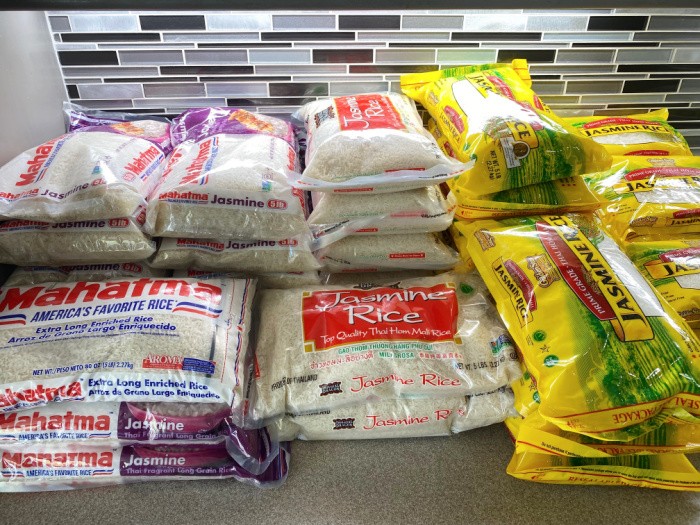
White rice, rolled oats, dried pasta, all-purpose flour, cornmeal, and dried beans are the foundation of any food storage plan. Stored properly in airtight containers away from heat and light, these foods last anywhere from one to twenty-five years. They’re also among the most affordable calories you can buy. I store my cornmeal in the freezer; that’s how I roll. I’m ready to make cornbread or corn tortillas.
Canned and Shelf-Stable Proteins
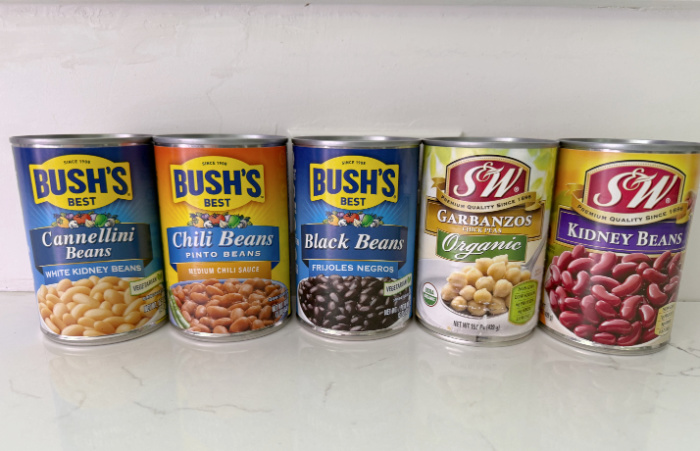
Canned tuna, salmon, chicken, sardines, and canned beans do double duty as both protein and convenience. They require no refrigeration, have shelf lives of two to five years, and can be added to a wide variety of meals. Peanut butter and other nut butters are also excellent sources of protein and have a shelf life of 1 to 2 years. You can also freeze your peanut butter in FoodSaver-like bags.
Fats and Cooking Oils
Cooking fats are easy to overlook in food storage planning, but they’re calorie-dense and essential for making shelf-stable staples taste like real food. Coconut oil, olive oil, ghee, and shortening all store well. Coconut oil and ghee in particular hold up for one to two years without refrigeration.
Flavor and Comfort Foods
Salt, sugar, honey, vinegar, soy sauce, dried herbs, and spices last virtually indefinitely and are the difference between just edible and genuinely enjoyable meals. Coffee, tea, cocoa, and shelf-stable comfort items matter enormously for morale and routine; don’t skip them. Don’t forget Worcestershire Sauce, I love that stuff.
Storing Your Food the Right Way
The enemies of stored food are heat, light, moisture, oxygen, and pests. Keep that in mind, and your pantry will do its job for years. A cool, dark, dry location is ideal; a basement, interior closet, or spare room works well. Avoid garages or exterior walls in climates with significant temperature swings.
For bulk dry goods like rice, flour, and oats, food-grade five-gallon buckets with gamma-seal lids are a practical and affordable storage solution. Mylar bags with oxygen absorbers inside the buckets extend shelf life significantly for long-term storage of a year or more.
For your working pantry, the foods you cycle through regularly, using simple organization, matter most. Label everything with purchase or pack dates. Rotate stock by putting newer items behind older ones. This first-in, first-out system keeps waste to a minimum and ensures nothing quietly expires at the back of a shelf.
You don’t need a dedicated room or special infrastructure to maintain a food storage supply. Most families do just fine using existing pantry space, a few shelving units, and a corner of a basement or closet.
Building Your Supply Without Blowing Your Budget
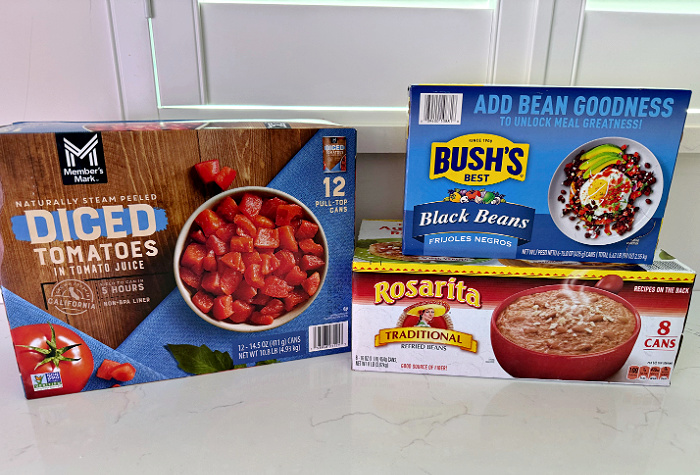
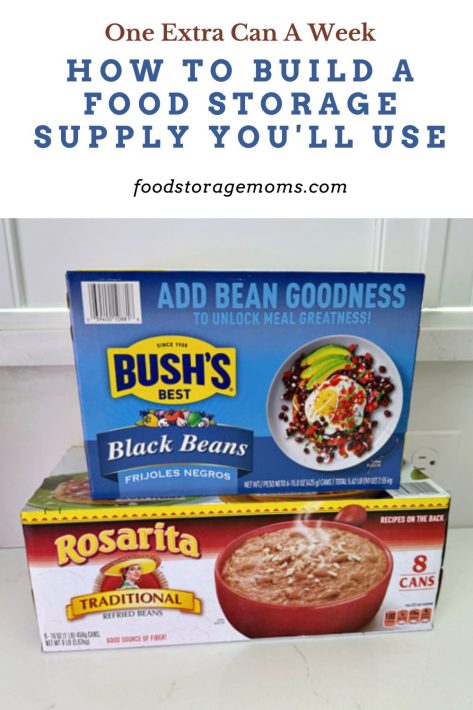
The most sustainable way to build food storage is to do so gradually, using the money you already spend on groceries. Add a few extra cans or an extra bag of rice with each weekly shopping trip. Over the course of a few months, that compounds into a meaningful supply without a large upfront expense.
Watch for sales on the staples you buy most. Case lot sales at warehouse stores and grocery chains are an excellent opportunity to stock up on canned goods, dried beans, and pasta at a meaningful discount. Even a 10% savings on items you buy regularly makes a real difference over time.
A reasonable milestone for most families is reaching a two-week supply in the first month, a one-month supply by month three, and a three-month supply within the first year. Adjust that pace to whatever actually works within your household budget; progress matters more than speed.
Water Storage: The Often-Skipped Essential
Food storage without water storage is only half a plan. The standard recommendation is one gallon of water per person per day, accounting for both drinking and basic sanitation. A two-week supply for a family of four means 56 gallons, which sounds like a lot until you realize that’s about eight standard seven-gallon water storage containers.
I recommend four gallons of water per person per day. You need water for cooking, hydration, basic hygiene/sanitation, and limited laundry chores. I get thirty just thinking about one gallon per day. But that’s me, one is none, two is one.
Commercially sealed water containers and food-grade barrels are the most reliable option. Tap water stored in clean, food-grade containers with a small amount of unscented liquid bleach will remain safe for up to a year. Rotate and refresh your water supply annually.
A quality water filter, such as a gravity-fed ceramic filter or a pump filter rated for bacteria and protozoa, adds another layer of security and extends your options considerably if your stored water runs low. I like the products from Big Berkey and PortaWell.
Special Dietary Needs and Your Food Storage Plan
Your food storage should reflect how your household actually eats. If someone has celiac disease, their grains need to be gluten-free. If you have an infant, you need formula or its ingredients. If a family member has diabetes, you’re thinking differently about carbohydrates than the average food storage list suggests.
Don’t copy someone else’s generic list wholesale. Use it as a starting point, then adapt it to your household. The best food storage supply is one that your family will actually eat, that covers any medical or dietary requirements, and that accounts for the ages and needs of everyone under your roof. Here is a form I used when I taught classes: PRINTABLE: Where do I start (PDF).
Keeping Your Food Storage Fresh: The Rotation System
A food storage supply that never gets used is not a supply; it’s a slowly expiring collection. Rotation is the practice that keeps your pantry functional and your food fresh. Cook with what you store, and replace what you use. If you’re eating canned chili from your pantry tonight, replace it on the next grocery run.
Some families find it helpful to do a full pantry inventory twice a year, once in spring and once in fall, to check dates, identify items that need to be used soon, and update their shopping targets. This also gives you a clear picture of what you actually eat versus what you thought you’d eat when you bought it.
Shelf-life guidelines printed on packaging are generally conservative. Many canned foods remain safe and palatable well past their best-by date. Trust your senses: if it smells off, looks off, or the can is bulging or compromised, don’t eat it. When in doubt, throw it out; the cost of replacing one can is far lower than the cost of foodborne illness.
Frequently Asked Questions About Food Storage
How long does food storage last?
Shelf life varies widely by food type. White rice and dried beans kept in airtight containers can last 20 to 30 years. Commercially canned foods typically last 2 to 5 years. Whole wheat flour and brown rice have shorter shelf lives of 6 to 12 months due to their natural oils. The key variables are temperature, moisture, and oxygen exposure.
I purchase Lehi Mills (Orem, Utah) white bread flour once a year, 200 pounds. I don’t put it in the freezer; I buy eight 25-pound bags, usually about $12.00 a bag (Costco). I store each bag in a clean 5 Gallon Bucket with a Gamma Lid.
5 Gallon Bucket with Gamma Lids
Is food storage the same as an emergency food supply?
They’re related but not identical. An emergency food supply is specifically intended for crisis situations and often includes freeze-dried meals or MREs with extremely long shelf lives. A general food storage supply, as described here, uses everyday foods that you rotate through regularly. Many households benefit from maintaining both: a working pantry supply for everyday use and a longer-term emergency reserve.
Where do I store food if I live in a small space?
Apartment and small-home dwellers build storage in creative places: under beds in flat storage bins, in the back of closets, in ottomans with storage interiors, in unused corners with a decorative cover, or on vertical shelving installed in a laundry area. Even a modest amount of thoughtful storage in a small home can hold a meaningful two-week to one-month supply.
Start Where You Are
Building a food storage supply doesn’t require a dramatic lifestyle change, a large budget, or any particular worldview. It’s a practical, sensible habit that makes your household more resilient. This approach isn’t for some imagined future catastrophe, but to deal with the entirely normal bumps and disruptions that every family encounters.
Foods That Have a Long Shelf Life
Smart Ways to Store Food in a Small Home
Final Word
Start with what you have. Buy a little extra of what you already eat. Find a spot to store it. Keep a rough count of what’s there. That’s really the whole system. The rest is just refinement over time.
A well-stocked pantry is one of the quietest, most unglamorous forms of self-sufficiency, and also one of the most rewarding. There’s a particular satisfaction in knowing that whatever this month brings, your household is fed. May God bless this world, Linda







Good morning Linda,
Don’t worry about the naysayers. They know nothing. You are loved and appreciated. I am thankful for the things I have learned from you my friend! You have a ministry in what you do! God bless you always!
Love and hugs,
Jackie Perkins
Hi Jackie, oh my gosh, thank you my sweet friend! I miss you! Thank you for your kind words, love and hugs, Linda
Jackie,
You are absolutely correct. Such folks will be crying for food when the time comes. I get so tired of those who criticize what they do not understand.
Hi Harry, thank you my friend! Linda
Just another reason to stay OFF Facebook. I’m not on it and don’t want to be on it. It’s all trauma and drama to me! You have NEVER taught Panic. If the naysayers are so, so whatever they are, they can be the ones begging for food if/when it comes the time and they don’t have anything to eat but grass. Apparently whomever said this, doesn’t live in the real world where disasters happen! Yes, I’m very offended by this!
Hi Deborah, I was very offended by it, I could have deleted it but I didn’t. I wanted others to see how rude this young woman is. People can hide behind a computer and say anything without recourse. She will indeed be in line for a handout after a disaster. I told her I grew up poor and share my experiences. Such is life. Not everyone was born with a silver spoon in their mouth! I sure wasn’t! LOL! Linda
Deborah,
Love your comment, especially about Facebook, or what I call Faceplant. I have never indulged in any form of so-called social media. From what I have seen, it is not very social and time-wasting. I have told friends that, if they want to contact me, they can call me, text me or send me an email. And if they want me to see a picture they can attach it to an email. That’s the extent of my electronic communication.
Hi Harry, I totally agree. I started my blog 14 years ago and applied for all the social media outlets to reserve Food Storage Moms. I rarely interact on any of them. I don’t want to feel the anger people put out. You are smart, I know how to get a hold of you and its not social media. LOL! Linda
Harry, you must be someone very special! I love that you don’t wish to spend a lot of time by wasting it on social media. We also ask people who are wasting their time to send us photos over email or over WhatsApp, if they are living overseas and contacting me that way.
As far as what was said on FaceBook, that person is brain dead as far as I can see!! Teaching preparedness is about NOT being panicky, but being prepared for whatever comes. Besides, there is no way to be prepared for EVERYTHING, but it certainly is a great comfort when a huge storm or power outage comes our way and our food supplies, water storage, fuel storage, etc., etc. take such good care of us!! Even the Scriptures say: “A prudent person sees danger and hides himself from it; but the simple pass on and are punished [with suffering].” In this verse, the section that says “hides himself from it” means takes precautions to protect themself from what dangers are seen plainly, and “the simple” means the fool or the simple-minded who doesn’t bother or scoffs at those who prepare in such a way as to be ready for dangers that come periodically. Note that the parenthesis emphasizes that the simple-minded person will suffer for his/her lack of prudence or wisdom and lack of forethought! Linda, I will say it plainly now: That person who said you teach panic is a FOOL!! Linda, I always considered myself a person with much “forethought” (which I sometimes share with my Ugandan adult “children” to think about your children’s futures), but you are the QUEEN of forethought and wisdom! THANK YOU SO MUCH TEACHING THE WORLD SO MUCH PRUDENCE AND WISDOM!! Your ministry of sharing your wisdom with us all is worth more than a bowl full of pearls!
Hi Jess, Harry really is a gem. Thank you for your kind words, my sweet friend. Linda
Oh Linda – panic? I think you do just the opposite! Your posts are genuine, down to earth and so very helpful! I agree with the other comments – that person will be first in line for a hand out!!
I consider prepping a form of insurance and have had to make a claim on more than one occasion!! I wonder if that person buys car, health or home owners insurance??
Hi Beth, thank you for your kind words. I think some people are really naive when it comes to food storage, water storage, or even being self-reliant. You and I will never be in line to get food or water unless our homes are totally destroyed. And even then they will have to drag us to go get it! LOL! We do not need or want handouts. We can take care of ourselves and read a book with a candle when the power goes out. You are so right it is insurance to take care of ourselves. Linda
Beth,
You are so right about it being a form of insurance. I have heard folks lament when they have had to dispose of something that they had stored way too long. I ask them “How many years have you paid car insurance or house insurance that you did not file a claim?” To me disposing of way outdated food that has gone bad is just the premium I pay to be prepared. That stuff was there for years if I had needed it. I just did not have to file a claim. ‘Nuff said!
Have a blessed day!
Hi Harry, I’m so glad you brought this up again. I tell Mark it’s insurance, just like our car insurance premiums. Love it. Linda
Pat and I have been paying house insurance for 51 years. We filed a small claim for a burglary in 1979 and the hail damage claim in 2016. I can guarantee that those two claim amounts together are a mere pittance compared to the premiums we have paid in those 51 years. I will get off my soap box now. LOL!!
Hi Harry, wow, if you look at the cost of insurance for your house over 51 years…..LOL! Throwing a can or even ten cans aways is nothing. When in doubt, throw it out. Great comparison, love it! Linda
I agree with everyone on here who has commented. You are appreciated for the down-to-earth common-sense approach you take to teach about the how and whys of food storage.
Knowing quite well the ins and out of food storage I have made mistakes too. I know peanut butter goes rancid after a year, but I recently had to toss about ten jars from 2021. I would rather have it than not have it. I love peanut butter but is one of the things I have to limit due to high cholesterol. Sure, I hated to toss it, but I had it if I needed it. I will store it in the freezer from now on. And rice do I have rice stored. In 5-gallon food grade buckets, in mylar bags, and oxygen absorbers. More rice than I will eat in my lifetime or should eat, but worst comes to worse, I can feed it to my daughter’s chickens, pigs, and perhaps ducks. I am better at rotating canned goods and have many from Sam’s club and Walmart. Now if I could just get my younger daughter to stop using my supply of chili beans and not replenishing them, I would be in good shape. She once asked why I had 12 cans of Folger’s 48 ounce coffee. Now she knows. I was buying the 48-ounce size when it was $8.99 a can. Now it was almost $19.00 at Sam’s the last time I checked and over $20.00 at Walmart for the same size can. I am still drinking Folger’s coffee from 2023 and have not lost one can. The vacuum seal is just as fresh as when I bought it. Please keep teaching and preaching and we will keep listening and heeding your advice. Like Beth said, “I wonder if she invests in car, home, and health insurance?” Only the foolish don’t.
Let’s see…..tuna when I started saving was 50¢ a can. It’s now, $1 a can.
I rest my case.
Hi Jay-Jay, oh my gosh, those were the good old days! I remember when gasoline was .26 cents a gallon! LOL! Linda
I was so grateful for your writing on anxiety. I felt it was written especially for me. I feel so bad for someone to criticize you for it. Your recommendations for my pantry and other needs has helped me avoid panic. Please continue to use your knowledge to keep all of us safe. God Bless you.
I guess the naysayers have never heard the Boy Scout motto of “be prepared”. And scripture also speaks of preparing. To me it’s just smart to have a full pantry.
One thing a friend told me to buy during the flu and cold season is canned chicken noodle soup. I usually make mine from scratch, but bought a few cans last fall. Well, they came in handy and we used all of them when we both were so sick with horrible colds in November! And they tasted good to us! LOL. I no longer tease anyone who buys canned chicken noodle soup. By the way, I spent a little more money and got the Progresso brand.
Hi Paula, oh my gosh, this is the best idea ever. I am going to pick up some Progresso chicken noodle soup. Yes, I make it from scratch as well, but sometimes we just need a can opener and cup to heat the soup in! Great tip! They don’t do the Boy Scouts here in Utah anymore, something with the Mormon Church and other affiliates. It’s too bad because I always admired those Boys who got their Eagle Scout Award. I didn’t have brothers or sons, but it was a big deal. Linda
My son is an Eagle Scout. He met all the requirements when he was only 14! One of the youngest in our area. My husband was an assistant Scout Master and those two had so much fun camping and going on all 3 high adventure camps that the scouts offered at that time. Great memories!
Hi Paula, I had a nephew that loved scouting, he went to the National Programs when he was old enough and then went onto to be a Marine. I thought it was great training. Linda
Great information as usual. Don’t let the naysayers get to you. You are doing us a favor by posting a self sufficient lifestyle.
Hi Jeff, thank you for your kind words. I guess they never learned that statement, if you can’t say anything nice don’t say anything at all. LOL! Linda