
White Rice: Why I Recommend Storing It
This post may contain affiliate links. We may earn a commission if you purchase via our links. See the disclosure page for more info.

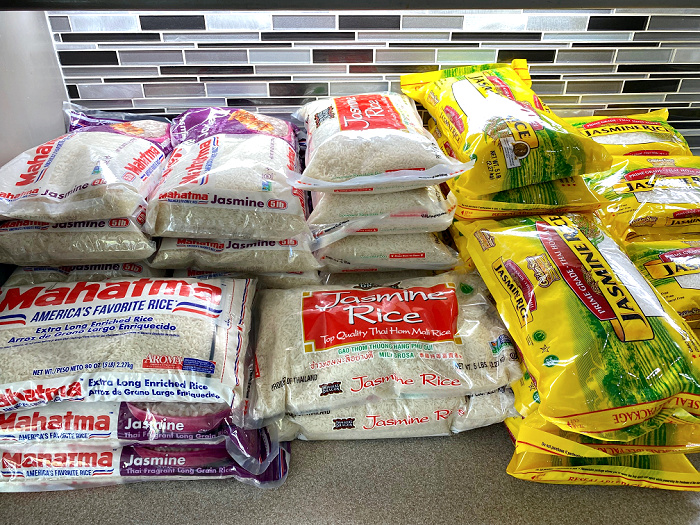
White Rice: Why I recommend storing it. This post will serve as a practical, family-friendly guide to one of the most reliable staples you can keep on your shelves. If there’s one ingredient I return to again and again when talking to families about building a reliable food storage system, it’s white rice. Simple, affordable, and extraordinarily versatile, white rice has been a staple in kitchens around the world for hundreds of years. And when it comes to stocking your pantry for the long haul, few foods come close to matching what a well-stored bag of white rice can offer your family.
Whether you’re brand new to the idea of food storage or you’ve been building your pantry supply for years, white rice deserves a permanent spot on your shelves. In this guide, I want to walk you through exactly why I recommend it so strongly, covering everything from its remarkable shelf life to its genuine nutritional contributions and its friendly price tag.
An Exceptional Shelf Life You Can Count On
The single most compelling reason to store white rice is its longevity. When stored properly in a cool, dry environment, white rice can remain safe and palatable for 25 to 30 years. This isn’t an exaggeration. The key is removing moisture and oxygen from the equation, which is why airtight containers, mylar bags with oxygen absorbers, or sealed food-grade buckets are the most common storage methods used by experienced preppers and homesteaders alike, particularly when storing white rice. Rice Cooker
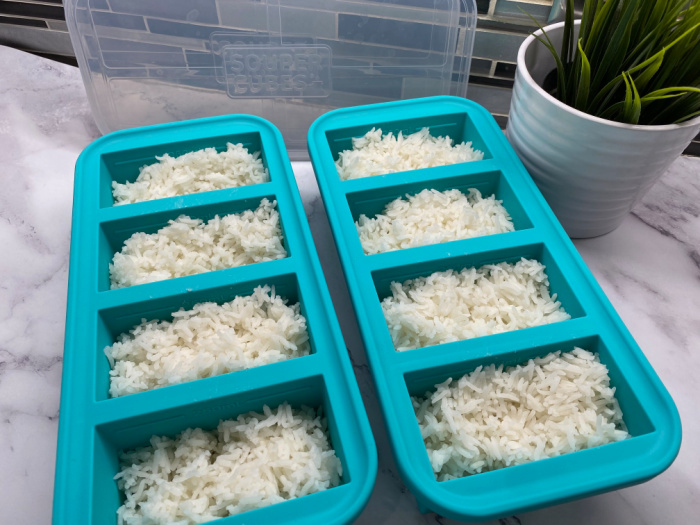
Contrast this with brown rice, which is nutritionally richer but contains natural oils in its bran layer that cause it to go rancid within 6 to 12 months. White rice, having had that outer bran layer removed during milling, becomes remarkably shelf-stable. The trade-off in fiber is real, but for pure long-term storage value, white rice wins by a wide margin. When stored in airtight containers away from heat and light, white rice can stay fresh and ready to cook for up to three decades. I freeze cooked rice in one-cup servings using Silicone Souper Cubes you see below. I freeze buttermilk and casseroles in these as well.
It’s One of the Most Affordable Foods You Can Buy
Food storage need not be expensive, and white rice is proof of that. Per serving, white rice is consistently one of the least expensive calorie sources available at any grocery store. A 25-pound bag of long-grain white rice typically costs between $10 and $15, depending on your region and where you shop, and it contains well over 100 servings.
For families on a budget who want to build a meaningful food reserve without stretching their finances, white rice is the place to start. You can gradually add a bag or two at a time to your supply, and within a few months, you’ll have a substantial reserve that costs far less than most other emergency staples. This accessibility is one of the biggest reasons I recommend it to every family, regardless of income level or storage space.
Health Benefits That Support Your Whole Family
White rice often gets an unfair reputation in nutrition circles, but the reality is more nuanced than many headlines suggest. As a carbohydrate-rich food, white rice is a quick, efficient source of energy, making it especially valuable during physically demanding situations or emergencies when your body needs fuel to keep going.
White rice is naturally gluten-free, making it a safe and reliable staple for families who include members with celiac disease or gluten sensitivities. It’s also low in fat and contains no cholesterol. When prepared plainly, it’s gentle on sensitive stomachs and is one of the first foods recommended during illness or digestive recovery, which is why it appears in the classic BRAT diet alongside bananas, applesauce, and toast.
Enriched white rice, which is the variety most commonly found in grocery stores, is fortified with several important nutrients, including iron and B vitamins like niacin, thiamin, and folic acid. These added nutrients help offset some of what is lost during the milling process. For growing children and women, the folic acid fortification in enriched white rice is particularly significant, as folic acid plays a critical role in healthy fetal development and red blood cell formation.
White rice also contains small amounts of protein, and when served with legumes like beans or lentils, the two together form a complete protein source, meaning they collectively provide all nine essential amino acids your body can’t produce on its own. This is a cornerstone of how billions of people around the world have eaten their meals for centuries, and it’s as practical today as it has ever been.
Incredibly Versatile in the Kitchen
One of the underappreciated advantages of storing white rice is that it doesn’t feel like an emergency food. Your family will actually want to eat it, and that matters more than most people realize. A food storage system only works if the food in it is something your household is comfortable cooking and eating regularly.
White rice is the backbone of countless beloved meals from virtually every culinary tradition in the world. It can be served as a simple side dish, used as the base for soups and stews, fried with vegetables and eggs, stuffed into burritos, simmered into congee, or pressed into rice cakes. Children who might resist other stored grains or dried foods tend to accept white rice without complaint, which makes it an especially family-friendly option.
Its neutral flavor also means it goes well with almost anything else you have on hand, whether that is canned beans, jarred tomatoes, frozen vegetables, dried spices, or fresh ingredients from your garden. This flexibility is invaluable when you’re cooking under constraints or simply trying to make a nourishing meal out of what’s available.
How to Store White Rice the Right Way
Proper storage unlocks white rice’s full potential as a staple of long-term food storage. The enemies of stored rice are moisture, heat, light, oxygen, and pests. Address all five, and your rice will be waiting for you in excellent condition decades from now.
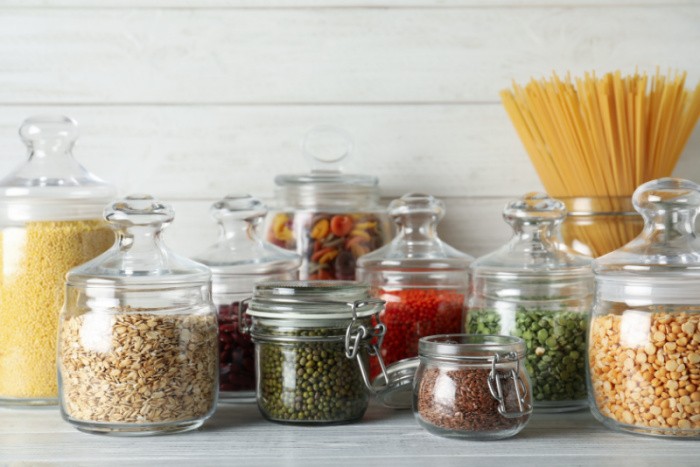
For medium-term storage of one to five years, transferring rice from its original paper or thin plastic packaging into airtight containers made of hard plastic, glass, or metal works well. Keep those containers somewhere cool and dark, away from kitchen heat or direct sunlight. A basement, pantry closet, or interior shelf is ideal.
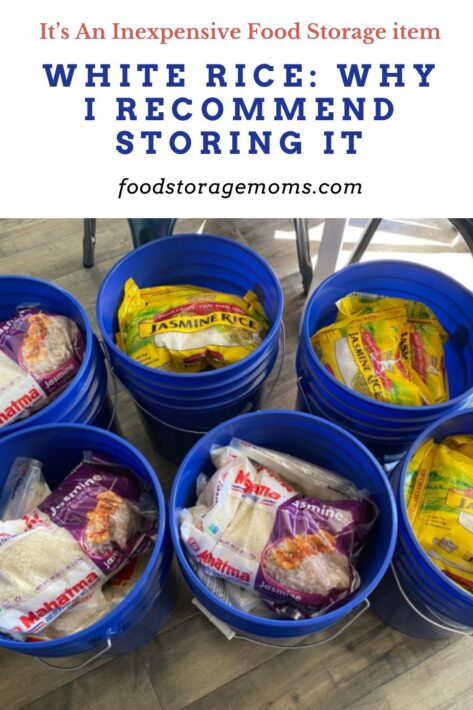
For long-term storage of 10 years or more, the gold standard is to seal white rice in mylar bags with oxygen absorbers, then place those bags inside food-grade five-gallon buckets with gamma-seal lids. The oxygen absorbers remove oxygen from the bag, preventing oxidation and deterring insects. Many families who store rice this way report opening sealed bags 20 years later and finding the rice in perfect condition.
It’s also worth noting that white rice stored for a long time may lose some of its vitamin fortification, though the calories, carbohydrates, and basic nutrients remain intact. This is one reason why rotating your supply by using and replacing older stock is a good practice, though it’s far from urgent given how slowly quality declines.
A Foundation Your Family Can Build Upon
No single food can supply everything a family needs, and white rice is no exception. But as a foundation, it’s difficult to beat. It provides reliable calories, pairs effortlessly with proteins, fats, and vegetables, requires nothing more than water and heat to prepare, and will still be waiting on your shelves long after most other stored foods have come and gone.
I recommend starting with whatever amount feels manageable, even if that’s just a few extra bags tucked into a corner of your pantry. Build gradually, store smart, and rotate what you use. Over time, a meaningful reserve will quietly accumulate, and with it, a genuine sense of security knowing that your family has a nourishing foundation to fall back on, no matter what the future holds.
White rice won’t solve every problem, but it’ll feed your family reliably, affordably, and for a very long time. That alone makes it one of the wisest investments you can make in your home pantry. This post is intended for general informational and preparedness planning purposes. Individual nutritional needs vary. Consult a healthcare professional for personalized dietary guidance regarding how much rice is best for you and your family.
Final Word
Food storage is ultimately an act of love. It’s the quiet, unhurried work of making sure the people you care about most will always have something nourishing to come home to. It doesn’t require a dramatic event to justify it, nor does it demand perfection to be worthwhile. A few extra bags of white rice on a shelf somewhere in your home is already a meaningful step in the right direction.
What I appreciate most about white rice, after everything else that can be said about shelf life, nutrition, and cost, is how ordinary it is. And in a world that can feel unpredictable more often than any of us would like, that quiet dependability is worth more than it might seem. Start where you are. Buy what you can. Store it well. And trust that the small, steady choices you make today have a way of adding up to something your family will be genuinely grateful for someday. May God bless this world, Linda









I have alot of white rice stored. I have an electric rice cooker, but if the power is out for awhile – how do I make it? Have tried to cook in a pot on the stove but it comes out mushy. Thanks in advance for any help I can get.
HI Barb, I have a post on how to cook rice. https://www.foodstoragemoms.com/how-to-cook-rice/
Here is what Deborah wrote: Deborah, one of my readers, suggests: “I do rinse the rice. But I bring the water to a boil with oil and salt added. Pour the rinsed rice in and bring it to a boil again. Boil for 5 minutes, then add the lid and turn off the heat. Let it sit for about 30-45 minutes. Usually, the rice is perfect and fluffy.”
I let mine sit about 20 minutes and it’s fluffy. I would practice to see what works for you depending on the amount of rice you are cooking. Linda
Thank you much for your help
When I’m hungry, mushy rice is better than no rice.
Have a God-filled day today.
Hi Jay-Jay, it’s funny you would say that, sometimes, I have to add more water to make it soften up. Life is good with rice! LOL! Linda
We are pretty strict at our home about what brand of rice we buy. Just so you know, the rice that is grown in areas where there have been wars or cotton grown, means you will be eating a lot of lead and arsenic. The leftovers of those two issues..lead shot in the ground from wars and arsenic from treating infested cotton fields, means you are MUCH safer to eat rice grown organically AND at least from an area that never was exposed to either of those 2 issues. THAT is why we mostly eat Lundberg Rice from California, because they’ve never lived through those 2 issues and they even improve their soil to keep it healthy and clean. Yes, we do sometimes eat the Eco-Farmed Rice, not just the organic rice. If you can find a food buying club or co-op store where you can become a member, you can get Lundberg Rice in 25 lb. bags. The only other rice that I THINK is pretty “clean” is the Royal Basmati in the 18 (or is it 15 lb.?) burlap bags with the plastic liner. This can be purchased easily from Walmart and for even less at BJs!! It’s a great deal but is a brown rice, I believe. The reason I THINK it is probably clean enough is that it is grown in the foothills of the Himalaya Mountains and is likely to contain higher amts. of minerals than most brands and have fewer toxic exposures. Even so, I see that Azure Standard has 25 Lb. bags of Lundberg Org. WHITE Basmati rice and Amazon sells a 15 lb. bag of Royal White Basmati Rice. Actually, any brand of rice that is NOT grown down south in the U.S.A. is probably less toxic then those brands grown in former cotton fields or where there were wars/battles fought.
Hi Jess, great recommendations as always. I always buy Non-GMO rice, usually from the USA. I do my best to watch for the highest quality, and safest products. Then I read almost every day that the air I’m breathing from the Great Salt Lake dust bowl is making us all sick in Utah. And Radon in the soil all over the US. We can do our best and be thankful we can buy rice. Linda
https://www.usu.edu/today/story/new-research-toxins-from-great-salt-lake-dust-absorbed-by-plants-soils-human-bodies
AS far as rice goes in the USA, Linda, the biggest deal is to buy rice that has never been grown in the South of the USA, where the soil is so contaminated. That’s the real deal here. Sorry, if my earlier post included too many details!
Hi Jess, I love details but I’m not sure we would know where the rice was grown. I know they tell us where it is processed, I’m just thinking out loud right now. Something for us to think about, thank you, Jess. Linda
Linda: I believe it’s not that hard to figure out. All of Lundberg’s rice is grown in California and the Himalayan Rice says it’s grown in the foothills of the Himalayas. There are other brands that say they are grown in TX (NOPE!) and in Arkansas (NOPE) and I believe others are labeled as grown in one of the Carolinas (NOPE!), so it’s not as hard to figure out as you might imagine.
I’ve been with the Mylar bags+O2 absorber users for years–placing those bags in 5-gallon buckets with gamma lids. But recently I’ve taken to vacuum sealing it in quart jars and putting the jars in the buckets. The Mylar system has worked well but I get tired of resealing the bags, so the quart jars make using the rice easier. I use my Dicorain to seal the jars.
Jane and I just redid our irrigation system front and back and now instead of one zone front and one zone back we have 3 zones each. We just planted a Bartlett Pear, a Frost Peach, Bing Cherry and a Utah Giant cherry, so add that to our Santa Rosa plum, Bonanza Peach, Anna Apple, Dorsett Golden and Gala apple trees and I think we’re fairly well set for our orchard.
I just trapped out the last (hopefully) packrat that was feasting on our Purple Passion asparagus in one of my raised beds. They seemed to prefer that to the Mary Washington in my in-ground bed. Can’t fault the little buggers for having good taste in asparagus.
As a result Jane and I will have fresh asparagus, baked potatoes and honey bourbon salmon for tonight’s dinner.
Hi Ray, I admire you so much for all your experience gardening, etc. I love hearing you planted so many fruit trees, what a blessing. The Dicorain is the best invention ever. Linda