
Emergency Preparedness Items: Are You Ready?
This post may contain affiliate links. We may earn a commission if you purchase via our links. See the disclosure page for more info.

Emergency Preparedness Items: Are you ready? Life has a way of surprising us. Whether it’s a winter storm that knocks out the power for days, a wildfire that demands a sudden evacuation, or a flood that cuts off your neighborhood from the rest of the world, emergencies don’t wait for a convenient time. The question isn’t whether something will happen. The question is whether your family will be ready when it does.
Taking stock of your emergency supplies once or twice a year is one of the most loving things you can do for the people who depend on you. Let this be your reminder to check in, restock what’s missing, and make sure everyone in the household knows how to use what you have stored.
Start with the Basics: Water and Food
Water is the single most important item in any emergency kit. The general recommendation is one gallon of water per person per day, stored for at least three days’ use, though a two-week supply is far better. Don’t forget your pets when calculating how much water to store. A large dog may need nearly as much water as a small child, especially if the weather is warm or the animal is stressed. By now, you know I don’t agree with the one-gallon-per-day-per-person theory. I prefer four gallons per person daily. It’s your choice, I can’t live on one gallon per day. It’s how I roll. Besides trying to stay hydrated, we need water to cook, maintain some level of personal hygiene, and do light laundry chores like washing underwear.
Rotate your stored water every six months and check containers for cracks or leaks. If you use commercially sealed water bottles, check the expiration date printed on the packaging. If you fill your own containers, use food-grade plastic containers with tight-fitting lids and store them away from direct sunlight, which can degrade the plastic and encourage bacterial growth over time.
WaterBricks™: Step-by-Step Instructions
WaterBricks and a Spigot. I use this in my water, so I only need to rotate it every 5 years. Water Preserver. You can also use unscented bleach if you want to rotate the water every six months. (1/8 teaspoon unscented bleach per gallon of water).
When It Comes to Food, Only Buy What Your Family Will Eat
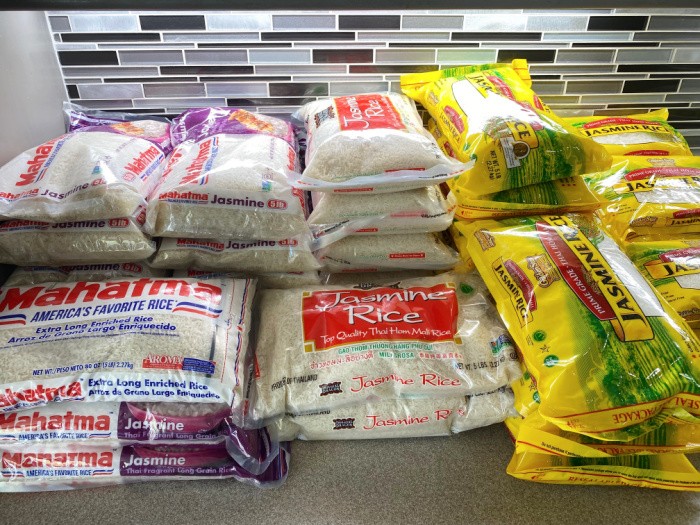
For food, focus on items your family actually eats and enjoys. There’s little point in stocking foods no one will willingly eat during an already stressful situation. Canned goods, dried beans, rice, oatmeal, nut butter, crackers, granola bars, dried fruit, and shelf-stable milk are all reliable choices. If you have young children, stock familiar snacks that comfort them. If you have family members with food allergies or dietary restrictions, plan for those specifically rather than hoping something in a generic kit will work. I feel crackers aren’t great for storage because they go rancid more quickly. I know people will say that if you’re starving, you’ll eat them. Well, you may want to learn to make your own crackers.
Can Openers
Keep a manual can opener stored directly with your food supplies. Write the purchase date on canned goods with a permanent marker so you can rotate them easily. Check expiration dates at least once a year and fold expiring items into your regular meal rotation. A well-maintained food supply costs very little extra when managed this way once you’ve built up what you want overall.
Consider also storing a small backpacking stove with fuel canisters. During extended outages, the ability to heat food and water makes a significant difference in morale, especially for children and older family members. Can Openers, Large Can Opener, and Electric Can Opener.
First Aid: Do You Know How to Use What’s in the Kit?
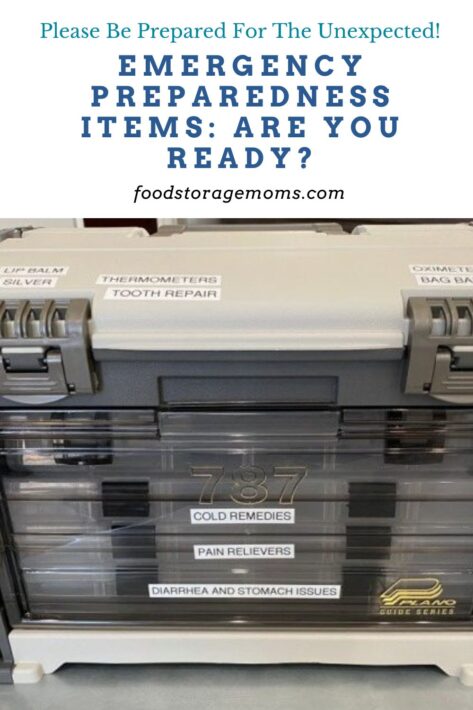
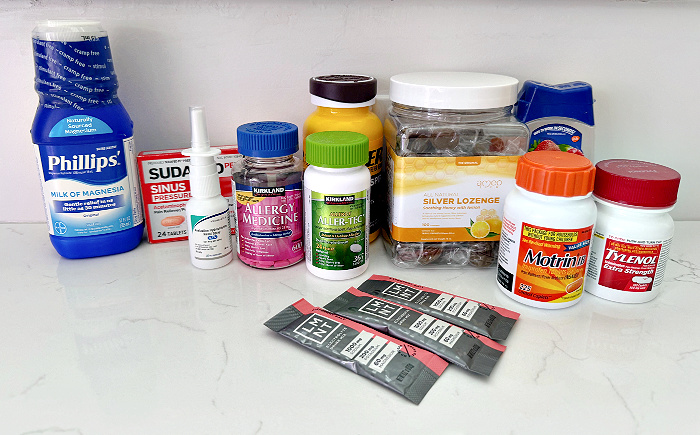
A first aid kit does very little good if no one in the family knows how to use it. Your kit should include adhesive bandages in multiple sizes, sterile gauze pads, rolled gauze, medical tape, antiseptic wipes, antibiotic ointment, hydrocortisone cream, tweezers, scissors, a digital thermometer, a CPR face shield, disposable gloves, instant cold packs, pain relievers, antihistamines, an antidiarrheal medication, and any prescription medications your family members need.
Keep at least a week’s worth of prescription medications on hand if your doctor and insurance allow it. Talk to your pharmacist about getting refills slightly ahead of storm season. Store medications in their original labeled containers and keep them in a cool, dry place, separate from any medications you use daily to avoid accidentally depleting your emergency supply.
Basic First Aid Class with CPR
Here is the part most people skip: take a basic first aid and CPR class. The American Red Cross and many local fire departments offer affordable or free training. Knowing how to clean a wound, treat a burn, apply pressure to stop bleeding, recognize signs of a heart attack or stroke, or perform CPR can genuinely save a life before professional help arrives. Refreshing this training every two years keeps the skills sharp.
Add a first aid reference booklet to your kit as well. In a high-stress moment, even trained adults benefit from a step-by-step written guide. The American Red Cross publishes an excellent one that is small enough to tuck inside any kit.
Light, Power, and Communication
When the power goes out, flashlights become essential immediately. Keep one in every room of the house and test them every few months. Stock up on extra batteries and store them in a sealed bag inside your emergency kit to prevent them from rolling loose and draining against other metal objects. Check stored batteries periodically for corrosion, which can spread to and damage your flashlights.
Mark and I like having solar light devices charged and ready to go. We have solar flashlights on our window sills all the time, so they stay charged. We also have solar lanterns so we can light up a whole room, if necessary.
A battery-powered or hand-cranked lantern is excellent for lighting a room during extended outages. LED lanterns are energy-efficient and can run for many hours on a single set of batteries. Solar-powered lanterns are another option if you live in a region with reliable sunshine during the seasons most likely to bring emergencies.
Candles and lighters, or waterproof matches, belong in your kit as backup light sources, but always use them with caution and never leave them unattended, especially around children. Keep a fire extinguisher in your kitchen and check the pressure gauge at least once a year.
Battery-Powered NOAA Weather Radio
A battery-powered or hand-crank NOAA weather radio is one of the most underrated items in any emergency kit. Cell service is often unreliable during large-scale emergencies when towers are damaged or overloaded. A weather radio keeps you informed about the situation, evacuation orders, road closures, and recovery information even when your phone can’t connect. Familiarize yourself with how to operate it before you ever need it.
Charge all your devices fully before a storm arrives. Consider keeping a portable battery bank charged and ready at all times. A high-capacity bank can recharge a smartphone several times, which may be enough to keep you connected during a multi-day outage. Store a charging cable for every device your family uses in the kit alongside the battery bank.
If you have a generator, know how to operate it safely. Generators must always be used outdoors, well away from windows and doors, to prevent deadly carbon monoxide buildup inside the home. Keep enough fuel on hand to run it for several days and store fuel safely in approved containers away from living spaces.
Documents and Financial Basics
In the chaos of an emergency, locating important paperwork can be surprisingly difficult. Prepare now by gathering copies of the documents your family would need most and storing them in a waterproof zip-lock bag or a small waterproof document pouch inside your emergency kit.
These documents should include copies of government-issued identification for every family member, passports, Social Security cards, birth certificates, marriage certificates, insurance policies for home, health, life, and auto, recent bank account statements, mortgage or lease agreements, medical records and vaccination histories for every family member and pet, a list of current medications with dosages and prescribing doctors, and a written list of emergency contacts including out-of-area relatives, your family doctor, veterinarian, lawyer, and neighbors.
Store originals of irreplaceable documents in a fireproof and waterproof safe at home or in a bank safe deposit box. Consider scanning everything and storing digital copies in a secure cloud service you can access from any device.
Keep a small amount of cash in your emergency kit in small-denomination bills. During widespread power outages, ATMs quickly run out of cash, and card readers may not function at all. Having $100 to $500 in small bills can cover fuel, food, or supplies when digital payment systems are unavailable.
Warmth, Shelter, and Clothing
Depending on where you live and what season brings the most likely emergencies, temperature management can be a matter of survival. Emergency mylar blankets are inexpensive, take up almost no space, and reflect up to ninety percent of body heat back to the person wrapped in them. Keep one for each family member, including pets.
In addition to mylar blankets, store several heavier wool or fleece blankets. Wool retains warmth even when wet, making it particularly valuable in flood or rain situations. A sleeping bag rated for colder temperatures than you typically experience is a wise investment for families in northern climates.
Pack a change of clothes for each family member, sized for the current season and updated as children grow. Include sturdy, closed-toe shoes stored near your kit. In an evacuation, many people flee in whatever they’re wearing, which may be inadequate for the conditions they encounter. Work gloves, rain ponchos, and warm hats take up very little space and can make a genuine difference in comfort and safety.
If your household includes infants, keep a supply of diapers, formula, and any other infant-specific items in your emergency stock and rotate them as the baby grows. If you have older family members, plan for their specific needs, including mobility aids, hearing aid batteries, and any comfort items that help them manage stress.
Sanitation and Hygiene
This category is often left off emergency preparedness lists, but sanitation quickly becomes a serious concern during extended emergencies, whether water service is disrupted or families must shelter in place for days at a time.
Store enough toilet paper, paper towels, and hand sanitizer for at least two weeks. Moist towelettes or baby wipes are invaluable when running water is unavailable. Keep a supply of heavy-duty garbage bags, which can serve many functions from waste disposal to waterproofing gear.
If your home loses water service entirely, you’ll need a way to manage human waste. A portable camping toilet with disposal bags is an affordable and compact solution that most families find far more dignified and sanitary than improvised alternatives. Familiarize yourself with how to use it before you need it.
Include feminine hygiene products, diapers, and other personal care items specific to your household. Soap, toothbrushes, toothpaste, and basic hygiene items like deodorant support not just physical health but also the sense of normalcy that helps people cope psychologically during prolonged emergencies.
Household bleach is a useful sanitation item. A small amount added to water can disinfect surfaces, and in an extreme situation where no other option exists, diluted bleach can be used to treat drinking water according to published guidelines from FEMA and the CDC.
Tools and Safety Equipment
A well-stocked tool kit is a valuable part of emergency preparedness that many families don’t think about until they need it. A multi-tool or Swiss Army knife covers a remarkable range of small tasks. Add a full-size wrench and know where your home’s gas shutoff valve is located, and how to turn it off. Knowing this before an emergency, and practicing it once, could prevent a gas leak from becoming a catastrophe.
A crowbar or pry bar can help open jammed doors after structural shifts. Duct tape and heavy plastic sheeting are endlessly useful for quick repairs, covering broken windows, or creating a sealed shelter-in-place if outdoor air quality becomes dangerous. Rope or paracord, zip ties, and bungee cords round out a basic toolkit that handles a surprising variety of emergency repairs.
Keep a fire extinguisher on every floor of your home and inspect it annually. Know how to use one. The acronym PASS, which stands for Pull the pin, Aim at the base of the fire, Squeeze the handle, and Sweep side to side, is easy to teach to older children and teenagers.
Keep a whistle in your kit. In a situation where someone is trapped or needs to signal for help, a whistle carries much farther than a voice and requires far less energy.
Special Considerations for Children and Pets
Children do better in emergencies when they feel involved and informed rather than frightened by the unknown. Talk to your kids about your family emergency plan in a calm, matter-of-fact way. Use age-appropriate language and frame preparation as something smart families do, like wearing a seatbelt or looking both ways before crossing the street.
Let children help pack their own small go-bag. Include a comfort item such as a stuffed animal or favorite book, a familiar snack, a flashlight they can operate themselves, and a card with important phone numbers written in their own handwriting. Children who feel they have a role and a responsibility in the plan are calmer and more cooperative during actual emergencies.
Practice At Least Once A Year
Practice your family plan as a drill at least once a year. Walk your children through the evacuation route, show them where the meeting spots are, and make sure they can recite the out-of-state contact’s phone number from memory. For very young children, consider sewing a small tag inside their emergency clothing with a parent’s contact information.
Don’t Forget Your Pets
For pets, keep a dedicated go-bag ready that includes at least three days of food and water, any medications, a leash or secure carrier, vaccination records and veterinary contact information, a recent clear photograph of your pet with you in it in case you become separated, and a comfort item such as a familiar toy or blanket. Research in advance which emergency shelters, hotels, or friends and family in your likely evacuation area accept pets, because many public shelters don’t.
Planning for People with Access and Functional Needs
Every household is different. A preparedness plan that works perfectly for a family of healthy adults in their thirties may be completely inadequate for a household that includes older grandparents, individuals with disabilities, people who depend on powered medical equipment, or family members with serious chronic illnesses.
If someone in your household uses powered medical equipment, such as a home oxygen concentrator, CPAP machine, or powered wheelchair, contact your utility company about their medical baseline or life-support programs, which may prioritize your address for power restoration. Keep your medical equipment provider’s emergency contact number in your kit and discuss a contingency plan with your doctor well in advance.
Register With Your Local Emergency Management Office
Register with your local emergency management office if a household member has a disability or access need that would make independent evacuation difficult. Many counties maintain voluntary registries that allow first responders to prioritize those households during large-scale emergencies.
Plan specifically for the medications, mobility aids, communication devices, and comfort routines that some family members will rely on. Disruption to routine is particularly hard on individuals with dementia, autism, or certain mental health conditions. Pack familiar items and think through how you’ll maintain as much structure as possible during displacement.
Store Your Supplies Wisely
This is a step many families overlook entirely. Where you store your emergency supplies matters as much as what you store. Rodents can chew through cardboard boxes, paper bags, plastic bags, and even soft plastic containers with alarming speed. They contaminate food with waste and pathogens, destroy first aid supplies, and can render an entire kit completely useless without you realizing it until the moment you need it most.
Store all food items in hard-sided, airtight containers made of thick plastic or metal with secure lids. Gamma-seal lids on food-grade buckets are a popular choice among serious preppers because they seal tightly, open and close easily, and effectively resist pests. Keep your entire kit off the floor on a shelf or elevated platform if possible, since rodents most commonly travel along walls and floors.
Watch For Rodent Droppings
Inspect your storage area every few months for signs of pests. Look for droppings, chewed edges on containers, or nesting material near your supplies. Avoid storing supplies in garages, sheds, or outbuildings that aren’t well-sealed against wildlife. Outdoor structures often have gaps around pipes, vents, and foundations that allow mice and rats to enter easily.
A cool, dry, interior closet is typically the best storage location for most households. Avoid areas subject to temperature extremes or high humidity, both of which degrade medications, reduce battery life, shorten food shelf life, and break down the adhesives in bandages and tape. Label your storage containers clearly on the outside with their contents and the date last inspected. This small habit saves considerable time during the stress of an actual emergency and makes it easy to identify what needs refreshing during your regular checkups.
The Go-Bag: Your Portable Emergency Kit
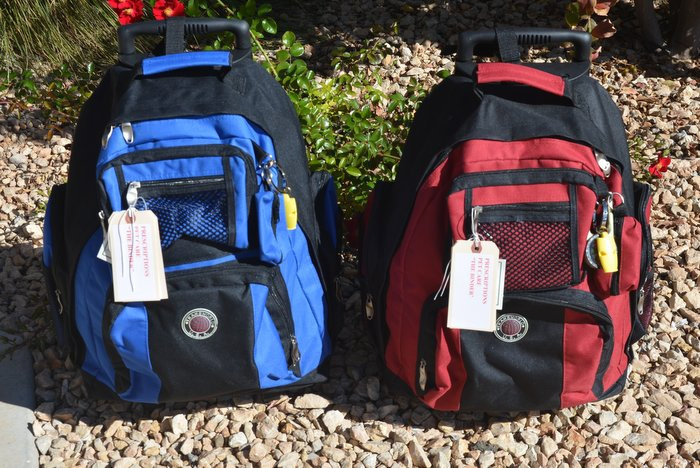
In addition to your home supply, every household benefits from having a go-bag ready to grab on a moment’s notice. An evacuation order can come with very little warning, and having a bag already packed, either by the door or in a vehicle, means you aren’t scrambling to gather things under pressure.
A go-bag should be a sturdy, water-resistant backpack or duffel that each adult in the household can carry comfortably. Pack it with a three-day supply of food and water, a first aid kit, copies of your important documents, a change of clothes and sturdy shoes, a flashlight and extra batteries, a weather radio, your phone charger and battery bank, cash, any prescription medications, and any items specific to the needs of your family members or pets.
Review and repack your go-bag at least twice a year. Seasons change, children grow, medications change, and a bag packed two years ago may be outdated in important ways. Keep it in an accessible location that every adult in the household knows about. Some families keep a smaller version in the trunk of each vehicle as well, since emergencies don’t always happen when you’re at home.
The Family Emergency Plan
Supplies and go-bags are only part of preparedness. Your family also needs a shared, practiced plan. Emergencies are disorienting by nature, and having decisions made in advance removes a significant mental burden from the moments when thinking clearly is hardest.
Choose two meeting spots outside your home. The first should be near your house, such as a specific neighbor’s driveway or a corner at the end of your street, for situations where you can’t re-enter your home but your neighborhood is accessible. The second should be farther away, such as a school, community center, or relative’s home, for situations where your entire neighborhood must be evacuated.
Out-of-State Family Members
Designate an out-of-state contact that all family members can call or text to check in. During regional disasters, local cell networks are often overwhelmed, but calls to numbers outside the affected area frequently go through more reliably. Make sure every family member has this number memorized and written on a card in their wallet or school bag.
Know your community’s evacuation routes and have a printed map in your go-bag, since GPS and cell service can’t always be relied upon. Know the location of your nearest emergency shelter and whether it accepts pets. Identify two or three routes out of your neighborhood in case primary roads are blocked.
Practice your plan with your whole family at least once a year. Walk through it, not just talk through it. Children and adults alike retain information better when they have physically practiced a behavior. A calm, routine drill creates the kind of memory that functions even when the mind is panicking.
Staying Informed Year-Round
Emergency preparedness isn’t a one-time project. It’s an ongoing habit of attention. Sign up for your county or city’s emergency alert system if you haven’t already. These text and email notification systems are how local authorities quickly communicate evacuation orders, road closures, shelter locations, and recovery information to residents.
Follow your local emergency management office on social media. During active emergencies, these accounts often post real-time updates that are more current and locally specific than national news coverage. FEMA’s website and the Ready.gov resource provide free downloadable planning guides, checklists, and preparedness information for families in every region.
Learn the specific hazards most likely in your area. A family in a coastal community faces different risks than one in a wildfire zone, a tornado corridor, or an area prone to ice storms. Tailor your preparations to the actual threats your household faces rather than building a generic kit that may be missing the most critical items for your situation.
Emergency Tips Every Family Needs
Final Word
Emergency preparedness isn’t about fear. It’s about confidence. It’s the quiet knowledge that if something happens tonight, your family has what they need and knows what to do. The time you invest now, going through your kit, restocking what is expired, practicing your plan, securing your supplies against rodents, and talking honestly with your children about what to do, is time that may one day mean everything.
Take an hour this week. Check the water. Rotate the food. Test the flashlights. Look for signs of rodent damage in your storage area. Make sure the go-bags are current. Walk your kids through the plan one more time.
Then put it all away and go back to living your life, with a little more peace of mind than you had before. Your future self and everyone who depends on you will be grateful you did. May God bless this world, Linda










Record your belongings. Store it to the cloud or email it to someone so it’s hanging out there. That way if there is a loss it’s easier to remember what you had and prove it.
Guns are insurance ammo is not so no need to share that tidbit. Same with food preps. Non insurable so keep that quiet.
Hi Matt, great idea, I store mine in the cloud. We have to keep the stuff we have to ourselves. I have been criticized about what I share. How else can I teach people what to do. It’s crazy I have told people for years to buy BlueCans water, it used to be $24.00 a case. People thought it was too expensive, now it’s unavailable because of the aluminum can issue. Freeze Dried companies are closing, I have suggested for over 14 years now to stock up on some Freeze-dried food. Not anymore, it’s too expensive. I begged people to buy the Lavario washing machine when it was $99.00, now (it went up to $250), now its unavailable. The SunOven was out of stock for a couple years, now that they are back in stock $700.00. I got one for free and paid $250 for a second one. My point is this, it’s like people either understand what’s going on or they don’t. I hope people understand what they need to do. I have said this before God helps those who help themselves. Linda
I know most would consider their cell phones an essential prep item for communication, but a pair of decent walkie talkies is a very good idea.
Do NOT store important papers like a Will or Trust paperwork in a safety deposit box. If you die your heirs might have to go through probate to get the box opened, leading to needless delays and costs.
Hi Ray, great comment on the walkie talkies. In Southern Utah we had a few families that we put on the same channel so we communicate through the blocks. They worked great. You know years ago I worked in a bank and had a safety deposit box. One day the power went out. When that happens we are on complete lockdown. no one can come into the bank. Yes, they let the customers leave and employees stay. But, it hit me that if there was ever a power outage, I would not get access through that oversized vault. It’s on a timer, and there is no getting into it. I closed out my safety box and purchased a safe for my home. You are so right on probate, what a mess. Linda
Safety deposit boxes are not safe from government officials. I have stories.
Also, a vhf boat radio is a good thing. Has a weather band and can work like a walkie talkie.
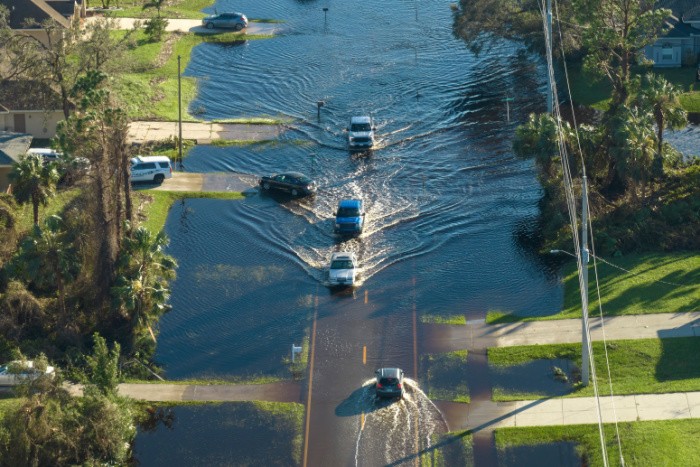
After hurricane Ian, there was NO cell service here for 2 weeks. We finally were able to ping off a mainland tower and text only after about a week.
I recommend Starlink now. Bought a Mini and pay, now, $10/month for stand by. It is useable for phone, text and some internet. Anyone with this service can toggle onto full service no matter if they are limiting new subscribers or congestion fees.
Cloud storage is “ok.”
I also recommend people have external harddrives with their information on them. I have 7 copies of my computer’s harddrive. If there is no power, the cloud is useless.
An external harddrive that is not attached to the computer unless it is being updated, is not subject to hacking, nor does it need contact with the internet.
We are entering hurricane season. Locked and loaded.
Hi CAddison, I looked into Starlink, that would be awesome! Great choice. Linda
Hey CAddison, Starlink is a good choice and one that I’m currently looking in to. Some of my friends used it for phone and internet and are very happy with it. And that vhf boat radio is also a great idea.
I just joined a local HAM radio club and and going to get licensed (after years of procrastination).
I also have backup hard drives that are only connected when being uploaded. I store one with a good friend and one in my 2 hr fire and flood proof safe.
Hi Ray, oh man, we should challenged each other to do the Ham Radio license years ago. I was going to do it, and now, it’s overwhelming to me. Linda