If We Have A War: Store White Granulated Sugar
This post may contain affiliate links. We may earn a commission if you purchase via our links. See the disclosure page for more info.

If we have a war, Store white granulated sugar. When people think about emergency preparedness and long-term food storage, they often focus on rice, beans, and canned goods. But one of the most overlooked and underestimated staples you can store is white granulated sugar. Whether you are preparing for a natural disaster, economic disruption, or a prolonged emergency, white granulated sugar deserves a permanent place in your preparedness plan.
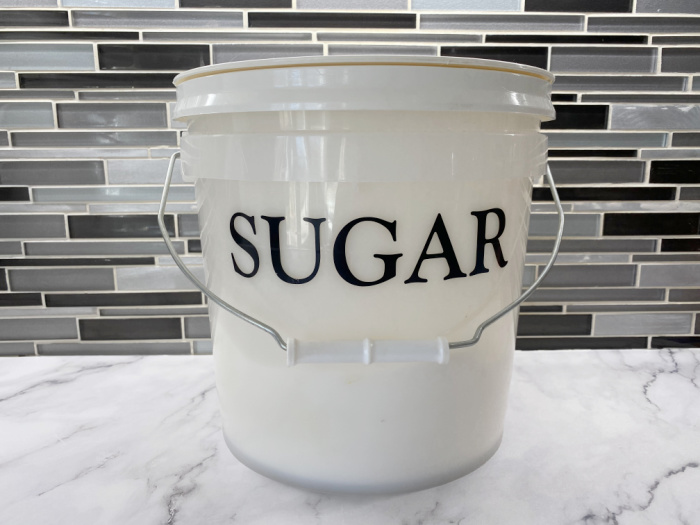
This post covers everything you need to know: the remarkable history of sugar, why storing it makes practical and nutritional sense, the many ways your family can use it, and smart alternatives to consider alongside it. The reason I keep bringing up what to stock is that prices keep rising. I noticed one of my 5-gallon buckets of sugar was only half full. We picked up 25 pounds of sugar from Costco. I try to keep between 200 and 300 pounds of white sugar in my pantry at all times.
A Brief History of Sugar: From Ancient Luxury to Everyday Essential
Sugar has one of the most fascinating histories of any food on earth. Its story stretches back more than 8,000 years.
Sugar cane is believed to have originated in New Guinea around 8,000 BC, where ancient peoples chewed the raw stalks for their sweetness. Over centuries, cultivation spread westward through Southeast Asia and India. It was in India, around 350 AD, that people first discovered how to crystallize sugar into a solid form, a technology that changed the world.
By the time Arab traders carried sugarcane across the Middle East and into the Mediterranean during the medieval period, sugar had earned the nickname “white gold.” It was so precious that European royalty used it to display wealth and power, decorating banquet tables with elaborate sugar sculptures.
When Christopher Columbus brought sugarcane cuttings to the Caribbean on his second voyage in 1493, sugar production exploded. The Caribbean and South American climate was ideal for growing cane, and sugar became the economic engine of colonial trade, unfortunately built on the devastating foundation of enslaved labor.
By the 19th century, sugar beet cultivation in Europe enabled further expansion of sugar production, making refined white granulated sugar increasingly affordable for ordinary families. The 20th century brought industrial refining techniques that made white sugar the common household staple we know today.
Understanding this history helps us appreciate something important: for thousands of years, sugar was considered so valuable that it was traded like currency and hoarded by kings. That instinct was not misplaced.
Why Store White Granulated Sugar for Emergencies
It Has an Almost Indefinite Shelf Life
White granulated sugar is one of the very few foods that, when stored correctly, can last indefinitely. The United States Department of Agriculture and food science researchers agree that pure granulated sugar does not spoil. It may clump or harden over time due to moisture, but its safety and sweetness remain fully intact. Properly sealed in an airtight container in a cool, dry location, your sugar supply can outlast almost any other food in your pantry.
It Is a Critical Source of Quick Energy
In a crisis situation, your family will likely be more physically active than usual: hauling supplies, working on your property, managing stress, and performing tasks that demand sustained energy output. Sugar provides fast, accessible carbohydrate energy that the body can use almost immediately. While sugar is not a nutritionally complete food, it plays a critical supporting role in maintaining stable energy levels when calorie intake is limited.
It Supports Food Preservation
One of sugar’s most critical emergency functions is food preservation. Sugar draws out moisture and creates an environment hostile to bacterial growth. This is why jams, jellies, preserves, pickles, and cured meats have relied on sugar for centuries. In a prolonged emergency when refrigeration may not be available, your knowledge of sugar-based preservation could protect your family’s food supply for months or even years.
It Sustains Morale
This point is often dismissed, but experienced emergency planners know it well. During times of extreme stress, small comforts matter enormously. Being able to bake a simple sweet bread, sweeten a cup of tea, or make a treat for your children can do more for family morale than many people expect. Sugar makes difficult times feel slightly more human.
It Has Barter and Trade Value
Just as it was for thousands of years of human history, sugar would have significant trade value in a prolonged crisis. A five-pound bag of sugar could be exchanged for goods, services, or skills your family needs.
How Much Sugar Should You Store
A general recommendation from most emergency preparedness experts is to store at least 60 pounds of sugar per adult per year for a comprehensive long-term supply. For most families, starting with a three-month supply and working up to a year-long supply is a reasonable goal.
For a family of four, a one-year supply would be approximately 240 pounds of white granulated sugar. This sounds like a lot, but when you consider how sugar is used across baking, preserving, beverages, and cooking, it is a realistic figure.
Best Storage Methods
Store white granulated sugar in:
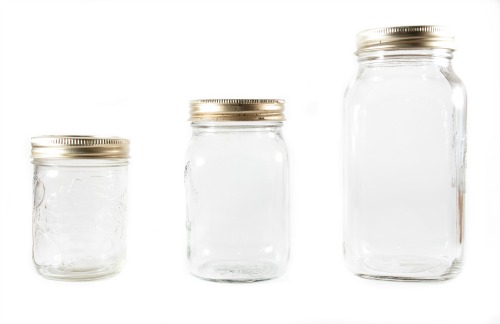
Airtight food-grade containers such as Mylar bags, sealed buckets with gamma lids, or large glass jars. I store my everyday sugar in 2-gallon buckets and long-term sugar in 5-gallon buckets with Gamma Lids. 2-Gallon Buckets with Lids. 5-Gallon Buckets with Gamma Lids.
A cool, dry location away from direct sunlight and temperature fluctuations.
An area free from strong odors, as sugar can absorb scents from its environment.
Away from moisture, which is the primary threat to stored sugar. Moisture causes clumping, but does not make sugar unsafe.
Oxygen absorbers are not necessary for white granulated sugar, and, in fact, some experts advise against using them for storing pure sugar, as they can contribute to hardening. The key factor is simply keeping moisture out. They will become like a brick, not fun to chisel.
The Health Benefits of Sugar: Understanding the Full Picture
It is important to approach sugar’s health benefits honestly and in context. White granulated sugar is not a health food, and consuming it in excessive amounts is associated with a range of health problems. However, sugar does have legitimate physiological benefits, particularly in specific circumstances.
Immediate Energy for the Brain and Body
Glucose, which is what sucrose (table sugar) breaks down into, is the preferred fuel source of the human brain. When blood sugar drops too low, cognitive function declines rapidly. In survival situations involving physical exertion, stress, or inadequate overall caloric intake, the glucose from sugar can be genuinely life-sustaining.
Wound Care and Healing
This may surprise you, but sugar has documented historical and modern medical uses in wound treatment. Pouring granulated sugar onto wounds, a practice known as sugaring or sugar wound packing, creates a high-osmolarity environment that dehydrates and kills bacteria. Field medics and nurses in resource-limited settings have used this technique for decades. In a crisis without access to antibiotics or advanced wound care, clean white granulated sugar applied to an open wound can help prevent infection and promote healing. Here is where I found the information on Sugar and wounds. Sugar as a Wound-Healing Modality by NIH. Please remember I am not a doctor, nurse, or anyone in the medical field. Always check with your medical provider.
Oral Rehydration Support
Sugar is a key component of homemade oral rehydration solutions, which can be critical in emergencies involving diarrhea, vomiting, or severe dehydration. The World Health Organization oral rehydration formula calls for a combination of sugar and salt dissolved in clean water. This simple mixture has saved millions of lives worldwide and is something every family should know how to make.
Preserving Nutritional Foods
When sugar is used to preserve fruits, berries, and vegetables through jams, jellies, and syrups, it helps retain vitamins and nutrients that would otherwise be lost to spoilage. So while sugar itself is not nutrient-dense, it acts as a vehicle for preserving foods that are.
Caloric Density in Emergencies
Pure white sugar contains approximately 387 calories per 100 grams. In a true survival situation where caloric intake is dangerously low, sugar provides a compact and shelf-stable way to add calories to whatever food is available. It can be stirred into grain porridges, added to teas or broths, or mixed into baked goods to increase the energy density of limited food supplies.
Ways to Use Stored White Granulated Sugar
White granulated sugar is remarkably versatile. Here are practical uses your family can rely on in everyday life and in emergencies alike.
Baking and Cooking
Sugar is foundational to baking. It sweetens breads, muffins, cakes, cookies, and pastries. It also plays structural roles: it helps leaven baked goods, retains moisture to keep baked items soft, contributes to browning through caramelization and the Maillard reaction, and improves texture. Even simple no-yeast flatbreads and skillet breads benefit from a small amount of sugar.
Homemade Jams, Jellies, and Preserves
One of the most valuable emergency skills is knowing how to preserve fresh fruit. Sugar combined with fruit and natural pectin creates shelf-stable preserves that can last a year or more when properly processed. Strawberry jam, apple jelly, peach preserves, and berry syrups are all achievable with basic equipment and granulated sugar.
Fermenting and Brewing
Sugar is essential for home fermentation. It feeds yeast in homemade breads and is the foundational ingredient in homebrewing kombucha, ginger beer, and other traditional fermented beverages. In a long-term emergency, the ability to safely ferment beverages could provide a clean drinking option and a probiotic benefit.
Curing Meats
Traditional curing recipes for bacon, ham, and jerky often combine salt with sugar. Sugar balances the harshness of salt, contributes to preservation, enhances flavor, and supports the curing process. Knowing how to cure meat with salt and sugar is an invaluable long-term storage skill.
Making Syrups and Sweeteners
Simple syrup, made by dissolving equal parts sugar and water over heat, is endlessly useful. It sweetens cold beverages, forms the base of fruit syrups and flavored sauces, and can be poured over pancakes, waffles, or porridge when other sweeteners are unavailable.
Natural Skin Care and First Aid
A sugar scrub made from granulated sugar and a small amount of oil provides gentle exfoliation and can help remove debris from minor skin irritation. As noted above, sugar applied directly to wounds can have antimicrobial and healing properties in emergency first aid situations.
Feeding Bees and Pollinators
If your family keeps bees or wants to support pollinators in a crisis garden, a simple sugar syrup made from granulated white sugar and water is a safe emergency feed for honey bee colonies when natural forage is unavailable.
Preserving Fresh Herbs and Flowers
Sugar syrups infused with herbs like lavender, mint, rosemary, or lemon balm preserve the medicinal and aromatic compounds of those plants and extend their usefulness well beyond their fresh season.
Sugar-Free Alternatives Worth Storing Alongside White Sugar
For family members who need to limit sugar intake due to diabetes or other health conditions, or simply for nutritional variety, several natural sweetener alternatives store well and deserve a place in your preparedness pantry.
Raw Honey
Raw honey is arguably the single best sugar alternative to store. It has an essentially unlimited shelf life when sealed and kept dry. Archaeologists have found 3,000-year-old honey in Egyptian tombs that was still edible. Beyond sweetness, raw honey has genuine antimicrobial properties, soothes sore throats, supports wound healing, and provides trace minerals and antioxidants. Store at minimum 20 to 30 pounds per person in your long-term supply.
Pure Maple Syrup
Real maple syrup contains manganese, zinc, and various antioxidant compounds not found in refined sugar. It stores well for years in sealed glass containers and adds a distinctive depth of flavor to baked goods, oatmeal, and beverages. When purchasing for storage, opt for pure maple syrup in glass jars rather than plastic.
Blackstrap Molasses
This dark, thick byproduct of sugar refining is surprisingly nutritious. Blackstrap molasses is one of the richest plant-based sources of iron, calcium, magnesium, and potassium. A single tablespoon provides meaningful amounts of these minerals. It has a shelf life of several years in a sealed container and can be used in baking, oatmeal, sauces, and marinades.
Coconut Sugar
Coconut sugar is made from the sap of coconut palm flowers and has a slightly lower glycemic index than white sugar. It stores well in airtight containers and can be substituted one-to-one for white sugar in most recipes. It has a mild caramel flavor and provides small amounts of iron, zinc, calcium, and potassium.
Stevia
Dried stevia leaves or pure stevia powder are intensely sweet, calorie-free natural sweeteners. Pure stevia stores indefinitely in a dry environment. A very small amount goes a long way, making it one of the most space-efficient sweeteners you can store. It does not behave the same way as sugar in baking, so it works best as a beverage sweetener or in recipes specifically designed for stevia.
Dried Dates and Date Sugar
Whole dried dates store for one to two years and serve as a natural sweetener in smoothies, energy balls, and baked goods. Date sugar, made from ground dried dates, retains the fiber and nutrients of the whole fruit. It does not dissolve well in liquids but works beautifully in baked items.
Pure Cane Syrup and Sorghum Syrup
Traditional Southern American pantry staples, pure cane syrup, and sorghum syrup keep for years and provide both sweetness and rich, complex flavor. Sorghum, in particular, contains iron, calcium, and B vitamins and was a primary sweetener for many rural American families before refined sugar became widely available.
Sugar Cookies (Copycat Famous Cookies)
Final Word
White granulated sugar has been woven into the fabric of human civilization for thousands of years, not by accident, but because of its genuine utility. It preserves food, provides energy, supports healing, sustains morale, and enables the cooking traditions that make a house feel like a home.
If a war, natural disaster, economic collapse, or prolonged emergency were to disrupt the supply chains we rely on, the families who had taken the time to store white granulated sugar, along with whole grains, legumes, and other essentials, would be dramatically better positioned than those who had not.
You do not have to prepare for every worst-case scenario at once. Start with a three-month supply. Store it properly in sealed, moisture-free containers. Learn how to use it for food preservation. And consider building a complementary collection of natural sweeteners, such as honey, maple syrup, and molasses, to give your family both nutritional variety and maximum flexibility. Sugar stored wisely today is security, comfort, and resilience for your family tomorrow. May God bless this world, Linda



I have a 5-gallon bucket with sugar in it, but we rarely use any of it. We mostly use stevia. It’s an alternative for diabetics. Hubby is one.
Hi Deborah, I use the green bags of raw Stevia for my drinks. Cookies and cakes, I use white sugar. I love Stevia, no aftertaste, no calories. Linda
I agree! It’s the best no calorie sweetener. I do have honey stocked as well. My grandmother had a 5-gallon bucket of sugar and flour when I was a child, back in the 50s and 60s. LOL
Hi Deborah, honey is a great one to stock. I stock it for my whole wheat bread. Great memories of your grandmother!! I love it! Linda
Hi Linda, when looking at sugar alternatives for storage, people might want to remember that molasses keeps pretty well after opening, but maple syrup does not without refrigeration… I try to store smaller containers of both so that they will be used up before going bad if the power is out… also, about stevia, while I believe that stevia itself is great, most of the powdered available options contain a lot of erythritol, which is now being linked to reduced gut bacteria and possibly other health threatening things… just stuff to think about… stay safe and God bless you and yours!
Hi Jan, I need to check my Stevia bags, thank you for the information. I love maple syrup, its hard to find in glass bottles. I love molasses as well. Small containers of everything work better for me these days. Linda
Hi Linda. The info about using white sugar to heal wounds is very interesting! I am curious about that process. I have probably overstocked sugar. I think I started stocking during the c-v days. I always enjoy reading your posts. Thank you for the time and effort you put into educating us regarding prepping!!
Hi Deee, I study and research about 4-5 hours a day. Here is where I found the sugar remedy: Here is where I found the information on Sugar and wounds. Sugar as a Wound-Healing Modality by NIH I added this to my post. Diabetics may be interested in it and can ask their doctors. I am not a doctor, nurse, or anyoine in the medical field. Linda
Using sugar for wounds also got my attention! I’d not heard that before either and am interested in learning more about it!
I’ve found maple syrup in glass bottles in Trader Joe’s before. I haven’t been there in a few months but I’ve bought it there in the glass bottles.
Hi David and Tana, I am going to go to Trader Joe’s my grandson had a bottle of it. Thank for the reminder. I just added this to my post: Here is where I found the sugar remedy: Here is where I found the information on Sugar and wounds. Sugar as a Wound-Healing Modality by NIH I added this to my post. Diabetics may be interested in it and can ask their doctors. I am not a doctor, nurse, or anyoine in the medical field. Linda
Hummingbirds depend on a simple sugar syrup, not so much when blooms are plentiful, but in fall and winter especially. Our hummers are residents year round (Pacific NW). I am certain that I use more sugar to support these wonders of God’s creation than I use for the people in my life. Worth every penny. Hummers bring me sweet joy!
Hi Deb, oh I love Hummingbirds!! You have them year round????? Oh I would love that! They bring me joy as well! Linda