
The Impending Food and Transportation Crisis
This post may contain affiliate links. We may earn a commission if you purchase via our links. See the disclosure page for more info.

Let’s talk about the impending food and transportation crisis today. A growing storm is brewing across the world’s food and transportation systems. From unpredictable weather patterns to global conflicts, economic instability, and fuel shortages, the cracks are widening in the networks that keep grocery store shelves stocked and goods moving.
While most people go about daily life assuming that trucks, trains, and ships will continue delivering as usual, experts warn that these systems are far more fragile than they appear.
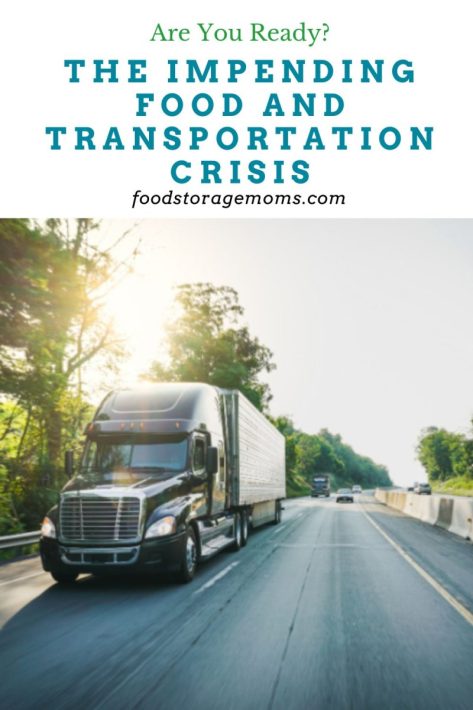
Recent disruptions from rising diesel prices and port slowdowns to fertilizer shortages and dwindling farmland have revealed just how interconnected and vulnerable our supply chains are. When one link breaks, the ripple effects can reach every household. Food becomes more expensive, deliveries take longer, and small shortages in one region can quickly spread across the country.
Governments and logistics companies are scrambling to strengthen infrastructure and diversify sourcing, but with global inflation and strained resources, the challenge grows more complex each year. The question isn’t whether the crisis will come; it’s how severe it will be and how prepared we’ll be when it hits.
The Impending Food and Transportation Crisis
- “What’s Causing the Crisis?”
- “The Role of Energy and Transportation Costs”
- “How Food Shortages Spread”
- “What You Can Do To Prepare”?
A Perfect Storm in the Making
The world’s food and transportation systems are under growing strain. From rising fuel prices and labor shortages to unpredictable weather and geopolitical conflicts, the warning signs are everywhere. These combined pressures threaten to create a food and transportation crisis that could impact every household, from the availability of basic groceries to the cost of everyday goods.
What’s Causing the Crisis?
Several factors are colliding at once:
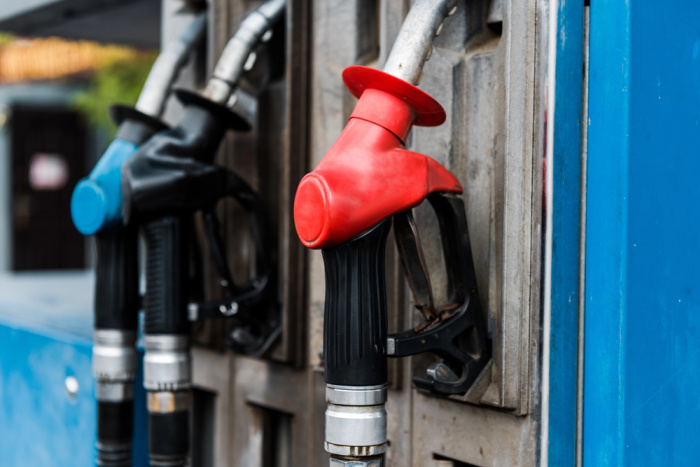
- Fuel Costs: Transportation relies heavily on diesel and gas. As energy prices rise, so do the costs of shipping food and goods. Trucking companies pass these expenses to distributors, who pass them to consumers.
- Supply Chain Fragility: Our just-in-time delivery model leaves little room for error. One breakdown in trucking routes, ports, or rail lines can delay food distribution for days or weeks.
- Labor Shortages: A lack of truck drivers, warehouse workers, and farm laborers has slowed production and deliveries worldwide.
- Extreme Weather: Droughts, floods, and heat waves have destroyed crops and disrupted harvest schedules, cutting food supplies and driving up prices.
- Geopolitical Conflicts: Wars and trade disputes can limit exports of vital resources like grain, fertilizer, and fuel, amplifying shortages across continents.
The Role of Energy and Transportation Costs
Energy is at the heart of the global supply chain. Every product, from vegetables to electronics, depends on transportation. When fuel prices rise, the effects cascade through every stage of the economy. Food becomes more expensive to grow, process, and transport.
Even small increases in diesel prices can significantly raise grocery bills, especially for items that travel long distances, like produce and dairy.
How Food Shortages Spread
Food shortages rarely start overnight; they build slowly.
When farmers face high fertilizer or fuel costs, they plant less. When transportation falters, deliveries are delayed. Small shortages in one region can quickly spread nationwide as consumers panic-buy or stockpile. The result? Empty shelves, inflated prices, and limited selection.
The Human Factor
The transportation sector depends on people, drivers, mechanics, dock workers, and farmers. As more workers retire or leave these industries, fewer replacements are stepping in. Without enough manpower, even the most advanced logistics systems falter.
How You Can Prepare
You can’t control the global supply chain, but you can control your household readiness. Here are some practical steps:
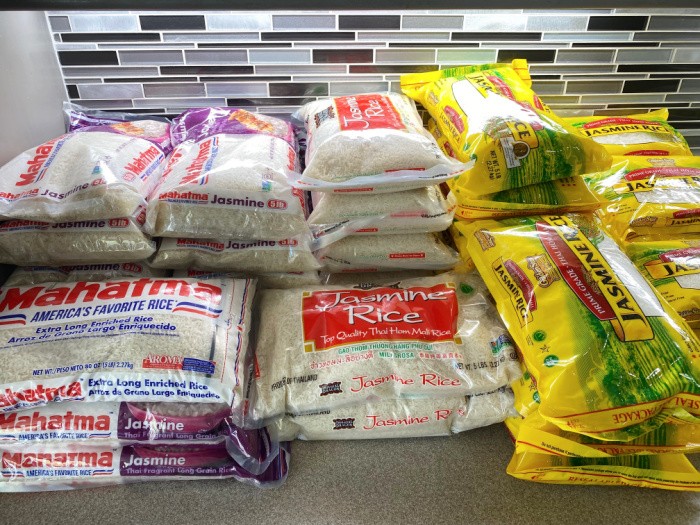
- Build a 3–6 Month Food Supply: Focus on shelf-stable foods like rice, beans, canned meats, grains, and dehydrated produce.
- Stock Up on Essentials: Keep extra fuel, water, and basic medical supplies on hand. Water Filters and WaterBricks
- Support Local Food Sources: Buy from nearby farms and community growers to reduce dependency on national distribution.
- Grow a Garden: Even small container gardens can produce vegetables and herbs to supplement your diet. My Favorite Garden Basket-Hod and Digz Garden Gloves
- Stay Informed: Follow reliable sources that track agricultural and energy trends.
- Will food shortages get worse in 2025?
- Which foods are most likely to disappear first?
- What are the best foods to store long-term?
FAQ: The Impending Food and Transportation Crisis
Will food shortages get worse in 2025?
Yes, many experts believe food shortages will continue into 2025 and possibly worsen. Global inflation, high fuel costs, and unpredictable weather have combined to reduce production and strain supply chains. Even if crops recover, transportation delays and energy costs will keep prices high for months to come.
Which foods are most likely to disappear first?
Foods that rely heavily on transportation or import routes tend to vanish first during disruptions. These include:
- Fresh produce (fruits and vegetables)
- Dairy products
- Meats and poultry
- Imported grains, coffee, and spices
Shelf-stable goods such as canned beans, pasta, and rice usually last longer but may also become more expensive over time.
Why are transportation problems causing food shortages?
Transportation is the backbone of the food system. If trucks can’t move goods efficiently due to fuel shortages, driver strikes, or infrastructure problems, food doesn’t reach grocery stores. Even minor delays can cause spoilage and regional shortages, especially with perishable items.
How can families prepare for possible shortages?
Start small and focus on building a steady reserve:
- Store what your family already eats, and buy extra when it’s on sale.
- Rotate stock regularly so nothing expires.
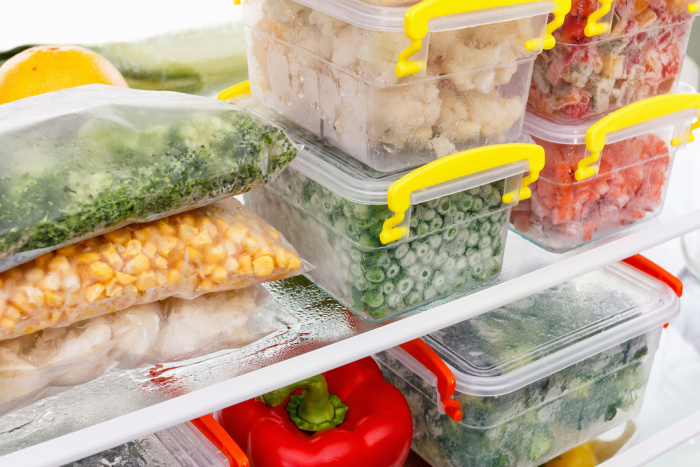
- Keep a mix of canned, dried, and frozen foods.
- Learn basic food preservation skills, such as dehydration or canning.
- Plan meals that use fewer perishable ingredients.
What role does energy play in the food crisis?
Energy drives every stage of food production from planting and harvesting to packaging and delivery. Rising oil and gas prices raise the cost of fertilizer, farm equipment operation, and shipping. When energy costs rise, food costs follow almost immediately.
How long should I prepare to be self-sufficient?
A good starting goal is a three-month food supply for your household. Long-term preppers often aim for six months to a year, depending on space and budget. Focus on nutritious, non-perishable staples that meet your family’s dietary needs.
How Are Our USDA and Agriculture Reports
What the USDA Reports Are Telling Us (Positive Signals)
- Strong U.S. crop production estimates. In the recent World Agricultural Supply and Demand Estimates (WASDE) and the Crop Production report, the USDA projected a record corn crop: for example, 16.7 billion bushels with yields around 188.8 bushels per acre. DTN PF+2Successful Farming+2
- That’s a positive for supply-side: more output potentially means less risk of an acute shortage (at least for that commodity).
- Higher yields and increased acreage help cushion supply fallback from weather or transportation disruptions.
- Regular, transparent reporting schedule: The USDA publishes frequent, scheduled reports: weekly crop progress/condition during growing season, monthly supply & demand (WASDE) for major crops, export sales weekly, etc. usda.gov+2usda.gov+2
- This means we have reasonably timely data to monitor for early signals of trouble.
- Crop condition reports show decent health in many cases. For example, in a recent week, about 72% of U.S. corn was rated “good-to-excellent” condition. Farm Progress
- While not perfect, this suggests many crops are not yet in emergency condition.
Areas of Concern / Warning Signs in the USDA Data
- High supplies can still translate into logistical issues: Even though yield and production are strong, having the crop is one thing; getting it from field to consumer is another. The USDA’s reports show supply is there, but they don’t always reflect transportation delays, fuel cost spikes, and infrastructure bottlenecks directly. So strong production doesn’t guarantee smooth delivery.
- Crop condition trending downward in some areas: While many crops rate “good-to-excellent”, some ratings have slipped. Example: soybean “good-to-excellent” dropped one point to 68% in a recent report. Farm Progress
- Conditions slipping could portend lower yield or quality issues if weather or other stresses worsen.
- Exports & demand uncertainties — The USDA’s weekly export sales data show some weak spots: for example, soybean net sales for some marketing years are down versus prior averages. USDA Apps
- If demand softens, producers may respond by planting fewer acres next year, thereby reducing future supply.
- Transport/distribution risk not fully captured. The USDA reports focus mainly on production, stocks, acres, yields, and condition. Less so on e.g., port congestion, truck driver shortages, fuel surcharges, intra-state distribution disruption. This means even with strong production, there may be “invisible” bottlenecks.
- Regional & crop‐specific fragilities, Strong overall numbers (e.g., for corn) may mask weak spots in other crops (fruits/vegetables, specialty crops) or in specific regions. Those weaker crops may be more vulnerable to transportation or weather shocks, even if headline numbers look okay.
Implications for Food & Transportation Crisis Outlook
Putting the USDA data into the context of your concern (food & transportation crisis), here’s what it suggests:
- Because the USDA is reporting substantial supply numbers in key staples (e.g., corn) this diminishes the immediate risk of a food production collapse for those staples. That’s good.
- However, the transportation/distribution layer remains a wildcard. Even with plenty of production, if trucks, rails, or ports get jammed, or fuel/driver costs spike, the food may not reach consumers efficiently.
- The fact that crop conditions are degrading in some areas means we should closely monitor whether the upcoming harvests still meet projected numbers or if there are quality issues that could impact supply, price, and availability.
- Export/demand uncertainties may reduce the incentive to plant next season, potentially lowering supplies beyond the near term.
- For perishable or less‐tracked categories (fruits, vegetables, specialty crops), USDA reports may not provide the same level of granularity. Still, these are precisely the items most likely to be disrupted by transportation or labor shortfalls.
How to Maximize Your Garden’s Production
How to Prepare for a Food Shortage
My Summary Judgment
In plain terms, the USDA’s recent reports offer some reassuring supply-side signals for major staple crops in the U.S., which is good news for avoiding an outright collapse in food availability.
However, and this is important, they do not eliminate significant risks, especially in distribution, logistics, labor, and non-staple crops. The bigger concern may not be “we’re going to run out of corn” but rather “corn is there but we can’t get it where it needs to go in the right form/time, or the cost becomes prohibitive.”
In short, the supply foundation is reasonably solid (for staples), but transportation & system stress remain significant vulnerabilities.
Final Word
The global food and transportation systems are under tremendous stress, and while we can’t prevent large-scale disruptions, we can reduce their impact on our lives. Building a home food reserve, supporting local farmers, and planning are simple steps that make a big difference when the unexpected happens.
The impending food and transportation crisis isn’t just a distant possibility; it’s a growing reality. By recognizing the warning signs and preparing now, you can protect your family from rising prices, empty shelves, and uncertainty. Preparedness isn’t panic, it’s peace of mind in uncertain times. May God bless this world, Linda
Copyright Images: Semi 18 Wheeler On Highway AdobeStock_302943937 By 5m3photos, Trucks on Tennessee Interstate AdobeStock_313923692 By Carolyn Franks






This year I have grown and canned more food than ever. Between the increased costs and shortages. I am not taking things for granted.
HI Janet, I hear you on stocking up on food. I totally agree with you that increased food costs and shortage will get worse. Linda
I am so thankful that I seriously started preparing before I retired 10 years ago. That is my insurance against rising food prices and transportation issues.
Since I live in a very small home, I recently purchased a nice, tall cabinet to create a better pantry!! While stocking my new pantry, I was able better organize my daily preps and see what I actually have! I am confident that I have at least a 6-month supply of food to keep the panic at bay. I also have some long-term storage that I haven’t even considered opening yet. Water continues to be my biggest issue, though. I simply do not have room to store more than a week’s worth of potable water.
Also, to help with the rising cost of food, I use apps to “pay me” when I purchase groceries. I don’t make much but, as the saying goes, “A penny saved is a penny earned”!! I use Ibotta and Upside.
Hi Leanne, I’m glad you found a tall cabinet, it feels so good to know what we have and what we may need. Organization is so helpful. Storing water I believe is everyones concern. It takes up a lot of space but is so critical for survival. You do have the liquid in your canned goods, so that will help even it’s just a little. I’m so glad I stocked up on BlueCans, I think they are sold out every well. They take up very little space. Linda
Did any of you know that the government will not let the railroads shut down? And the trains carry a lot of the trailers that the Big Rigs pull? Yes, my husband retired from the railroad after 36 years of service. Oh, and the Truck drivers don’t like the rail workers! Well, not all, but a lot don’t.
One of the top officials of the railroad called the engineers, “glorified trash truck drivers”.
Hi Deborah, oh my gosh, that is terrible. I’m glad the government will not shut down the railroads, I had not heard that. I have so much respect for truck drivers, when Mark and I see them on the freeway we give them space and treat them with dignity, they are driving huge trucks filled with items we all need. I see people cut them off and I just shake my head, those trucks cannot stop fast, people please show some respect. I know you do Deborah, you know what I’m saying. Wow, we need the railroad and the truck drivers, Linda
Yes, ma’am, we do need truckers and railroaders. Some trains are well over a mile long. And it takes them a lot longer to stop than a big rig. Larry had a neighbor want him to fix a ticket because neighbor got one for going around the crossing gates. He told him he was lucky a train didn’t hit him. Some trains can go 60 mph on the tracks. As I learned in elementary school, Any Time Is Train Time. You’d be so surprised at how many nuts try to beat the train and a lot get hit! Guess who gets blamed by the family. Yep the train crew. Oh and Engineers have to have a Special license to drive the train. School buses try to beat the train too. Can you imagine a buss full of kids staring at you as you are going fast toward them and can’t stop? It’s awful. But it does happen at times.
HI Deborah, I hope the bus drivers loses his job if he survives the train near miss. YIKES! I bet you are glad your husband is retired, he’s safe at home. Linda
Yes ma’am I am glad he’s retired. He has hit cars, luckily no school busses though. It is devastating to the rail crew to hit a vehicle with a fatality. It gives them nightmares. And then for a lawyer to ask stupid questions? Example: Where were your hands on the steering wheel? Duh! There is no steering wheel. The train runs on the rails and stays on by the wheels. And for him to keep asking?
Once a vehicle ran into the side of the train and sued. LOL The Company sued back for damage to the train. Some people are just ignorant.
Hi Deborah, I wish we could all share stories like this in a group, things we never hear but are shocked when we hear them. I did not know the railroad did not have a steering wheel, it makes sense, its on a track, never thought about it. Linda
Linda, all that you said is true and now the government shut down will impact millions of recipients of SNAP benefits. If people haven’t already stocked up they are late to the party.
My garden beds are still thriving, though with the cooler weather bean production is dropping. Still, my Contender beans produced a bounty this year. I’ve blanched and frozen several packages, canned some, eaten a ton fresh and given away bunches. Tomatoes and squash are slowing down too, but still producing. Lettuce, carrots, beets, spinach, cabbage, bok choi, and broccoli are all up and thriving. And either today or Monday I’ll harvest my Covington sweet potatoes–and I’ll end up canning some of them too.
And a friend of mine gave me a vermiculture beginners kit so now I’m farming red wigglers and producing my own worm castings to improve my soil. Always good to learn a new skill.
My cataract surgery appears to have gone well though there is still some blurriness and light scattering due to my eye being swollen. I get the right eye done later this month. Jane has begun baking cinnamon bread so our home smells great.
Hi Ray, I love hearing about your garden. I need to learn tht skill, “beginners kit so now I’m farming red wigglers and producing my own worm castings to improve my soil. Always good to learn a new skill”. Love hearing this!! I hope you take it easy the cataract surgery is pretty easy but you must take it easy. I can almost smell the cinnamon bread from here! YUMMY! Linda
My pantry stocks are pretty good, though meals will likely get a bit boring around the 4 or 5 month mark. It’s hard to stock up some items for one person when so many things come in large containers. Now that I have a 2,000 gallon rainwater tank I can expand my garden. With the increasingly long summer droughts and not being allowed to use community water for gardens it’s been hard to grow much the last few years. As the budget allows I will add more tanks but this is a good start. Next thing to work on is a decent root cellar. I love the convenience of freezing but we get a lot of power failures in the winter so that’s not as reliable and not everything is suitable for canning or drying. Slowly but surely increasing my personal food security and your no nonsense articles and information definitely help.
We are as prepared as we can be. More water would be my wish. Even though we have at least enough for 5 to 6 months, that drops rapidly when we add our son and his family ( 3 teenage boys) and daughter and her husband. I am hoping they are focused on getting everything together.
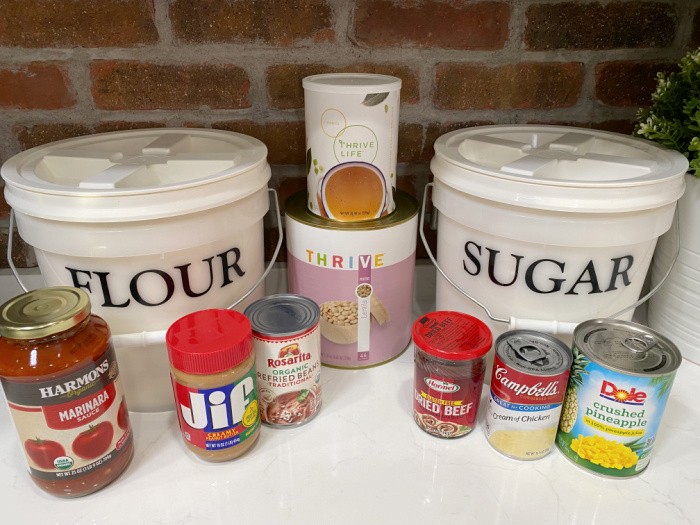
Hi Chris, that’s a lot of water, 5 or 6 months. Be thankful, most cannot store that much. I was just making doughnut/donuts for a Halloween family party, I surveyed our flour stash. I have three empty 5 gallon buckets labeled FLOUR. We washed them and I will not refill them for now. I still have FOUR 5 gallon buckets full. We don’t use as much flour these days. I used to deliver bread and cinnamon rolls to neighbors, not anymore. I can no longer walk that far without help. I hope our family and neighbors are focused on getting everything done. I’m ready for anything but an earthquake. LOL! Linda