
Summer Is Here — Is Your Family Ready for the Heat?
This post may contain affiliate links. We may earn a commission if you purchase via our links. See the disclosure page for more info.

Summer is here-Is your family ready for the heat? Everything you need to know about extreme summer heat, staying safe, recognizing heat illness, and knowing when to head to the ER. Summer is one of the most wonderful times of the year, but extreme heat can turn a fun day outside into a medical emergency faster than you might think.
As temperatures soar across the country, it’s crucial that every family understands the risks of heat-related illness, how to prevent them, and what to do when things go wrong. Whether you’re at the beach, in the backyard, or just running errands, heat safety is for everyone.
Please note that I’m not a doctor, a nurse, or anyone in the medical field. My husband recently had an episode where he didn’t know where he was or what he was doing, and he didn’t know the name of his church’s leader. This is why I’m writing this today. He was severely dehydrated from golfing in the heat and hadn’t eaten or had a drink of any kind in over 6 hours. He wouldn’t go to the doctor; he’s stubborn sometimes. I called my granddaughter, who’s a nurse, and she asked me if his face was drooping (possible stroke). No, it wasn’t.
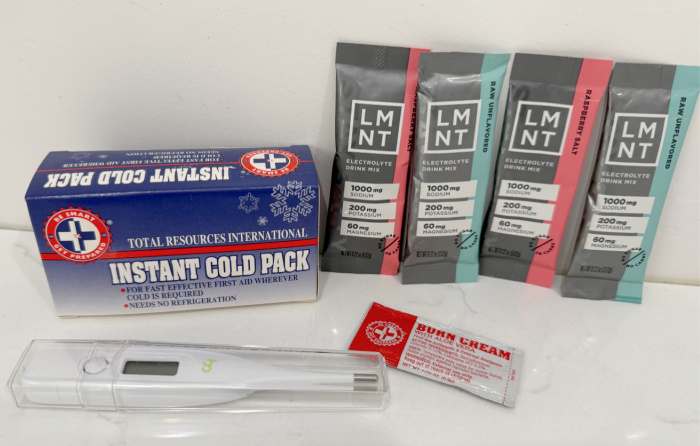
My other daughters suggested he may be dehydrated, so I started him on some electrolytes. I always stock these two brands. LMNT and Liquid IV. He slowly got better, and he learned he had to take water with him when he golfs or goes outside in the heat of the day. Frogg Towels To Stay Cool
Why Extreme Heat Is So Dangerous
Your body is remarkably good at cooling itself, mainly through sweating and increasing blood flow to the skin. But when temperatures climb above 90°F, especially with high humidity, that cooling system gets overwhelmed. The real danger isn’t just air temperature. The heat index, which combines temperature with humidity, is what you should watch. A 95°F day at 60% humidity can feel like 114°F to your body.
Children, older adults, pets, and anyone with chronic health conditions are especially vulnerable. But healthy adults can get into serious trouble too, particularly during physical activity or when working outdoors.
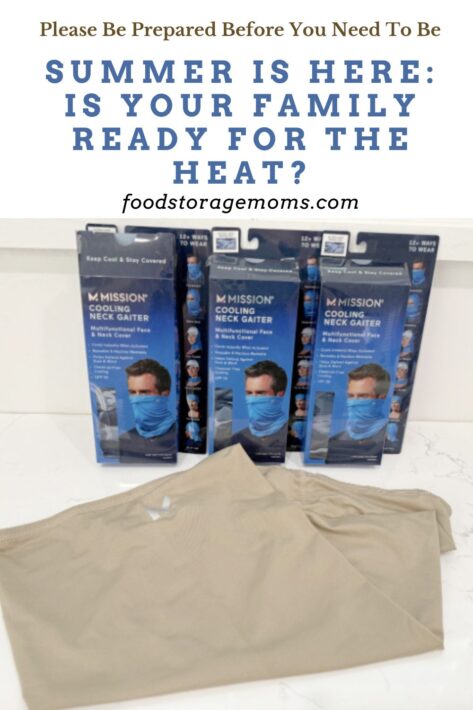
The Hydration Golden Rule: Drink water before you feel thirsty. By the time thirst kicks in, you may already be mildly dehydrated. Aim for at least 8 to 10 glasses of water per day in summer, more if you’re active or sweating heavily. Avoid alcohol and excess caffeine, which speed up fluid loss. Mission Cooling Supplies
The 3 Heat Illnesses Every Family Should Know
Heat illnesses exist on a spectrum, from mild muscle cramping to life-threatening heat stroke. Knowing the difference can save a life.
Heat Cramps
Mild · Stage 1
What it is: Painful muscle spasms, usually in the legs, arms, or abdomen, caused by heavy sweating and loss of electrolytes during exercise or physical work in the heat.
Symptoms:
- Painful muscle spasms or tightening
- Heavy sweating
- Muscles feel hard or knotted to the touch
- Usually occurs during or after exercise in the heat
What to do: Stop the activity immediately and move to a cool place. Drink water or an electrolyte-rich sports drink. Gently stretch and massage the cramping muscle. Rest for several hours before resuming any strenuous activity. Don’t resume activity if cramps return.
Heat Exhaustion
Moderate · Stage 2
What it is: A more serious condition where the body is losing the battle against overheating. The body is still sweating and trying to cool down, but struggling to do so. This is a warning sign. If not treated, it can rapidly progress to heat stroke.
Symptoms:
- Heavy, excessive sweating
- Pale, cool, or moist skin
- Weakness, dizziness, or fainting
- Nausea or vomiting
- Fast, weak pulse
- Headache and muscle cramps
- Body temperature may be elevated up to 104°F
What to do: Move the person to a cool, air-conditioned space immediately. Loosen or remove tight clothing. Apply cool, wet cloths to the skin. Have them sip cool water slowly. If vomiting occurs or symptoms worsen, call 911 without delay. Don’t try to give fluids to anyone who is unconscious.
Heat Stroke
Severe · Stage 3 · Medical Emergency
What it is: Heat stroke is a life-threatening emergency. The body’s temperature regulation system has completely failed, and core body temperature reaches 104°F or higher. Without immediate treatment, heat stroke causes permanent organ damage and death.
Symptoms:
- Body temperature of 104°F or higher
- Skin is hot, red, and dry — no longer sweating, a critical warning sign
- Rapid, strong pulse
- Confusion, slurred speech, or unconsciousness
- Throbbing headache
- Seizures
- Loss of consciousness or not responding
What to do: Call 911 immediately. While waiting for emergency services, move the person to a cool area. Cool them down as quickly as possible using any means available. Immerse in cool water, apply ice packs to neck, armpits, and groin, and fan them while misting with cool water. Don’t give fluids by mouth if unconscious. Don’t leave them alone.
When to Go to the Emergency Room
Call 911 or go to the nearest ER immediately if you or anyone around you experiences:
- Body temperature of 104°F (40°C) or higher
- Confusion, disorientation, slurred speech, or altered mental state
- Loss of consciousness or difficulty waking up
- Seizures of any kind
- Hot, dry skin, stopped sweating despite the heat
- Rapid, strong pulse that won’t slow down
- Symptoms of heat exhaustion that don’t improve within 30 minutes of cooling
- Vomiting that prevents drinking fluids
- A child or infant who is limp, unresponsive, or unusually quiet in the heat
When in doubt, call. Heat stroke can kill within minutes. Early intervention saves lives.
10 Essential Tips to Beat the Summer Heat
- Stay hydrated: Drink water every 20 minutes outdoors
- Stay cool indoors: Use AC or a cooling center from 10 am to 4 pm
- Cover up: Wear light-colored, loose clothing and a wide hat
- Time your activity: Exercise before 9 am or after 7 pm
- Never leave kids in cars: Car temps reach 140°F in minutes
- Use sunscreen: SPF 30 or higher every 2 hours outdoors
- Eat light: Choose water-rich fruits like watermelon
- Check the heat index: Not just temperature; humidity matters too
- Watch the older people and the young: Check on neighbors and family often
- Know the signs: Learn heat cramp, heat exhaustion, and heat stroke symptoms
A note for families with young children: Children’s bodies heat up 3 to 5 times faster than adults’. Always bring extra water, take regular shade breaks, and watch for signs of overheating, such as flushed skin, irritability, or unusual quietness. Babies and toddlers can’t tell you when they’re hot. Check on them frequently and never leave them in a parked vehicle, even for just a minute.
Pets-Never Leave Them in The Car
Thank you, Beth, for this very important reminder. Please never leave your dog, cat, or pet in the car. The temperatures escalate in the summer. Keep them safe.
Heat Exhaustion vs. Heat Stroke: What You Need to Know
How To Be Prepared For Extreme Cold Weather
The Bottom Line: Enjoy Summer Safely
Summer is meant to be enjoyed, with backyard cookouts, beach days, evening walks, and making memories with the people you love. You don’t need to hide inside all season. You just need to respect the heat.
Know the signs of heat cramps, heat exhaustion, and heat stroke. Keep everyone hydrated. Take breaks in the shade or indoors. And when in doubt about someone’s symptoms, call 911 or head to the ER. Heat illness escalates fast, and acting quickly is always the right call. Stay cool, stay safe, and have a wonderful summer. May God bless this world, Linda







Great article Linda! I would add a Number 11 – Never leave pets in a vehicle! 🙂
Hi Beth, oh my gosh, I am going to go add that right now. Thank you! Linda
As someone who has lived in the subtropics for 52 years, I can tell you that all of us oldies know a few tricks.
ONE – running your a/c too cold means you suffer more outside and you never acclimate. We run ours at 78 during the day and 77 after 11PM. One degree does make a difference. We also keep the humidity about 50%. In addition to our central A/C unit we have a whole house dehumidifier.
You won’t need that wherever you live. Your A/C will do enough.
I collect the water from our A/C unit to water my plants. I get 5-10 gallon per day. In the big drought we have, it’s enough to keep my small butterfly garden going. I just took down my Tower Garden. We can’t grow your produce here in the summer.
Besides not suffering so much outside, your electric bill will thank you.
This time of year my instapot gets a lot of work. Heating the oven is insanity. Instapot and slow cooker ( I use both) are out on the porch. Don’t need more heat or the pressure/vapor release in the house.
Hi CAddison, great tip of collecting the A/C water. I wondered how the Tower Garden worked. Would you recommend one? I make cookies to day for a neighbor and wow, it makes the kitchen hot. I love usin the slow cooker and pressure cooker, great items to have in the kitchen to cook outside in! Great idea! Linda
I am a great fan of tower gardens. I bought mine “gently used” off Craigs List. I start seedlings here in late september, depending on hurricanes!, and take it down when summer hits.
We have 4 distinct seasons and they come in literally in one day.
I have to trim my mother’s geraniums way back in summer. They are from HER mother’s yard! So, well over 100 years of geraniums in all climates.
Anything with large leaves can’t make it here. They simply cannot uptake enough water. So, I trim those plants way back and root more in big pots in the shade- just in case.
Tower gardens can be used inside with “plant” lamps. We certainly do not need the humidity inside the house in summer. Beneficial to you up north in the dry winter.
There are many sizes and brands. I buy my supplies from TG, but I think there are adequate brands that might be less, but maybe not the quality. Their liquid fertilizer comes to mind.
Aeroponic growing is amazing. We have a guy here who has a huge Hydroponic growing ground. Uses far less water. Some people have fish tanks and the fish poop fertilizes (there’s more to it than that, but they also get to eat the fish).
I also sprout and microgreen. Sprouting was great on the sailboat in the Bahamas. Takes little room or water and provides wonderful crunchy nutrition. I usually have a jar going on my kitchen windowsil (or I forget to rinse it!) https://amzn.to/49xx1xd
Many years ago, my mother had Heat Exhaustion. She had trouble in the summer getting over heated. I’ve been lucky that I have not. We keep our AC on about 78. Heat is about 74. I feel like the ACs have spoilt us all. LOL I remember when I was little we only had table fans. Used them only at night. You’d go to bed hot and no cover, but before long you were reaching for a quilt. LOL No heat at all at night. The heaters were all turned off. Woke up to solid ice in the toilet bowl many times. Fun times though.
Hi Deborah, I love this story! Ice in the toilet, oh my gosh, you are lucky the pipes didn’t freeze! We didn’t have table fans, we had one swamp cooler in the hallway. If you walked out of the bathroom and just hair sprayed your hair it would look like a whirlwind if you walked six feet from the “wind” coming straight down from the swamp cooler! LOL! Those were the days. Then I got married and we didn’t even have a swamp cooler, let alone A/C. Fun times! LOL! Linda
It’s hot here now. The temperature here is 90° but feels like 101°. Our air conditioner is set for 77°. We are just staying in for the next 3 days.
i Chris, oh my gosh, we went to picnic tonight, I wish I had had a fan. I do better with air conditioning!! LOL! Linda