
Water: Are We Running Out Of It?
This post may contain affiliate links. We may earn a commission if you purchase via our links. See the disclosure page for more info.

Water: Are we running out of it? Every morning I turn on my kitchen tap without a second thought, and I would bet you do the same thing. Water just comes out. It’s easy to forget that clean water is not something we’re guaranteed forever. As a family that believes in being prepared, I think it’s worth pausing to ask some honest questions. Do we have a water shortage? Are we wasting water? Is water scarcity real? The answers may surprise you, and they’re worth thinking about the next time you turn on that tap. A great book: “Bugging In” by Raymond Dean White
Only a Sliver of Our Water Is Actually Usable
Here’s a fact that stopped me in my tracks. Only 3 percent of all water on the planet is freshwater, and of that small fraction, about 2.5 percent is locked away in glaciers, ice caps, and underground aquifers, leaving roughly 0.5 percent of the Earth’s total water as accessible freshwater in lakes, rivers, wetlands, and shallow groundwater. That’s an incredibly small slice of the planet’s water supply that all of humanity, animals, and crops depend on.
Undrinkable Water Is a Daily Reality for Many
It’s easy to assume clean water is something everyone has access to, but that’s far from true. Around one in four people worldwide lack access to safely managed drinking water, meaning their water isn’t reliably safe, available at home, or free from contamination. In parts of the world, families walk miles for water that would never pass a basic safety test in our own kitchens. That’s something worth contemplating, and worth teaching our children to be grateful for.
Empty Aquifers Are a Slow-Motion Crisis
Aquifers are underground layers of rock and soil that store groundwater, and many of us rely on them without ever thinking about where our well or municipal water actually comes from. The world’s thirty largest aquifers supply about 40 percent of global groundwater use, and 60 percent of them are being drained faster than they can naturally refill. Groundwater depletion rates have climbed by 50 percent since 1990, and about 2.1 billion people depend on groundwater for their drinking water. These underground reserves took centuries, sometimes millennia, to fill. Once they’re gone, they don’t completely come back quickly, if ever.
Leaking Pipes Waste More Than We Realize
Water waste isn’t only about long showers or watering the lawn at noon with the water quickly evaporating. A huge amount of treated, drinkable water never even reaches a faucet because it leaks out of aging pipes long before it gets there, and here in the United States, the numbers are hard to believe. The nation’s drinking water system relies on more than 2.2 million miles of underground pipes, and much of it was laid down 50 or more years ago, right after World War II. In some older cities, water mainlines are pushing a century old.
Because of that aging network, the country loses nearly 20 percent of its treated water before it ever reaches a home or business. That works out to somewhere between 2 trillion and 2.1 trillion gallons of clean, already treated water lost every single year, which experts say is enough to supply more than 30 million households for an entire year. On an average day, that’s nearly 6.75 billion gallons slipping away underground, unseen and unused. Somewhere in the country, a water main breaks roughly every two minutes, and there are an estimated 240,000 water main breaks every year nationwide. All of that lost water costs utilities, and ultimately customers, more than six billion dollars annually.
It is a quiet kind of waste. Nobody sees a puddle forming in their yard when a pipe cracks three feet underground on a street a mile away, but it adds up to a staggering amount of clean water lost every single day, water that was already pumped, filtered, and treated before it disappeared into the ground.
Rivers Are Being Shared by Too Many Hands
Rivers don’t respect state lines or country borders, and that’s part of the problem. Of the world’s 30 largest rivers, which supply water to about 4 billion people, roughly a quarter are now experiencing declining flows. Two-thirds of the world’s largest rivers are no longer free-flowing. When farms, cities, and industries upstream all draw from the same river, there’s simply less left for the communities downstream. This is already causing real tension between states and even between countries.
Waterborne Diseases Still Threaten Families
Clean water isn’t just about convenience. It’s about health and survival. About 1.8 billion people drink water from sources contaminated with human waste, significantly increasing the risk of waterborne disease. Illnesses like cholera, dysentery, and typhoid spread quickly through contaminated water, especially among young children and older adults. This is one more reason why having a reliable, safe source of water at home, along with a backup plan, matters so much for our families.
So, Are We Running Out of Water?
The honest answer is complicated. We aren’t running out of water in the sense that the Earth’s water simply disappears. Water moves through a cycle. But we’re absolutely running out of easily accessible, clean, affordable freshwater in many regions, and that shortage is growing. By 2050, nearly five billion people are expected to live in areas facing high water stress. Three billion people already live in areas where total water storage is declining, and more than half of the world’s food is produced in those same stressed regions. That’s not a distant problem for someone else to solve. That’s a real and growing concern for our children and grandchildren.
Simple Ways Our Families Can Be Part of the Solution
We may not be able to fix aquifers or rivers on our own, but there’s still plenty we can do at home. Fix that dripping faucet instead of letting it run for months. Store water properly for emergencies so a boil water notice or a broken pipe doesn’t catch you off guard. Water your garden in the early morning or evening rather than during the heat of the day. Teach your children why turning off the tap while brushing their teeth actually matters. Small habits, repeated across millions of homes, genuinely add up.
Your Family Water Storage Checklist
Since so much of this comes back to having your own safe water supply on hand, here’s a simple checklist to get your family started or to check up on what you already have stored.
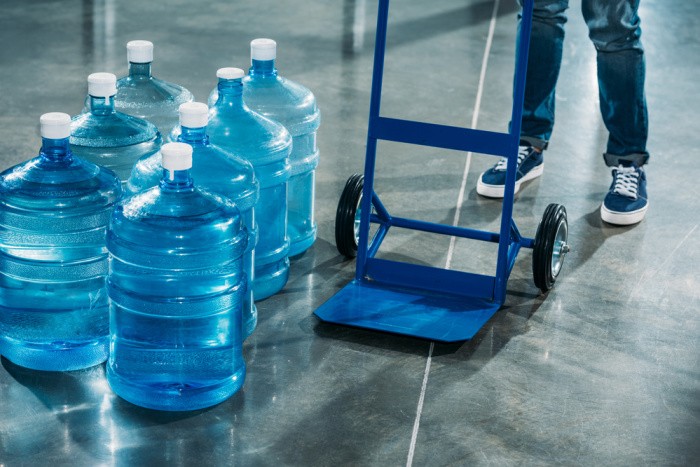
Store at least one gallon of water per person per day, and plan for a minimum of two weeks per person if you have the space. You know my thoughts: I tell my readers that 4 gallons per person per day is a more realistic goal when prepping for emergencies. I get thirsty thinking of just one gallon of water per day. We need water for proper hydration, cooking our food, basic personal hygiene, and limited laundry chores.
Don’t forget your pets. They need water too, and it’s easy to overlook them when you’re planning. We just found out Stella, our Shih Tzu, has gained too much weight. She’s now on a diet. Every pet needs water: Dogs need one ounce of water per pound per day. So hefty, Stella now needs 14 ounces of water each day.
Use food-grade water storage containers, and avoid reusing containers that once held milk or juice, since they’re hard to fully clean.
Keep stored water away from direct sunlight and away from harsh chemicals, gasoline, or cleaning supplies.
Rotate your water supply roughly every six months to a year if you’re storing plain tap water in containers, or check the expiration date if you’re using commercially bottled water.
Have a way to purify water on hand as a backup, such as water purification tablets, a reliable filter, or the ability to safely boil water. I have both Big Berkey and PortaWell water filtering systems. They’re great if you feel the water might be questionable and needs to be filtered effectively. You can check out my posts on how to properly filter and store water for emergencies.
Keep a few cases of bottled water in your vehicle or car trunk, especially if you travel through rural areas or during extreme heat.
Label your containers with the date you filled them so you always know when it’s time to rotate your supply.
Lake Powell and Lake Mead: Water and Power Crisis
Is There a Water Shortage Where You Live?
Final Word
Water is one of those blessings we so easily take for granted until it’s not there. I believe part of being a prepared family isn’t living in fear, but living with awareness and gratitude, and taking small, steady steps to be good stewards of what we’ve been given. The next time you turn on your tap, I hope you’ll pause for just a moment and remember how precious that simple stream of clean water really is. May God bless this world, Linda
Copyright Images: Filling Glass Of Tap Water Depositphotos_4466899_S, Water With Water Jug Depositphotos_221729546_S






Boone Pickens the oilman had switched to water rights before he died. That should tell ya something
Hi Matt, good point: Water shares, Water rights- love it! Linda
First of all- Linda is spot on with what she says.
I lived off the grid 6-9 months/year for 22 years. We had 3 gallons/day for everything but toilets when we were on our sailboat. Toilets flush with salt water. Three gallons…that includes dishes and washing up.
My oil/gas attorney in Texas is a big deal oil guy. He said the biggest deal he ever did was a water rights deal.
The island where I live has never had fresh water. Our aquafir is brackish (salt/fresh. Brackish water means it is diluted salt water). ALL the older houses on the island were built with cisterns. They work. Many homes in the Bahamas still have them.
To this day, I can’t leave water running for anything including tooth brushing.
Our island has a R/O plant. Reverse Osmosis. Many of us are on “city water,” but many still have wells – all wells are brackish. They have home R/O units. They are not overly expensive, but they do require maintenance and supplies.
After hurricanes we know we won’t have water. It was 2 weeks after Ian before full water was restored. When there is no power, the plant uses diesel.
This time the road has washed out so the only way on/off the island was by boat.
They didn’t have enough diesel for an extended outage. Some of our guys got a barge over to the mainland where they loaded a diesel tanker truck, brought it over, drove it up to the plant…and we had water for 3 HOURS each day. That’s it.
Summer heat in SW florida with no power or water. We’d hear the toilets filling and run to fill the jugs.
WE have 2 rain barrels, a camper with a 30 gallon tank, a hot water heater (water storage, folks), a bunch of 5 gallon buckets, and 6 five gallon jerry jugs for drinking water. I have Berkey filters and a Go Berkey.
During Ian aftermath time, we had our generator going. Not at night. Turned it off to save fuel. We were kind of in need of clean clothes after a while. Induction motors (washers) use a lot of power. We figured if we had the washer ready to go, when the water came on, we could unplug the refrigerator and when the water came on for that 3 hours I could get ONE load of clothes washed. Did that 3 days in a row. Line dry of course.
NOBODY waters lawns here. EVER. Never have. Most have native plants that can survive our normal winter dry season. We are in a severe drought. Been a couple of years. There’s enough stuff growing in the yard to keep the bunnies going.
I have buckets under my a/c outfall and collect about 10 gallons a day for watering the plants that need it.
Folks this is NOT an emergency. This is how we live. This is also not a poor area, though there are some who are, sadly.
If you go over 2,000 gallons/month on your water usage, the bill gets really high. 2,000 isn’t much for most households. We do it routinely.
There are more people moving into Florida than the water tables can handle. They come here thinking it is like “up north” where everyone waters lawns.
Aquafirs all over Florida are in danger now.
Fortunately, we have a septic, so we don’t have to worry about not being able to use our toilets if the R/O water is down. Grey water for flushing. ALL TP goes into the composter. Only flush for #2.
Best get used to it. Nobody can fix Mother Nature’s whims.
Author Micael Chricthen said “of course there is climate change. The Earth used to be Molten and then it was frozen.”
Life is good. Listen to Linda.
Hi CAddison, oh, I love your wisdom, my friend! We keep our showers to a bare minimum and brush our teeth with the tap turned off. Water will be like gold pretty soon, my friends. You are blessed to have a septic tank; good to hear. Thank you for your kind words; we must teach people to store water. I have heard on the news for years about people trying to sell a case of water for $20.00 because stores are sold out after a disaster. That’s a crime, but they get away with it until someone stops them. R/O is the best water. Linda
Personally, after seeing videos like “Watch The Water”, I have never again ingested ANY tap water. I consider it too dirty or maybe even poisoned… Yeah, I know that sounds like a conspiracy theory, but less than 2 1/2 years ago, I noticed our tap water had a different taste to it. I called the county water office to ask about it, and they swore there was nothing different. YES, there WAS and there still IS!! Besides, a lot of alternative medicine people I follow say not to drink tap water, cause it contains the remnants of what was never removed from people’s urine before it entered the tap water supply….Psychiatric drugs, abortion drugs, high blood pressure drugs, you name it!! Even flouride in the water just lowers your I.Q.!! Then, there is some evidence out there that the deep state has been placing toxic compounds in the tap water to fulfill their mandate of getting rid of millions of people from this planet. Top that off with the fact that many parasite specialists declare there are parasites in our water, and I am DEFINITELY not drinking tap water anymore!!! Sorry to sound so negative and/or scarey, but there it is. We only drink water (that we buy) that is very filtered from a natural spring called, AVOCA water and intermittently drink the water that passes through our R.O. System (for cooking). Sometimes I ever distill some water for medicinal purposes, too. My hubby still drinks a little of the garbage water, but not me. Makes me wonder how much of that garbage ends up contaminating people’s produce from their gardens!!!
JESS
Certified Natural Health
Professional since 2005
Hi Jess, I’m the same way; no tap water for me. I took some “Yellow” water in a white cup to our city offices in Farmington, Utah (in 1983) and said there was something wrong with the water. The arrogant guy said, “there is nothing wroing with our water”. Well, guess what? Over the years, we counted the cancer cases in our large subdivision. Cancer was in every third house that we knew about. What about the ones we didn’t know? We had several adults die and children as well. Several have Leukemia; the water is not safe. I don’t care what they say. Tap water is not safe, in my opinion. Linda
We are lucky that we have a 4 way filter on our drinking water. Larry put it in 3-4 years ago. I also use it for cooking and for our pets water. Can’t be too careful!
Hi Deborah, oh yes, having a 4-way filter on your drinking water is the best! I use mine for cooking and my dogs’ water. Never drink tap water. Linda
Deborah: Please don’t forget that EVERY TYPE OF FILTER must be replaced with a new one every so often. I believe we replace our R.O. Filter every year or year and a half.
Best to you!
JESS
Thank you Linda for sharing this and appreciate the information in the comments too.
It’s alarming about our water supply but we need to be aware and make wise choices.
I do filter my water in a Berkey and store a lot of water now that I rotate.
Awhile back you mentioned storing water in barrels. I asked what water purifying agent you used but forgot to ask the best place to purchase the barrels to store water in.
I’m saving to purchase some and would like to make a wise choice.
I have a small dog, cats, chickens and ducks along with a garden to water. I reuse a lot of the water from the dog’s pool and the ducks pond for plants and seldom have to use the city water. I’m concerned about even giving the animals any city water and use the filtered water.
I appreciate what you share and get on here as much as possible.
Hi Cindy, thank you for your kind words. It depends on where you live. In Utah, I have seen them at Walmart and outside grocery stores. The barrels are 55-gallon and very pricey on Amazon or at emergency preparedness stores. We used to pay $40- $ 50 per barrel for new, BPA-free barrels. I had UV covers on mine because I lived in the desert. The plastic can degrade quickly in extreme heat. They must also be off the ground (set on 2-by-4s). Do a quick Google search; put in “where can I buy 55-gallon BPA water barrels for emergency preparedness” or something similar. Keep me posted, and I can do a little search; it all depends on where you live. Shipping would be expensive. Linda. P.S. Check Walmart.com
Our water is paid for by our HOA
Some people use that as an excuse to waste it. We are careful, even draining cooking water into a pot and then water the flowerbeds with it. Everyone has to help.
Hi Chris, wow, that’s nice. I used to be an HOA president in Farmington, Utah. We had to pay for the HOA to handle snow removal, which is part of the monthly HOA fee. We need more people like you to conserve. Good job, Linda
Thank you Linda.
I’ll be doing some searching and update you when I find what works for me price wise.
Maybe what I find will help someone else.
I’m in Iowa and hopefully shipping won’t be too crazy but if so I’ll have to deal with it.
Thanks for the reminder to have the barrels on 2×4’s as well.
Hi Tami, I checked a few places, wow the prices have escalated. I will keep checking as well. Keep me posted, Linda
Water shortage……. Yes and no. Water is recycled many many many times. Is is really safe to drink is another question! Watering of lawns with treated water should be illegal! Use grey water. I have a a 27 year old well……. When drilled it produced a whopping 3 gpm. Due to this, we have a large storage tank. During drought (in TX) we barely have enough to water the livestock and take a sponge bath. We have a 1500 gallon storage tank. Looking at replacing that with a 3,000 gallon tank, putting the 1500 gallon to collect rain water (garden) and then working on adding onto the water bank with additional 3,000 gallon tanks. We do NOT water lawns on this homestead (just over 20 acres)! If we water grass it is for stock. Lawns are a HORRID waste of water. Yes, it recycles…….. but unless it falls in the proper spots, it is not really usable to the ever expanding population………. Or for the every reducing farmland (caused by subdivisions).
There is supposedly a lower level of water available……… 400+ feet (my well is 100 feet). This water supply is supposedly unlimited, FRESH never touched water. I am not for certain about that.
Hi Tami, oh, a 3000-gallon tank would be a dream for me. I love hearing this! One of my neighbors got sued by the city because she wants to put artificial turf. I know some brands emit chemicals, but they don’t need water. DUH, this helps all of us. I totally agree lawns should be banned, they waste water we all need. That water 400+ feet beneath sounds awesome! Linda
Jane and I take Navy showers–water on, wet down, water off, lather up, water on, rinse off.
We’ve also been filtering our tap water through our Aquarain filtration and purification system for the past 15 years.
We store drinking water, but we also keep a minimum of 15 sixteen ounce bottles of frozen water in our freezers. That way if we lose power the contents stay cold for much longer than they would otherwise.
I have a chapter in my Bugging In book titled “Water is life.”
Hi Ray, great reminder. I will go add your book to the post; it’s a good one! I need to add some bottles of water to my freezer. Linda
Hi Linda
Just wanted to update that I was gifted two food grade barrels for water storage Yeah
I’m a bit behind in setting them up and filling them and ordering the water purifier due to constant rain and flooding but getting close.
It can get super cold here in Iowa. I’m wondering if I can put a submersible
heater in the barrels to keep water from freezing.
Hi Cindy, wow, what a blessing. I’m not sure I would put anything electrical in the barrels with water; it’s too dangerous. If someone reads this, please correct me if I am wrong. That sounds like someone could get electrocuted. Always leave room for water to expand; never fill them to the top. I don’t know what temperatures you get in Iowa in the winter; could you put them on 2-by-4s in your garage? Linda
It definitely is a blessing to get these.
I hear what your saying about putting anything electric in the barrels of water.
I can’t put them in the garage as much as wish I could.
Due to flooding the ducks and chickens are now in the garage when they go
back in from the fenced area we made for them to keep them out of mud and
water. Although the ducks would probably have a hay day lol
I’ll brain storm what I can do different other than putting them on 2 x 4’s
and leaving room for water to expand.
Once the basement is cleaned out might be an option although will be interesting
to get a hose down there to fill them.
I’ll be brain storming if might be any other options.
Thanks for your response
Hi Cindy, please fill them with a lead-free hose if possible. Linda
Thanks Linda and I definitely will.