
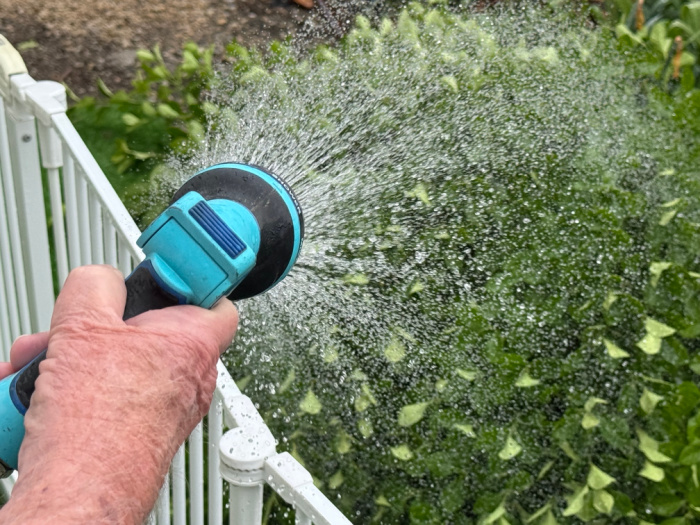
Is There a Water Shortage Where You Live?
This post may contain affiliate links. We may earn a commission if you purchase via our links. See the disclosure page for more info.

Is there a water shortage where you live? This is something that every American family needs to know. Water is something most of us take for granted. We turn on the faucet, fill a glass, and don’t think twice. But across the United States, millions of families are discovering that clean, reliable water isn’t as guaranteed as they once thought. Whether you live in the dry Southwest, the growing Southeast, or even the wetter regions of the Northeast, water shortages are closer to home than many people realize.
This post breaks down what is happening with water in America right now, which states and cities are most affected, what is causing the crisis, and most importantly, what your family can do to help.
I just saw this on the news yesterday: KUTV 2 Water Shut Off In Emery, Utah
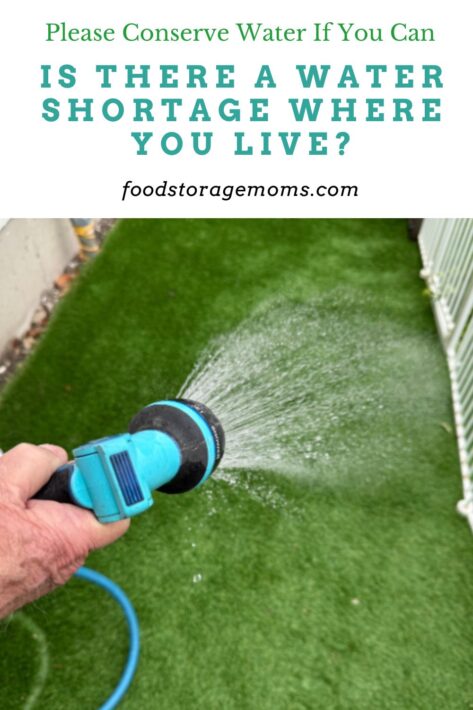
How Bad Is the Water Shortage Problem in the USA Right Now?
The numbers are striking. As of April 2026, more than half of the United States and Puerto Rico are experiencing drought conditions, and over 62 percent of the contiguous 48 states are classified as being in drought, according to the U.S. Drought Monitor. That’s not a distant forecast. That’s today.
A landmark study released in January 2025 by the U.S. Geological Survey found that nearly 30 million Americans live in areas where the available surface water supply can’t keep up with demand. This was the first comprehensive assessment to examine water supply, demand, and quality across all 48 contiguous states.
The problem isn’t just about how much water falls from the sky. It’s about crumbling pipes, aging treatment plants, population growth outpacing water infrastructure, and a warming climate that’s changing where, when, and how much rain and snow the country receives.
Life Straw Filters, Sawyer Bottle Filters, Lifestraw Bottles
Which States and Cities Are Most at Risk?
Water challenges aren’t limited to the American West, though the West is certainly facing some of the most severe conditions. Here’s a look at what’s happening in key regions.
The Colorado River Basin
The Colorado River is the lifeblood of the American West, supplying water to seven states and about 40 million people. As of late 2025, the entire Colorado River Basin was in drought, according to data from Drought.gov. The basin lost nearly 28 million acre-feet of groundwater between 2002 and 2024, an amount roughly equal to the total storage capacity of Lake Mead, the nation’s largest reservoir.
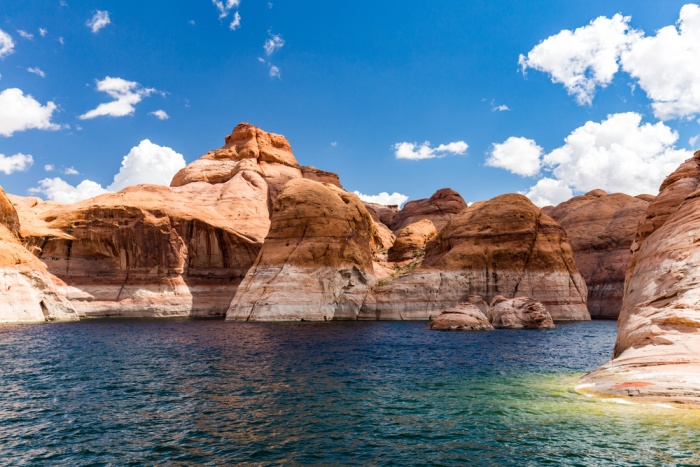
Lake Powell, one of the two main reservoirs on the Colorado River, faced the possibility of dropping low enough to stop generating hydroelectric power entirely by late 2026. That wouldn’t just be a water problem. It would also be an energy problem for millions of households.
Arizona
Arizona sits in the lower Colorado River Basin, where about 68 percent of the region’s groundwater losses have occurred. Phoenix and Tucson depend heavily on Colorado River water, and as that supply tightens, communities in the state are looking at increasingly difficult choices about growth, agriculture, and daily water use.
Utah
Utah’s reservoir levels fell at more than double the normal rate during the summer of 2025, driven by increased demand, less snowfall, and a very dry season. For families in Salt Lake City and surrounding areas, this is a reminder that the Great Salt Lake region isn’t immune to serious water stress.
California
Southern California remains in moderate to extreme drought despite the northern part of the state seeing better conditions in recent years. The Los Angeles metro area, home to nearly 4 million people, relies heavily on imported water from hundreds of miles away and on Colorado River water that is increasingly strained. The 2025 Palisades fire exposed just how fragile the region’s emergency water supply systems can be, and city officials are now investing in recycled water programs that won’t be fully operational until 2056.
Texas
Texas is facing a triple challenge: an ongoing drought, aging water infrastructure, and an international water dispute with Mexico over treaty-required water deliveries. The town of Mathis, Texas, with about 5,000 residents, was racing in 2025 to find alternative water sources, including deep groundwater wells and recycled wastewater, before a potential shortage became a crisis.
Mississippi and the South
Jackson, Mississippi, has been struggling with a water crisis for years, made worse by aging pipes, leadership challenges, and equipment failures. In a region not traditionally associated with water scarcity, this situation is a warning to other Southern cities about the risks of deferred maintenance and underinvestment in water systems.
Virginia and the Mid-Atlantic
Richmond, Virginia, experienced a major disruption in January 2025 when a power failure knocked out its water treatment plant, triggering a boil-water advisory for 230,000 residents in the city and nearby counties. A second advisory followed in May. State health officials concluded the crisis was completely preventable with proper infrastructure investment.
Data centers are also creating new pressure in Virginia. Large tech facilities in the state can consume up to 5 million gallons of water per day, further straining groundwater supplies already affected by rising temperatures.
The Northeast
Even the historically water-rich Northeast saw record-low streamflow levels in 2025, with conditions so dry that New Hampshire’s Department of Environmental Services issued guidance urging households to immediately reduce water use. The region experienced drought conditions severe enough to trigger official state advisories.
What Is Causing the Water Crisis?
Understanding the causes helps families and communities make better decisions. The water shortage problem in the United States comes from several overlapping factors.
Climate change is altering precipitation patterns across the country, bringing more intense droughts to some regions and more flooding to others. In the West, about 70 percent of the water supply comes from mountain snowpack. When winters are warmer and drier, as 2025-2026 has largely been, there’s less snow to melt in spring and less water flowing into rivers and reservoirs.
Aging infrastructure is another major factor. Many American cities have water pipes and treatment facilities that are decades old. When those systems fail, entire communities can lose access to safe water overnight, as Richmond discovered.
Population growth is pushing demand higher in states like Florida, Arizona, and Texas at exactly the same time that water supplies are becoming less reliable. Florida, for example, depends on groundwater for about 90 percent of its drinking water, and overuse is drawing down those underground reserves faster than they can be replenished.
Agricultural demand plays a massive role as well. Farming accounts for the largest share of freshwater use in the United States, and in drought years, the competition between farms and cities for limited water can become intense.
What Can Your Family Do to Help?
While the scale of the problem can feel overwhelming, everyday household choices genuinely matter. According to the EPA, the average American family uses more than 300 gallons of water per day, and simple changes can reduce that by at least 20 percent while saving families over $380 per year.
Here are practical steps your household can take starting today.
In the Bathroom
Turning off the faucet while brushing your teeth can save between 4 and 8 gallons of water each day. A leaking toilet can waste about 200 gallons per day, which is more than 50 unnecessary flushes. You can test for a toilet leak by adding a few drops of food coloring to the tank and checking whether the color appears in the bowl without flushing. Shorter showers and low-flow showerheads are among the fastest ways to reduce household water use.
In the Kitchen and Laundry Room
Running the dishwasher only when it’s full can save roughly 320 gallons of water per year. A standard top-loading washing machine uses between 30 and 40 gallons per load, while a modern high-efficiency front-loader uses as little as 7 to 10 gallons per load. For large families, upgrading the washing machine is one of the highest-impact changes available.
In the Yard
Outdoor water use accounts for about 30 percent of the average household’s total water consumption. Watering the lawn or garden in the early morning or late evening, rather than at midday, can save up to 65 percent of the water that would otherwise evaporate. Installing a smart irrigation system can cut outdoor water use by up to 50 percent. Rain barrels are another easy, low-cost way to collect water from your roof for garden and landscape use. Some states regulate how much rainwater runoff you can capture and use. Check your local area water agencies for guidance.
Teaching Kids About Water
Children who understand where water comes from and why it matters tend to carry those habits into adulthood. Simple activities like checking for leaks together, timing showers, and watching a rain barrel fill up can make water conservation feel like a family adventure rather than a chore. The EPA even has free coloring books and puzzles for younger kids through its WaterSense for Kids program.
The Bigger Picture for American Families
The water situation in the United States is serious, but it’s also something that communities, families, and lawmakers can meaningfully address through smarter infrastructure investment, better water management policies, and everyday conservation habits.
Researchers project that if current trends continue without intervention, nearly half of the country’s freshwater basins could struggle to meet monthly demand by 2071. That is a long horizon, but the decisions made in the next few years, including where communities invest in water infrastructure, how agriculture adapts to drier conditions, and how families use water at home, will shape that outcome.
The question is no longer whether water shortages are a problem in the United States. They clearly are, affecting tens of millions of people right now. The question is what all of us are willing to do about it.
Start at home. Turn off the tap. Fix the drip. Talk to your kids about where water comes from. And pay attention to what your local water utility, city council, and state officials are doing to protect this most essential resource. Your faucet is part of a much bigger story. The good news is that every family gets to help write what happens next.
Quick Facts Summary
Less than 1 percent of all water on Earth is available for human use, according to the EPA. Nearly 30 million Americans live in areas where surface water supplies are limited relative to demand. As of April 2026, more than 62 percent of the contiguous United States is in drought. A single drip per second from a leaky faucet wastes more than 3,000 gallons of water per year. Families that switch to water-efficient fixtures can save over $380 annually. The Colorado River Basin lost groundwater equivalent to Lake Mead’s total storage capacity between 2002 and 2024.
75 Reasons Why You Should Store Water Now
Final Word
Water isn’t just a political issue or a distant environmental concern. It’s the most fundamental resource on Earth, and right now, it’s under pressure in ways that most American families have never experienced in their lifetimes. The good news is that awareness itself is a form of action. When you understand that nearly 30 million of your fellow Americans are already living in areas where water supplies can’t keep up with demand, and that more than half the country is currently in drought, the dripping faucet in your bathroom and the sprinkler running at noon in your front yard start to look very different.
Conservation isn’t about sacrifice. It’s about paying attention. It’s about teaching your children that the water in their glass traveled a very long way to get there, and that it’s worth protecting. Communities that invest in their water infrastructure, families that build smarter habits, and kids who grow up understanding the value of water will be the ones who help turn this story around. The shortage is real. So is the solution. And it starts at home, one drop at a time. May God bless this world, Linda
Sources: U.S. Drought Monitor (Drought.gov), U.S. Geological Survey National Water Availability Assessment (January 2025), U.S. Environmental Protection Agency WaterSense Program, Seven Seas Water Group, The Packer, New Hampshire Department of Environmental Services









Linda –
The drought here where I live is pretty severe! Some of the farmers are talking about not planting at all because of the lack of water for the crops. This is the 3rd spring I have lived here and there simply has not been enough moisture – snow or rain to replenish the water table. I know that at some point, we’ll be complaining about how much snow we get but this is not the year!!
Hi Leanne, we are having a severe drought here as well. I have a granddaughter that works at a ski resort in Utah, we need the snow in order to have water. My granddaughter said they have never closed three months early because of lack of snow. I should have said did work at a ski resort, once the snow is gone, people get laid off. She is looking for a job right now. We need the water, so many states need it now. Linda
Water shortage?
Our water coming through our pipes is R/O on our island. ALL the aquafirs in our area are compromised with salt. It’s natural, for some, but exaserbated on the mainland by people drawing down too much water and the salt flows in. Once that happens it is FOREVER. There is no regaining a fresh water aquafir once it goes brackish (salt mixed in).
Nobody waters lawns and only barely plants with R/O water. It is VERY expensive. You only flush for #2.
Florida has a severe water shortage going and people moving in from up north are a 2 part problem. 1- they don’t know how to conserve water because they don’t have to where they come from and 2 there are a LOT more people flushing, etc. now.
The Florida organge crop is down by 90% Get ready for Oranges to be a treat. Cattle? Have to reduce the herds because the grass is dead/dying.
Florida and Texas go back and forth for being the biggest cattle producers. That’s a little known fact. There are years when we have more than them. They are also in a big drought situation.
All this talk about fertilizer is a joke (sort of). If your crops are not going to grow because there is no water, you don’t need fertilizer.
This is nothing new to our earth. Remember the “Dust Bowls” of the 1930-40?
We lived off the grid. We used for the entire boat 3 Gallons of water/day. That’s everything. Toilets flushed with salt water. When we could get to a settlement, we would do laundry.
People have no idea what it is like to pump water and bucket it for use. I have 2 rain barrels. I bucket water for my little garden. I have a Tower Garden because it uses little water.
Sometimes we get a couple of gallons off our metal roof in condensation flowing into the barrels.
And, our rainy season should be beginning. We didn’t have one last year and there’s no rain in sight now.
The world has always had issues. We just didn’t live in places we should not (that includes us on our barrier island)…and we didn’t have world wide weather/news telling us everything about everywhere.
There was no running water out here until the 1960s. Old houses have cisterns. We are getting back to that.
I guess that answers the question in your headline.
Hi CAddison, if anyone knows how to conserve water it would be you. You have to pay for RO water which is expensive, you mentioned. I did not know Florida had herd of cattle, thanks for sharing that, I learn something new every day. Those tower gardens look awesome, great reminder. No fertilizer you won’t need water, you nailed it. Great comment, Linda
We don’t have a water problem as much as we have a too many people living in the wrong place that can’t sustain them problem.
Until it’s looked at properly the pain will continue
Hi Matt, this is a true reality. We moved from Southern Utah because we could see the writing on the wall. One of the reasons we moved anyway. St. George, Utah is growing, as in too fast. There is not enough water or infrastructure to support the growth. Arizona has some sections with the same problem. It all comes down to greed for building permits and building small communities so people do not have to leave that new community to shop, work and eat out. But they still need WATER. Great comment, Linda
Just taking a dive into readily available information on the latest craze of “data centers” I found disturbing information… and the “AI data centers” will use even more…
A single large data center can use between 1 million and 5 million gallons of water per day, which is comparable to the daily water consumption of a town with 10,000 to 50,000 people. Some estimates suggest that a typical data center uses around 300,000 gallons of water daily, equivalent to the demands of about 1,000 households. The total direct water consumption by U.S. data centers was estimated at 66 billion liters (approximately 17.4 billion gallons) in 2023.
https://www.eesi.org/articles/view/data-centers-and-water-consumption
https://www.fwpcoa.org/content.aspx?page_id=5&club_id=859275&item_id=130961
https://www.construction-physics.com/p/i-was-wrong-about-data-center-water
A study by the Houston Advanced Research Center (HARC) and University of Houston found that data centers in Texas will use 49 billion gallons of water in 2025, and as much as 399 billion gallons in 2030. That would be equivalent to drawing down the largest reservoir in the US—157,000-acre Lake Mead—by more than 16 feet in a year.
https://www.lincolninst.edu/publications/land-lines-magazine/articles/land-water-impacts-data-centers/
In 2020, U.S. data centers collectively used an estimated 174 billion gallons (659 billion liters) of water, mostly for cooling.
https://electronics.howstuffworks.com/everyday-tech/why-do-data-centers-need-water.htm
—-
There’s links – are those allowed? If not I’m sorry I can remove them
The information and reliable substantiation of information is very disturbing to our water supply, or soon – lack of water supply. When the water runs out, how much is that data worth?
Hi Bruce, normally I remove links, but not these. Oh my gosh, I knew the AI system centers use a LOT of water. In Utah we have one being built by Kevin O’ Leary. https://www.foxnews.com/media/kevin-oleary-details-massive-utah-ai-data-center-rival-chinas-tech-dominance (using natural gas). 3G and 40,000 acres. A very secure site. Thanks for sharing those links, Linda
Here in the land of sun and fun,
we don’t flush for number one.
If it’s yellow, let it mellow.
If it’s brown, flush it down.
When we were sailing in the Virgin Islands, this was a common sign on both land and boats. This was a habit I brought back to the States, and it is worth repeating for the uninitiated.
.
Hi Steve, thank you for the reminder. If it’s yellow, let it mellow. If it’s brown, flush it down. Great reminder on how to conserve water. Thank you, Linda
I guess I didn’t realize how blessed we are when it comes to water. We did have a minor drought last year, but March and April’s rain and snow more than made up for it. It still isn’t our nature to waste our resources.
Hi Chris, you are so lucky you do not have a drought this year. Thank goodness most people try not to waste our resources. Great reminder, thank you, Linda
Living on a small island between mainland BC and Vancouver Island our water supply issues have changed as the climate changed. We used to get enough rain in the summer to regularly replenish 45 gallon rain barrels for the garden but now you need to collect enough in the rainy season to get through almost a whole summer. I have a 2000 gallon tank, could use another. Groundwater storage is full by spring but disappears when the summer population increases and hot dry weather coincide. Our local water system doesn’t allow using hoses to water gardens or wash cars in summer, and when they go to the next stage of drought you aren’t allowed to water gardens at all unless you use your own collected rainwater. In the dry season I save laundry rinse water for the next load’s wash and save all the wash water for toilet flushing, etc. All toilets are low flush. Each sink has a separate water collection basin sitting next to it to save incidental bits of water, like when waiting for the water to get hot. Navy showers are helpful too. (Wet down, turn off water, soap up then use just enough water to rinse off.) I shower standing in a wash tub and save that water too. There is an amazing amount of water wasted that could be reused. Unfortunately “used” water doesn’t keep long before growing all sorts of bacteria so you can’t store too much and need to be selective when watering food plants. A lot of our island infrastructure is old and keeps springing leaks. Some people use exclusively collected rainwater for all their household needs but they need a really good filtration system.
Hi Alice, wow, you really know how to conserve water. You have to, of course you want to as well. Great tips, I have always wanted a rain barrel or two. Not sure if it will happen here. Thank you for sharing more ideas about saving our precious water supply. Linda