
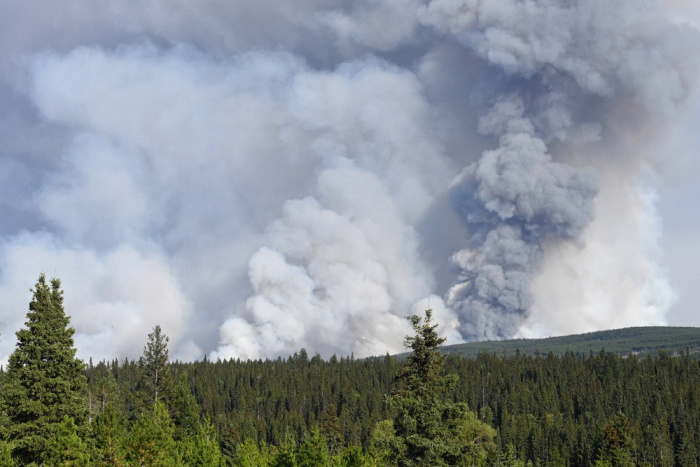
How Many Fires Has the US Had In 2026?
This post may contain affiliate links. We may earn a commission if you purchase via our links. See the disclosure page for more info.

How many fires has the US had in 2026? A family guide to this year’s wildfires. If you’ve been watching the news this summer, you already know 2026 has been a rough year for wildfires. As of the middle of August, the National Interagency Fire Center reports that firefighters across the country have responded to more than 46,600 wildfires that have burned over 6.4 million acres. That is about 154 percent of the 10-year average for acres burned at this point in the year, and the country is at National Preparedness Level 5, the highest level. More than 29,000 firefighters and support personnel are currently assigned to these fires nationwide.
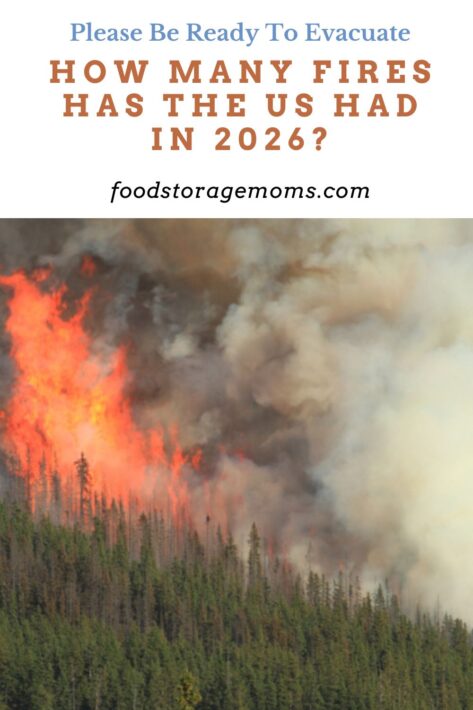
How many fires has the US had in 2026?
Where the Fires Are Burning
The Pacific Northwest is the hardest-hit region right now, with dozens of large, uncontained fires burning across Washington and Oregon. Here are some of the bigger ones as of mid-August.
In Washington, the Sinlahekin Fire near Tonasket in Okanogan County has burned about 151,850 acres and is 42 percent contained. The Ptarmigan Fire, burning in the Pasayten Wilderness north of the Methow Valley, has burned about 24,500 acres and is 13 percent contained. The Little Giant Fire, spreading across Chelan and Okanogan counties near Lake Chelan, has burned about 128,000 acres and is only 7 percent contained. The good news is the Modrite Fire, at almost 57,700 acres, is 80 percent contained, and the Autumn Lane Fire, at about 5,764 acres, is 97 percent contained.
Oregon: The Wrights Spring Fire near Altamont has burned over 33,000 acres and remains in the very early stages of containment.
Nevada: The Bug and Stallion Fire complex near Cold Springs has burned about 122,000 acres and is 15 percent contained.
Montana: Several fires are burning across the western and central part of the state. The Sand Creek Fire in Beaverhead County is the largest, at about 27,700 acres, and remains at 0 percent contained. The Bobcat Lakes Fire, also in Beaverhead County, has burned about 9,680 acres and is 6 percent contained.
In Utah, the Widemouth 2 Fire near Fillmore has burned nearly 118,000 acres and is 50 percent contained.
In Florida, the South Canal Fire has been one of the more active incidents in the Southeast this year, with wind-driven fire runs threatening nearby communities.
California has had a comparatively quieter year so far, with about 1,720 fires burning roughly 54,000 acres statewide, including the Springs Fire in Riverside County, which forced evacuations near Moreno Valley.
Are These Fires Started by Storms or by People?
Both. Nationally, fire officials estimate that about 85 percent of wildfires in the United States are started by people, whether through unattended campfires, dragging trailer chains that throw sparks, downed power lines, equipment use, or debris burning. That’s why fire officials keep reminding everyone to check trailer chains, follow local burn restrictions, and fully extinguish campfires.
That said, many of the largest and most remote fires this year, especially the huge ones burning in the wilderness areas of Washington, Nevada, and Montana, were sparked by lightning during dry summer thunderstorms. Lightning-caused fires tend to start in hard-to-reach terrain, which is part of why some of the fires above have such low containment numbers even after burning for a couple of weeks.
How Much Water Does It Take to Fight These Fires?
This is a question I get asked a lot, and I want to be honest with you. There is no single published number that tells us exactly how many gallons of water have been used to fight all of the fires burning across the country this year. Water use isn’t tracked and added up nationally the way acreage and fire counts are.
What we do know is that water use varies enormously depending on the fire. A single air tanker drop can release several thousand gallons at once. A wildland water tender, the specialized trucks that haul water to the fire line, typically carries between 1,000 and 4,000 gallons per trip, and larger municipal tenders can carry 8,000 gallons or more. On a big fire with helicopters doing repeated bucket drops all day, the water used can add up to hundreds of thousands of gallons in a single day, and that’s before you count the engines and hose lines on the ground.
If you want to follow water use and firefighting resources for a specific fire near you, the best places to look are the National Interagency Fire Center’s InciWeb incident pages and your state forestry or fire agency’s dashboard. These sites post daily updates on personnel, aircraft, and containment, though they still don’t typically report an exact gallon count.
What This Means for Families in a Drought
This is the part that concerns me most as a mom who thinks about preparedness. The U.S. Drought Monitor has been tracking expanding dry conditions through the spring and summer of 2026, especially across the Southern Plains and parts of the interior West. When our lakes and reservoirs are already low, every gallon pulled for firefighting is a gallon that matters. Fire agencies do prioritize water for firefighting when it’s needed, but a drought year like this one is a good reminder for all of us to think about our own household water storage and our family’s wildfire evacuation plan, not just for fire season but for any emergency that strains local water supplies.
A few simple things you can do right now include keeping a defensible space around your home if you live near wildland areas, having a go bag ready with essentials, knowing two ways out of your neighborhood, and signing up for your county’s emergency alert system so you get evacuation notices the moment they’re issued.
How to Put Together Your Family’s Evacuation Grab and Go Kit
When an evacuation order comes, whether it’s for a wildfire, a flood, or any other emergency, you won’t have time to think. You’ll only have time to act. That’s why the best time to put together your grab-and-go kit is right now, while everything is calm and you can think clearly about what your family actually needs.
Start With a Container Everyone Can Carry
Choose a sturdy backpack or a duffel bag for each family member who is old enough to carry one. Keep everything packed and ready near your front door or in your vehicle, not scattered around the house where you’d have to hunt for it under pressure. If you have little ones, pack their items in your own bag or in a smaller bag they can help carry themselves so they feel included in the plan.
The Documents and Money You Can’t Replace Available on the Way Out
Keep copies of important documents in a waterproof pouch or a small, easy-to-grab fireproof lockbox. This includes identification for every family member, insurance policies, birth certificates, the deed or lease to your home, medical records, and a list of prescriptions with dosages. Add a small amount of cash in small bills, since power outages can mean card readers and ATMs aren’t working. It’s also smart to keep digital copies of these documents saved somewhere you can access from your phone.
Water and Food for the First Three Days
Pack at least 1 gallon of water per person per day for 3 days, along with easy-to-eat, shelf-stable food that doesn’t require cooking, such as protein bars, canned goods with pull-tab lids, peanut butter, and crackers. Don’t forget a manual can opener and enough food and water for any pets in your household. Yes, I still prefer 4 gallons per person per day. You decide how much you can deal with effectively.
A Basic First Aid and Health Kit
Include a first-aid kit, any regular medications your family takes, a spare pair of glasses or contacts (if needed), hand sanitizer, and a small supply of basic over-the-counter medicines for pain, allergies, and upset stomachs.
Clothing and Comfort Items
Pack a change of clothes for each person, sturdy closed-toe shoes, a warm layer, and a rain jacket, since you don’t know what weather you’ll be facing once you leave. For children, tuck in a small comfort item like a stuffed animal or a favorite small toy. It makes a real difference for a child’s sense of calm during a scary and confusing time.
Tools and Communication
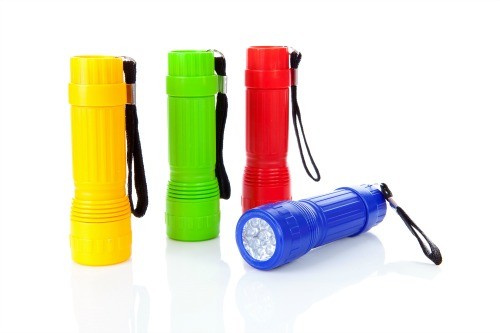
Include a flashlight with extra batteries, a battery-powered or hand-crank radio, a portable phone charger, a whistle to signal for help, and a paper map of your area in case cell service goes down. Write out a family communication plan with an out-of-town contact everyone can check in with, and make sure every family member, including kids, knows the plan.
Don’t Forget Your Pets
Pack a leash, a carrier if needed, food, water, any medications, and a copy of vaccination records for each pet. If you have larger animals like horses or livestock, plan your evacuation route and destination well before fire season starts, since those decisions take longer to arrange under pressure.
Keep the Kit Fresh
Set a reminder every six months to check your kit. Rotate out food and water before they expire, update clothing sizes for growing kids, refresh any medications nearing their expiration dates, and make sure batteries and phone chargers still work.
Practice the Plan
A grab-and-go kit only helps if your family knows where it is and how to use it. Walk through your evacuation plan together once or twice a year, including two different routes out of your neighborhood in case one is blocked. Practicing takes the panic out of the moment if the day ever comes when you actually need to use it.
Drought: How Will It Affect Our Food Prices?
Final Word
As mentioned, an evacuation order is one of those moments when there’s no time to think, only time to act. The families who get through those moments with the least stress are almost always the ones who think ahead. Building this kit this weekend, even a little at a time, is one of the most loving things you can do for the people who depend on you. Wildfire season in 2026 has been one for the record books, and while most of the news is about acreage and containment percentages, the real story is about the families near these fires and the crews working to protect them. Whether a fire starts with a lightning strike or a spark from a trailer chain, the response is the same: it takes water, personnel, and preparation to bring it under control. Please take this as a gentle nudge to check your family’s food and water storage and evacuation plan this week, whether there is a drought or not. May God bless this world, Linda
Copyright Images: Wildfire Smoke from a wildfire rises in the sky above the forest Depositphotos_676867234_S, Huge flames burning coniferous trees in the forests of the Rocky Mountains Depositphotos_340088138_S,









Linda,
This is near and dear to our heart. Our former pastor, now retired, and his wife lost their home in Yakima, WA to the recent wildfire. They lost everything and are starting from scratch, in retirement. How sad! Our church members are in the process of gathering directed monetary donations to send them. Needless to say we will be participating in that effort.
Hi Harry, oh, your comment gave me goosebumps. We have a grandson who lives in Washington, and he is fine. I just barely wrote an article on wildfires, and now there are more. Your pastor and his family must be devastated. Oh my gosh, starting from scratch to rebuild and all the lost memories in their home. What a blessing that people like you and your church will be able to help them rebuild. May God bless them, Linda
About 20 years ago my Dad lost his mountain home to a wildfire. He got out okay but the fire consumed his antique car collection as well as a backhoe I’d lent him. Got so hot aluminum melted and flowed like water.
Fortunately, I was still building houses at the time so I was able to help him rebuild. And the worst of it was the fire that burned his place down was a backfire set by the Forest Service to contain the then raging Hayman Fire in Colorado. That was the largest fire in Colorado history back then, but has been exceeded several times since then.
During that fire my wife and I opened our mountain home to people who had to evacuate from burned areas. We could see the firenadoes generated by that intense heat from our deck. We were under voluntary evacuation orders but the closest the fire got to us was 7 miles away. Still, we had our most important possessions packed and ready to go if needed.
If you live in wildfire country you really NEED to be prepared for one.
Hi Ray, oh my gosh, I remember you telling me about your dads mountain house. I did mortgages for homes and most banks will not risk the fire danger and they are hard to get insured. Therefore, people built knowing full well, they would have to pay cash, and no insurance available. Too many pine trees to ignite quickly. Also, if the mountain house cabin didn’t have year around access, no loan available. Most in Utah have ATV’s to get to their cabins (snow). Cabins or mountain homes are so peaceful but they are risky at the same time. They are sure are fun, though, I never had one, but we would visit friends who did have one. Linda
Our local water districts have to maintain a certain amount of water in their large storage tanks at all times, dedicated for fire fighting but these new hotter fires may require more. So far our island has been lucky and the few idiots being careless with fire haven’t managed to set off any major blazes even though we’re well into multi year summer drought. Local residents are extremely vigilant and our volunteer fire department is really quick to respond. There is no way everybody could get their vehicles off the island quickly in an emergency via the ferry service but there are muster points where people can gather and get taken off in assorted boats. I still want to get an emergency life raft to keep on hand so I could self rescue if needed. Easy ocean access is just a few houses away. It hasn’t gotten to the point of fire drills but it might yet. Go bags are always packed and I have a folding wagon to transport things. I recently added a tent cot to the supplies to either sleep in outside or have some privacy if I ended up in a large open reception area. Need to find a lighter option but it will do for now.
Hi Alice, that’s a great idea about getting an emergency raft for self-rescue. I love hearing how prepared you are! Good job! Mark and I got a fold-up wagon; we use it for groceries because we have to walk pretty far from the garage to our door. We will use it for our Go bags if we bug out. I do not see us bugging out, but neither did the other families affected by flooding and fires. Linda
My dad didn’t have insurance because of the fire danger–no one would insure any of the homes up there. But since his place was burned down by a Forest Service backfire that got out of control he got a settlement that mostly paid for his rebuild.
HI Ray, this is so awesome. I’m glad he was reimbursed. Linda
It seems the floods are making more of the nightly news even though I think the fires are more destructive. Please everyone stay safe and healthy.
Hi Chris, the flooding is now popping up everywhere, even 1000 year floods. This is nuts! Linda
The Bug fire here in Nevada started in California (man caused) and later merged with the Fred fire (a woman set it on fire intentionally); it was about 188,000 acres all told. As of yesterday it was about 84% contained. Then the Stallion fire near Pyramid Lake happened (about 46,000 acres) and it was 81% contained. We were lucky enough to get some rain but not nearly enough. Still, anything is better than nothing. This was the first fire that came close enough to us that I worried. I did realize it had several towns to burn through before it got to us as long as it didn’t come from up above. That would have been a game changer. I admit I haven’t updated our gobags lately but that’s on my list to get done asap. I did sit and stew on the couch while watching the news about where everything was that I needed to grab and how. My husband lost a good portion of his house in his younger life so he knows exactly what this feels like. I think about 9 families lost their homes way out on Red Rock Rd. Fire scares me to pieces! It’s a fact of life in Northern Nevada with all the trees and then the sagebrush. Tons of fuel to burn. I feel so bad for all the people in Washington and Oregon; just like the Palisades fire in SoCal last year. It’s horrible to see all those housing developments go up in flames and lose everything. We’ve been extremely lucky here in Nevada with our crews and our management (unlike SoCal). It just goes to show how people need to be responsible for themselves and do whatever they can to prepare. This site, Linda, is a God-send for that purpose!
Hi Robbie, thank you for your kind words. I am so glad you are okay!! It seems like a new fire is starting every day or week. Or floods, crazy weather. Thank goodness your Nevada team is on top of everything. Stay safe, my sweet friend. Linda