

Fortress: The 90 Day Military Bases Plan
This post may contain affiliate links. We may earn a commission if you purchase via our links. See the disclosure page for more info.

Fortress: The 90 Day Military Bases Plan. What is it? Friends, every so often a news story comes along that makes me stop what I’m doing in the kitchen and read it twice. This past week was one of those times. Our own military is now planning for the very thing we talk about here all the time: being able to take care of yourself when the outside world stops delivering. Let’s talk about what this plan is, why it’s happening, and which other countries are doing something similar.

What Is the Fortress Plan?
The plan is called FORTRESS, and the Pentagon announced it in September 2026. It requires military bases in the United States to be able to operate for at least 90 days without relying on civilian power, fuel, water, or supply lines. The name itself is an acronym. It stands for Federal Operations for Resilience, Troop Resources, Energy, Supply, and Survivability, and it was announced by Secretary Pete Hegseth on September 30, 2026, during his State of the Force address.
The details came out more fully this week. Under FORTRESS, every major military installation in the continental United States would be expected to keep essential operations running on its own for at least 90 days, including electricity, water, fuel and communications.
According to the Pentagon memo, FORTRESS focuses on five pillars: energy independence; supply chain and defense industrial base resilience; a strategic defense reserve; installation hardening and cyber resilience; and resilience in space and spectrum.
How Would Bases Actually Do This?
This is where it gets interesting for those of us who think about backup power at home. The plan envisions portable nuclear reactors, large-scale battery storage, and microgrids that can disconnect military installations from the civilian electrical grid, allowing bases to continue operating during prolonged power outages.
It isn’t just about electricity, either. FORTRESS calls for strategic reserves of munitions, fuel, critical minerals, electronics, spare parts and medical supplies that could sustain military operations if international supply routes are disrupted or domestic manufacturers can’t keep up with wartime demand. It also looks upward. The plan seeks to protect military communications, navigation and satellite systems against interference, including GPS jamming and disruptions to space-based assets.
Doesn’t that sound a lot like a family food storage plan on a much bigger scale? Water, fuel, medicine, a way to communicate, and a way to keep the lights on. The principles are the same.
Why Is This Happening Now?
The short answer is that our military depends on the same power grid and supply chains as the rest of us. A central concern FORTRESS is meant to address is the military’s reliance on the civilian power grid. Pentagon spokesman Sean Parnell put it plainly when he said: “Power is combat now.” He explained that without electricity, you lose communications, water, logistics, assembly lines and basic military command structures, and he described FORTRESS as an insurance policy to keep US forces operating if a major conflict disrupts the infrastructure and supply chains they depend on.
Secretary Hegseth
Secretary Hegseth framed it in terms of geography and changing threats. He said he created FORTRESS America because the country can no longer rely on two oceans to protect it, and that war and threats have evolved, so defenses must evolve too. He added that the goal is to make sure the country cannot be “starved out, shut down, or cut off.”
There is a supply chain piece to this as well. A July 2026 executive order signed by President Trump said the U.S. must source vital components for military equipment domestically or from allies.
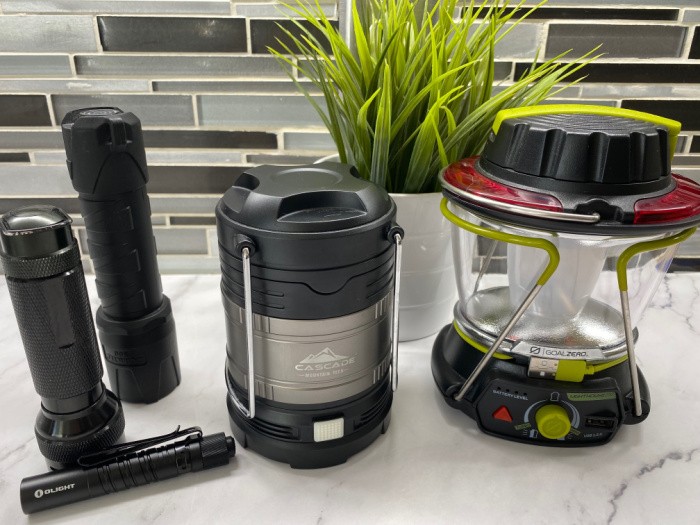
NOAA Radios, Flashlights, Batteries, Solar Flashlights, Lanterns, and Headlamps. I buy all of my batteries through Sam’s Club. I joined their loyalty club and get delivery free with my annual membership.
What We Don’t Know Yet
I always want to give you the honest picture, so here it is. This is a plan and a goal, not something that is already finished. The 90-day standard is a planned requirement, not proof that all major bases can already operate independently for that long. The Pentagon hasn’t publicly announced a total FORTRESS budget or completion date. Secretary Hegseth’s memo ordered Pentagon teams to set up a dedicated office by October 30, and that office will report to the Under Secretary of War for Acquisition and Sustainment, Michael Duffey.
Congress will have its say too. Because Congress controls defense spending, it’s expected to take a close look at the plan’s scope and price tag. Supporters see it as long overdue homeland preparedness, while others will want to know what it costs and how realistic the timeline is. Both are fair questions, and I’ll be watching to see how it unfolds.
What Other Countries Are Doing
Here’s the part that really caught my attention. The United States isn’t alone. Countries around the world are rethinking preparedness, and many are asking ordinary families to get involved.
Finland
It’s the example everyone points to. Finland and Sweden are known for their “total defense” approach, meaning national defense isn’t a job for the military alone but for the whole of society. Because Finland never let its system lapse, it’s considered the gold standard for whole-of-society preparedness. Think about this one: Finland has more than 50,000 shelters with room for 4.8 million people, a little over 85 percent of the population.
Sweden
Sweden let its old system lapse after the Cold War and is now rebuilding quickly. The Swedish government proposed about 12 billion kronor for civil defense for 2026 through 2028, including funding to build up preparedness stockpiles. In January, Sweden’s Minister for Civil Defense reported that the country now has stockpiles of medical products, has increased its supplies for purifying drinking water, and has begun reinforcing preparedness wells. And this one made my prepper heart happy: Swedish households are now encouraged to be ready to get by without government help for at least a week, a step up from the old 72-hour guideline.
European Union
The European Union as a whole has joined in. The EU wants every member country to encourage the distribution of 72-hour survival kits for citizens as part of its Preparedness Union Strategy, which also calls for greater stockpiling of essential supplies and better cooperation between civilian and military groups. The European Commission explained that in extreme disruptions, the first period is the most critical. The strategy even includes adding preparedness lessons to school curricula and creating an EU Preparedness Day.
Germany
Germany is studying the Nordic model closely. German Defense Minister Boris Pistorius traveled to Scandinavia to learn about their civil protection models and then argued for stronger protection of the civilian population in Germany.
Asia
In Asia, the concerns are similar. Taiwan, Japan, and South Korea import nearly all of their oil and gas through sea routes that could be interrupted. Taiwan has planned counter-blockade drills and is increasing military spending to 5 percent of its economy by 2030. Both Germany and Japan have also been steadily increasing their defense spending.
What This Means for Our Families
When governments around the world start telling their citizens to keep water, food, and medicine on hand, and when our own military sets a goal of 90 days without outside help, I think it’s a gentle nudge for the rest of us. If our bases need a plan, so do our homes. A good friend shared this statement with me: ” Failure to plan on your part does not mean an emergency on my part.”
Notice that Europe is asking families for 72 hours and Sweden for a week, while our military is aiming for 90 days. I’ve always encouraged you to start small and build steadily. Begin with three days of water and food. Then work toward two weeks. Next, a month. Finally, three months, if your space and budget allow. Think about the same categories the military considers: water, fuel, power, medicine, communication, and food your family will actually eat.
How To Survive On Freeze-Dried Vegetables
11 Canned Meat Ideas I Recommend
15 Canned Vegetables I Highly Recommend
A Few Simple Steps
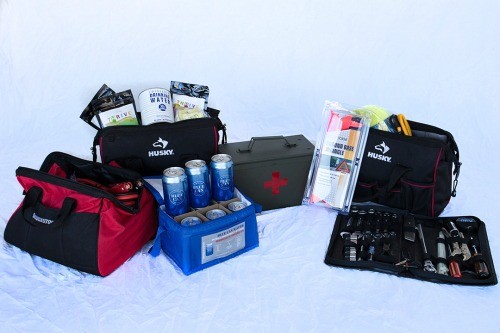
Here are a few simple steps you can take this week. Store at least one gallon of water per person per day, and don’t forget your pets. Add a few extra cans or jars to your cart each time you shop. Keep a battery-powered or hand-crank radio and spare batteries. Refill prescriptions on time and keep a small supply of over-the-counter basics. Consider a solar generator or a small power bank for phones. Write down important phone numbers on paper, because a dead phone won’t help you. By now you know, I disagree with the one gallon of water per person per day. It must be 4 gallons a day per person per day. Quit messing around with only one gallon. Geez Louise. You need water to stay hydrated, cook, perform basic personal hygiene tasks, and to do limited laundry like underwear.
None of this is meant to frighten anyone. Preparedness is about peace of mind. When the pantry is stocked and the water is stored, we can face hard times with a calm heart rather than panic. That’s what I want for every one of you. May God bless this world, Linda
Copyright Images: ogden-utah-aug-hill-aerospace-Depositphotos_175404432_S,ogden-utah-aug-hill-aerospace-Depositphotos_175404744_S
Sources:
IBTimes UK
Fox News
Snopes
Newsweek
Anadolu Agency
The Defense News
JFeed
Political.org
Heinrich Böll Stiftung
Government of Sweden, speech
Government of Sweden, budget
Defence24
Echo24
Euronews
Nutrition Insight
WION
China Russia Report
Lowy Institute














I was curious about timelines so here’s an overview of what a friend found on the FORTRESS America Project
September 30, 2026: The program was officially launched.
October 30, 2026: Deadline for Pentagon teams to officially carve out and staff the dedicated FORTRESS program office.
Late January / Early February 2027 (120-Day Mark): Assigned planning groups must submit their initial findings and base-by-base installation assessments to determine exact funding requirements and baseline vulnerabilities.
Operational Expectation: The Pentagon’s acquisition mandate states that the program office must begin delivering actionable results in “weeks, not years”.
– – – – –
The Department of the Air Force’s Installation Infrastructure Action Plan already had a framework to install resilient microgrids at 14 Air Force bases and 2 Space Force bases by 2030.
The U.S. Army previously set a benchmark to have self-sufficient microgrids operational at all of its bases by 2035. The FORTRESS initiative is expected to aggressively compress these existing timelines. – AIR AND SPACE FORCE MAGAZINE
Hi Mickey, thank you for this information. This one hit me straight on: Operational Expectation: The Pentagon’s acquisition mandate states that the program office must begin delivering actionable results in “weeks, not years”. That’s what I have been reading about. When you hear that other countries are aggressively working to get the word out to their families, something is up. Some are actually giving out 72-hour kits of some sort. Some have bunkers. I was never in the military, but I take this quite seriously. Something is going on. I am not in the know, but we shall all find out soon enough. Great comment, thank you. Linda
Linda, my only comment it to wonder why our major military bases didn’t have at least this level of preparedness already. But better late than never.
And I”m once again asking your permission to use this article in my newsletter.
Hi Ray, thank you for asking, but you can always use any of my stuff. Thank you. I agree with you. Why hasn’t this been in place already? I was interviewed for Ted Koppel’s book, “Lights Out,” in 2014. Geez, Louise, that was 12 years ago. He talked about how antiquated our power grid system was back then. It would take YEARS to repair or replace our useless power grids. Plus, in Utah, we have antiquated natural gas lines that are exploding in roads and blowing up houses. I think last year, 5 homes blew up and a few people were killed. The gas lines were installed in 1975, as I remember. Let’s cut some government salaries in Congress and quit giving away our tax dollars to people who need to get a job. I’d better get off my soapbox! Linda
I’m just surprised it took them so long to get with the program that many of us have been doing for decades. And for those of us that live in a hurricane area, blizzard area, tornado area, earthquake area, etc. – oh I guess that’d be all of us.
Thank you for all your advice and delicious recipes.
Hi Barb, I totally agree with you. Why has it taken so long to replace antiquated equipment? After building this house in South Jordan, Utah, I would never do it again. They have the most ridiculous laws and regulations. I think it’s the worst city in Utah for “rules”. Yet we had several homes blow up due to natural gas lines in city streets. People died; where are the priorities? So this FORTRESS thing really does make us all think: why hasn’t this been done years ago? On a lighter note, I have more recipes coming out. Thank you, my sweet friend. Linda
Given what’s happening in the Middle East and with the Ukraine war I take this announcement as more than a mere nudge. I believe it’s just short of announcing that bad things are about to happen….
With all the interconnected systems required for modern businesses to run I’d really hope folks are taking the potential for disruptions seriously. Just look at grocery stores. They need electricity to keep perishable items fresh and to run their registers. They also need computer networks to reorder items and to connect to credit/debit card payment systems. To restock their trucks need fuel. Any broken links in those systems that stay broken for more than a few hours will start having serious impacts.
Cyberattacks can take down companies networks – a recent example was earlier this month when Ahold Delhaize was attacked and had to take their systems offline. This impacted online ordering as well as their website. Fortunately their payment systems stayed online, but it could easily have been worse.
I’m glad I’m as prepared as I am for my family’s sake, but I worry about my community and local region in any widespread event. Even if folks are prepared for a 3 day event as per Ready.GOV used to recommend (they now say several days), any serious attack could take weeks to fully recover from. Being ready for a month without outside support is just smart in these uncertain times. Anything less than 7 days without outside supplies is putting you at risk.
Don’t mean to be a prophet of doom. I just hope everyone is taking steps to be as prepared as they can be. I always like to say prepare for the worst, but hope for the best. Just remember that only preparing for the best can leave you scrambling if the worst happens…
Linda, I appreciate everything you do to keep folks safe and calm. Here’s hoping we can get past the current international unrest safely!
Hi DMWalsh, great comment. If people don’t have at least 30 days’ worth of food and water at home, they will be in trouble. The government does not deliver food and water to your homes. You almost have to go through a disaster once to see how bad it can be without food, water, or even communication. I think this one is pretty serious; why else would so many other countries tell their families to stock up on food, water, and cash? Someone on Facebook accused me of “fearmongering”; that does not go well with me. I am not fearmongering. Let’s get real, people. Something is coming. Linda
Government will be slow to get it done if it happens at all.
We on the other hand should strive for it quickly. Get busy
Hi Matt, you are so right; the government is slow to get stuff done. We will all be on our own; no one is coming to take care of us. No deliveries of food and water. No fast food drive-throughs. Empty grocery stores; we have told everyone to stock up. Water is more important than most people think. I get thirsty thinking of one gallon per person per day. Get busy is so true. Linda
My Dad was literally one of the founders of the electronics industry as we know it today. He lived long enough to say that he thought the internet would be the death of humanity. Nobody so far disagrees.
If anyone believes that this is a “news” thing to the military, I’m betting they are mistaken. Military type organizations do not give out information willy-nilly. My suspicion is that it’s pretty much a done deal for them.
There is a reason for putting the word out now. As I used to tell my troops “failure to plan on your part does not constitute an emergency on my part.”
I also told them “if you are going to be dumb, you need to be tough.”
Once after a big bar fight we were all in the ER getting patched up. Nobody was hurt on our side. Just scuffed up and we needed to get back to work- calls were holding.
I had a big scrape on my upper arm. It was only 2am – I had to get back on the street…and my uniform shirt would chafe on it. I was well known to all the med staff in the ER. As one of my favorites zoomed by (trauma nurse), I showed my arm and asked if she had something to cover the scrape? She came back with a big band aid that wrapped around my then and still scrawny arm. I looked at it and said…”wow think of the sympathy I’ll get with this!” She looked at me and said, in all seriousness “sympathy is between s–t and syphilis in the dictionary. Look it up.” And she roared off to someone who really needed her.
Those 3 sayings have been part of my regular reminders to people.
There is a reason that we are suddenly getting these serious warnings from all sides, many countries- civilian and military.
After Nov 3 it will be katy bar the door….with el Nino’s help. The big elections are over and “they” can do what they want…both sides. “They have 2 years.”
I know a couple of things for sure. You can’t fix broken, crazy, or stupid people.
And from what I also know for sure having been a supervisor in command posts in the middle of HUGE disasters..THERE IS NO HELP COMING. YOU ARE ON YOUR OWN.
If you fail to prepare….well, read the above. Nobody is joking.
Hi CAddison, I LOVE LOVE LOVE your comment; people need to be prepared. I have been writing for 14 years now. Let’s hope many more listen. The game is on; I can feel it. Linda
If Hegseth had spent more time on preparation instead of testosterone and firing generals and admirals who don’t agree with him, we’d all be better off now that supplies and diesel are more difficult to afford.
Linda, thank you for the heads up. I’m going to fill in some cracks in my preps with crates of V8 juice!
Hi Linda, I think buying some V-8 juice sounds awesome! Great idea! Linda
Have you actually seen how FAT the military people are? FAT generals. Out of shape.
None of them could fight or think their way out of a paper bag, but probably wouldn’t want to leave the bar to try.
We need warriors.
My Dad told me about how in Winter in Germany WWII he was driving with his combat engineer group. Dad had a silver star from Battle of the Bulge. They stopped to take the boots off FROZEN, DEAD, American soldiers. Dad, philosophically said, “those guys didn’t need them anymore and my guys did.”
AND now we have American military writing home to their mommies that they don’t like the food on board their ship? There IS food, but the wussies don’t like it.
How in the world can we expect to win any kind of conflict with these people?
Time to kick arse and take names.
But, you have probably never been shot at. It’s a sobering experience the first time it happens. You never get used to it.