Do We Need To Worry About Canned Peaches?
This post may contain affiliate links. We may earn a commission if you purchase via our links. See the disclosure page for more info.

Canned Peaches: Do we need to worry about purchasing them now? If you have seen headlines lately about Del Monte™ cutting down hundreds of thousands of peach trees, I don’t blame you for feeling a little rattled. As a family that leans on canned and home-preserved fruit for our food storage, this is exactly the kind of story worth understanding before it turns into a rumor at the next church potluck. So let me walk you through what’s actually happening, and whether it means trouble for the canned peaches sitting on your pantry shelf.
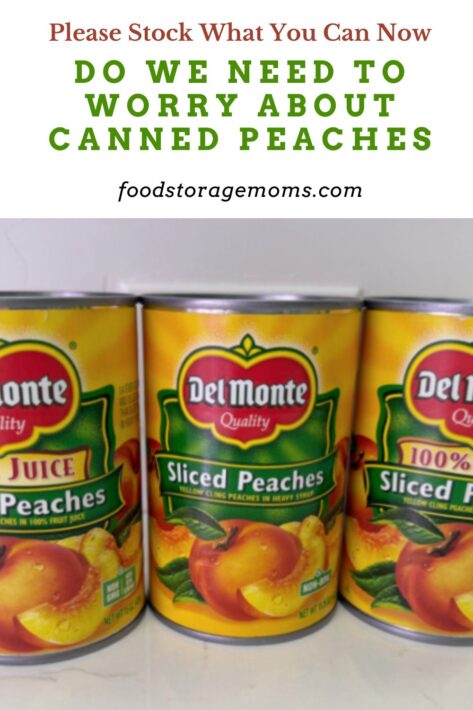
Del Monte Foods™
Del Monte Foods™ filed for Chapter 11 bankruptcy protection in July of 2025. This is a nearly 140-year-old American company, and the filing came after the company took on heavy debt, struggled with shoppers moving away from canned goods toward fresh produce, and got squeezed by rising costs. By April of 2026, Del Monte™ had permanently closed two of its California canneries, one in Modesto and one in Hughson. Those two plants alone had handled somewhere between 30 and 35 percent of all the cling peaches processed in California.
Here’s the piece that matters most for growers. Clingstone peaches, the variety grown almost entirely for canning, don’t really have a fresh market. When the cannery that buys them shuts its doors, and no replacement buyer steps in for that plant, the farmers who grew that fruit are left holding a crop with essentially nowhere to go.
The Number 420,000
You may have seen the figure 420,000 tossed around alongside the word acres. That’s not quite right, and I want my readers to have the correct picture. The number refers to roughly 420,000 individual peach trees, spread across about 3,000 acres of Central Valley orchards. The United States Department of Agriculture approved up to 9 million dollars in relief funding, matched by another 3 million from the California Canning Peach Association and industry partners, to help farmers remove those trees before this year’s harvest even ripened. The goal is to pull about 50,000 tons of peaches off the market so growers aren’t stuck trying to sell fruit that has no buyer, which USDA estimates will save farmers roughly 30 million dollars in losses they would otherwise absorb.
It’s a hard trade. Removing the trees early protects the farmers who remain in business by preventing a glut that would crash prices further. But it also means a lot of fruit that could have fed people will simply never be picked.
Del Monte™ Isn’t Liquidating Entirely
Here’s the reassuring part. Del Monte™ isn’t liquidating entirely. The company has been selling off pieces of its business to multiple buyers, including Fresh Del Monte™ Produce, B and G Foods, and Pacific Coast Producers, and operations have continued through the restructuring rather than shutting down all at once. Pacific Coast Producers has already stepped in with one-year contracts covering a portion of the fruit that Del Monte can no longer take. So this isn’t a total collapse of the canned peach supply chain; it’s a painful regional restructuring that’s hitting Central Valley growers the hardest.
That said, with roughly a third of California’s cling peach processing capacity gone from the Modesto plant closure, it wouldn’t surprise me to see some tightening in canned peach supply or a bump in prices over the next year or two as the industry finds its new balance. This is exactly why I always encourage families to keep a working stock of canned fruit on hand rather than waiting until shelves look thin.
California Peaches
California grows virtually all of the peaches that get canned in the United States. There’s no other domestic region that fills that gap. But the country doesn’t rely on California alone. Roughly 30 percent of the canned peaches sold in the United States already come from overseas, mostly China and Greece, with Chile also supplying fresh peaches into the market. So even with California’s cling peach capacity shrinking, imported canned peaches will likely fill more of the gap on store shelves in the months ahead.
Buy American
I want to gently flag something here for my readers who care about buying American. A few years back, a Modesto school lunch program was caught serving canned peaches packaged in Thailand that were actually grown in Greece, despite Buy American sourcing rules. If keeping your food dollars with American farmers matters to you the way it does to our family, this Del Monte™ closure is a good reminder to read the fine print on your canned goods. Look for wording like grown in USA or packed in California rather than assuming a familiar brand name guarantees a domestic peach. As more of our canned peach supply shifts overseas, that label check becomes more important, not less.
Frozen Fruit
It helps to remember that canned peach consumption has been declining for decades as families shifted toward fresh and frozen fruit, so this closure didn’t come out of nowhere. It’s the continuation of a trend that’s been building since the 1970s and 1980s, combined with a debt load Del Monte™ took on after overordering supplies during pandemic-era demand spikes. Rising tariffs on the steel used to make cans added even more pressure on the company’s margins. Understanding that broader context helps explain why one company’s bankruptcy could ripple out to affect thousands of acres of orchards.
Check Country of Origin
Here’s what I would add to your preparedness plan. Check the country of origin on your canned peaches at the store, since more imported product will likely appear on shelves this year. If you can peaches yourself, this may be a good year to buy extra fresh peaches directly from local orchards while cling peach growers are still selling what they can, since some of these trees will not produce again. Keep an eye on canned fruit prices generally through the rest of 2026, since a supply shift this size tends to show up gradually rather than all at once. And remember that food storage isn’t about panic buying; it’s about steady, informed stocking so your family is never caught off guard.
This year’s peach shortage mainly comes down to weird weather timing.
The main culprit: a warm winter followed by a late spring frost. Peach trees need a stretch of cold (“chill hours”) to go dormant properly, and this year unusually warm winter temperatures in several growing regions caused trees to bloom early. Then a cold snap or frost hit right when the blossoms were exposed, killing much of the fruit before it could even form. In the Mid-Atlantic, a heat wave in early April was followed by a frost later that month, significantly reducing the amount of viable tree fruit for 2026.
It hit hard in several key growing states:
- In the Texas Hill Country around Fredericksburg, a warm winter followed by a late freeze killed much of the local peach crop, leaving orchards with only a fraction of their usual harvest. KXAN
- California, Texas, and New Jersey — three of the biggest peach-producing states — are entering summer with a shortage tied to adverse weather plus a bankruptcy filing affecting the supply chain. Inc
- Georgia and the broader Southeast have seen similar patterns in past years for the same reason: early blooming followed by frost.
Beyond weather, a few other pressures compound it: rising costs for labor, fertilizer, and fuel discourage some growers from expanding acreage, and disruptions in packaging or distribution can make the peaches that did survive harder to get onto shelves efficiently.
The upshot for you as a shopper: expect smaller peaches, higher prices, and less consistent availability this summer, especially for regionally grown or heirloom varieties, with things easing somewhat as later-season harvests come in.
Final Word
The Del Monte™ bankruptcy is a reminder that even the most familiar brands in our pantry can shift without warning, and that our food supply is more interconnected than most of us stop to think about on a normal grocery run. This isn’t a reason to panic or to clear the shelves. It’s simply another nudge to keep doing what we already do here, stocking steadily, checking labels, supporting local growers when we can, and trusting that a well-prepared pantry will carry our families through whatever changes come next. May God bless this world, Linda




We live in scary times. Thanks for that great explanation! You are the voice of reason we trust.
Hi CAddison, thank you for your kind words, my sweet friend. Linda
Hi Linda,
I appreciate your reporting on this topic. I’m not questioning it at all. Cling peaches are just for canning. Del Monte did declare bankruptcy. Those processing plants in California did close, and the fresh peach market shouldn’t have been affected. But something isn’t adding up.
My daughter is visiting her grandma in a community close to those processing plants. She took a few cases of empty jars to cans peaches while she visited, just as I did for a few decades. She got two cases of O’Henry peaches canned, and then the fruit disappeared. This is from a major commercial fruit seller, not a side of the road operation. The Elberta peaches that they’ve always sold are nowhere to be found. It’s not that they’re being bought before she can get there. It’s that the store can’t get those peaches at all, at any price. She’s been told that the wholesalers are buying them up, which doesn’t make sense. And she’s heard them blame the Del Monte issue, which makes no sense, either. But she can’t get peaches to can there, and she won’t be able to bring any home for us to can either. 🙁
Jennifer
Hi Jennifer, I’m right there with you. Where are all the peaches going? This year’s peach shortage mainly comes down to weird weather timing.
The main culprit: a warm winter followed by a late spring frost. Peach trees need a stretch of cold (“chill hours”) to go dormant properly, and this year unusually warm winter temperatures in several growing regions caused trees to bloom early. Then a cold snap or frost hit right when the blossoms were exposed, killing much of the fruit before it could even form. In the Mid-Atlantic, a heat wave in early April was followed by a frost later that month, significantly reducing the amount of viable tree fruit for 2026. I just added another section to my post. Great question, Linda
Thanks for this post, Linda.
I am, frankly, exhausted with all the news about our sad food industry!! I’m not even sure anymore what to purchase and what to look for on the labels! The industry is so secretive about where the food is coming from/processed; whether it is natural or lab grown. Geez! Labeling is messed up! I try my best to purchase locally, when possible, but peaches don’t grow in any sort of quantity here in my area. Guess I am fortunate to still have freeze dried peaches!!
Hi Leanne, I’m exhausted from reading labels as well. I can’t even think of the lab-processed meat. I bought a pork tenderloin from Costco and cut it up to make several meals. I put the pieces in the freezer. The meat seemed too perfect to me; that sounds weird, I know. I cooked a small roast for 90 minutes in my pressure cooker, and we could not even cut it; it was so tough. I cooked it another 90 minutes, still tough. I can’t take the pieces back to Costco, or I would! LOL! I will never buy pork from them again. Linda
Makes me glad I just planted another Peach tree a few months ago.
Hi Ray, great idea that you planted a peach tree!!! Linda
Linda,
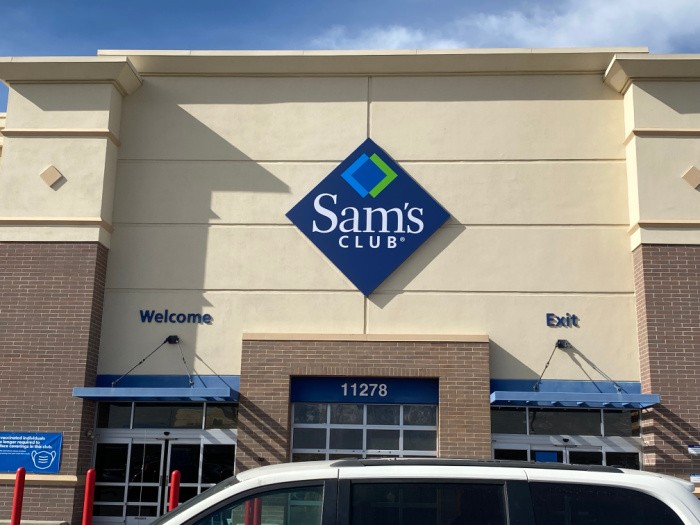
Sam’s Club still has Del Monte canned peaches in stock for shipment. I would assume they are last years crop that Sam’s has had in the warehouse as they contract for mass quantities each year. I just ordered some and may order some more as I am not sure how long their stock will last. I did not want to order too many at one time as the order gets heavy quickly. LOL!
Hi Harry, great idea. I will order some peaches from Sam’s Club as well. Great reminder. Linda
We only eat fresh peaches. I think our food sources are all hurting. I feel more need for stocking up than ever before. Please everyone stay safe .
Hi Chris, I love fresh peaches. I buy frozen peaches sometimes, so I don’t have to peel them. Lazy me. I love fresh peaches! Linda