If We Have A War: What Are People Waiting For?
This post may contain affiliate links. We may earn a commission if you purchase via our links. See the disclosure page for more info.

If We Have a War: What Are People Waiting For? Millions of families have no emergency food, no stored water, and no way to cook without power. Here are the excuses they keep making; and why not one of them holds up under scrutiny.
The headlines keep coming. Geopolitical tensions. Power grid vulnerabilities. Supply chain disruptions. Experts across government agencies and the military have been sounding the alarm for years: the question is no longer whether Americans should prepare for emergencies, but whether they will. And still, the vast majority of households in this country have fewer than three days of food on hand, no meaningful water reserve, and no plan for how to cook a meal if the gas lines go down or the electricity disappears. The excuses are familiar. They’re also, every one of them, wrong.
The time to prepare is before the disaster, not during it. Every week you delay is a week your family continues to live with the high risk of being unprepared.
What are people waiting for? The excuses tend to stay the same.
It Will Never Happen Here
This is the granddaddy of all preparedness excuses and the most dangerous one. History isn’ kind to people who assume geographic immunity. Earthquakes, tornadoes, flooding, wildfires, ice storms, and extended power outages don’t check the address before they arrive. War, whether a direct attack on infrastructure or a cyberattack on the electrical grid, doesn’t spare suburban neighborhoods or rural communities. FEMA consistently reports that the areas hit hardest by disasters are often the ones least prepared for them. The idea that your town, your state, or your country is somehow exempt from catastrophic disruption isn’t confidence. It’s complacency dressed up as confidence.
Emergency food storage, water reserves, and off-grid cooking devices aren’t just for people in high-risk zones. They’re for anyone who eats, drinks, and needs to cook food to survive, which is everyone.
I cannot Afford It
This excuse has a kernel of truth, which makes it particularly sticky. Yes, buying a year’s worth of freeze-dried food at once is expensive. But that isn’t what building emergency food storage actually requires. A 72-hour emergency kit can be assembled for under fifty dollars. Adding a few extra cans of beans, rice, oats, and shelf-stable protein each week at the grocery store costs almost nothing if done incrementally. Over the course of three months, a family of four can build a meaningful reserve without ever feeling a significant financial pinch.
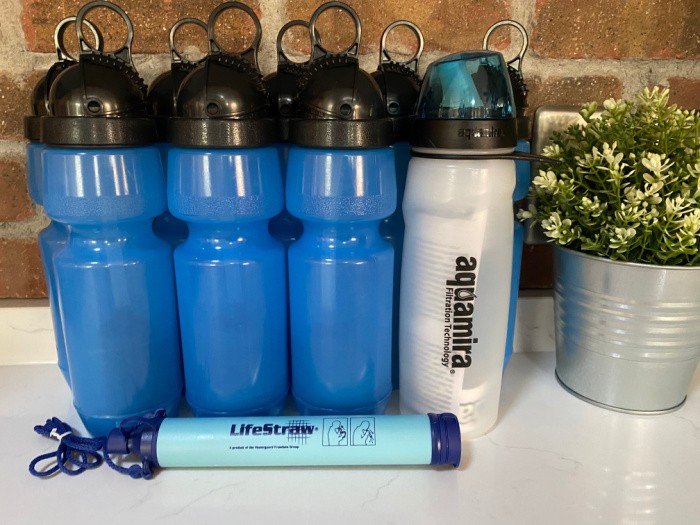
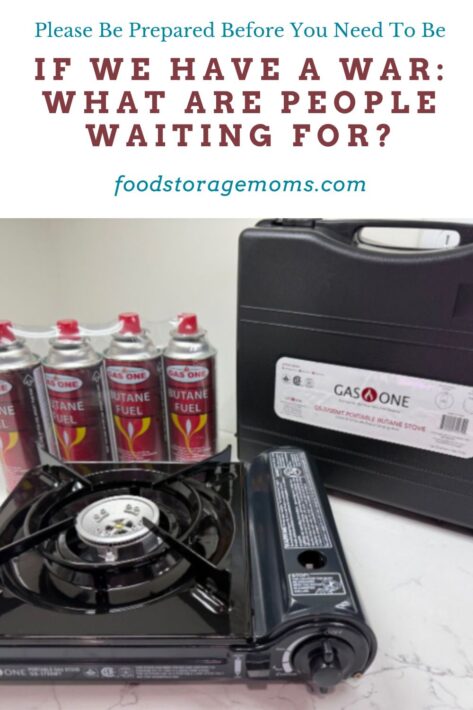
Water storage is even less expensive. Food-grade containers cost a few dollars each. A water filter, such as a Sawyer Squeeze or a basic gravity filter, costs $50 to $60 and can filter thousands of gallons of water, given sufficient time. A single propane camp stove and a few extra fuel canisters from a hardware store are a thirty-dollar emergency cooking solution that’ll last for years. The idea that preparedness is a luxury is simply not supported by the actual cost of basic supplies. What is expensive is being completely unprepared when shelves go bare and delivery trucks stop running. Life Straw Filter Bottle or The Sawyer Squeeze Bag
Single Butane/Propane Stove and Butane Fuel as well as Propane Fuel
The Government Will Take Care of Us
FEMA itself has repeatedly and publicly stated that citizens shouldn’t rely on government agencies as their primary source of emergency aid. After Hurricane Katrina, after Superstorm Sandy, after the Texas freeze of 2021, the pattern has been the same: government response is slow, uneven, and overwhelmed. When a widespread disaster or wartime disruption affects an entire region or the entire country simultaneously, government resources are stretched far beyond their capacity to help individual households in the first days and weeks.
Emergency food storage, water, and cooking capability at the household level isn’t paranoia. It’s the specific behavior that FEMA, the CDC, the American Red Cross, and local emergency management agencies actively recommend. They want you to take care of yourself for at least two weeks, and ideally longer, so that government and relief resources can focus on those who can’t help themselves. Depending entirely on institutional rescue isn’t just naive. It puts your family at the back of an extremely long line.
I Don’t Have the Space to Store Anything
People living in apartments, condos, or small homes often use the lack of space as a reason to skip preparedness entirely. But a two-week supply of food for two people can fit in two or three medium-sized plastic bins stored under a bed, in a closet, or on a shelf in a utility room. Water can be stored in collapsible containers that take up almost no space when empty. Emergency cooking devices, like a compact butane stove, fold flat and fit in a drawer. Collapsible Water Containers
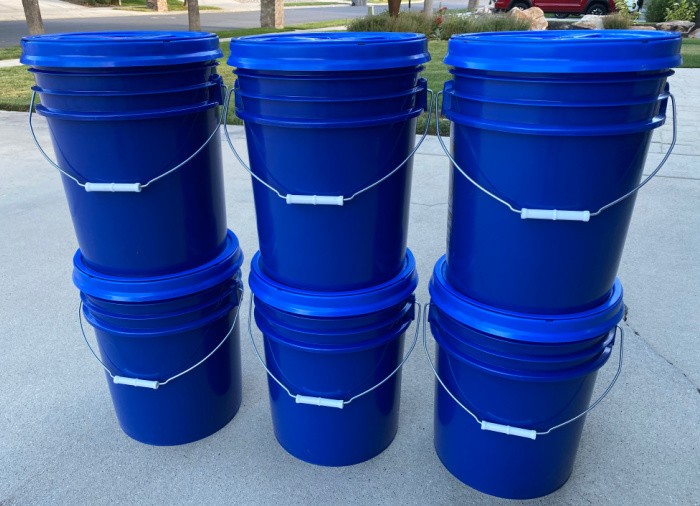
The space argument usually holds up only if someone has never actually priced out how small a meaningful emergency supply can be. A 25-pound bag of white rice, a 25-pound bag of rolled oats, two cases of canned goods, a few jars of peanut butter, and some basic protein sources take up roughly the same amount of space as a medium-sized suitcase. That isn’t a fully expanded preparedness plan, but it’s a foundation that fits almost any living situation. The real issue isn’t space. It’s a priority that needs to be dealt with. I use 5 gallon buckets with Gamma Lids.
I Wouldn’t Even Know Where to Start
This is perhaps the most understandable excuse and the easiest to solve. The barrier of not knowing where to begin stops many well-meaning people from taking any action at all. The answer is simpler than most people expect. Start with water. Store one gallon per person per day, for at least two weeks. A family of four needs at least 56 gallons. That’s roughly nine standard water containers from a grocery store or outdoor supply retailer. That’s what the American Red Cross suggests. You know by now, I want four gallons per person per day. I get thirsty thinking I can only have one gallon a day. That’s why I store a lot of water for Mark and me.
Next, build a two-week supply of food using items your family already eats that have a longer shelf life. Canned beans, canned vegetables, canned fruit, rice, pasta, oats, nut butters, shelf-stable milk, and honey are practical starting points. Then add a way to cook without your home’s standard utility hookups. A propane camp stove, a butane stove, a rocket stove that burns wood or fuel pellets, or a solar cooker all serve this purpose at different price points. That’s the foundation of emergency food and cooking preparedness, and none of it requires special knowledge, a large budget, or significant storage space.
My Food Would Just Expire Anyway
This excuse misunderstands how emergency food storage actually works. The goal isn’t to buy a stockpile and never touch it. The goal is to rotate through your supply using the first-in, first-out method. You buy extra food, you eat from it regularly, and you replace what you use. Done correctly, nothing expires. Your emergency supply becomes a living pantry that you maintain as you would any other grocery stock.
For those who prefer longer-term storage, freeze-dried foods and properly sealed staples like white rice, hard red or white wheat, and dried beans can be stored for twenty-five to thirty years under the right conditions. The expiration excuse applies only if someone is planning to buy food and then completely forgets it exists, which isn’t how preparedness is supposed to work. Learn the rotation principle, practice it, and the expiration problem disappears entirely.
I’ll Just Bug Out If Things Get Bad
The fantasy of simply leaving when things get dangerous is compelling and almost entirely impractical. Where exactly would you go? How would you get there when roads are gridlocked, fuel is unavailable, and everyone else has the same idea at the same time? What would you eat when you arrived? Emergency management professionals consistently point out that evacuation without a pre-planned destination and a stocked vehicle is one of the most dangerous choices a family can make during a crisis.
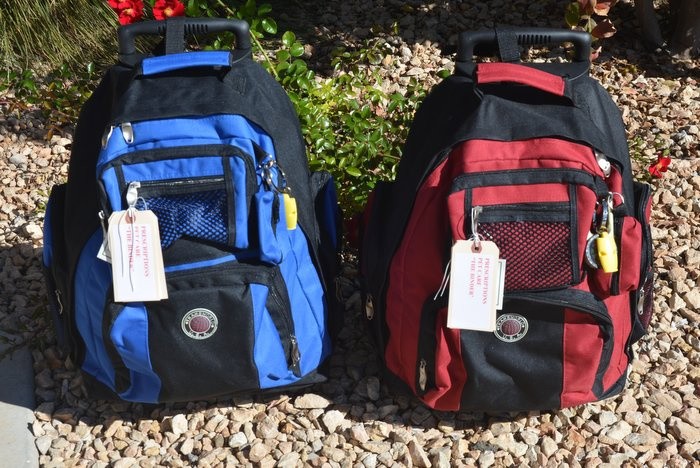
More importantly, most emergencies and disasters don’t require evacuation. They require sheltering in place for days, weeks, or longer. Home-based food storage, water reserves, and emergency cooking devices are what keep a sheltering family stable, fed, and functional while the situation resolves. Planning to leave isn’t a substitute for preparing to stay. It’s also not a substitute for preparing to leave, since a good bug-out bag still contains food, water, and a portable cooking method.
I Keep Meaning to Do It — I Just Haven’t Gotten Around to It Yet
This is the most honest of all the excuses and possibly the most widespread. Preparedness isn’t urgent on any given calm Tuesday afternoon. There are errands, work obligations, children, social commitments, and a hundred other things that feel more pressing. Emergency preparedness falls into the category of important but not yet urgent, and that’s exactly where it tends to stay until the moment it becomes both important and critical.
The nature of disaster is that it eliminates the luxury of preparation time. A cyberattack on a power grid, a missile strike on a regional logistics hub, a rapid escalation of a military conflict, or simply a severe winter storm doesn’t provide a two-week preparation window. The supply chain disruptions of 2020 gave many Americans a preview of how quickly shelves empty and how long they stay empty. That preview was mild by historical standards and by the standards of what a genuine wartime or catastrophic infrastructure event would bring. Doing it later isn’t a plan. It’s a hope, and hopes don’t feed families.
Storing Food and Water Feels Like Extreme Survivalism
For some people, the idea of food storage carries a cultural association with bunkers, conspiracy theories, and extreme prepper culture that feels uncomfortable or embarrassing. This perception, while understandable, tries to combine two very different things. Recommending that a family keep a month of food and water on hand isn’t significantly different from what grandparents and great-grandparents across every culture on earth considered basic household management. Pantry stocking, root cellars, preserved meats, and stored grains were normal features of family life for most of human history. Industrial supply chains and just-in-time retail made that tradition seem unnecessary. Recent events have demonstrated exactly how fragile those supply chains actually are.
Keeping emergency food, water, and cooking capacity at home isn’t extremism. It’s prudent. It’s what insurance looks like for your family’s most basic needs. You wouldn’t go without health insurance because having it feels overly cautious. The same logic applies here.
My Neighbors or Family Will Help Me
Community and mutual aid are genuinely important parts of disaster resilience. Neighbors do help neighbors. Families do pull together in crises. These things are real and valuable. But they aren’t a substitute for individual household preparedness, for a straightforward reason: in a widespread emergency, your neighbors and family are facing exactly the same pressures you are. If none of you have stored food, water, or emergency cooking capability, the generosity of the community doesn’t create resources that don’t exist.
The most resilient communities in emergencies are those in which individual households are already self-sufficient for at least 2 weeks before a crisis. When everyone has their own supply, community mutual aid becomes about sharing surplus and helping those with genuine needs, not about a scramble for scarce basics that leaves everyone worse off. Being prepared yourself is, in fact, one of the most community-minded things you can do.
75 Reasons Why You Should Store Water Now
How To Build A Food Storage Supply You’ll Use
Final Word
“Preparedness isn’t about fear. It’s about the quiet confidence that comes from knowing your family won’t be desperate in the first week of a crisis.” There’s no good excuse. There are understandable, relatable, and honest ones. But none of them hold up when weighed against the actual cost of being unprepared in a serious emergency. Emergency food storage doesn’t require wealth. Water storage doesn’t require space you don’t have. Emergency cooking devices don’t require expertise you haven’t developed yet. What all three require is a decision, a trip to the store, and a small, consistent habit of adding to what you do have. The question isn’t whether you can afford to prepare. The question is whether you can afford not to. The decision is yours to make. May God bless this world, Linda






Water is life, so if you don’t have a good water filtration system, or the ability to boil water or treat it with unscented bleach, you and your family are hosed.
The Scout’s motto “Be Prepared” is good common sense. I view it as emergency situation insurance. After all, you have home insurance, car insurance, health insurance, and life insurance. Adding emergency situation insurance is a no brainer, especially when it could mean keeping your family alive during hard times.
Ray,
You and I think along the same lines. I have said many times that preps are like insurance. In fact, in times past, we have had to dispose of a few food items that truly were beyond usefulness, like canned tuna that while still edible, was very mushy and not palatable. I never regretted that since it was insurance if we had needed it while it was still palatable. How many times have we paid premiums on the insurance you mentioned and never filed a claim? A whole bunch of times.
Harry, great comment, well said. Linda
Thank you, Harry. I consider that a compliment.
Hi Ray, great comment, you are so right! Less than 10% of Utah is prepared for disasters. It’s probably actually less but thats the stat I heard. You can only imagine some other states, until people get hit in the face with a disaster, they will not get it. I quit speaking for church and county invitations, people don’t think anything will happen to them. It truly is insurance to be prepared. Love it! Linda
Another great one Linda!!
I have a friend who has used most of these excuses. A few months ago I talked to her about water storage and the ability to filter it – she told me she’s all set because she gets her water from a restaurant that sells spring water. That restaurant is 25 miles, one way, from her house!! I give up…
Hi Beth, well I hope she has a lot of that restaurant spring water stored at her home. Walking 25 miles to get a couple of gallons of water would be tough for most people. I totally understand your statement, I give up…Linda
My motto is, “Hope for the best, but Prepare for the Worst!” It’s going to happen at some point in life.
I’ve been to the point in life that I didn’t know what or how I was going to feed my children! That is one scary feeling. My mother and grandmother taught me to always have some food stored for “What if”! I started with one meal at a time and moved to two meals and then more. Yes, it was hard, but a can of veggies at a time is doable. Even a can of soup or two. Shop what you eat when it’s on sale. That’s what I was taught. Grandma also taught me to buy flour, sugar and other staples, on sale and to store in food grade buckets. She always had a 5 gallon bucket of flour and sugar in her pantry. She taught me so much, without even knowing it. By example.
Hi Deborah, your grandmother truly was a blessing in your life. She taught you by example how to take care of yourself and your family. What you did and still do is in fact doable. Your statement “My motto is, “Hope for the best, but Prepare for the Worst!” It’s going to happen at some point in life.” You nailed it! Linda
Linda: This is a great article! You always seem to point out JUST what part of our preps need more attention! We just received the 6 new cans of Keystone beef I bought after your article on meat; and I am planning on pressure-canning some pot roast today, too! We have quite a bit of homemade canned meat and fish, but I never feel it’s truly enough, if there is such a thing!
I’m so grateful for the insights of those who leave posts, too. PLUS, I am trying to figure out HOW Beth’s friend thinks she is going to carry by hand 40-50 BOTTLES of the heavy spring water from the restaurant that is 25 miles away (each way, no less). WOW! Talk about living in la la land! May God OPEN EYES!!
Hi Jess, I addressed the 25 miles walking with water, it’s not going to happen. There’s never too much meat or food to store. If you have room, stock it. Water is critical, sometimes I don’t think people realize how much water they use in a day. Linda
Yes, I see that now. Sorry, had missed it the first time around!
Hi Jess, no worries, it’s a critical and important thought!! Linda
I live in Texas – if you do take advantage of the Emergency Preparation Supplies Sales Tax Holiday April 25–27, 2026
https://comptroller.texas.gov/taxes/publications/98-1017.php?fbclid=I..
Hi Paul thank you for sharing this link for the people in Texas. Great program. Linda
It’s funny you made this article, been preparing for this to happen since 2011, also with hurricane season coming up in a couple months these suggestions come in handy.
Remember the 3’s”
3 minutes without air (or in icy water)
3 hours without shelter in harsh weather
3 days without water
3 weeks without food (or if you’re like me one day)
Keep your powder dry, and keep your head on a swivel if it comes to war.
Hi Barb, I have a laminated poster with those “3’s”, thank you for sharing them! Life is good if we are prepared. Linda
I have two excuses to add in!!!!!!!! I have offered to take one couple to some food banks that give out a LOT of nutritious food. They are both on the disabled side. They don’t have the ENERGY to stand in line. The one that really requires the standing in line I could get them into chairs and then I could hold their spot in line. And every month they run out of food, money, food stamps and all………….. Sure, they have no car, I have even offered to pick them up and drive them! This is only one of their excuses.
The other excuse to add in……. “God will take care of me.” I am sorry, I have not seen any Manna falling from the sky lately and the bible does recommend prepping.
Tami/TX,
I greatly admire what you are trying to do. But, what those folks do not understand is that God is already taking care of them. He gave them you and your offer to help them receive His help. They have refused to acknowledge God’s help that is right in front of them. That is so sad.
God bless you!!
Hi Harry, great comment to Tami! Linda
Hi Tami, well, You are a blessing to them to help them get the food they need. You drive them, you encourage them. God helps those that help themselves. God sees your intensions, they need to do their part. Life is a challenge sometimes. Good job Tami! Linda
There is something to be said for the peace of mind that comes with a full pantry. Even our medicines are fully stocked for 6 months. Water is always a work in progress for me but I’m getting there. My kids know mom doesn’t like excuses.
Hi Chris, what a blessing to medicines stocked for six months. Water is the number one thing we need above all, its too bad the Blue Cans are all sold out. They are a blessing to me, expensive, yes, good water, the best. Store water however you can. The Blue Can water is backordered until May of this year. I sure hope thats true. It’s so easy to store. Linda
Sometimes in dealing with people you have to meet them where they are. While my husband has always supported me thru 51 years of marriage, I have to respect him even when I disagree. To that end I work with him rather then against him. We have purchased 10 cases of bottled water. We have also added 10 cases of Canada Dry ginger ale. We buy Canada Dry because it has real ginger, better for my stomach. We have 20 containers from All detergent bought at BJs, filled with water for laundry and cleaning. I have filled numerous Tupperware pitchers with filtered water and put them in the freezer. Serving two purposes. More water and keeping the freezer full. Everything is a work in progress.
Hi Chris, that’s more water than most people have stored. Pat yourself on the back. Water is water, good job, Linda