
Freeze-Dried Food vs. Dehydrated Food
This post may contain affiliate links. We may earn a commission if you purchase via our links. See the disclosure page for more info.

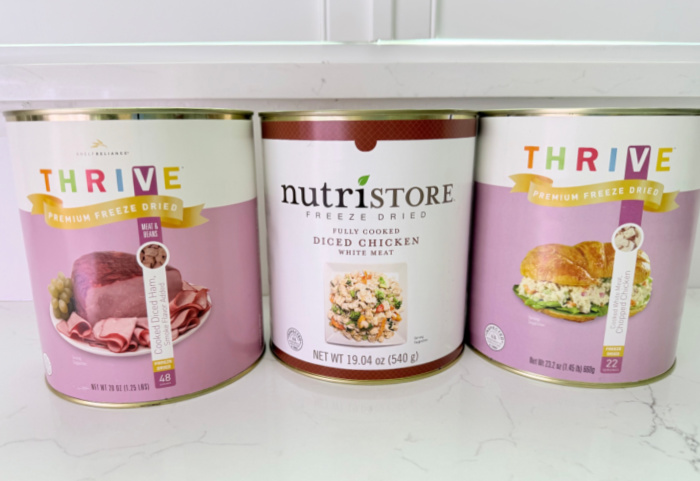
Let’s talk about Freeze-Dried Food vs. Dehydrated Food! When it comes to stocking an emergency pantry, two preservation methods dominate the market: freeze-drying and dehydrating. Both extend shelf life, both keep food lightweight, and both have passionate fans. But they’re not the same thing, and the differences matter when it comes to feeding your family in a real emergency. Please be aware that both Thrive Life and NutriStore have closed.
Please spot-check some of your #10 cans you have stored, to be sure the food smells as it should, and the color is bright, as if just picked or packed in the cans. I have been asked by many neighbors in different neighborhoods to smell the #10 cans they opened, which smelled rancid. They would not be safe to eat. It’s also a good way to learn how to use the contents. Freeze-dried foods take more water than I had pictured. Mark and I are living off of our #10 cans to cut our food budget, and our kids will not want to inherit it.
What is freeze-dried food?
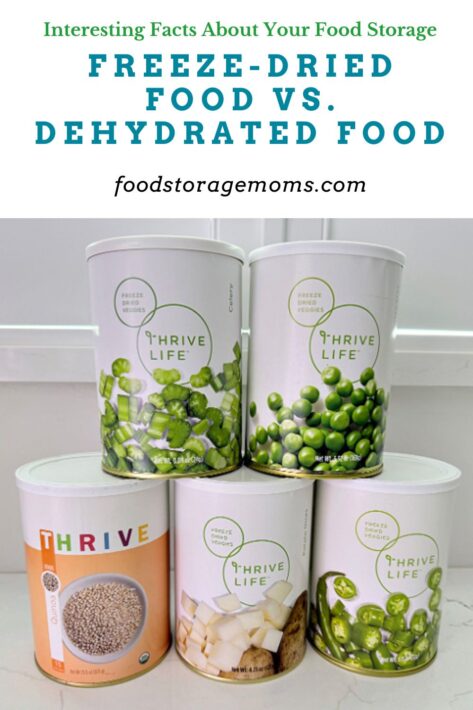
Freeze-drying is a two-stage process. Food is first frozen solid at very low temperatures, often below -40°F. Then it goes into a vacuum chamber where the ice turns directly into vapor without ever becoming liquid; a process called sublimation. What remains is food that has lost nearly all of its water content, typically 98 to 99 percent, while retaining most of its original shape and color, and almost all of its nutritional value.
The result looks almost exactly like the original food. A freeze-dried strawberry looks like a strawberry. A freeze-dried pea looks like a pea. And when you add water back, the texture and flavor come remarkably close to fresh. This makes freeze-dried food one of the most popular choices for long-term emergency storage, camping, and backpacking.
What is dehydrated food?
Dehydration is an older method that removes moisture through heat and air circulation. Food is sliced and placed in a dehydrator or a low-temperature oven for hours until most of the moisture evaporates. The food shrinks, darkens slightly, and takes on a chewy or leathery texture. Think of jerky, dried apricots, or sun-dried tomatoes. That is dehydration at work.
Dehydrated foods retain around 80 to 95 percent of their nutrients, depending on the type of food and the heat used. They are denser and heavier than their freeze-dried counterparts because some residual moisture remains. They are also much less expensive to produce, making them typically much more affordable for families building a food supply on a budget.
Side-by-side comparison
| Factor | Freeze-Dried | Dehydrated |
|---|---|---|
| Shelf life (sealed) | 25–30 years | 1–5 years typical |
| Moisture removed | 98–99% | 80–95% |
| Texture after rehydrating | Close to fresh | Chewy or softer |
| Nutrient retention | Very high | Good to very good |
| Weight | Very light | Light but denser |
| Cost | Higher | Lower |
| Rehydration time | 1–5 minutes | 5–20 minutes |
| Home production | Difficult/expensive equipment | Easy with a basic dehydrator |
Recommended freeze-dried foods for families
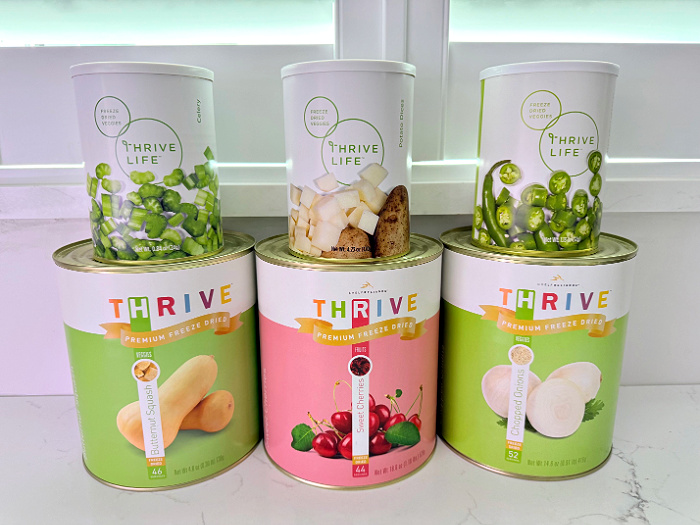
These are the freeze-dried items that offer the best balance of nutrition, versatility, and family acceptance. Prioritize these when building your long-term supply.
Proteins
- Freeze-dried chicken: works in soups, pasta, rice dishes, and casseroles
- Freeze-dried ground beef: rehydrates well for tacos, chili, and pasta sauce
- Freeze-dried shrimp: surprisingly versatile and lightweight
- Freeze-dried eggs: essential for breakfast and baking; scrambled eggs rehydrate well
- Freeze-dried cheese: great for morale, melts acceptably after rehydration
Fruits (often eaten dry as snacks)
- Strawberries: a family favorite, especially for children
- Blueberries: high in antioxidants, easy to eat straight from the can
- Bananas: sweet, filling, and popular with picky eaters
- Peaches and mangoes: add variety and sweetness to oatmeal and cereals
- Apples: work well dry or rehydrated, pair well with oats and grains
Vegetables
- Peas and corn: mild flavor, accepted by most children
- Broccoli and green beans: nutritious and rehydrate well in soups
- Bell peppers: add color and flavor to many dishes
- Sweet potatoes: filling, nutritious, and naturally sweet
- Spinach: blends easily into soups and sauces without detection
Complete meals (pre-packaged)
- Macaroni and cheese: universally accepted by children, easy to prepare
- Chicken noodle soup: comforting and familiar during stressful situations
- Beef stew: hearty and calorie-dense for cold conditions
- Pasta primavera or pasta with sauce: a reliable crowd-pleaser
Recommended dehydrated foods for families
These are the dehydrated staples that provide the most value per dollar and form the backbone of a practical emergency pantry. Many can also be made at home.
Grains and starches
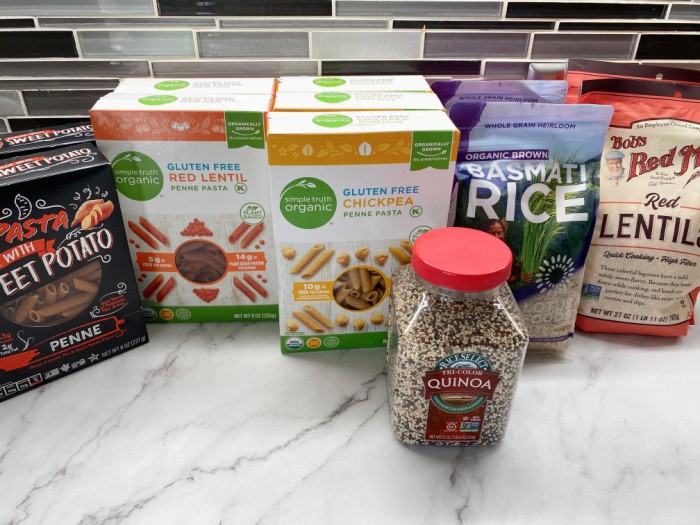
- White or brown rice: stores extremely well, forms the base of countless meals
- Rolled oats: versatile for breakfast, baking, and thickening soups
- Pasta: inexpensive, filling, and easy to prepare with minimal water
- Dehydrated potato slices or flakes: quick to prepare, accepted by children
- Quinoa: higher in protein than most grains, stores well
Legumes
- Pinto beans: essential for chili, burritos, and soups
- Black beans: versatile and protein-rich
- Lentils: cook faster than most dried legumes, no soaking required
- Chickpeas: filling and useful in soups, stews, and salads
- Split peas: make excellent, hearty soups with minimal ingredients
Fruits and vegetables
- Raisins and dried cranberries: portable, no preparation needed
- Dried apricots and prunes: calorie-dense and nutritious
- Dehydrated carrots and celery: flavor staples for soups and stews
- Sun-dried tomatoes: add depth and umami to any savory dish
- Dehydrated onions and garlic: essential for flavor in almost every cooked meal
Proteins and dairy
- Beef or turkey jerky: high protein, no preparation, great for on-the-go
- Dehydrated powdered milk: useful for cooking, baking, and feeding young children
- Powdered butter: adds richness to rice, pasta, and baked goods
- Dried beans and lentils: inexpensive protein that stores for years
Shelf life and storage tips
If you’re building a long-term emergency pantry intended to last decades, freeze-dried food wins by a wide margin. Properly sealed cans of freeze-dried food are commonly rated for 25 to 30 years. Dehydrated foods are excellent for short- to medium-term storage, with most commercially dehydrated products having shelf lives of 1 to 5 years.
Both types of food last longest when stored in cool temperatures below 70°F, away from direct light, and in low-humidity environments. Opened cans and pouches should be sealed tightly and used within a few weeks to a few months. Mylar bags and oxygen absorbers extend the life of home-dehydrated food considerably.
Nutrition and taste
Freeze-drying preserves nutrients exceptionally well because the process doesn’t use heat. Vitamins, minerals, and even delicate antioxidants survive almost intact. When your family rehydrates a freeze-dried meal during a stressful situation, it’ll look and taste recognizable, which matters more than most people expect when morale is low.
Dehydration uses heat, which degrades heat-sensitive vitamins such as vitamin C. That said, most minerals and many vitamins survive the process well. From a flavor standpoint, dehydrated foods carry a more concentrated, sometimes sweeter taste. Children who are picky eaters may take longer to adapt to differences in texture, especially with rehydrated vegetables.
A note for families with young children: Kids often do better with freeze-dried foods in emergencies because the texture and appearance more closely resemble what they’re used to eating. If you’re building a supply with picky eaters in mind, including some freeze-dried fruits and complete meals can make a significant difference in helping children eat during stressful times.
Cost and home production
Freeze-dried food is more expensive to produce and therefore more expensive to buy. A family-sized emergency supply can run into several hundred dollars or even thousands. The process requires specialized industrial equipment that most households can’t replicate at home without investing $2,000 to $5,000 in a home freeze-dryer.
Dehydrated food is far more budget-friendly. Many families dehydrate food at home with a basic electric dehydrator that costs between $50 and $500. You can dehydrate seasonal produce when prices are low, preserve garden harvests, and build a meaningful food supply without a large upfront expense. For families on a budget, dehydrating is often the most realistic starting point.
Which one should your family choose?
The honest answer is that most well-prepared families benefit from having both. A layered approach gives you flexibility and resilience that a single method can’t. Start with dehydrated staples like rice, beans, oats, and pasta to fill the bulk of your pantry affordably. Then add freeze-dried proteins, fruits, and complete meals to extend your shelf life, improve nutrition, and give your family familiar comfort foods when it matters most.
The most important step is simply getting started. A modest, well-chosen supply built over time is far better than a perfect plan that never gets off the ground.
I Can No Longer Recommend Freeze-Dried or Dehydrated Foods in #10 Cans
Please let me explain. It’s a personal preference because food is so expensive NOW, so are the commercially processed #10 cans. I believe they are safer, but canned goods at the store will work just fine. If your pantry is stocked, you’ll survive without those expensive cans of meat, fruits, and vegetables. I’ve been stocking since I got married almost 57 years ago. Things have changed, and the prices have escalated.
I started stocking #10 cans back in 2013, from Thrive Life. I became a consultant so I could get the cases at a lower cost. Our friends traveled the world, and I stocked my shelves. We took vacations, but food storage was more important to me. If you read my book, you know why. “Prepare Your Family For Survival”. I want to thank you from the bottom of my heart for purchasing my book. It didn’t do as well as my publisher was hoping. You have to think about it this way: if you were at Barnes and Noble, and a Cupcake Book was next to the “Prepare Your Family For Survival” book, the cookbook would win. I wish my publisher had added different hashtags on Amazon, but they were from New York and had zero clue about preparedness.
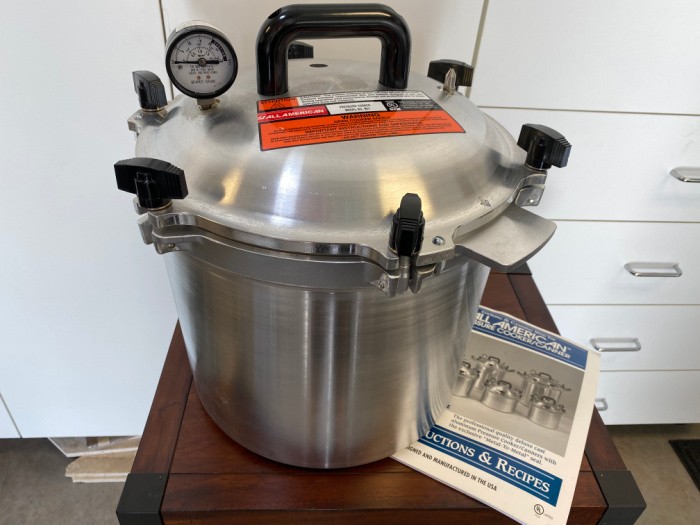
Canned Foods I Highly Recommend You Store
Frequently asked questions
Can I make freeze-dried food at home?
Technically, yes, but it requires a home freeze-dryer, which currently costs between $2,000 and $5,000. For most families, it’s more cost-effective to purchase commercially freeze-dried food and focus home preservation energy on dehydration. Please keep in mind that if you buy a Home Freeze-Dryer, you still need to purchase the food, Mylar bags, cans (if available), oxygen absorbers, and jars.
Do these foods need water to prepare?
Most do. This is an important planning consideration. Make sure your emergency supply includes ample water storage or a reliable water purification method. Many freeze-dried fruits and vegetables can also be eaten dry directly from the container as snacks.
Are there foods that dehydrate better than others?
Fruits, vegetables, herbs, jerky, and grains dehydrate very well. Foods with high fat content, like full-fat dairy or avocado, don’t dehydrate reliably and can go rancid. Freeze-drying handles a broader range of foods, including full meals, dairy, and eggs.
How do I know if my stored food has gone bad?
Off smells, visible mold, unusual discoloration, or a rancid taste are all warning signs. Commercially sealed cans that show no damage and have been stored properly are generally safe within their rated shelf life. When in doubt, throw it out.
How much food should I store for my family?
Emergency preparedness experts generally recommend starting with a 72-hour supply, then working toward a 30-day supply, and eventually a 90-day supply. A general guideline is to store roughly 2,000 calories per person per day, adjusted for children and activity level. Please note: I don’t count calories. There, I said it. LOL!
Final Word
Whether you choose freeze-dried, dehydrated, or a mix of both, the goal is the same: making sure your family has safe, familiar food when it matters most. Start small, build steadily, and remember that any supply is better than none. Preparedness is not a one-time purchase; it is a habit, and one your family will be glad you built. May God bless this world, Linda






“if you were at Barnes and Noble, and a Cupcake Book was next to the “Prepare Your Family For Survival” book, the cookbook would win.” O.o
Maybe I’m weird, but I’d go for the book to be prepared before I’d grab cupcakes! Besides, the internet has PLENTY of recipes 🙂 I even have some favorite recipe sites that if they have a recipe it is sure to be tasty! But being better prepared will win out, for me, in a book acquiring battle.
Today’s post was great! (feels like it has a dash of yesterday in it.)
I had tried dehydrating over the years, some foods with way better success than others. Looked at freeze dryers, spent many hours researching them, just could never pull the trigger on one. The initial price, the ongoing expenses, the sad fact that home models (under $10k) would not give the product equal to commercial freeze dried… I still thought hard about it and how much garden produce I could preserve without all the jars and hours in the garage over the canner. But sometimes there was really great sale on meat… that almost pushed me over the line LOL
One consideration I think many forget – How much mote water you MUST store to use that food…
Hi Bruce, I wrote the post because of your comment, you nailed it. LOL! I just added another paragraph, about checking the #10 cans NOW! The reason I opted not to buy the freeze dryer unit was how slow it takes to process food. When my daughters were little we would purchase 4 bushes of peaches for instance and crank them out in three days. Water bath canning. You can’t do that with a freeze dryer. I agree with you the home freeze dryers will not give me the safety I need knowing the food I stock is commercially processed. I admire those families who put their money together and take turns using it. That would not work with how I used to can. I’m 76 now, we had many hands working to water bath or pressure can jars back in the day. It taught my girls to work and we had fun growing most of the food. I’m a Master Canner and Preserver so food safety is my #1 concern. You are right we need more water than people think to use the food we store. Linda
Hello, Linda et al.: We purchased a Harvest Right freeze drier about 3 1/2 years ago when they had a really good sale on. We have had nothing but excellent results with it, though I will say that it is not great with berries that are made up of sections. We have freeze-dried peaches, apples, cheese, blueberries and other berries (Stawberries are the BEST!), broccoli, zucchini, peppers, cherry tomato halves, onions, chicken, ham, venison,cottage cheese, scrambled eggs, and so much more without ANY problems! Our dear organic farmer friends always have too much milk, so she freeze-dries it! We do always double check to make sure the item is completely dry, as sometimes a really wet and juicy fruit may need a tiny bit more time. I find the mylar bags with oxygen absorbers work really well for us, are inexpensive, lightweight and are easy to store. The issue for us is that I DO can food a LOT, but run out of space to store all those cases of heavy bottles! Maybe most people will think that a 4-tray Harvest Right Freeze Drier is too expensive for them, but you can always do what I did. I saved up a little bit at a time until we could almost afford one, and then when extra money came in, we added it together and bought one as an investment in prepping. Do I have a lot of freeze dried food from companies that sell it in cans? NOPE! We used to buy those a few at a time, but were never all that enthusiastic about it…O.K., but not great on the meat. I have developed the habit of pressure-canning chicken or turkey breast or thighs, canned in pints, rather than freeze-drying chicken. We love the canned chicken for barbecued pulled chicken dinners (think pulled pork, only it’s chicken). We also pressure can beef and lamb sometimes, but mostly beef hamburger to add to a dish or a soup. Works fantastically and OH, SO EASY to pressure-can meats, as they slide right into the bottle! The other one dish I prefer to pressure-can is soup with meat in it. We ate some of my chicken lentil soup from 2 or 3 yrs. ago last night and it was FANTASTIC! All I did was add a little thyme herb to it on a whim, and boy was that GREAT!
Otherwise, we like that the Freeze Drier lets you know when the food is processed, so we don’t have to stand in a steaming room in the summer, nor do we have to keep watch on the pressure canner for safety reasons nor heat up the kitchen with a food dehydrator. I will say that freeze-dried fruits are SO MUCH BETTER than many canned fruits! Once they hit your taste buds, you will never look back! They are like super-powered fruit slices with flavor that nearly explodes in your mouth! Once you start the process of freeze drying, the machine does all the work and just lets you know when it’s finished. Our For the dehydrator, we love to use it for a few items in the Fall, when you don’t mind the extra heat in the kitchen! Otherwise, we barely use it anymore, except to lightly dry our pepper seeds we’ve collected from last year’s pepper harvest. I will keep mine, though, because in a SHTF situation, the generator will run the dehydrator before it will run the freeze drier. We have an entire group of friends that have all purchased the Harvest Right freeze-driers as they were able. None of them are rich, but all love them! Plus, I think they may have created some sort of pay over time program, but don’t quote me. Just sayin’…. It is an investment, but where there’s a will there’s a way!
Hi Jess, this is great to hear that you have had success with the freeze dryer. I know a few people who have them and love them. Linda
My son in law just offered me his dehydration equipment. I haven’t decided if that is something I want to try at this point in my life. I did do canning and freezing for years. I’m not sure.
Hi Chris, I just gave my third Excalibur Dehydrator (I went through three because of use over the years) just used maybe 3 or 4 time to my neighbor 2 doors down. Mine was nine trays with a timer, so it went to good home. I’m too tired to dehydrate anymore. This oxygen 24/7 is wearing me down. I freeze a lot of stuff after prepping it. That’s my phase in life right now. Linda
I have read your book as has my youngest daughter and her husband. My son just took it on vacation and my oldest daughter is next in line. It is helping the hard conversations we need to have.
Hi Chris, oh that is so awesome they read my book, thank you!!! We all need conversations right now as families. Linda
Thank you for this terrific post. Educational and important.
I’ll be crawling around under the guest bed examining the #10 cans! Most of it is Freeze dried! We used to eat freeze dried food, Mountain House, back in our back packing days. It was good. Of course after back packing all day, we were happy to have anything tasty and easy to prepare on our little stove!
The point? The stuff is just fine.
Good job!
Hi CAddison, thank you for your kind words. Mountain House has great food storage! Yay for freeze dried food. We are eating ours right now. With what is going on in the world, and the price of groceries, we are eating it every day. Some is good, some is chewy, you get used to to! LOL! We need more water than people realize. Linda
Hi! I bought your book on Amaz, I think k, right after it was published…so I didn’t have to make a decision between it and a cookbook.
I have dehydrated foods for years and been very pleased with the results, but, some foods are just better freeze-dried. I am by myself, and don’t need to worry abut stocking up for anyone else, so I look at it a little differently. To me, buying #10 cans and food packaged in mylar pouches – WHEN ON SALE! – is a good decision. If the time comes I can’t buy groceries, for whatever reason, these will keep me fed, and af my age, the shelf-life of freeze-dried food will be sufficient without rotation being necessary. If a can arrives dented slightly, I go ahead and open it up and use it now. I LOVE using freeze-dried fruits and vegetables…right now I’m working through cans of mushrooms, onions, broccoli, tomatoes and a pouch of mixed vegetables. I just throw some of these into whatever I am cooking. And I don’t have to throw out .old unused produce. I think it’s cheaper. When Mountain House and MPS’s Beyond meal pouches go on sale, I stock up on those…now 4P has some instant meals in pouches and they are good.
Thanks for your articles. I have been a follower for many years and share your newsletters frequently. Don’t go anywhere! Oh…you should publish your articles. You could do a series! I have a friend who published her own book on creating a written preparedness plan…It’s on Amazon and her name is Leslie Hughes. Check it out! God bless you, Linda.
Hi GB, thank you for your kind words, my sweet friend. What you are doing is perfect for 1-2 people. I can’t imagine starting today buying freeze-dried food. The price of regular food is so high priced it makes the freeze-dried priced out of the market in some cases. I believe that is why several well known companies closed their doors. No notice, just BAM! People out of work, total surprise. I do what you do, I have freeze-dried meat, fruits, vegetables, no meals. I just open a can and add it to what I’m cooking, just like you. Check your freeze-dried tomatoes or tomato powder they have a shorter shelf-life. I will check on Leslie Hughes book, thank you for the suggestion. May God bless you, Linda