If We Have A War: Stock Toilet Paper-Paper Towels-Tissues
This post may contain affiliate links. We may earn a commission if you purchase via our links. See the disclosure page for more info.

Most people learned the hard way in 2020 that the things you use every single day can vanish from store shelves almost overnight. Toilet paper, paper towels, and facial tissues were gone within days during the early pandemic panic, leaving families scrambling. The lesson should have stuck, but for most households, it didn’t. Now, with global tensions rising and a fresh reminder that supply chains are fragile, it’s time to revisit preparedness for some of the most basic of household needs.
Kimberly-Clark
Kimberly-Clark is one of the largest producers of household paper products in the world. On the morning of April 7, 2026, a fire was started at the Kimberly-Clark Distribution Center in Ontario, California. It escalated to a six-alarm fire and took nearly twelve hours to extinguish. The facility was completely destroyed and declared a total loss. Its brand portfolio includes Huggies, Kleenex, Scott, Cottonelle, Poise, Depend, Pull-Ups, Goodnites, Viva, and WypAll, holding number-one or number-two market share in approximately 70 countries. PR Newswire
Losing a distribution center of this size, even temporarily, has ripple effects. Kimberly-Clark stated that no manufacturing assets were affected and that its supply chain network is designed for continuity during disruptions, with mitigation actions already underway, including identifying alternative locations for inbound shipments and securing additional warehousing capacity. PR Newswire. That’s reassuring on paper, but distribution disruptions take time to resolve, and retail shelves can thin out quickly when a major hub goes offline.
Now layer on top of that the broader picture. In a time of actual armed conflict or national emergency, supply chains don’t just slow down. They can stop entirely. Trucking routes get disrupted. Fuel becomes prioritized for military or emergency use. Workers don’t show up at factories. Ports get congested or closed. The items that seem most mundane, like a roll of toilet paper, become suddenly precious.
If We Have A War: Stock Toilet Paper, Paper Towels, Tissues
Here’s why you should stock all three categories.
Toilet Paper
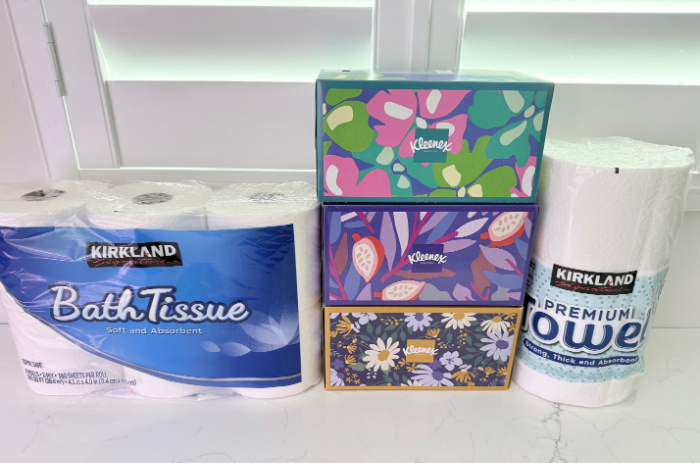
Toilet paper is the obvious one. It’s non-negotiable for basic sanitation and hygiene. An active household of four uses just less than one roll per person per day, though that figure varies, particularly if you have females in the house. If you’re shopping for a 90-day supply, a reasonable preparedness target, you should look at storing around 90 – 100 rolls per person. Buying in bulk from warehouse stores and rotating your stock so older rolls get used first is the simplest strategy. Don’t underestimate how much space this requires. A dedicated shelf or closet section devoted to paper goods isn’t excessive for a prepared household.
If the panic buying of 2020 taught the world anything, it’s that toilet paper occupies a unique place in the human psyche. The moment people sense a disruption coming, it’s the first thing they reach for. Shelves that were fully stocked in the morning were completely bare by afternoon, not because of a manufacturing shortage, but simply because everyone decided to buy at once. Imagine what happens when the disruption is real and prolonged.
It’s Not A Luxury
Toilet paper isn’t a comfort item or a luxury. It’s a basic sanitation necessity, and going without it creates immediate hygiene problems that can compound quickly, especially in a household with children, older family members, or anyone with a medical condition. There’s no good substitute that most households have on hand in meaningful quantities, which is precisely what makes it so vulnerable in the supply chain when things go wrong.
The math on usage is simple but sobering. If the average person uses roughly 90 rolls of toilet paper per quarter, that works out to about 2.5 rolls per week. In my book, Prepare Your Family For Survival, I suggest a household of four people goes through about 384 rolls annually. A 30-day supply for that same household requires somewhere around 32 rolls at a minimum. A 90-day supply, which is a more serious preparedness target, means keeping close to 100 rolls on hand at all times. When you look at those numbers, the case for toilet paper sitting in your closet stops feeling excessive and starts to feel like basic common sense. Of course, each family is different, and you’ll have to take your own inventory of usage and buy stock accordingly.
Storage is straightforward
Toilet paper needs to stay dry and away from pests, but it doesn’t require any special conditions beyond that. A dedicated shelf in a closet, a corner of a garage, or a space under beds can all work. Keeping it in its original plastic wrapping until use helps protect it from moisture and dust. Rotating your stock so older rolls get used first ensures nothing goes to waste.
The supply chain for toilet paper is longer and more complicated than most people imagine. Trees are harvested, pulp is processed, paper is manufactured, rolls are wrapped, cases are packed, trucks carry them to distribution centers, and from there they move to regional warehouses before finally reaching store shelves. Every single step in that chain depends on fuel, labor, functioning infrastructure, and stable logistics. A war, a major natural disaster, a significant cyberattack on transportation networks, or even a large warehouse fire can introduce delays or gaps at any point along that route.
Kimberly-Clark
As mentioned above, the Kimberly-Clark distribution center fire in Ontario, California, in April 2026, is a recent and concrete example. A single facility covering 1.2 million square feet, packed with paper products from some of the most recognized brands in the country, was destroyed within hours. No manufacturing plants were lost, and the company moved quickly to activate backup plans, but the short-term impact on regional distribution was real. That was one warehouse fire with no broader crisis attached. Scale that scenario up to a national emergency, and the picture becomes considerably more serious.
Stocking toilet paper isn’t about fear. It’s about recognizing that something you use every single day without fail can also disappear from stores with very little warning. Buying a few extra packs each shopping trip until you reach a comfortable reserve costs almost nothing in extra money and requires only a modest amount of storage space. The return on that small investment is the ability to stay calm and stay home when everyone else is racing to the store for something that should never have been allowed to run out in the first place. Stock it. Rotate it. Do not wait until the shelves are empty to wish you had.
Paper Towels
Paper towels serve a different but equally critical function during an emergency. They replace sponges, cloths, and rags when laundry is difficult or water is being conserved. They’re essential for cleaning wounds, handling food safely when running water is limited, and managing spills without creating a pile of dirty laundry that needs washing. A common mistake is assuming paper towels are a luxury item. In an emergency, they become a workhorse. Stock more than you think you need, ideally a dozen or more multi-roll packs stored in a cool, dry area.
Simple Ways to Use Paper Towels
Paper towels are one of those household staples that most people use without giving much thought to just how versatile they actually are. Beyond wiping up a spill on the kitchen counter, they can do a surprising number of jobs around the house, and knowing all the ways they can help you makes the case for keeping a solid supply on hand even stronger.
In the kitchen, paper towels do far more than clean up messes. Placing a sheet of paper towel in your salad bowl after washing the greens absorbs excess moisture and helps keep your lettuce crisp longer. Wrapping celery, broccoli, or fresh herbs in a damp paper towel before refrigerating them considerably extends their freshness. You can also use them to pat meat dry before cooking, which helps achieve a better sear and more even browning in the pan.
Around the house, paper towels are excellent for cleaning mirrors and glass surfaces without leaving lint behind, as cloth rags sometimes do. A folded paper towel with a little rubbing alcohol can quickly sanitize a keyboard, remote control, or phone screen without causing damage. They also work well for applying and removing shoe polish, cleaning up pet accidents, and wiping down dusty surfaces in places where you would rather not use a good cloth.
Garage or Workshop
In the garage or workshop, paper towels handle grease, oil, and grime that you would never want near your regular household rags or laundry. They’re ideal for checking oil levels, wiping down tools, and cleaning up small chemical spills safely before disposal.
During an illness in the household, switching from reusable cloths and hand towels to paper towels in the kitchen, bedroom, and bathroom significantly reduces the spread of germs. Each person gets a fresh sheet rather than sharing a damp towel that’s been hanging on a rack for two days.
They even have uses in the garden. A damp paper towel inside a sealed bag is a classic way to germinate seeds before planting. They can also be used to clean gardening tools and wipe down plant leaves that have gathered dust indoors.
The humble paper towel earns its place in a well-stocked home many times over. Keeping a generous supply means you’re always ready for the kitchen, the garage, the sick room, and everything in between.
Facial Tissues
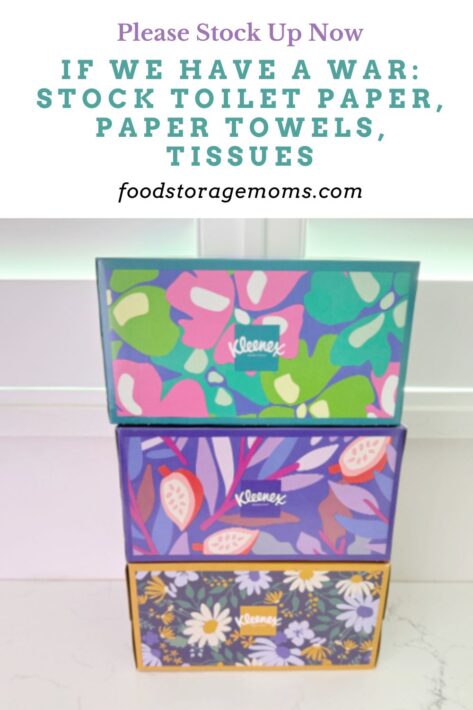
Facial tissues are frequently overlooked entirely. People tend to think of them as a comfort item, something for colds and allergies. But tissues serve a hygienic purpose that becomes especially important during a prolonged emergency, particularly if illness is spreading and you want to minimize contact with shared surfaces. They’re also useful for cleaning glasses, wiping down surfaces, and a dozen other small tasks. They store flat, take up minimal space, and have essentially no expiration date. Stock them generously.
The broader principle here is worth stating plainly. Preparedness is not paranoia. Stocking basic consumable goods that you’ll use regardless of whether any emergency occurs is simply good household management. You’re not stockpiling out of fear. You’re buying ahead so that when a disruption happens, whether it’s a local warehouse fire, a hurricane, a cyberattack on logistics infrastructure, or something larger, your family isn’t standing in a line at a store competing for the last package on a shelf.
Why Facial Tissues Must Be Stocked
Facial tissues are almost always the last thing people think about when they’re building up a household supply of essentials. Toilet paper gets the attention. Paper towels get the credit. Tissues get overlooked. That’s a mistake worth correcting, because facial tissues quietly serve more purposes than most people ever stop to consider.
The most obvious use is managing colds, flu, and seasonal allergies. A household going through a respiratory illness can burn through boxes of tissues faster than anyone anticipates. When you’re sick, the last thing you want is to run out and have to resort to rougher alternatives that irritate already-tender skin. Keeping several boxes in reserve means that when illness hits, and it will, your family is comfortable, and you’re not making a pharmacy run while feeling miserable.
Beyond illness, tissues are a daily hygiene tool that most people reach for without thinking. Blotting makeup, cleaning smudges off eyeglasses, dabbing a small cut, wiping a child’s face, handling something sticky without dirtying a cloth, these are all tissue jobs that happen in nearly every household multiple times a day. They’re gentle enough for sensitive skin in a way that paper towels aren’t, which matters more than people realize until they try to substitute one for the other.
Emergency Disruption
During an emergency or extended disruption, tissues take on additional importance. If laundry becomes difficult due to limited water or power, having tissues available reduces the number of clothes that need to be washed. They can handle small cleanup tasks that would otherwise require a cloth that then needs to be put in the laundry pile. In a situation where water conservation matters, that’s not a trivial advantage.
Tissues are also one of the most space-efficient items you can stock. Flat boxes stack neatly in closets, on shelves, and under beds without taking up much room. They’re lightweight, inexpensive, and have essentially no shelf life concerns. A case of tissues bought today will be just as useful two years from now.
Comfort and Stress
There is also the matter of simple comfort. During stressful times, small comforts carry real psychological weight. Having soft tissues available instead of rough paper substitutes is one of those small dignities that makes a difficult situation feel a little more manageable. That might sound trivial until you’re in the middle of a hard week and the little things start to matter enormously.
Stock them generously. They take up almost no space, cost very little, and quietly earn their place in a well-prepared home every single day.
Disruptions Can Happen
The Kimberly-Clark fire in Ontario serves as a reminder that disruption doesn’t always come from the direction you expect. It doesn’t take a war to empty shelves. It can take one person with a match in a very large warehouse. The paper products you depend on travel a long road from a manufacturing facility through multiple distribution points before they reach your local store. Any link in that chain can break.
A reasonable starting point for most households is a 30-day supply of all three items at a minimum, with 90 days being a more serious preparedness target. Store them somewhere dry, rotate your stock, and buy a little extra each time you shop until you reach your goal. It’s like special insurance that costs you almost nothing beyond a bit of shelf space, and it provides genuine peace of mind the next time you see breaking news about a supply chain event, and everyone else is heading to the store in a panic. You’ll already be covered. That’s the point.
If We Have A War: Stock Paper Products Now
Final Word
There’s no better time than right now to take stock of what your household actually has on hand and what it would need to get through a serious disruption. The world is unpredictable, supply chains are more fragile than most people realize, and the Kimberly-Clark warehouse fire in Ontario is a fresh reminder that shortages can begin close to home and without warning.
Toilet paper, paper towels, and tissues aren’t glamorous purchases. Nobody brags about their stockpile of Cottonelle or their wall of Bounty. But when the shelves go bare, the people who planned ahead are the ones who stay calm while everyone else panics. Start small, if you need to. Buy a few extra packs this week. Add more next week. Before long, you’ll have a cushion that covers your family for months, and you’ll have spent almost nothing extra to build it. That kind of quiet readiness isn’t pessimism, it’s wisdom. May God bless this world, Linda









Linda, thanks for the heads up. I just went online to Costco and ordered more TP, Paper Towels and Kleenex. We were already stocked but it never hurts to have more if you have the room. One thing to consider about storage of TP and Paper Towels is to avoid really hot areas. Garages with no A/C or storage sheds. The heat causes the glue they use to seal the rolls to seep through several layers, making them a pain to unpeel and leading to wasted product.
I also ordered a few packages of dried fruits and protein bars.
Hi Ray, Mark is stopping by to pick some up later today. We have very little storage space, BUT I can always make it work. We store it in our master bedroom closet. It’s large and open. Dried fruit and protein bars are good as well. Linda
I remember before the pandemic “lock-down” going for my regular grocery shopping and saw a young woman throwing packs of toilet paper into her cart. She acted panicked and I stood and watched her along several other people. There was already a limit put on how much you could buy, and the manager was talking to her. I didn’t have to buy any paper products since we are well-stocked at all times, but it was interesting to see this happen. That was my last visit to get groceries for 2 months. We didn’t have to worry about what we would do or what we would eat. We were ready!
Hi Paula, oh yes, the limit on TP and I remember a friend was going to make chili and he needed 5 different kinds of beans (in California). There was a limit on how many cans of beans your could buy. He had to go to several stores. Hopefully these people who were unprepared learned a thing or two. Stock up and you save money by shopping less often and have a filled pantry. We were ready, I love that statement! Linda
Linda, another good idea is a bidet toilet seat, preferably heated. Water actually gets you clean instead of TP smearing your poop around until it’s invisible. At least that’s what a Muslim guy I know says.
Hi Ray, I am going to Google that to see if I figure out how to hook it up. I have wanted one for a long time. Linda
We love our bidet toilet seats. We cut down on tp quite a bit.
Hi Janet, I need to get one. Linda
Just a hint for those of you who live in the East, like we do. Don’t bother with expensive Bounty paper towels. The Wegman’s brand is just as good (or better) and costs way less for the same quantity of product!
Hi Jess, great tip, thank you! Linda
This one I have covered, so to speak. We have bidet attachments in both bathrooms, assuming ofcourse we have water, a full cabinet of toilet paper and paper towels in the basement and two cases of Cottonelle wet wipes in our linen closet. My grandmother always believed in hankies, so disposable facial tissues were a no-no. I still have some with her crochet trim.
Hi Chris, I almost bought some washable hankies, I use so many tissues each day. I still might, I could just wash them weekly. I’m going to look at the bidets, such a great idea. Linda