If We Have A War: 30 Items You Need Now
This post may contain affiliate links. We may earn a commission if you purchase via our links. See the disclosure page for more info.

If we have a war, here are 30 items you need now. No family wants to think about war. But history has shown repeatedly that the families who prepare in advance are the ones who come through emergencies intact. Whether facing geopolitical instability, civil unrest, or a large-scale conflict, having the right supplies on hand could be the difference between crisis and calm. This guide covers the 30 most essential items every family should have ready and why each one matters.
Preparedness is not panic. As I’ve mentioned before, it’s love in action. Building a family emergency kit follows the same logic as buying car insurance: you hope you never need it, but you’ll be grateful it’s there if a situation arises where the insurance coverage is needed.
If We Have A War: 30 Items You Need Now
CATEGORY 1 — WATER AND HYDRATION
- Water Storage (1 Gallon Per Person Per Day as per government agencies). You know, I prefer 4 gallons per person per day. We need water to properly hydrate, cook, provide personal hygiene, and perform minimal laundry chores.
FEMA recommends a minimum of two weeks’ supply of clean drinking water for each household member. Store water in BPA-free containers in a cool, dark location. For a family of four, that’s at least 56 gallons. Don’t overlook pets; they need clean water too.
- Water Purification Tablets or Filter Straws
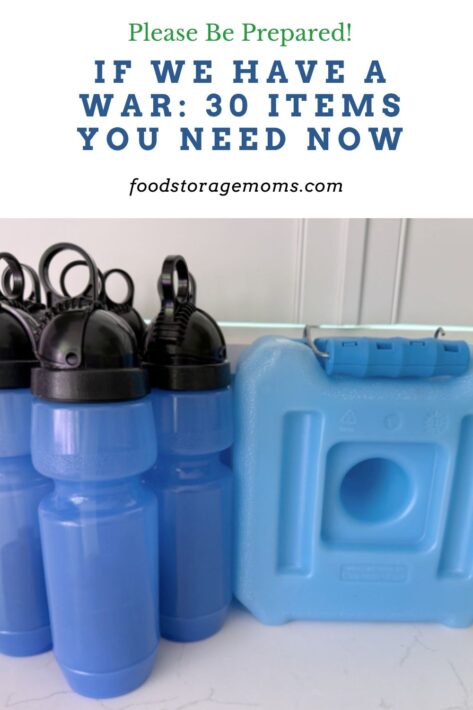
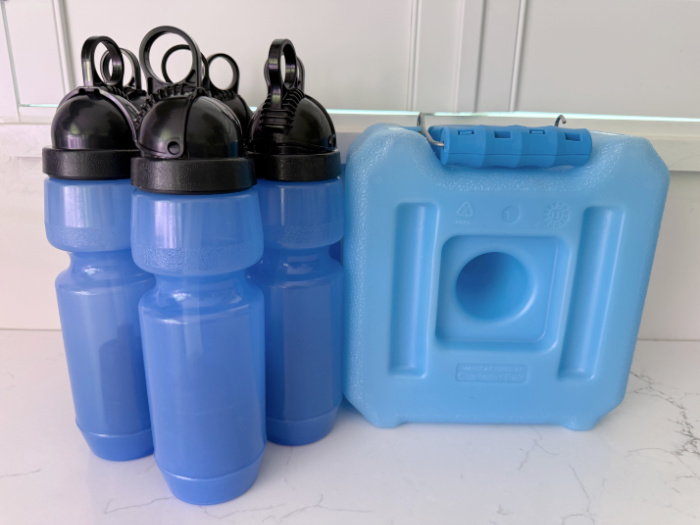
Municipal water supplies can be compromised during conflict. Portable water filters such as the Sports Berkey or Sawyer Squeeze can filter thousands of gallons of water, while iodine or chlorine tablets serve as a compact backup. Every family emergency bag should include at least one method of purification. Sports Berkey Bottles
- Collapsible Water Carriers
If you need to evacuate quickly or collect water from a source, collapsible containers are lightweight and easy to store. Keep two or three folded flat in your emergency pack. Collapsible Water Carriers
CATEGORY 2 — FOOD AND NUTRITION
- Non-Perishable Food Supply (30-Day Minimum)
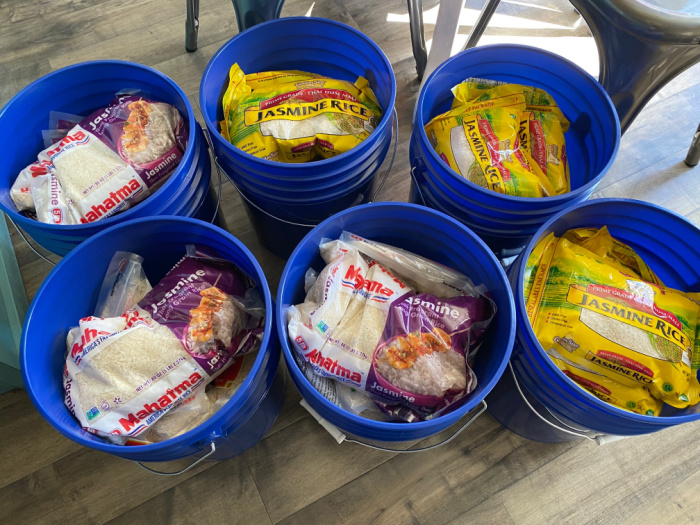
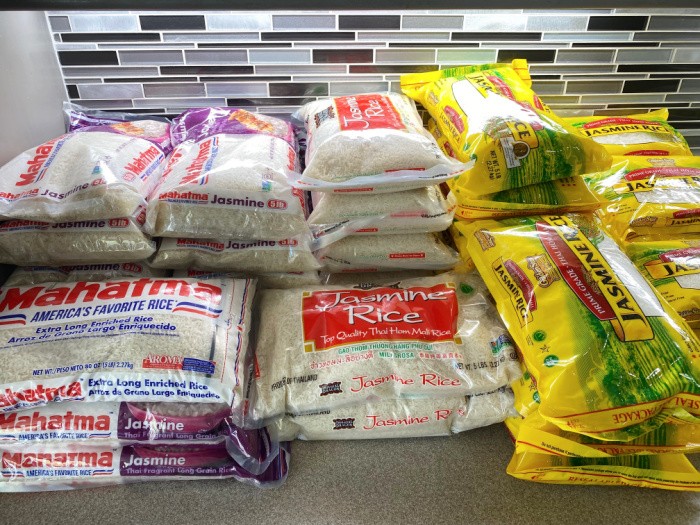
Canned goods, freeze-dried meals, and vacuum-sealed staples like rice, oats, and lentils form the backbone of any wartime food cache. Rotate stock every six to twelve months. Prioritize foods your family will actually eat. Stress isn’t the time to introduce new flavors at mealtime.
- Manual Can Opener
One of the most overlooked items in any survival kit. Power outages make electric openers useless. Keep two in your kit, one at home and one in your go-bag.
- High-Calorie Emergency Ration Bars
Designed for survival scenarios, these compact bars provide 2,400 to 3,600 calories per package and have shelf lives of five years or more. They’re ideal for bug-out bags because they require no preparation and take up minimal space.
- Baby Food and Formula (If Applicable)
Infants have specific nutritional needs that can’t be met by substitutes. If you have young children, stockpile at least a three-month supply of formula and age-appropriate food. Breastfeeding mothers should also ensure adequate caloric intake and hydration.
- Comfort Foods and Morale Items
Psychological well-being matters just as much as physical survival. Include a small supply of chocolate, coffee, hard candy, or any shelf-stable comfort item your family enjoys. Morale is a survival resource.
CATEGORY 3 — MEDICAL AND FIRST AID
- Comprehensive First Aid Kit
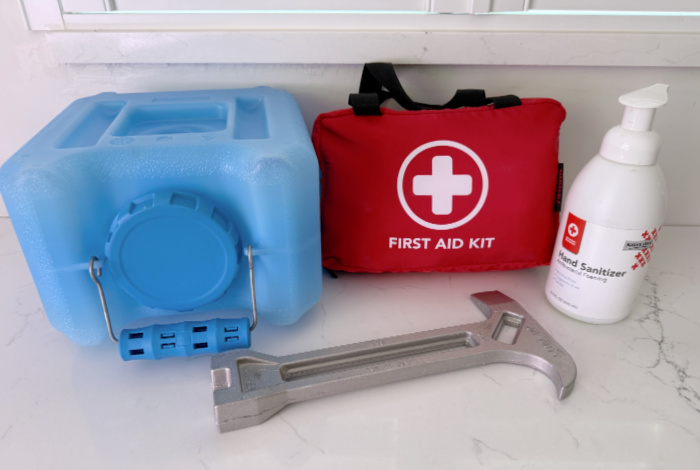
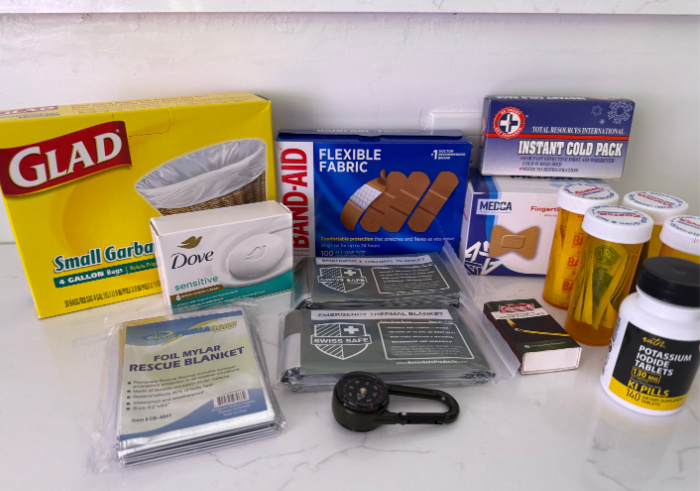
Go beyond the standard drugstore kit. Your wartime medical cache should include sterile gauze pads, compression bandages, antiseptic wipes, medical tape, tweezers, a suture kit, nitrile gloves, a CPR face shield, and a detailed first aid manual. Take a basic first aid course now while resources are available. First Aid Kit
- Prescription Medications (90-Day Supply)
Talk to your doctor about obtaining extended supplies of any critical medications. During wartime, pharmaceutical supply chains can break down quickly. Insulin, blood pressure medication, antiepileptics, and psychiatric medications should be prioritized. Store in a cool, dry location away from light.
- Over-the-Counter Medications
Stock ibuprofen, acetaminophen, antihistamines, antidiarrheals, antacids, and cold and flu remedies. Include topical antibiotic ointment, hydrocortisone cream, and burn treatment gel. These seem mundane until they’re not available at any price.
- Tourniquets and Hemostatic Gauze
In the event of serious injury during conflict, knowing how to control severe bleeding could save a life. A CAT (Combat Application Tourniquet) and QuikClot hemostatic gauze are now recommended for civilian emergency kits by trauma surgeons and emergency physicians alike.
CATEGORY 4 — COMMUNICATION AND INFORMATION
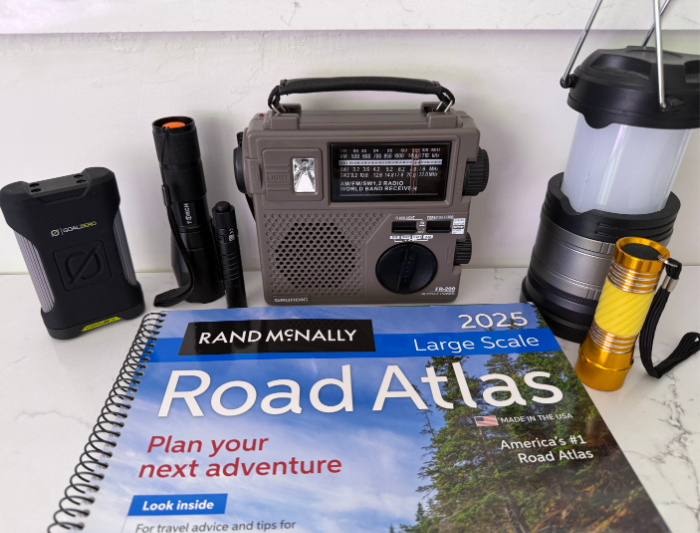
- Battery-Powered or Hand-Crank Emergency Radio
When the internet, cell service, and power grids fail, a NOAA-compatible emergency radio may be your only source of official information. Look for models with AM/FM, shortwave, and NOAA weather band capabilities. Solar charging is a useful bonus.
- Walkie-Talkies or Family Radio Service (FRS) Radios
Cell networks collapse during mass emergencies. Short-range two-way radios allow family members to stay in contact during evacuations or when separated, unless they’re out of range. Keep a set charged at all times and establish a family check-in protocol now.
- Physical Maps of Your Region
GPS depends on functioning satellites and charged devices. Printed topographic and road maps of your local area, state, and surrounding regions cost almost nothing and never run out of battery charge. Know at least two evacuation routes from your home before any crisis begins.
CATEGORY 5 — POWER AND LIGHT
- Portable Power Station or Generator
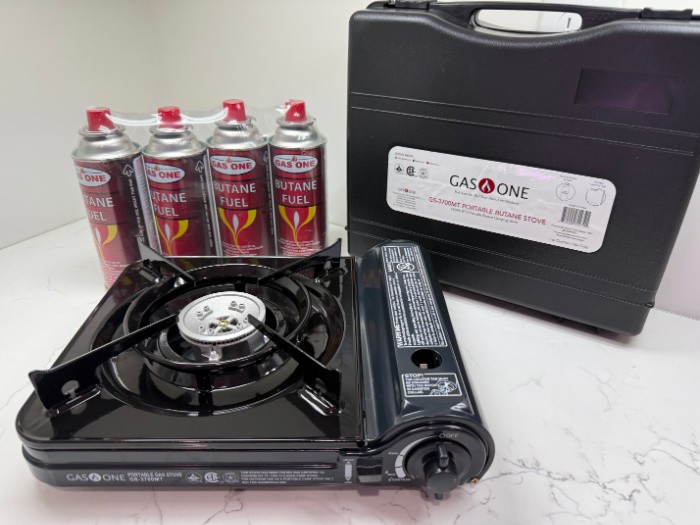
A solar-compatible portable power station can charge devices, run a CPAP machine, keep refrigerated medications cold, and power basic lighting. Generators require fuel storage, which introduces its own risks; balance your needs with your storage capacity and local regulations.
- Flashlights and Headlamps
Keep one headlamp per family member, plus several heavy-duty flashlights. LED models are far more efficient than older incandescent versions. Store extra batteries or choose rechargeable models. Hands-free illumination is essential when managing children, applying first aid, or navigating at night. Headlamps and Flashlights We have solar flashlights that we keep on our window sills so they stay constantly charged.
- Candles and Waterproof Matches
Long-burning candles and strike-anywhere matches are low-tech but reliable. Keep them in a waterproof container. Use candles cautiously around children and in enclosed spaces. Never leave them unattended.
CATEGORY 6 — SHELTER AND WARMTH
- Emergency Mylar Blankets
These lightweight, space-efficient foil blankets retain up to 90 percent of body heat and cost very little. Keep one per family member in every vehicle, go-bag, and emergency kit. They also function as ground covers, rain shelters, and signaling devices.
- Sleeping Bags Rated for Cold Weather
If you must leave home or lose heating, quality sleeping bags rated to at least 20°F can prevent hypothermia. Prioritize children’s sizes if you have young ones. Store bags in compression sacks to minimize space.
- Tarp and Paracord
A heavy-duty tarp and 100 feet of paracord allow you to create makeshift shelters, cover broken windows, secure loads, and perform dozens of other survival tasks. This simple combination has immense utility in a wide range of emergency scenarios.
CATEGORY 7 — SANITATION AND HYGIENE
- Portable Toilet and Waste Bags
Sanitation infrastructure is often among the first casualties of conflict. A portable camp toilet with compostable waste bags prevents the spread of disease in your household. Disease, not combat, is historically the leading cause of civilian casualties in wartime.
- Hand Sanitizer, Soap, and Disinfectant
Stockpile enough soap, hand sanitizer, and household disinfectant for several months. Maintaining hygiene when water is scarce requires discipline and supplies. Bleach (unscented), when diluted, is also a powerful disinfectant for surfaces and can be used to treat water in emergencies.
- Feminine Hygiene and Diapering Supplies
Often excluded from generic preparedness lists, menstrual products and diapers are essential for many families. Stock a three-month minimum supply, or consider reusable alternatives such as cloth diapers and menstrual cups, which help eliminate restocking concerns.
CATEGORY 8 — DOCUMENTS AND FINANCIAL PREPAREDNESS
- Waterproof Document Safe or Folder
Gather physical copies of every critical document your family owns: passports, birth certificates, Social Security cards, insurance policies, deeds, vehicle titles, medical records, and prescriptions. Store originals in a fireproof, waterproof container at home and a duplicate set offsite or in a safety deposit box.
- Cash in Small Denominations
ATMs and card readers fail when power goes out. Keep a meaningful amount of physical cash in small bills, accessible at all times. A mix of ones, fives, tens, and twenties allows you to make exact purchases without needing change from strangers.

CATEGORY 9 — TOOLS AND UTILITY
- Multi-Tool or Swiss Army Knife
A quality multi-tool with pliers, blades, screwdrivers, a saw, and scissors handles an extraordinary range of tasks. Keep one in your kit and one in your vehicle. Choose a reputable brand — this isn’t the place to cut costs.
- Duct Tape
The utility of duct tape in emergencies is nearly impossible to overstate. Window sealing, shelter repair, wound closure in extreme situations, equipment repair, and improvised carrying solutions are just a few of its wartime applications. Store two rolls per kit.
- Fire Starting Kit
Beyond matches and lighters, a quality fire-starting kit includes a ferrocerium rod, tinder material, and fire-starting cubes. The ability to reliably start a fire provides heat, cooking capability, boiling water for purification, and psychological comfort, all of which are critical in an extended emergency.
CATEGORY 10 — FAMILY COORDINATION AND MENTAL HEALTH
- A Written Family Emergency Plan
The most important item on this list is not a physical object. Sit down as a family and write out your emergency plan. Where will you meet if separated? What are the two evacuation routes from your home? Who is the out-of-state contact? What are each person’s roles and responsibilities? A family that has rehearsed a plan will outperform a family with expensive equipment and no coordination. Review the plan twice a year and update it as children grow and circumstances change.
THE BOTTOM LINE
Preparing for the possibility of war or large-scale conflict doesn’t require extreme political views or a bunker mentality. It requires the same foresight that leads responsible families to carry car insurance, wear seatbelts, and install smoke detectors. These 30 items represent a solid foundation, not a complete solution, but a meaningful head start.
Start with water and food. Add medical supplies. Communicate with your family. Build your plan. And do it now, while shelves are full, prices are normal, and the pressure of crisis isn’t yet upon you. The best time to prepare was years ago. The second-best time is today.
FREQUENTLY ASKED QUESTIONS
How much does it cost to build a basic war preparedness kit?
A solid foundational kit for a family of four can be assembled for between $500 and $1,500, built gradually over several months. Prioritize water, food, and first aid; these provide the highest return on investment at the lowest cost.
Where should I store my emergency supplies?
Keep the bulk of your supplies at home in a cool, dry, dark location. Store a smaller go-bag in each vehicle and consider a secondary cache at a trusted family member’s home in a different area.
How do I talk to children about war preparedness without causing anxiety?
Frame preparedness as a family strength, not a fear response. Use age-appropriate language, involve children in age-suitable tasks like packing snacks or choosing comfort items, and emphasize that having a plan means your family is ready for anything.
How often should I rotate my emergency food and water supply?
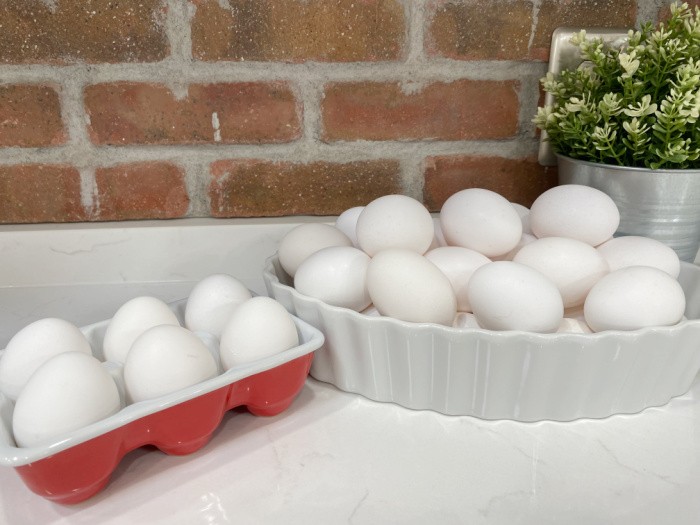
Water stored in commercial containers should be replaced every six to twelve months. Canned and shelf-stable foods should be cycled using the first-in, first-out method, with attention paid to expiration dates. Freeze-dried foods often have 25-year shelf lives and require less frequent rotation.
Is this list applicable outside of wartime scenarios?
Absolutely. Every item on this list is equally useful in natural disasters, extended power outages, pandemic disruptions, and severe weather events. A war preparedness kit is simply a comprehensive emergency preparedness kit by another name.
Final Word
Preparedness isn’t about fear; it’s about love. Every can of food you store, every plan you write down, and every conversation you have with your children about what to do in an emergency is an act of care for the people who matter most to you. War may never come to your doorstep. But the calm, capable family you become in the process of preparing will serve you in every storm life sends your way, large or small. Start today. Start small. Just start. May God bless this world, Linda











Weapons: you only own what you can keep and that includes yourself
Matt, you nailed it on this one. Thank you! Linda
We have some extra time, and if this turns out well, great. Another crisis will come along sometime. Consider this a wake up call.
Hi Janet, you are so right, I didn’t write these for just a war, its for disasters as well. A few okay, many people need a wake up call! Get prepared, these will be no “DoorDash” after a disaster. Linda
“Freeze-dried foods often have 25-year shelf lives”
I read the same thing when buying some and thought what a great deal…
Has anyone tried some after 5, 10 or more years?
Pretty sad when you open a can that’s less than half the age and it smells really stale. I mean stale enough that putting it in your mouth is the last thing you want to do 😛
I had too much invested over 10 years to feel good continuing down that path, especially when you look at the amount of water YOU MUST HAVE to use that food.
Imma going to have to open more cans and see just how bad it is. Just imagine if SHTF and there is no other food how bad off we could be!
Hi Bruse, I need to ask you where you purchased that food immediately. I need to tell you why ASAP. Linda
Hi Bruce, if you purchased those items from the LDS cannery they may be rancid. How Do I know? I bought it for all my daughters and the cannery did not know how to use oxygen absorbers. THEY WERE VOLUNTEERS HANDING OUR OPEN BAGS of oxygen absorbers. Yes, it was cheaper, but I had to throw out about $1200 worth of food we dry canned. I pray people check those cans. It is indeed rancid. The LDS church has since shut down their “Do it yourself” dry cannery. I have had so many people contact me at my house to check their LDS cannery cans. It IS rancid. Please note, I am not talking about what they sell online, but I wouldn’t buy that either. Linda
Hi Bruce, is it freeze-dried or dehydrated food? Linda
Hi Bruce, sorry so many emails. I ONLY have the Thrive Life brand, Mark and I are living off of it right now. I’m 76 and he will be 80. It’s perfect it is not rancid. Beauitful color, taste, and the smell is wonderful. Linda
Let’s see if I can answer the flurry! 😀
No nothing from LDS
Mostly freeze dried
Some of the newer cans are Thrive.
The oldest are Emergency Essentials (they had great sales back in the day) All said a handful of well known brands, that’s why I must pop some more tops… Was it just 1 or are there many problems across batches and/or brands. My oldest is about 15 years and newest is only maybe 2.
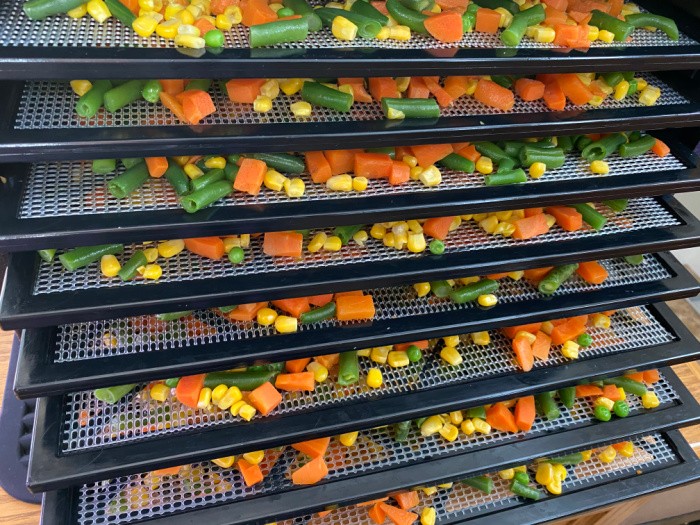
Hi Bruce, thank you for getting back to us. I do know that Thrive Life had some recalls, one was pancake mix years ago. It had a short shelf life anyway. I had to call Thrive Life because they shipped pinto beans, not Instant Pinto Beans to me. They took care of that. I can’t think of another recall at the moment. If in fact those cans you have are freeze dried they should have a longer shelf life compared to dehydrated foods like eggs, potatoes, and carrots. Some companies print the processed date on the bottom of the cans. If you in fact stored those cans in your house in a cool location, they should replace the bad ones. It’s worth a call. Of course you don’t want to have to open all of them. Some may be good. Mark and I are living off of our freeze dried food, at or age, it makes sense. It takes more water than I realized for freeze-dried food. Linda
Started with Emergency essentials many moons ago. I stick to freeze dry food but there’s a couple things that seem to be available in dehydrated only.
I, like the flock, took their word for it – 20 – 25 years… Read a post on a prepper blog about not knowing till its too late for plan B – That would be a bite of a bad apple that I don’t want, so I checked one.
I don’t want to get too excited – yet – but I’m going to have to check some more cans.
I have learned over the years that it’s the ingredients you have to look at. Plain white rice, plain salt, plain sugar, lots of things will last almost forever. Till they add a bunch of stuff, like a freeze dry pack of stroganoff- its the flavor and gravy stuff that has maybe 2 year life expectancy. might be great for a pack trip this summer but not in my long term supplies!
Some of the stores I’ve used are:
Nutristore
Ready Store
Be Prepared – Emergency Essentials
Thrive Life
Valley Food Storage
BeReadyFoods
and a couple other prepper emails that had pouches for great deal (pouches… what ever they say its a couple years maybe (they’re pouches NOT sealed steel cans 😉
Hi Bruce, All of these companies have sent me food storage to try. Some were meals, but they all tasted the same. Mushy meal. These are all great companies, let’s be clear. NutriStore and Thrive were sister companies, both now out of business. Wait, I have never tasted any from BeReadyStores. All the others sent me cases of food to test. Valley Food Storage is a good one (meals, I never bought any). The Ready Store and Emergency Essentials have been around forever, it seems. I wasn’t satisfied with the quality of those. Personal preference. I bet they are better now.
I only purchased plain meat, fruits, vegetables, and instant milk (25 years). No meals, too much junk in the ingredients. It’s easy for some people, but it’s scary because some items in those buckets have a shorter shelf life, while others have a longer one.
I sure hope 99% of the items you have are okay!!! Linda
For those of us who are boaters, most have a vhf radio. They are all 12v. Because we did a lot of off shore sailing and were living aboard (a larger vessel), we also have hand a hand held vhf radio. Looks like a walkie talkie.
In addition to talk channels Marine radios all have Coast Guard channels and National weather channels. So, IF the Coast Guard is not down, they can be reached via radio. Line of sight. The higher the antenna, the longer the range. We could talk to CG Miami from places in the western Bahamas. They have tall antennas with boosters and our was coming off the top of the mast.
Point it, it’s another way of communicating and it isn’t limited to your walkie talkie talking to another on your frequency…and people already own them.
Doesn’t help the land locked, but there are a lot of us who have boats.
When hurricanes hit, I always bring the hand held VHF home.
HI CAddison, I’m getting a lot of emails to what to use if the power is down about communication. Someone mention the App: Zello, yes it needs the internet, but you may be able to get a signal and you can talk to others who are on Zello. Ham radio are another great option. Thanks for the tips on the Marine radios, etc. Great tips, Linda
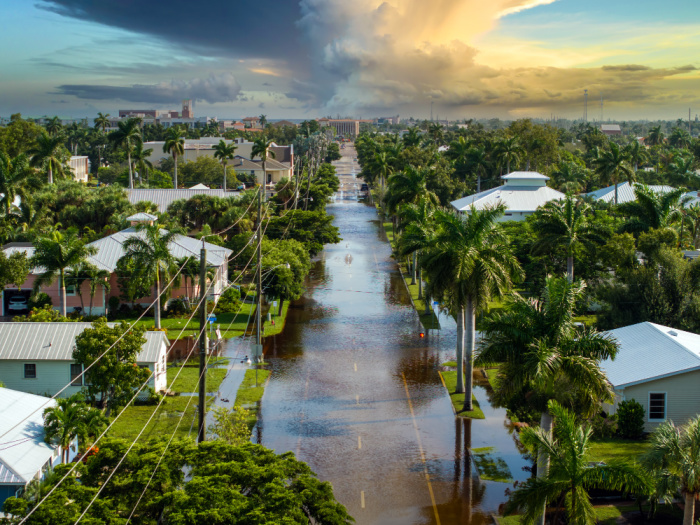
Where we live, there was NO communication from internet or phone at all for 2 week after Hurricane Ian. When the towers go dark, that’s it. The generators or batteries on them are normally good for a couple of days. We didn’t have that. We had radio, antenna tv off the generator, and the vhf.
After about 5 days, I could ping with barely 1 bar off a tower somewhere a long way off.
Texting will work when nothing else does. That’s how the 911 people got word to loved ones. Once a text gets into the system, it goes into a que and waits for when there is bandwidth to get through. It can take a while, but once it is gone, it will go through if it gets into their system.
As to things like those “rapid radios.” The advertising is misleading. Read the fine print. They depend on towers.
The ONLY thing that will get through are satellite phones OR, now, Starlink.
I have Verizon for phone, AT&T for fiber optic internet, and Starlink mini, which will run on either 12v or 110.
Zello and any of the others are useless if you have no signal. If you have a signal, then you don’t need Zello.
Again- best way through if there is any signal is text. Phone calls take a lot of bandwidth and clog and jam the system rapidly.
I had people who were upset because they didn’t know what happened to us. I asked them what the heck they thought they were going to DO? Once things opened up, we didn’t have time or energy to deal with all those people who were sitting somewhere wondering.
Ham radios are good, but require knowledge. Take a look at short wave radios. That’s what we have. Even a short wave receiver is good for getting information. One of my emergency radios has a short wave full band.
Unless you have been where there is NO communication it’s hard to comprehend how it is.
And, remember- nobody is coming to help. That’s the reality.
Hi CAddison, I want Starlink so bad, its not in the budget. But that’s life. I have everything I need for Mark and I. Great tips as always, thank you! Linda
Starlink has a sale going on the mini. Once you get it, you pay for one month $50. Then you toggle it to stand by for $5/month. I have it for emergencies. On standby you can still make calls, send texts, and use some apps. IF things go sideways, people on standby automatically get accepted for full service- if they have congestion issues, some won’t get on.
For you it should be tax deductible as part of your business. I splurged to get the 12v plug and case for it. Both were on sale. Walmart. free delivery
Hi CAddison, I will pass this information on to some of my friends, thank you. I will check it out, thanks again, Linda
We are as prepared as possible but I continue to do what I can. My prayers are that the people who are not prepared will see this as a wakeup call.
Hi Chris, great comment, we are prepared, the others are in la la la land. They have been told, no one delivers food or water, no one delivers anything after a disaster, a tornado, hurricane, or a war. It’s not going to happen. Great comment, Linda