Freezer Meal Prep & Long-Term Freezer Storage Tips
This post may contain affiliate links. We may earn a commission if you purchase via our links. See the disclosure page for more info.

Freezer meal prep is one of the most effective strategies for saving time, reducing food waste, and sticking to a budget. Whether you’re a busy parent, a working professional, or simply someone who wants to eat better without the daily grind, mastering your freezer can completely transform how you approach mealtime.
Imagine coming home after a long day and having a delicious, home-cooked meal ready in minutes, no delivery apps, no scrambling for ingredients. That’s the power of freezer meal prep.
In this in-depth post, you’ll learn everything you need to know about freezer meal prep and long-term freezer storage, from the science behind freezing food safely to the best containers, to a complete list of freezer-friendly meals.
Introduction: Why Freezer Meal Prep Is a Game-Changer
Table of Contents
- How Freezing Preserves Food
- The Golden Rules of Freezer Meal Prep
- Best Containers for Freezer Storage
- How Long Can You Freeze Food? (Complete Storage Guide)
- Step-by-Step Freezer Meal Prep Process
- The Best Freezer-Friendly Meals and Recipes
- Foods You Should NEVER Freeze
- Tips for Organizing Your Freezer
- How to Prevent Freezer Burn
- Thawing Food Safely
- Freezer Meal Prep for Special Diets
- Frequently Asked Questions
1. How Freezing Preserves Food
Understanding the science behind freezing helps you make smarter storage decisions. When food is frozen, the water inside its cells turns to ice, which halts the growth of bacteria, yeast, and mold — the primary culprits of spoilage.
However, freezing doesn’t kill microorganisms; it only suspends their activity. Once food thaws, bacteria can resume multiplying, which is why safe thawing practices are essential (more on that below).
The quality of frozen food depends on three key factors:
- Temperature: Your freezer should be set at 0°F (-18°C) or below at all times. Even slight fluctuations degrade food quality over time.
- Speed of freezing: The faster food freezes, the smaller the ice crystals that form — and smaller crystals cause less damage to cell walls, preserving texture and flavor.
- Air exposure: Oxygen causes freezer burn and oxidation. Proper packaging minimizes exposure to air and maintains quality.
2. The Golden Rules of Freezer Meal Prep
Before diving into recipes and containers, internalize these core principles:
#1: Start with Fresh, High-Quality Ingredients
Freezing can’t reverse spoilage. Freeze food at peak freshness for the best results when thawed.
#2: Cool Food Completely Before Freezing
Never place hot or warm food directly in the freezer. It raises the internal temperature, potentially thawing surrounding items and creating condensation that leads to ice crystals. Allow food to cool to room temperature (within 2 hours) before freezing.
#3: Portion Before Freezing
Freeze meals in individual or family-sized portions based on your needs. This makes thawing faster and reduces waste since you only defrost what you’ll use.
#4: Label Everything
Every container should be labeled with:
- Contents (be specific: “Chicken Tikka Masala — 2 servings”)
- Date frozen
- Reheating instructions (optional but helpful)
- You use something as cheap as adhesive tape on the container as a label
#5: Use the FIFO Method
FIFO = First In, First Out. Always place newer items at the back of the freezer and older items at the front. This ensures nothing gets lost or forgotten.
#6: Don’t Overload Your Freezer
A freezer works most efficiently when about 75–85% full. Too full restricts airflow; too empty wastes energy and causes temperature fluctuations.
3. Best Containers for Freezer Storage
The right packaging makes all the difference between a meal that tastes fresh and one that’s riddled with freezer burn.
Freezer-Safe Zip-Lock Bags
- Best for: soups, stews, marinated meats, blanched vegetables
- Pro tip: Lay bags flat to freeze, then stack vertically to save space
- Look for bags labeled “freezer bags”; they’re thicker than regular storage bags
Glass Containers with Airtight Lids
- Best for: casseroles, pasta dishes, individual portions
- Pro tip: Leave 1 inch of headspace, liquids expand when frozen
- Choose wide-mouth jars for soups and sauces
Aluminum Foil Pans
- Best for: casseroles, lasagnas, baked dishes
- Can go directly from freezer to oven, extremely convenient
- Cover tightly with heavy-duty foil
Plastic Freezer Containers
- Best for: soups, chilis, sauces
- Look for BPA-free containers rated for freezer use
- Avoid thin, cheap containers that crack at low temperatures
Vacuum Sealer Bags
- Best for: meats, fish, and any food you want to store for 6+ months
- Removes virtually all air, dramatically extending shelf life and preventing freezer burn
- A vacuum sealer is one of the best investments for serious meal preppers
What to Avoid:
- Regular plastic bags (not thick enough)
- Glass without headspace (can crack)
- Containers not labeled “freezer safe.”
- Thin plastic wrap alone (insufficient barrier against air)
4. How Long Can You Freeze Food? (Complete Storage Guide)
While frozen food remains safe to eat indefinitely at 0°F, quality degrades over time. Here are the recommended maximum storage times for best quality:
Meats
| Food | Freezer Life |
|---|---|
| Raw beef, pork, lamb (roasts, steaks) | 4–12 months |
| Raw ground meat | 3–4 months |
| Raw poultry (whole) | 12 months |
| Raw poultry (pieces) | 9 months |
| Cooked meat | 2–3 months |
| Cooked poultry | 4 months |
| Hot dogs / deli meat | 1–2 months |
| Bacon and sausage | 1–2 months |
Seafood
| Food | Freezer Life |
|---|---|
| Lean fish (cod, tilapia) | 6 months |
| Fatty fish (salmon, tuna) | 2–3 months |
| Shrimp and scallops | 3–6 months |
| Cooked seafood | 3 months |
Prepared Foods & Leftovers
| Food | Freezer Life |
|---|---|
| Soups and stews | 2–3 months |
| Casseroles | 2–3 months |
| Cooked pasta with sauce | 2–3 months |
| Pizza | 1–2 months |
| Cooked rice | 6 months |
| Cooked beans | 3 months |
| Bread and baked goods | 3 months |
| Muffins and pancakes | 2–3 months |
Dairy & Eggs
| Food | Freezer Life |
|---|---|
| Hard cheese (shredded) | 6 months |
| Butter | 6–9 months |
| Ice cream | 2–4 months |
| Egg whites or yolks (raw) | 12 months |
Fruits & Vegetables
| Food | Freezer Life |
|---|---|
| Blanched vegetables | 8–12 months |
| Fruits (unsweetened) | 6–9 months |
| Fruit purees | 6 months |
5. Step-by-Step Freezer Meal Prep Process
1: Plan Your Meals (1–2 Days Before)
Start with a meal plan for 2–4 weeks. Choose 5–10 recipes that freeze well. Look for:
- Recipes with overlapping ingredients (buy in bulk and save)
- A variety of proteins, cuisines, and cooking methods
- Meals your household actually enjoys eating
Pro tip: Choose 2–3 recipes that use the same protein (e.g., chicken) so you can cook in one large batch and divide among multiple dishes.
2: Create a Master Shopping List
Organize your list by category (produce, proteins, pantry staples) to shop efficiently. Buying in bulk from warehouse stores like Costco or Sam’s Club can significantly reduce costs.
3: Prep Day Setup
Set up your kitchen as an assembly line:
- Clear all counter space
- Have all containers, labels, and markers ready
- Preheat the oven or get pots ready
- Pull out a large cutting board, a sharp knife, and mixing bowls
4: Cook in Batches
Work smartest by cooking similar items together:
- Roast multiple sheet pans of vegetables at once
- Brown several pounds of ground meat in one large pan
- Cook multiple batches of grains (rice, quinoa) simultaneously
- Simmer large pots of soup or sauce
5: Cool, Portion, and Package
- Spread food in shallow containers to cool quickly (within 2 hours)
- Divide into appropriate portions
- Remove as much air as possible from bags
- Leave headspace in containers for liquids
6: Label and Freeze
- Label every item before freezing
- Place items in the coldest part of your freezer (usually the back)
- Lay bags flat until frozen solid, then reorganize vertically
7: Build Your Freezer Inventory
Keep a running list (on paper, a whiteboard, or a phone app) of everything in your freezer, including the date it was placed in the freezer. Update it as you add and remove items.
6. The Best Freezer-Friendly Meals and Recipes
Not all foods freeze equally well. Here are the top categories and ideas:
Soups & Stews (The Freezer Royalty)
Virtually all soups and stews freeze beautifully. Top options:
- Chicken noodle soup (freeze before adding noodles; add fresh when reheating)
- Beef and vegetable stew
- Lentil soup
- Black bean chili
- Tomato bisque
- Butternut squash soup
Casseroles & Baked Dishes
- Lasagna (freeze unbaked or baked)
- Chicken enchiladas
- Shepherd’s pie
- Baked ziti
- Breakfast casserole (eggs, sausage, cheese, vegetables)
Proteins
- Marinated raw chicken breasts (freeze in marinade, they marinate as they thaw!)
- Cooked shredded chicken (incredibly versatile, tacos, salads, sandwiches)
- Cooked ground beef or turkey (season or leave plain)
- Meatballs (freeze individually on a sheet tray, then bag)
- Pulled pork
Grains & Sides
- Cooked rice and quinoa (portion in zip-lock bags, lay flat)
- Mashed potatoes
- Roasted vegetables
Breakfast Items
- Breakfast burritos (scrambled eggs, cheese, sausage, wrapped in foil)
- Pancakes and waffles (freeze on a sheet tray first)
- Muffins (individually wrapped)
- Smoothie packs (pre-portioned fruit and greens)
- Egg muffin cups
Sauces & Bases
- Marinara sauce
- Bolognese
- Curry base
- Pesto (freeze in ice cube trays, then transfer to bags)
- Homemade broth
7. Foods You Should NEVER Freeze
Some foods become unpalatable or unsafe after freezing. Avoid freezing:
- Lettuce and leafy greens (become wilted and slimy)
- Cucumbers and raw celery (lose all texture)
- Whole eggs in shell (the shell cracks; freeze beaten eggs instead)
- Mayonnaise and cream-based sauces (separate and become watery)
- Sour cream and yogurt (texture becomes grainy)
- Cooked pasta without sauce (turns mushy when thawed)
- Soft cheeses (brie, ricotta, cottage cheese lose texture.
- Fried foods (coating becomes soggy)
- Watermelon and high-water fruits (turn mushy)
- Gelatin-based desserts (break down completely)
8. Tips for Organizing Your Freezer
A well-organized freezer saves time, reduces waste, and makes meal prep sustainable in the long term.
Use Zones
Divide your freezer into designated zones:
- 1: Ready-to-eat meals (soups, casseroles, prepped dishes)
- 2: Raw proteins (meats, seafood)
- 3: Fruits and vegetables
- 4: Grains and breads
- 5: Breakfast items
Use Bins and Baskets
Small bins or dollar-store baskets group similar items together and make it easy to pull out a whole category at once without digging.
Freeze Flat, Store Vertical
Freeze soups and stews in zip-lock bags lying flat. Once frozen solid, store them upright like file folders. This maximizes space dramatically.
Keep an Inventory List
Tape a whiteboard or sheet of paper to the outside of your freezer and update it every time something goes in or comes out.
9. How to Prevent Freezer Burn
Freezer burn occurs when moisture evaporates from the surface of food, leaving dry, grayish patches. It’s not dangerous, but it severely affects texture and flavor.
Prevention Strategies:
- Wrap food tightly in plastic wrap before placing it in a container or bag
- Remove all air from zip-lock bags; press out manually or use a straw
- Use a vacuum sealer for items stored longer than 3 months
- Double-wrap meats and other vulnerable items
- Keep your freezer at 0°F; temperature fluctuations accelerate freezer burn
- Don’t leave the freezer door open longer than necessary
- Use food within recommended timeframes; even the best packaging has limits
10. Thawing Food Safely
Improper thawing is one of the leading causes of foodborne illness. Never thaw food at room temperature. The safest methods are:
Refrigerator (Best Method)
- Slow and safe; keeps food at a consistent temperature
- Plan ahead: large items like whole chickens can take 1–2 days
- Thawed food can be kept in the fridge 1–2 days before cooking
Cold Water
- Place food in a leak-proof bag and submerge it in cold water
- Change the water every 30 minutes
- Cook immediately after thawing; do not refreeze
Microwave
- Use the defrost setting
- Cook food immediately after thawing in the microwave
- Parts of the food may begin to cook during this process
Cooking from Frozen
- Many foods (casseroles, soups, vegetables) can go straight from freezer to oven or stovetop
- Simply add extra cooking time (usually 50% longer than the fresh version)
Never Thaw:
- On the countertop at room temperature
- In hot water
- Left out overnight
11. Freezer Meal Prep for Special Diets
For Vegetarians and Vegans
The freezer is your best friend. Focus on:
- Bean and lentil soups and stews
- Veggie burgers (freeze individually)
- Grain bowls (freeze components separately)
- Tofu scrambles
- Vegan chili
For Gluten-Free Diets
Most naturally gluten-free foods freeze wonderfully:
- Rice-based dishes
- Corn tortilla enchiladas
- Soups and stews thickened with cornstarch
- Grilled meats and roasted vegetables
For Low-Carb / Keto Diets
- Cooked proteins (chicken, beef, pork)
- Cauliflower rice and mashed cauliflower
- Soups without noodles or starchy vegetables
- Egg muffin cups
- Fat bombs and keto desserts
For Families with Young Children
- Mini meatballs
- Mac and cheese (homemade)
- Chicken nuggets (homemade)
- Pancakes and waffles
- Smoothie packs
12. Frequently Asked Questions
Can I freeze food in store packaging? A: For short-term storage (1–2 months), store packaging is usually fine for meats. For longer storage, rewrap in freezer-safe packaging for best quality.
Can I refreeze thawed food? A: Yes, if the food was thawed safely in the refrigerator and has not been left out at room temperature. However, quality (texture and flavor) may decrease slightly with each freeze-thaw cycle. Cooked foods that were previously frozen raw can safely be refrozen after cooking.
Why does my frozen food smell strange? A: Odor absorption is common in freezers. Keep strong-smelling foods (like fish) tightly sealed. A box of baking soda placed in the freezer can help absorb odors.
How do I know if frozen food has gone bad? A: Signs include severe freezer burn (large white patches), an off smell after thawing, unusual colors, or a slimy texture. When in doubt, throw it out.
Is it safe to freeze food in aluminum foil? A: Yes, heavy-duty aluminum foil works well for freezer storage, especially for baked dishes. For long-term storage, place foil-wrapped items inside a freezer bag for added protection.
Does freezing kill bacteria? A: No, freezing only pauses bacterial growth. Proper cooking to safe internal temperatures is required to kill harmful bacteria.
What’s the best freezer for meal prepping? A: An upright chest freezer is ideal for dedicated meal preppers. It provides more space, better organization and item viewing options, and consistent temperatures compared to the freezer compartment of a standard refrigerator.
Sustainable Food Storage Containers
Final Word
Freezer meal prep is one of the most impactful habits you can build for your health, budget, and sanity. It takes a little investment of time upfront, but the payoff, stress-free weeknights, zero food waste, and home-cooked meals always on hand, is absolutely worth it. Start small: pick two or three recipes this weekend, batch cook, and fill your freezer. Within a month, you’ll wonder how you ever managed without it. May God bless this world, Linda
Another post to save! I love this!! I made a big batch of spaghetti, and mixed the sauce and noodles, add cheese on top and baked it. When it was done, after we’d eaten what we wanted, I let it cool completely, and put it in the fridge. The next day, I cut it into meal sized portions and placed in a container and froze. Larry worked away over night sometimes and that’s what I’d eat for supper. Lasagna works well with this method, too.
Hi Deborah, you taught me the term encore meals, it sounds better than leftovers! LOL! We always have containers for two in the freezer. We call them mystery meals. LOL! I tell Mark, lets see what we are eating tonight……LOL! Linda
Excellent article Linda! Plus I like organization. I have been organizing my kitchen staples and finally finished this week. Now my family can’t tell me they can’t find anything. My freezer is next and this article came in at the right time.
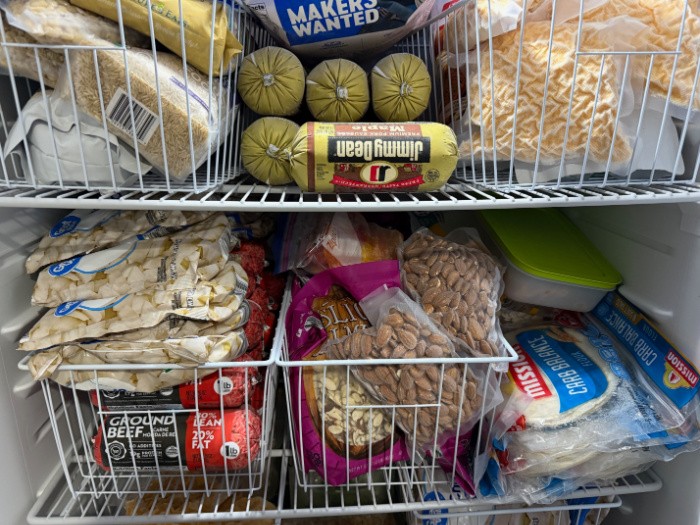
Hi Judy, oh my gosh, doesn’t it feel great to have your kitchen staples organized??? I just picked up some canned goods and getting them placed quickly out of the bags feels so good! I know exactly what I have now! I was getting low on certain items. Having your freezer organized helps a lot. Of course, I took a picture with the Jimmy Dean sausage upside down on the shelf, front and center! LOL! That’s how I roll, Linda
I’ve discovered Souper Cubes! These are a game changer for me! I’ve struggled in the past with a lot of food waste: not much for leftovers and sometimes extras simply get pushed to the back of the fridge and become science experiments Now I cool and immediately place portions in my Souper Cubes and freeze!
I have 1 cup and 1/2 cup Cubes. I’m planning to get a couple more as my budget allows.
Even though they are expensive, I find that less food waste saves more than the cost of the Cubes.
I also learned that I can bake in the cubes since they are silicone.
Hi Leanne, I love Souper cubes, they are expensive but worth every penny! I did not know they are oven safe, thank you! Up to 415 degrees! I have all different sizes. Great for gifts, for someone special! Linda
Correction up to 415 degrees without the lid. Thanks Leanne! Linda
I cook large amounts of rice, then portion for future use. I vacuum seal each portion, adding a Tbsp or so of butter. After thawing, the rice package (still sealed) goes into water in a sauce pan to reheat. Works beautifully!!
Hi Kathie, I like the idea of adding the butter and reheating the vacuum sealed bag in boiling water! Love it! Linda
I would freeze 45 quarts of strawberries every June. Followed by raspberries, corn on the cob and tomatoes. I would place a 9 month meat order at the butchers and when I picked it up it would be pre seasoned, marinated and vacuum sealed. Spaghetti sauce, broccoli cheese chicken, portion controlled. Onions and peppers diced and baby carrots ready for roasts. Apple pies ready to bake and Christmas cookies, baked, frozen and labeled chicken livers so no one peaked.
Hi Chris, girl you are do organized, I would love frozen strawberries and raspberries. I’m hoping to order some good beef, it all depends on how things go the next few months. It’s such a great feeling to have frozen onions and carrots in the freezer for me. Life is good! Linda