
Dangerous Heat Dome With El Niño Brewing
This post may contain affiliate links. We may earn a commission if you purchase via our links. See the disclosure page for more info.

Dangerous heat dome with El Niño brewing. What you need to know and how to stay safe. If it feels like this summer has been brutal, you’re not imagining things. A powerful heat dome has settled over the western half of the country, and it’s being fueled by one of the strongest El Niño events in decades. Understanding what’s happening, and what’s likely coming next, can help your family stay safe through the rest of this summer and into the fall.
Cooling Items To Consider
Dangerous Heat Dome With El Niño Brewing
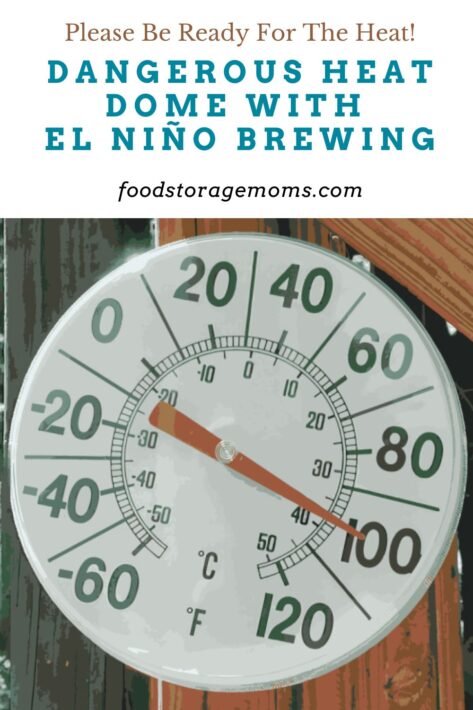
What is a dangerous heat dome?
A heat dome forms when a large area of high pressure gets stuck in place over a region and traps hot air underneath it, almost like a lid on a pot. The eastern United States experienced one of these heat domes from the end of June through the Fourth of July, and now a second heat dome has formed over the western half of the continent, bringing heat advisories to the southwestern United States and Alaska. These domes can sit over an area for days or even weeks, which is part of what makes them so dangerous.
What is happening with El Niño
El Niño is a natural climate pattern that develops when the surface waters of the central and eastern Pacific Ocean warm up. This year’s El Niño is turning out to be historic. The World Meteorological Organization says El Niño conditions have already set in and are forecast to strengthen rapidly between July and September. NOAA’s Climate Prediction Center reported on July 9th that there is now an 81% chance of a very strong El Niño by fall, up from 63% just the month before, and a 97% chance the event will last through early spring of next year. A NOAA scientist noted that only seven El Niño events over the last seventy five years have been classified as very strong, so this one is expected to rank among the strongest ever recorded.
Why this matters for the heat we’re feeling
El Niño tends to raise global temperatures, and scientists expect them to reach record levels during El Niño years. Right now, the western United States is under a serious heat threat. Parts of Arizona, Nevada, New Mexico, Texas, Arkansas, and Florida are forecast to see triple-digit or near-triple-digit temperatures, with the hottest conditions expected in southern California’s Coachella Valley, where Palm Springs could reach 117 degrees. Even areas that rarely see this kind of heat, like Montana and Wyoming, have been dealing with temperatures near 110 degrees, and many homes in those states simply aren’t set up with air conditioning for that kind of heat.
Climate researchers point out that El Niño usually influences weather more strongly later in the year. El Niño is expected to lead to a record warm year in 2027, while boosting temperatures to some extent this year as well, though its biggest impacts on land heat waves typically show up a few months after it strengthens rather than right away. In other words, what we’re feeling now may just be the beginning.
What is likely coming next?
Forecasters expect this pattern to continue building through the summer and into fall. The latest seasonal prediction models indicate an El Niño strength competitive with the strongest events of the past century, with the event expected to weaken through winter and into spring. That means more extreme heat waves are likely in the coming weeks, along with an increased risk of drought in some regions. El Niño years often bring drier conditions to parts of North America, so families who garden or store food from their own harvest may want to plan for a potentially tougher growing season.
There’s also a bigger picture concern beyond the heat itself. Very strong El Niño events have historically affected agricultural regions around the world, and a commodities analyst recently warned that global agricultural supply is highly concentrated geographically, with the top three exporting countries controlling sixty to ninety percent of global trade in crops like soybeans, corn, rice, sugar, and palm oil, leaving markets vulnerable to weather-related shocks. This is one more reason why having a well-stocked pantry and some home-grown food storage gives your family a real cushion if prices rise or certain items become harder to find later this year.
How to keep your family safe in extreme heat
Stay hydrated throughout the day. Don’t wait until you feel thirsty. Water is best, and you can add a pinch of salt or an electrolyte packet if you’re sweating heavily or spending time outdoors.
Keep your home as cool as it’s comfortable. Close blinds or curtains during the hottest part of the day, run fans to move air, and avoid using the oven or stove if you can help it. If you don’t have air conditioning, identify a cooling center, library, or shopping center nearby where your family can spend a few hours during peak heat, if necessary.
Heat Exhaustion and Heat Stroke
Watch for signs of heat exhaustion and heat stroke. Heavy sweating, weakness, dizziness, nausea, and a headache can signal heat exhaustion. Confusion, a rapid pulse, hot, dry skin, and a body temperature above 103 degrees can signal heat stroke, which is a medical emergency. Move the person to a cool place, apply cool cloths, and call for emergency help right away if you suspect heat stroke.
Check on older neighbors and family members. Older adults, young children, and people with chronic health conditions are at the highest risk in extreme heat. A quick phone call or visit can make a real difference.
Never leave children or pets in a parked car, even for a few minutes. Temperatures inside a car can climb dangerously fast, even with the windows cracked.
Plan outdoor activities and chores for early morning or evening. Avoid strenuous activity during the hottest hours of the day, generally between eleven in the morning and six in the evening.
Be careful when taking dogs for walks, as concrete sidewalks and asphalt streets can blister their paws in the heat. If you put your bare hand on the sidewalk and street, and if it doesn’t burn, you should be okay unless the temperature rises. That is the heat their paws will feel. DO NOT base it on the air temperature. Concrete sidewalks and asphalt heat up quickly.
Protect your food storage and garden. Extreme heat can be hard on a vegetable garden, so consider shade cloth for tender plants and water deeply in the early morning to reduce evaporation. Check that your stored food is in a cool, dry location, since extended heat can shorten the shelf life of some pantry items.
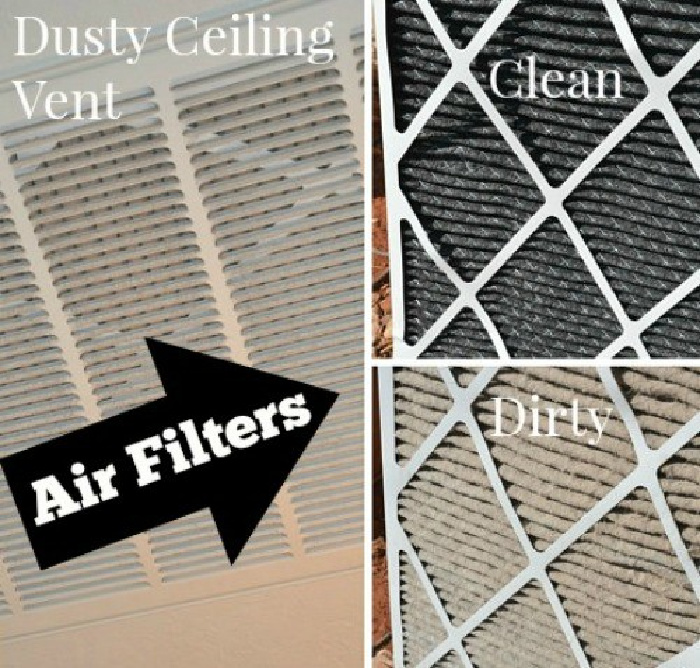
Change Your HAVC/AC Filters
Make sure you change out your A/C and furnace filters. My neighbor in Southern Utah called me and said her A/C wasn’t working. I said, “When was the last time you changed your filters?” She had no idea. Mark and I brought a ladder over, changed the filters, and the air conditioner started working again. She was lucky; she could have had a fire.
Prepare for possible power outages. Heat waves put a heavy strain on the power grid, and outages can happen without warning. Keep a battery-powered fan, extra water, and a way to charge your phone on hand.
Build a heat emergency kit. A simple kit with extra water, electrolyte packets, a battery-powered or hand-crank fan, sunscreen, and a list of nearby cooling locations can save you valuable time if the heat becomes dangerous.
Water Storage: How Much Do You Really Need?
125 Preparedness Items You Need To Stock
Final World
This summer’s heat dome and the historic El Niño building behind it aren’t something to brush off. Taking a few simple steps now-staying hydrated, keeping your home cool, checking on vulnerable neighbors, and keeping your food storage in good shape-can help your family weather whatever the rest of this year brings.
Extreme heat can sneak up on even the most prepared families, but a little planning goes a long way. Fill your water bottles, check on your neighbors, and keep your pantry stocked with foods that store well in the heat. Staying calm and staying ready is what self-reliance is all about. May God bless this world, Linda.
Copyright Images: Heat In Summer With High Temperatures Depositphotos_481425168_S, Thermometer Depositphotos_446688500_S a Author allanwoolwine








If you don’t have air conditioning, take a cotton sheet, dish cloth, etc. (Has to be only cotton) and wet it down real well. Wring it out where it’s still wet but not dripping. Hang over an open window. Hopefully you have a breeze. It will cool your room down quite a bit. Make sure you open another window across room to create a cross breeze. When cloth dries, re-wet and rehang. The Amish has been doing this for 100s of years. They don’t have or use a/c. I’ve tried it with my cotton flour sack dish towels and it works really good.
Hi Pam, oh this is awesome to learn, it makes total sense. We can learn a lot of the Amish, thank you, Linda
Your welcome. I just learned this myself. I don’t use air conditioning. Don’t really need it where I live. Don’t normally get out of the high 70s/low 80s, but tried it one day when we reached 83. I think we can all learn a lot from the Amish, I know I’m going to try to learn more. Stay cool during this heat wave we have coming soon. Same to ALL your readers.
Hi Pam, heat exhaustion is scary. We need to know how to stay cool. No A/C bills, that would be awesome! Linda
Linda, I don’t know about the rest of the SW but here in Kingman our temps have been below average. July is often the hottest month of the year, with August a close second, and yet this year we have only hit low triple digits three times. Usually we’re up around 110 or even hotter. Not this year–knock wood.
And this year, for the first time in two years, we are getting a bit of a monsoon season. Yeah, rain. So, at least for us, this El Nino is bringing cooler and wetter than normal weather. I guess even an ill wind can blow some good.
Hi Ray, Mark golfs twice a week and I worry about him in this heat wave we have going in Utah. But, I ask to please hydrate a long the way. My friends garden is suffering, mine is protected a bit from the house. I was afraid we wouldn’t get anything to grow but, I am pleasantly surprised where I put the planters. Hopefully we will all get rain, its the flooding that worries me. Stay cool, Linda
I close and open our curtains around the house as the sun moves. The same with opening and closing doors and windows for fresh air. Tom opens our attached garage door about 1 foot to release the heat of the day. Otherwise we stay in and try to schedule errands on the cooler days of the week. Please everyone stay safe and healthy and cool.
Hi Chris, that’s a great idea. I love fresh air! We used to open our garage in Southern Utah a couple inches for the same reason. Linda
I’ve lived in the subtropic area of S Florida for 52 years. Everything here is set for heat. Our worst months are generally Aug-September, but this year we are having that weather already. And, rain is spotty at best. I water my little garden with the water that comes out of our A/C unit.
Did you know about that? Put a bucket under the tube. Find a way to do it. I get between 10-15 gallons of water/day. ATMOSPHERIC water. That’s enough to sustain a few people if the water gets stopped or polluted. Don’t start with me about dirty air. If you are going to die from dehydration, a bit of whatever is in the air is not an issue. A Britta filter (or better) will do the job. Or filter through a paper towel or coffee filter.
We have R/O water from a big plant on our island. Takes some power and, after hurricanes, diesel to keep it going, but we had water for 3 hours a day and nobody else had any at all.
If People are getting toasted all over America, what about the crops? Fertilizer is not needed if there’s no water.
Linda has this just right. I took delivery of some #10 cans of hard white wheat from LDS. $3 to ship 60 pouns of the stuff across the country to me. Price was good compared to what flour/wheat will be later this year (opinion). I gave it a whirl in my Kitchen aid attachment and made a loaf of bread in my machine. Broke open a can to use as a tutorial. I know that learning under fire (and I mean guns) is not as good as knowing what to do before hand. I’ll store the canned wheat berries. I know how to use them now. I prefer my stored in glass grocery store flour!
I now have an Instant pot. There are other brands, but “instant pot” has become a generic name, like Kleenex. I don’t like appliances cluttering my counter, but the Bread Machine and Instant pot are worth the real estate. My bread machines have paid for themselves many times over during the last 30 years. The instant pot will do the same. They do a pretty good job substituting for an oven and stove top. Use a lot less power and are FAST. They work on generators or shore power.
I’m not domestic. I’m better at military things, but my mother, a WWII Marine Sgt. schooled me that everyone needs to be able to do many things. So, I learned. Thank you Julia Child and now the Tasty channel. We didn’t have lockdowns very long and ignored them anyway, but I did a lot more cooking then- and figured out some techniques.
It’s called “surviving.” Not survivalist stuff.
I will also tell you, as a person who was on the other side of a badge during spectacular emergencies…if you can’t DO for yourself, there will be nobody to DO for you. If you don’t have it, nobody else will – and won’t share.
So, this is one of Linda’s best ever. All her posts are good/great. The difference this time? The others were planning on speculative things. This one is warning about what IS coming.
And she wrote it very well.
I used to tell my officers “failure to plan on your part does not constitute an emergency on my part.” Tough words. When lives are on the line, “tough” is what we all have to be.
Life is good.
HI CAddison, okay, educate me on the KitchenAid wheat grinder, please. Did it not grind it fine enough? I love hearing how you have lived and how you live today as well. Is the wheat you ground to coarse??? I never thought about that, if that’s what happened. Mine have ways to adjust how fine I want my flour. We need to know, thank you, Linda
Hi CAddison, I just read the Kitchen Aid wheat grinder has adjustments but sometimes you have to double mill it for a finer texture. Linda
Let’s start out with I opened the one can so I could learn how to do this milling thing with the Kitchen aid attachment. Sacrificial can!! I don’t want to NEED the stuff and not get it right. First I did clean the oil off the screw. Boy, could that have been a sticky mess!
I had my trusty glass container of store bought whole wheat bread for comparison.
I believe the device works just fine. Changing the grinding level is easy. I was on “fine.” You were correct that it is slow. I got about a cup done and wondered whether it would be better/more efficient to do the first milling more coarse and then put it through again. THAT was a winner, but it was still a little gritty. Far from corn meal, but more than I thought it should be. I tried to run it through a 3rd time. Pretty much nothing came out…or maybe some, but I won’t live long enough to make bread from doing it that way!!!
I went with the coarser milling run 1 and then as fine as I could get in for #2.
My normal “whole wheat bread” is 3 C AP flour + 1 C whole wheat. I’m not a purist as long as there aren’t a bunch of chemicals. I sent you my bread machine recipe, honed to perfection after years of doing this & your dough enhancer (the coup de gras)
I made a 3 cup loaf with only the grain I ground. AND my home made dough enhancer (I use it now for my regular bread and it’s SO wonderful…and I had to cut the AP flour down to 2 1/3 cup or it blows the top off the machine! Big savings over time…AND the bread is magnificant.
Thank you for the dough enhancer tip.
Bottom line: Disclaimer: I am figuring this out!
The Kitchen aid attachment IS a winner if you are just milling a few cups at a time.
It is EASY to use, simple to clean with the included brush (no water), doesn’t take up much room and beats the heck out of a cheap hand grinder(no experience, but I can imagine!) and easy to adjust. The thing is idiot proof.
The cost is very reasonable.
IF you want to do 5 pounds of flour, it will take forever and I think it would be too hard on the mixer motor. Mine is one that has all metal parts. Good luck with the new ones.
For the average person who already has or wants a Kitchen Aid (they have a big assortment of attachments), this is the way to go.
It is no trouble to get the thing out and mill some flour for what you are doing today. I started it on my porch fearing a flour snow storm, but it isn’t messy so I went back into the A/C. I will use up the grain in the can by making a cup of WWheat for my regular bread recipe and see how that goes. That’s experiment #2 for later this week.
Let me say the taste of the bread is really good.
The critiques I read by people complaining about the device really need to get a REAL mill that is heavy duty. You are not going to get the same results with a $129 attachment that you will with a $600+ device.
For me- this is going to be just fine. Sometimes “good enough IS good enough.”
Fair warning- I’ll give you updates on my experiment as it goes along. Cooking is chemistry.
Hugs to all of you- now you know why a lot of people scram from Florida in the summer. Up north you bundle up, go outside in the cold and come into the warmth. Here we go outside in the heat for a while and come back into the a/c! Same thing in reverse.
Life is good.
Hi CAddison, thank you for sharing your experience with the KitchenAid mixer wheat grinder. You can use a Vitamix blender to grind a little at a time. You do not want to burn up your KitchenAid or Vitamix to grind 5 cups of flour. Nope, they are not designed to do that. I love your comment ““good enough IS good enough.” Thank you, Linda
We’ve been in triple digits about 7 times so far, but the last two days we’ve had rain and upper 70s to low 80s for highs. We live in East Texas. It’s always hot here in summer, but this year seems hotter to me. So glad for the rain! We do have AC, but I grew up with nothing, but open windows. Later a swamp cooler/water cool, fan. We did learn if you pour a block of ice in it, it cooled more. We only used during the day. Nights an oscillating fan with open widows. It’d get so cool you’d need a quilt before morning. Good times, but pretty sticky. Due to sweating. I have heard of the wet sheets in windows. Really good to know. My blinds stay closed. As do my curtains.
Hi Deborah, I grew up pretty much the same way. Windows open, then a Swamp Cooler, then an A/C. Life is good unless the power goes out! LOL! Linda
That is true, unless you have a generator to use. You know, I don’t remember losing power during my childhood. The heat or cold, I remember well! LOL No heat at night in winter. Frozen water in the toilet. Not fun, but real!
Hi Deborah, it’s awful what the heat is doing to the power grid which is antiquated already. Having a generator is a blessing! Linda
Yes ma’am it is. It’s a dual fuel one. Propane, which is what we use and gas. It will run the whole house, but we do turn off the AC until it gets too hot. We’ve lost a big freezer and refrigerator full of food before we got one.
Hi Deborah, you are blessed to have a generator. I like the idea of dual fuel, sounds like an excellent choice. Linda
Our area has had fairly normal temperatures after an earlier period of intense heat but we’re due for the higher temperatures again soon. I’m so glad I have a heat pump for cooling when it gets unbearable. If there’s a power failure there’s always the cellar. Not a nice place to hang out (unless you’re a spider!) but at least it’s cool down there. In the meantime I can close curtains and windows during the day and open everything up overnight. As long as it cools down outside at night it’s not bad but once the heat lasts all night it gets harder.
Hi Alice, oh the spiders, I have to laugh, I remember walking through my mother-in-laws cellar and there were spider webs. I only went down there once. It reminded me of a scary movie. Once when we were growing up, we had no type of A/C or a swamp cooler. I would go in the shower and get my nightgown wet so I could sleep through the night. I do not take A/C for granted. LOL! Linda
It is too hot where I live!! a bit over 100 several days in a row. I do have a free standing AC unit and it works great during the morning and until about 1:30pm. At 1:30pm or so, the sun starts coming into my main western window. Even though I have blackout curtains, the temp in my living room climbs as high as 88-90 degrees (AC keeps it about 75 during the morning hours). I have some window insulation (comes in a roll from Amazon – it is reflective and helps some!! but not quite enough for me!! One thing I also do is keep damp washcloths in the freezer to help me cool off.
Hi Leanne, oh my gosh, 88-90 degrees, I am spoiled, that is way too hot for me. I remember losing power in Southern Utah and I had portable fans, they helped a little. They took “D” batteries. Damp washcloths, great tip! Linda
Today our heat is around 88° with “feels like” temps at 93°-96° but our problem is not the heat but the air quality. Because of the Canadian wildfires, our air quality has been as high as 289. It’s very unhealthy for most people. My husband had a doctor’s appointment and he had to come straight home because his heart condition couldn’t handle the thick smoke in the air.
Hi Chris, oh my gosh, the air quality is bad there!!! It is indeed unhealthy for people! That’s scary!! I’m glad he got home okay. Linda