
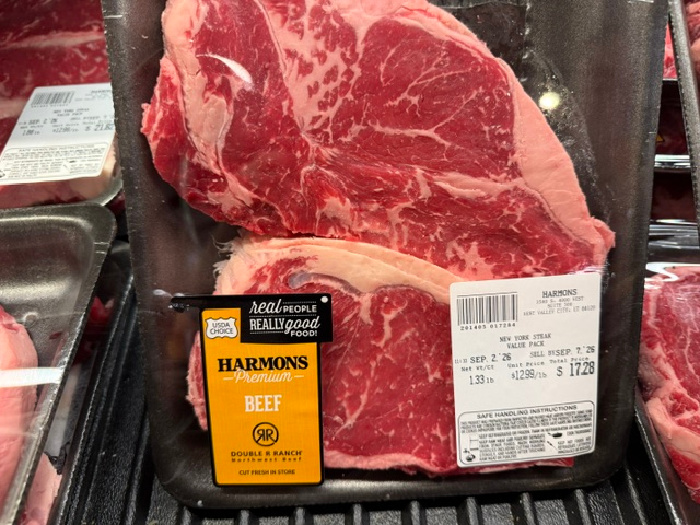
Beef Prices: They Are Going To Get Worse
This post may contain affiliate links. We may earn a commission if you purchase via our links. See the disclosure page for more info.

Beef Prices: They Are Going To Get Worse! If you’ve stood at the meat counter lately and felt your stomach drop at the price of ground beef, you’re not imagining things. Beef has become one of the most expensive items in the grocery cart, and unfortunately, the honest answer is that prices are likely to climb even higher before they come back down. As a mom who has spent years thinking about food storage and feeding a family on a budget, I wanted to dig into why this is happening. It isn’t just one problem. There are several problems stacked on top of each other, and ranchers are caught in the middle of it all. Cast Iron Dutch Oven (Indoors Only). Outdoors: Lodge Dutch Oven. Traeger Grills Instant Read Meat Thermometer.
Beef Prices: They Are Going To Get Worse
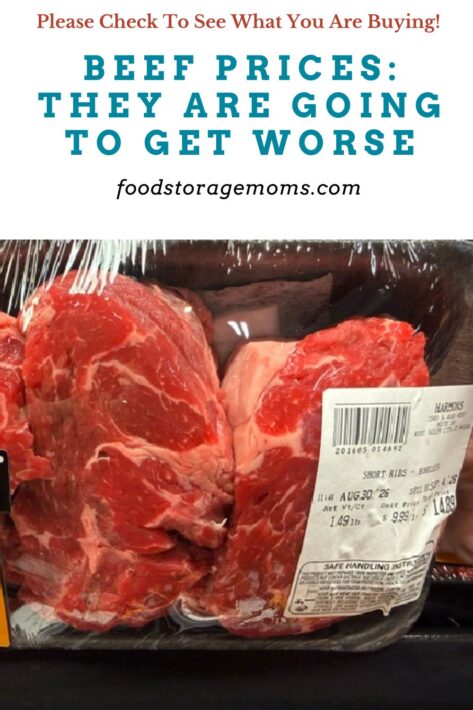
Why Beef Costs So Much Right Now
The simplest explanation is supply and demand. The United States cattle herd has shrunk to its smallest size in about 75 years, and persistent drought, rising costs, and an aging ranching workforce have pushed grocery prices up sharply, with beef climbing roughly 20 percent in a single year. When there are fewer cattle available, and just as many or more people wanting to buy beef, prices rise. That’s exactly what’s happened.
Right now, roughly three-quarters of the entire U.S. beef cow herd is sitting in a drought zone, compared with a long-term average closer to 20 percent. That’s an enormous difference, and it explains a lot about why ranchers are struggling.
Water Is The Root Of The Problem
Cattle ranching starts with grass. Grass needs rain. When the rain doesn’t come, the grass doesn’t grow, and ranchers are left with dry, brittle pastures that can’t feed a herd. Many ranching families depend on wells for both their cattle and their households, and in areas hit hardest by drought, those wells are running dry or producing far less water than they once did.
When pasture and water disappear, ranchers are forced into an impossible choice. They either spend a fortune trucking in water and hay from somewhere else, or they sell off cattle early, sometimes selling breeding females they’d normally keep for years to come. Expansion of the herd is likely to stay small, if it happens at all, heading into next year.
This is a slow-moving disaster. A rancher can’t simply flip a switch and grow more cattle once the rain returns. Breeding decisions have to be made years in advance. A calf born today won’t become the steak on your plate for a couple of years. So even if it started raining tomorrow, it would take a long time for the extra supply to show up at the grocery store.
Fertilizer And Feed Costs Are Squeezing Ranchers From Another Direction
Drought is only part of the story. The other part is the rising cost of everything a rancher needs to keep cattle alive and healthy. Fertilizer prices have climbed due to supply chain disruptions, and that fertilizer is what helps grow the hay and feed crops that cattle depend on, especially when pastures are too dry to graze. When fertilizer costs more, feed costs more. When feed costs more, it costs more to keep every single animal on the ranch.
Add to that the price of replacement cattle, which is currently about 100 percent above the twenty-year average, and you can see why so many ranchers are hesitant to grow their herds even when beef prices are historically high. It sounds strange, but many ranching operations are losing money or barely breaking even, even while beef sits at record prices in the store. Packer margins have been running negative, between $200 and $300 per head, which shows just how thin things have become throughout the supply chain.
Why Ranchers Aren’t Simply Expanding Their Herds
You might wonder why ranchers don’t just take advantage of high prices and grow bigger herds. The honest answer is risk. Keeping more young female cattle for breeding means committing to feeding, watering, and caring for them for years before they produce a single calf that can be sold. With dry pastures, high interest rates, rising land prices, and no guarantee that the drought will ease, that’s simply too risky for many families to take on.
Land itself has also become incredibly expensive. In some ranching regions, the average price of farmland and pasture land has climbed 400 percent over the last twenty years, making it nearly impossible for a young rancher to buy in. That’s pushed many younger generations away from ranching altogether, leaving fewer hands to do this difficult work and fewer new operations to help rebuild the national herd.
What This Means For Your Grocery Bill
Put all of this together, and you get a picture that’s hard to hear. Fewer cattle. Higher land and water costs. Higher fertilizer and feed costs. An aging group of ranchers with fewer young people stepping in to replace them. Beef prices are expected to stay elevated for years, not months, because rebuilding a national cattle herd simply can’t happen quickly.
This doesn’t mean beef will disappear from our tables, but it does mean many of us will need to adjust how we shop, cook, and stock our pantries. Buying cheaper cuts, learning to stretch beef with rice, beans, and vegetables, watching for sales and stocking up when prices dip, and considering other proteins like chicken, pork, eggs, or beans more often are all practical ways to soften the blow to a family budget.
I also think this is a good reminder of why food storage matters so much. When you see sales on beef, even smaller sales, that’s the time to buy extra and preserve it, whether by freezing, canning, or dehydrating. Building a supply when prices dip a little can help protect your family when prices climb again.
What Ranching Families Are Going Through
I want to say something directly to the ranching families reading this. I know this article focuses on numbers and supply chains, but behind every statistic is a family working incredibly hard, often for very little reward, to keep food on all of our tables. Many ranchers are watching wells their grandparents dug run dry, selling off cattle they hoped to keep, and wondering whether the next generation will even be able to continue the family operation. That’s not just an economic story. It is a story about resilience, faith, and hard work in the face of circumstances completely outside anyone’s control.
Why ranchers are selling off their herds
Ranchers are selling off their herds mainly because they’re running out of the two things a cattle operation depends on most: affordable water and affordable feed.
When drought dries up pastures, the grass that cattle normally graze on stops growing. Without grass, ranchers have two choices. They can buy hay and feed to replace what the land used to provide at a more reasonable cost, or they can reduce the size of their herd so there are fewer mouths to feed. Buying hay and feed from elsewhere is expensive, especially when it has to be trucked in from hundreds of miles away, and rising fertilizer costs have made it more expensive to grow that feed in the first place. For many ranchers, the math simply doesn’t work. It may cost more to keep a cow alive through a drought than that cow will earn them when it’s eventually sold.
Wells Running Dry
Wells running dry make this even worse. Cattle need a steady source of water every single day, and so do the households living on the ranch. When a well that’s supplied a family for generations starts producing less water or stops altogether, there’s often no backup plan. Drilling a new well or hauling water in by truck is costly, and it’s not something every rancher can afford to do indefinitely.
There’s also a longer-term calculation happening. Breeding females, the cows ranchers keep specifically to produce next year’s calves, are the most valuable part of a herd for the future. But keeping them costs money every single day, for years, before they produce a calf that can be sold. When water and feed are scarce and expensive, and there’s no guarantee the drought will end soon, many ranchers decide it’s safer to sell those breeding females now rather than gamble on being able to feed them through an uncertain future. This is called herd liquidation, and while it protects the rancher from immediate losses, it also means fewer calves being born in the years ahead, which is part of why the national herd has shrunk to its smallest size in about 75 years.
In short, ranchers aren’t selling because they want to. They’re selling because dry pastures, dry wells, and expensive feed have made it too risky and too costly to keep every animal fed and watered through conditions that show no sign of easing soon.
How Can We Tell If The Beef We Buy is Raised and Butchered in the USA?
Telling where your beef actually came from is trickier than it should be, but here’s what you need to know as of right now.
There’s no mandatory country-of-origin label on beef packages today. That kind of labeling existed for a while, starting in 2009, but Canada and Mexico challenged it at the World Trade Organization, and Congress repealed it for beef and pork in 2015. So current rules don’t require a beef package to indicate where the animal was born, raised, or slaughtered.
There is some good news. As of January 1, 2026, the USDA tightened the meaning of the “Product of USA” label. Before this change, beef could carry a Product of the USA label as long as it was simply packaged in the United States, even if the animal itself was born and raised elsewhere. Now that label can only be used if the animal was born, raised, slaughtered, and processed here in the United States, start to finish. This is still a voluntary label, though, which means companies aren’t required to use it; if they choose to put it on the package, it must be true.
Here is how you, as a shopper, can look for the real thing.
Look for the words Product of USA on the package and trust that, since January of this year, it now means the animal spent its entire life here, not just that it was packaged here.
Look for labels from smaller, known American ranches or cooperatives, since local and regional producers are far more likely to be transparent about exactly where their beef comes from, often listing the ranch or state right on the package.
Shop at a butcher counter or farmers market where you can simply ask, since a real butcher or a rancher selling directly to you can usually tell you exactly which farm or region the animal came from.
Watch for the USDA inspection stamp, which indicates the meat was processed at a USDA-inspected facility, though keep in mind this doesn’t, by itself, tell you where the animal was raised.
Be cautious with generic terms like “packaged in the USA” or “distributed by a US company,” since those phrases say nothing about where the animal actually lived, only where the box was filled or shipped from.
There is also a push in Congress right now to bring back mandatory country-of-origin labeling for all beef, not just the voluntary “Product of USA” claims. Ranching groups have been pushing hard for this because right now, four large meatpacking companies control the large majority of the beef industry, and many ranchers feel that shoppers can’t easily tell the difference between their beef and imported beef sitting right next to it on the shelf. Until that changes, your safest bet as a shopper is to look for the updated Product of USA label, buy directly from a local rancher or butcher when you can, and ask questions whenever you’re unsure.
Nebraska Blizzards
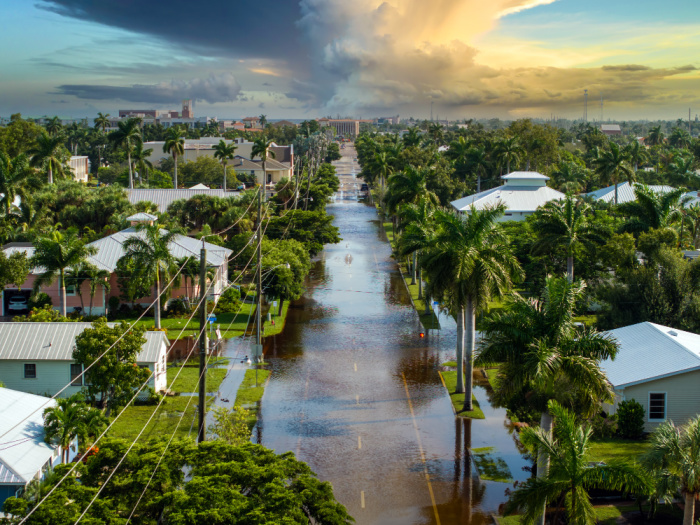
Nebraska has learned the hard way just how fragile a cattle herd can be in the face of extreme winter weather. Severe blizzards and bomb cyclones in recent years have killed thousands of cattle across the state in a matter of days, with early estimates from past storms placing livestock losses in the hundreds of millions of dollars. Many of the animals lost were mature breeding cows, some ten or twelve years old, that had spent their entire lives producing calves for the ranch. Losing that many breeding females at once does not just hurt a rancher for one season. Since it takes roughly two years for a newborn calf to become a mother herself, it can take three years or more for a herd hit hard by a winter storm to rebuild back to where it once was, and that slow recovery is one more reason beef supplies stay tight, and prices stay high long after the snow has melted.
Ground Beef Fat Ratios Explained
Final Word
Beef prices aren’t going up because grocery stores are being greedy or because ranchers are getting rich. They’re going up because water is scarce, land and fertilizer cost more than ever, and America’s cattle herd is smaller than it has been in generations. Rebuilding that herd will take years, not months, so it’s wise for families to plan ahead, stock up when prices are low, and lean on a variety of other protein sources in the meantime. May God bless this world, Linda





You need to include the weather in another way. The Winter Freezes, it wiped out the vast majority in Nebraska, it takes 3 years to come back from that blow.
Hi Ardelle, thank you for the heads up on that one. I will try to add it today. We can’t get a break; these poor ranchers. Life has changed so much, Linda
Hi Ardelle, Hi Ardelle, I had no idea. I just added a section; this is catastrophic. Thanks for bringing that to my attention. Linda
My heart breaks for the ranchers – can’t even begin to imagine what they are going through. We are retired and on a fixed income. Haven’t purchased anything but ground beef in months. Just this morning I went to our local grocery store and got 10 pounds of ground beef for $2.99 a pound – never expected to see that as a good deal! Tomorrow I will can sloppy joe mixture for the winter. Already have taco meat canned- along with plain ground beef. Grateful for our pantry!
Hi Beth, wow, that is a good buy. I haven’t seen ground beef that cheap for a long time. Great buy! My heart breaks for the ranchers as well. I used to take for granted that I could walk into any grocery store and pick up a roast for Sunday dinner. I bet it’s been ten years or more since I bought a roast. I refuse to pay the prices. My budget has zero room for anything but ground beef and rotisserie chicken. Linda
I’m so glad there’s nothing I can’t walk away from depending on the price. And I don’t know my price limit til I reach for a product, see the price, and say OUT LOUD, I’m not paying that. And walk away to the next product on my list. And I thank God for finding you and prepping. You are an angel.
2 years ago I warned everyone about this when I was raising feeder steers.
Cattle take years to “fix” something. The market and people want immediate correction but that’s just not the way it works. Independents could carry some sways over the years but independents are dying out because of over regulation and the prices themselves.
My friends small place generally put 60 head into the market a year. This year it was 20 due to cost. I didn’t put any into the market when I did but I kept 4 families from buying. Now they have to buy adding pressure. Only a few states have more cattle than people now. Oklahoma fell off years ago.
What’s the fix? I don’t see one.
You’ll get cheaper foreign beef for a while but that’s very temporary.
I don’t like being bleak but critical mass is coming. I’m unsure if it’ll hit before I die but it won’t be long after if not.
HI Matt, I remember you telling me the price was out of sight on the feeder steers. I knew then that our buying beef would never be the same. We were right. I don’t see a fix either. I believe we will see more people getting licensed to get tags for deer, elk, or whatever. I feel bad for people like your friends; their small place had to go down to 20 head. It is for sure a bleak outlook; it will not get better. It can’t; it’s going to get worse. If we want to buy meat from China, that is so wrong. I don’t see a fix either. Hang on for the ride, Linda
I have learned that there is food that will fill your belly, and food that will actually nourish you. I have a short list of foods that I will buy. I pay 3 times the ordinary cost for canned tuna because I want tuna, not just fish. I was pasta made the old fashioned way, and I am willing to pay for it. We are getting rid of all types of canned food. I want better. I won’t buy beef, maybe ever again. I can eat pork and chicken and seafood. My husband and I are on a tight budget at our house, but if we kick a bunch of sub par food off of the list, we should be able to afford better food. We are trying it. It will have to be better for us.
Hi Beth, my husband and I are in the same boat. I do not know how people are feeding their families. I agree with you: buy right the first time. Buy good-quality tuna, chicken, or pork. We eat a lot of beans and rice; thankfully, I love tacos and bean burritos. I love ground beef tacos and sloppy joes. We can do this, Beth; we have to! We can survive. You go girl, Linda
Tom and I are just leaving the grocery store with a bill for $343. for only ground beef and chuck roasts. My husband was not pleased but that will see us through the winter. All any of us can do, is the best we can. Please everyone stay safe and healthy.
Hi Chris, meat is expensive, and it’s going to get worse. It’s a fact, so we must invest in food today. Good job. Linda
Whether you like Glenn Beck or not, his broadcast yesterday explains a lot about what is going on with beef.
The people making money are the middle guys.
All the major groceries are now under investigation by the DOJ for their beef pricing.
I buy my beef from a Florida rancher. Born, raised, butchered in Florida.
At Publix, if you buy their “Greenwise” beef, it is American. Otherwise it is from “anywhere.”
I buy grass fed and finished. We are satisfied with smaller portions.
I agree with Matt.
Herbert Stein, father of Ben, and a noted economist said “if something can’t go on forever, it stops.”
Governments around the globe have tried “socialism” or a version of it. A vain attempt to defeat “survival of the fittest.”
It’s not nice to fool Mother Nature.
There are a few things that can start the dominoes falling. One of them will, but I believe the BIG one is Mother Nature (El Nino). THAT is the one thing that governments cannot manipulate their way out. No amount of printing money will work.
Best investment I can advise ( I invest for a living)…with pretty much a guaranteed 15% rate of return ? FOOD. It is already making a price move. When “people” figure it out, it will be a landslide.
To say “I don’t have extra money for food now….you have more now than you will pretty soon.” Skip all the extras and pick up some BOGO soup. A can of soup over a bowl of rice will fill your belly.
Hi CAddison, I admire Glenn Beck. I believe he is, or was, a rancher in the West. Great reminder to stock up on soup. And any other high quality canned goods. Linda
Beck still has a ranch in Idaho. He broadcasts from there regularly.
Hi CAddison, oh yeah, Idaho! Thank you! Linda
Linda, this is one of your best and most informative articles ever. Seems like Ranchers are always being squeezed, whether by financial or environmental pressures. In my 76 years I cannot recall a time when ranchers got more money for a steer than it cost them to grow it. They survived by constantly refinancing their ranches which they could do because the value of their land increased each year. This was never a winning strategy long term.
I’ve been out of that business for decades now but it seems to me pressures on ranchers have continued to increase. If the prices they receive for their cattle don’t rise high enough to cover their costs it will force them out of business. BTW this is why I buy most of our beef directly from local ranchers. It is also why companies are trying to promote lab grown “beef.”
I agree with Matt that I don’t see the situation improving any time soon.
Hi Ray, thank you for your kind words, my friend! We really do need to feel for the ranchers; they are the ones getting hurt financially. I will never eat lab-grown meat. I will be a vegetarian! I gag just thinking about fake meat. Things will not improve for the ranchers, we see it every single day on the news. Linda
Hi Linda and Food Storage Moms friends: I cannot even remember the last time we’ve ever purchased any beef, except ocassionally the canned prepper beef products when I feel too overloaded with pressure canning other foods. We buy all of our ground beef from our almost organic farmer friends (as well as their beets, rhubarb, eggs and honey and once in awhile some asparagus). Then, there is a well-known organic farmer not too far beyond the almost organic guys, and they always have fabulous meat…sell beef liver relatively cheap, too, if you like that.
If you can afford to buy 1/4 of an organically-raised cow, you can fill a very large freezer for $7.99/lb., even for sirloin steak, rib eyes, roasts, whatever you want. I don’t consider that too bad of a price for what you get, but we never have an empty freezer, even when we DO have the money! TOO MANY BERRIES!! Then, again, we still have some of that $1.00/lb. venison that was all but given to us just to get rid of it last Fall, when the deer were eating the apple orchard apples, so our Amish Friends said “here you go…we just want $1.00 for the packaging and processing. YOU CANNOT BEAT THAT PRICE!!
Over the last 3-4 years, I have pressure canned quite a lot of beef and chicken and we ONLY eat Safe Catch Tuna Elite, because they test every fish for heavy metals and the Elite version is skipjack, which is the smallest of their tunas canned…younger, smaller = less contamination! I will say, though, that I am pretty disgusted with the Season company for raising their BJS price for a 10 pack of sardines from $10.99 to $22.99 in one week! I said to myself, if they are going to screw us around like that, I will just buy the expensive Safe Catch sardines. They are more or less the same price, but at least we know they are quite safe to eat!! O.K., I’ve said my piece. It’s time to go roast some more of those Italian Red Roasting peppers we just harvested!! And holy smokes, what to do with all those Aronia Berries again this year? We do NOT NEED 40 QUARTS AGAIN!! YIKES!! I have gotten a few people to try them, but there are still at least another 20 quarts out in the yard and we didn’t even fertilize nor water them this year. Pure neglect was all they got for 2026… Next year, they will get a hack job while in bloom, so we only get 6-8 quarts, tops!
And now I must go finish roasting Ital. Red Roasting Peppers and start processing the 2, 8-quart baskets of those elongated sweet and sour yellow plum that came from my orchardist friend who used to work as a breeder for the Geneva Fruit Testing Station (only 20 mins. from our door).
Bless you ALL, Linda and friends! Stay safe now…
JESS in beautiful Central New York/The Fingerlakes Region (You should just see all the gorgeous apple orchards fully loaded along the roadsides right now.)
Certified Natural Health Professional since 2006
Hi Jess, oh, I bet those apple orchards are so beautiful! Linda
O.K. My son came into the computer room to talk while I was typing…SO NOW I see that stupid spell check put “while they’re in blood”, instead of “in bloom”!
GEEZ! Why are computer programs SO STUPID SOMETIMES?
Hi Jess, no worries, I think I fixed it. Linda
Thanks so much for this article, Linda! It was very helpful to me because honestly, I didn’t understand what all was going on with ranchers, beef prices, country of origin, etc. You answered all the questions I didn’t know I had! Now I have helpful information with which to make educated decisions. Blessings to you!
Hi Lisa, thank you for your kind words, my sweet friend. I did the research because I kept reading about the ranchers going out of business or selling off their herds. We all depend on those ranchers and farmers to provide food for us. Not all of us can grow all of our food. The price of meat keeps escalating. Why do we need to buy meat from other countries? We should be self-sufficient. I guess not. Linda