
How to Store Zucchini From the Garden
This post may contain affiliate links. We may earn a commission if you purchase via our links. See the disclosure page for more info.

Are you wondering how to store zucchini from the garden? As many of my readers know, zucchini is a versatile squash that adds delicious and savory flavor to all sorts of dishes. Some of the most notable ones include pasta, pizza crusts, burgers, meatballs, salads, soups, stews, and one of my personal favorites, zucchini bread! But once your zucchini starts to turn to mush, there’s not a whole lot you can do with it, so you need to learn how to store it before that happens. My garden always produces loads of summer zucchini, and I love making The Very Best Zucchini Cake Recipe!
It has been a standing joke in our family for years that we wish our other garden vegetables were as prolific as our zucchini plants! Yes, our neighbors for blocks around have been the beneficiaries of our generous plants, and we love to share our bounty.
Kitchen Items You May Need
- Cutting Board
- Quart or Pint Wide Mouth Mason Jars
- Mueller Mandoline Pro-Series Slicer
What is zucchini?
Zucchini is a very popular type of summer squash. It’s a long green squash with a mild flavor and tender flesh that has a texture you’ll like to eat. You can actually eat all the zucchini plant parts but the stem. Other types of summer squash you may be familiar with are pattypan, crookneck, and yellow squash. Other types of squash fall into the winter category due to their hard skin and tough seeds, neither of which are typically eaten.
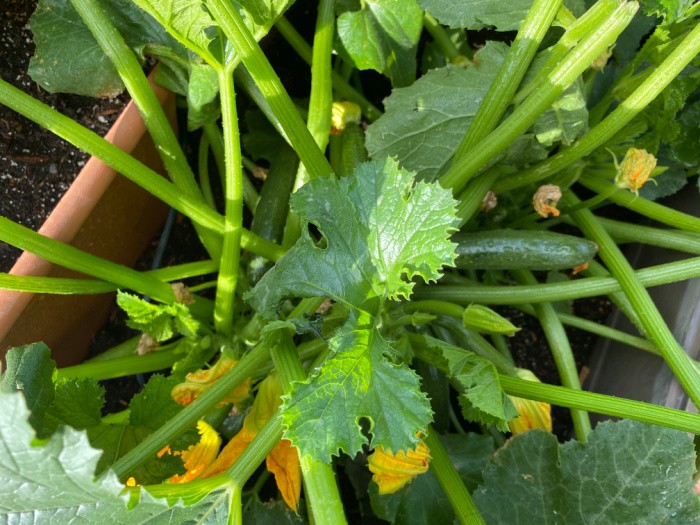
Zucchini is a type of summer squash that belongs to the species Cucurbita pepo. Squash in this species originated in Mesoamerica, in the region that’s now Mexico and Central America, where they were cultivated by native peoples thousands of years ago alongside corn and beans. The zucchini we know today, with its long green shape, was developed later by Italian growers in the 1800s and early 1900s, which is why it carries an Italian name meaning little squash. It became popular in the United States in the twentieth century and is now a common garden vegetable across the country.
Zucchini Nutrition
In terms of nutrition, zucchini is low in calories and high in water content, which makes it a light and refreshing addition to meals. It provides a good amount of vitamin C, which supports the immune system, and vitamin A, which supports eye health. It also contains potassium, which helps regulate blood pressure, along with smaller amounts of folate, manganese, and magnesium. Zucchini has a modest amount of fiber, which supports digestion, and it contains antioxidants such as lutein and zeaxanthin, which are beneficial for eye health. Because it’s mostly water and low in sugar and fat, zucchini is often recommended as part of a balanced diet for those watching their calorie intake.
Home gardeners have many zucchini varieties to choose from, each suited to different tastes and growing spaces.
Traditional Varieties
Black Beauty is one of the most traditional varieties, known for its deep green skin and reliable production throughout the growing season. It’s been a garden favorite for generations because of its consistent yield and classic flavor.
Costata Romanesco is an heirloom variety from Italy, prized by cooks for its nutty flavor and ribbed texture. It tends to be less watery than other types, which makes it a good choice for grilling or sautéing.
Golden zucchini has bright yellow skin and a slightly sweeter, milder taste than the green varieties. It also adds a nice visual contrast when mixed with green squash in garden beds or on the dinner table.
Eight Ball and Roly Poly are round varieties that are popular for stuffing, since their shape naturally forms a bowl once hollowed out. They tend to stay compact, which makes them a good option for smaller garden spaces or container growing.
Cocozelle is another heirloom type, with striped green and light green skin. It has a firm texture and holds up well in cooking, making it a favorite for those who like to slice and roast their squash.
For gardeners with limited space, bush varieties such as Raven or Spineless Beauty are worth considering. These plants grow in a compact form rather than sprawling across the garden, which makes them easier to manage in raised beds or smaller yards.
Zucchini plants generally do best in full sun with well-drained, nutrient-rich soil. They benefit from consistent watering, especially during fruit development, and should be harvested regularly once the fruit reaches about six to eight inches long. Harvesting often encourages the plant to keep producing throughout the season.
Zucchini Pests
Zucchini plants can face several pests and problems throughout the growing season, but most are manageable with early attention and good garden habits.
Squash Bugs
Squash bugs are one of the most common pests. They’re brownish gray insects that cluster on the undersides of leaves and suck sap from the plant, causing leaves to wilt and turn brown. Checking the undersides of leaves regularly and removing egg clusters by hand can help keep them under control before they spread.
Squash Vine Borers
Squash vine borers are another serious threat. The larvae bore into the stem of the plant, which causes sudden wilting even when the soil has plenty of moisture. Gardeners often notice a small hole near the base of the stem with sawdust-like material around it. Wrapping the base of young stems with foil or fabric can help prevent the moth from laying eggs there.
Cucumber Beetles
Cucumber beetles, which are small and either striped or spotted, feed on leaves, flowers, and stems. They can also spread bacterial wilt, a disease that causes the plant to collapse fairly quickly. Row covers placed over young plants can help protect them until the flowers open and pollination needs to occur.
Powdery Mildew-Fungal Problem
Powdery mildew is a common fungal problem, especially in humid conditions. It appears as a white, powdery coating on the leaves and can eventually reduce the plant’s ability to photosynthesize. Good air circulation, spacing plants properly, and watering at the base rather than overhead can reduce the chances of this developing.
Blossom Rot
Blossom-end rot sometimes affects zucchini, showing up as a dark, sunken spot on the bottom of the fruit. This is usually related to inconsistent watering or a calcium imbalance in the soil rather than a pest or disease, and can often be corrected with more even watering.
Aphids
Aphids are small insects that cluster on new growth and the undersides of leaves. They weaken the plant by feeding on its sap and can attract ants due to the sticky residue they leave behind. A strong spray of water or insecticidal soap is often enough to manage a small infestation.
Poor Pollination
Poor pollination is another issue many gardeners encounter, especially early in the season. Zucchini plants produce separate male and female flowers, and without enough bees or other pollinators, the female flowers may drop without producing fruit. Hand pollinating with a small brush is a simple solution if pollinator activity seems low.
Keeping the garden bed clean, rotating crops each year, and monitoring plants regularly are some of the best ways to prevent these problems from taking hold.
Do you have a lot of zucchini and aren’t sure what to do with it? If you’re a fellow gardener like myself and plan on growing several zucchini plants during the growing season, you’ll need to know how to store and keep your zucchini so that they last longer. Here’s how to store zucchini right from your garden so that you can enjoy them even during the winter season.
- How to Start a Garden
- How to Garden With 5-Gallon Buckets
- 9 Superfoods You Can Grow in Your Garden
- 10 Great Reasons To Try Raised Bed Gardening
Should You Wash Your Zucchini Before Storing?
You’ll receive all kinds of mixed answers on the internet about this bit of advice, but I’d encourage you not to wash your zucchini before storing it, and here’s why. To keep your stored zucchini fresh longer, it’s important to keep it as dry as possible. So, instead of washing, take a paper towel and wipe your zucchini down while making sure all the moisture is removed from the skin, along with any dirt or debris from the garden. Once you’re ready to use them, that’s when the best time to wash them properly is.
How Long Will Freshly Picked Zucchini Last in the Fridge?
When stored properly in the refrigerator, your freshly picked zucchini will last for up to two weeks. However, if you choose to slice them up into smaller pieces, your zucchini may last for even more than a month. As always, make sure you keep them dry when putting them away and store them in a baggie that’s left open. That way there’s air circulation in the plastic bags and moisture doesn’t start to form, which quickly shortens the life of a zucchini. An airtight container will work to freeze zucchini, but when stored in the fridge, the raw zucchini needs to have fresh air circulating.
Does Zucchini Last Longer on the Counter or in the Fridge?
Whether you choose the counter or the fridge to store your zucchini is entirely up to you, but I’d recommend keeping it in the fridge or a root cellar if you have one. Not only does this help keep your zucchini fresh longer, but it also prevents any bacteria that could form on the outside of the squash. The same goes for storing cut-up pieces. One thing to keep in mind when leaving your squash on the counter is that it will ripen and turn soft faster, which means you’ll want to use them sooner rather than later.
Methods for Preserving Zucchini for Later Use?
Wondering what the easiest way is to preserve zucchini? Once you’ve decided how to store your zucchini, it’s time to preserve it. Zucchini can be preserved using a few different methods. Let’s take a look at some of them so that you can decide which one is the best and easiest for you.
Blanch and Freeze
Considered one of the more popular ways to preserve zucchini, blanching is a quick boiling-water process that kills any bacteria present on the zucchini’s surface. To blanch and freeze your zucchini, first cut them into slices or cubes and boil them for no more than three minutes in salted water. Once finished boiling, drain the zucchini slices or cubes and lay them out on a parchment-lined baking sheet.
Place the tray in your freezer and let the slices or cubes freeze for two to three hours. Once fully frozen, take single portions of the zucchini out of the tray and store them in freezer bags or containers. The pieces should last up to six months in your freezer!
Pickling

- 2-3 Firm Small Zucchini (the large ones have too many seeds)
- 1 Cup Vinegar
- 1 Tablespoon Salt per quart of water
- 1 Quart Water
-
You can also try pickling your zucchini using vinegar as a preservative. This is a great way to store zucchini for later use in salads, sandwiches, and more!
-
To pickle your zucchini, first cut them into thin slices or small cubes.
-
Boil a vinegary solution of 1 cup vinegar and 1 tablespoon salt per quart of water, and let the solution cool.
-
Place the zucchini slices in jars or airtight containers, pour the cooled vinegar solution over them, and cover with airtight lids.
-
Store the pickles in the fridge after they get to room temperature. Let the jars or other containers sit in the refrigerator for two weeks before opening and consuming them.
Dehydrating
Yes, zucchini can also be dehydrated and then rehydrated when you’re ready to use them. To dehydrate your zucchini, cut them into thin slices and lay them out in a single layer on a baking sheet lined with parchment paper. Place the tray in an oven preheated to 140°F (60°C) for four to five hours until the zucchini slices become dry and brittle. Once they’re finished dehydrating, let them cool down and place them in an airtight bag or container. The zucchini slices should last up to six months if stored properly. How To Dehydrate Zucchini-Sliced & Cubed
You can also use your dehydrator to dry out the slices. Some people refer to these dried slices as zucchini chips. They can be eaten like other chips with some veggie or fry dip. Delicious!
How to Tell if Zucchini Has Gone Bad
The best way to tell when your zucchini is no longer good to eat is if it’s soft, shriveled, or has a sour smell. If in this condition, it should be disposed of as soon as possible. Additionally, if you see any mold or rotten spots on the zucchini, that means it’s gone bad and shouldn’t be consumed. However, if there are just a few tiny spots or blemishes on your zucchini, simply cut them off and your zucchini should be just fine if eaten relatively soon.
What can you make with zucchini from the garden?
- Zucchini noodles, fresh zoodles
- Zucchini boats
- Favorite soup, just add zucchini
- Chocolate chip zucchini muffins
- Loaves of zucchini bread
- Frozen shredded zucchini
- Frozen zucchini tastes as good as the day you picked it!
- Dip in pasta sauce
- Cut into long strips and fry in oil to make zucchini fries
- Add to your other vegetables when making stir-fries – adding meat increases the flavor
- Can be made into a relish for use on burgers and hot dogs
More Zucchini Recipes
- Zucchini Pizza Boats
- Easy Baked Cheesy Zucchini Bites
- Zucchini Muffins Recipe
- 5 Reasons Why People Love Zucchini Bread
Should you refrigerate zucchini from the garden?
I like harvesting my zucchini when the plant is small and then putting them in the fridge crisper drawer. I’ve found the small and younger squash has a better texture and flavor. The fridge helps maintain that freshness longer.
Final Word
The best zucchini is what comes out of your garden. No matter how you choose to store your zucchini, it’s important to remember that the fresher the produce is when it’s first picked and preserved, the longer it will stay fresh in storage. These are just a few of the ways to store zucchini from your garden so that you can enjoy it during the cold winter months! With these methods, you’ll always have some delicious zucchini dishes to look forward to. How do you love to prepare zucchini? I’d love to hear from you! May God bless this world.








It’s one of them difficult things to store. I had my niece and her husband take it around the neighborhood and share. Even if they declined I told them it builds rapport. They are just learning country ways.
I sure like zucchini and squash with some chicken and peppers
Hi Matt, I agree, zucchini typically grows in abundance as long as the bees pollinate them. It’s funny you go outside and think you picked them all and then you see some overgrown ones!! We still eat them, but I like them when they are slender and tender. Country life must be awesome Matt!! Linda
It has its moments like this morning when we were wrestling a calf with ringworm. Unlike the cutsie TikTok videos most cattle do not like being treated and massaged with smelly soapy stuff and will fight ya tooth n nail on day three lol
Just downright unappreciative he was. That’s the episode ya won’t see on Yellowstone lol
The only 2 ways I have “preserved” fresh zucchini is: grated and frozen for use later in cooking; and dehydrated. The grated zucchini I generally use for adding to other foods like meat balls, meat loaf, cakes, cookies, etc. But what I really love to use grated zucchini for is zucchini fritters! I add seasoning (salt, pepper, garlic and onion powder) to grated zucchini and add a bit of flour and egg to make a fairly dry mixture. Then I fry it in patties in a bit of oil until well browned and crispy – yummy with some ranch dressing. When I dehydrate slices, I typically sprinkle the slices with garlic and onion powder for “chips”. I can also break up the dry slices to add to dips, soups/stews, etc. Fresh zucchini I do in a couple of ways: battered and fried slices; thinly sliced and patted dry for a replacement for lasagna noodles; spiralized and sautéed with garlic and butter for a replacement for noodles.
If the zucchini is overgrown, I slice it down the length, scoop out the seeds and stuff with a mixture of meat and rice like I would stuff peppers, top with marinara sauce and cheese, bake until all is hot and cheese is melted.
Other than freezing and dehydrating, I have never tried to store fresh zucchini. If I have one or two, I try to store them in my stomach!!!!
Hi Leanne, now I’m hungry! I love zucchini fritters! I love the frozen grated zucchini to use in the middle of winter to make zucchini bread or muffins. I love the spiralized zucchini! Whoever thought of that gadget is amazing! It makes “spaghetti” out of so many vegetables! You gave us all some really good ideas! Yummy! Linda
I love the simplicity of yellow squash, zucchini and onions with some garlic and salt and pepper in a frying pan. Unfortunately the worm got our plants early on so I am waiting for new plants to produce mature
. Thank you for the idea of aluminum foil or fabric around the bottom of the stem. We will try that and hope for a prolific zucchini harvest!
Hi Carol, thank you for the 5 stars, my sweet friend! I was able to pick several zucchini and yellow straightneck, but then they got blossom rot (they needed calcium). I lost those and reseeded some; they are about 4 inches tall right now. I hope to harvest some again. I have never had that on my squash before; it’s the first time for everything. Have fun gardening! Linda
Leanne, how do you store your dehydrated zucchini? We have zephyr squash that is similar but not as watery, I’d like to try. My freezer is already full of grated. We love the fritters, which we top with a fried egg. We’ve also cooked, frozen fritters to reheat! Linda, definitely going to try the pickling!❤️
Hi Marilynne, thank you for the 5 stars, my sweet friend. I store my dehydrated squash in mason jars. https://www.foodstoragemoms.com/dehydrate-zucchini/ Linda
Marilynne –
I rarely store my dehydrated zucchini as I make thin seasoned chips! And I eat them rather than potato chips!! If I were to store dehydrated zucchini, I would most likely dehydrate them in thicker slices than I do for the chips (very thin) and not season them at all. Then I’d place them in quart jars and vacuum seal them.
Linda:
Sorry I have not been online much since our car accident. I have felt miserable.
What I do with extra squash of any type is to can it. When I want to use it I drain it and make sure it has drained well and put a towel over the top of them. Leave them overnight and they dry out real easy and they cook better that way. I notice that here in New Mexico that they seem to over water their squash and it makes it harder to cook. When I can my squash they have less water in them and they fry up nice and crispy when you fry them in a cast iron skillet
Hi Jackie, oh I’m so sorry you are still miserable. Thanks for sharing how you can your squash, I love it. Linda
I side with the grate it and freeze it crowd. I grate it, wring it out to get as much moisture out of it as possible and freeze it two cups at a time in mason jars I vacuum seal with my Dicorain. Two cups is what I need for making loaves of blueberry zucchini bread, which is my favorite.
Jane and I used up the last of my frozen broccoli last night when we made a very thick broccoli cheese soup, which we had with Halibut and baked potatoes. I froze the broccoli from a fall planting harvested in February. Vacuum sealing it in mason jars makes frozen produce last a lot longer than simply storing it in ziplock bags.
Hi Ray, I am going to try to freeze it in mason jars! I have always grated it and used freezer bags. I love that Dicorain. Great tip! Linda
Apologizing to everyone for not reading the entire post (a personal pet peeve) Sitting with hubs as he was recovering from his 2nd cataract surgery and just excited for ways to keep more squash longer! Love everyone’s tips❤️
Hi Mailynne, thanks again for the 5 stars, my sweet friend. No worries, I hope your hub’s cataract surgery helps! Linda