
Wildfires: Are You Ready To Evacuate?
This post may contain affiliate links. We may earn a commission if you purchase via our links. See the disclosure page for more info.

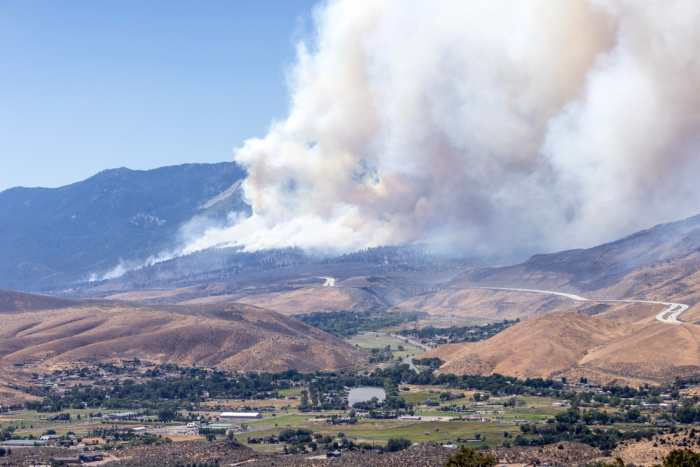
Wildfires: Are you ready to evacuate? The Hawk Fire burning in the hills near Reno, Nevada, is a hard reminder that a wildfire can turn an ordinary weekend into an emergency in a matter of hours. This fire started on a Saturday, and by Sunday it had grown to more than 15,000 acres, forced roughly 90,000 people to evacuate, and put other neighborhoods on notice to be ready to leave. It’s been reported that local evacuation centers are already full, so families are having to travel further for shelter.
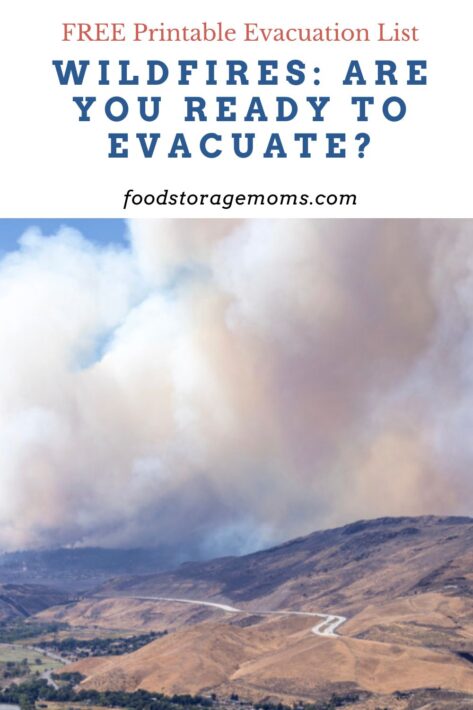
Officials have said the fire was human-caused; it was 0% contained as it grew, and shifting winds made it move unpredictably. Nevada’s governor declared a state of emergency for Washoe County and activated the National Guard to help, and at least six people, including three firefighters, were injured as crews battled the flames.
I called my good friend, Robbie, who lives in Reno, to see how close she is to the fire. The date 8/24/2026 at 10:00 a.m. MST. She mentioned the TV news is reporting that Walgreens and Walmart are closed, that her PT department is closed, and that even the new ER is closed for now. She said all the roads are closed in and around the area. It’s still a Go Now evacuation area.
If you’re interested, you can get the FREE app on your phone called “Watch Duty”; it’s yellow with a brown flame in the middle. It’ll let you know the status of fires you want to inquire about.
If you live anywhere near wildland areas, dry grass, or forest, please don’t wait for a fire like this one to start before you make a plan. Today I want to walk you through why evacuation orders happen so fast, how to prepare your home and your family long before smoke is on the horizon, and give you a complete checklist so everyone can grab what matters and go, calmly and quickly.
Why wildfires move so fast
Wildfires driven by strong wind, low humidity, and dry vegetation can grow by thousands of acres in a single day. Fire officials often describe these as wind-driven fires because the wind pushes flames rapidly into neighborhoods with very little warning. That’s exactly what happened with the Hawk Fire, where the evacuation zone reached the edge of a university campus within about a day of the fire starting, and officials warned residents to be prepared to stay away from home for several days. This is why your family needs a plan for how you can execute in minutes, not hours.
Understanding evacuation levels
Most areas in the western United States use a simple three-level system, though the exact wording can vary by county.
Level one: be ready. A fire is burning in the area. Gather your go bags, fuel your vehicle, and stay tuned to local alerts.
Level two: be set. This is a warning to leave now if you have family members who need extra time, pets, or medical equipment. Officials often say to leave now and be prepared to stay away for several days.
Level three: go now. This is a mandatory evacuation. Leave immediately without waiting to pack. Take only what’s already in your go bag.
Knowing which evacuation level your neighborhood is under, and understanding that the level can jump quickly, is one of the most important pieces of wildfire knowledge a family can have.
Building your family evacuation plan
A good plan covers four things: how you’ll get an alert, where you’ll go, how your family will communicate, and what you’ll take.
How you’ll get an alert. Sign up for your county’s emergency notification system and download a wildfire tracking app. Keep a battery-powered radio on hand in case cell towers go down or become overloaded. During fast-moving fires, alerts can come through text message, reverse 911 calls, sirens, or even a knock on the door from a sheriff’s deputy, so don’t rely on only one method.
Where you’ll go. Pick two meeting locations, one near your home and one outside your neighborhood, in case roads are closed. Know at least two routes out of your area, since a wind shift can close the route you planned to use. Identify a shelter, a friend or family member’s home, or a hotel outside the fire zone where your family could stay for several days, since many evacuations last longer than a single night.
How your family will communicate. Choose an out-of-area contact that everyone can call or text if local lines are jammed. Make sure kids and grandparents know that person’s phone number by heart, not just saved in a phone. Agree ahead of time on a family code word or simple phrase so everyone knows when it’s truly time to leave.
What you’ll take. This is where a checklist saves precious minutes.
Preparing your home before smoke is even on the horizon.
Families who live in or near fire-prone areas benefit from doing a little bit of preparation every single season, not just when a fire is already burning.
Clear dry leaves, pine needles, and dead brush from your gutters, roof, and within several feet of your home.
Store firewood piles and propane tanks away from the house.
Keep your lawn watered and trimmed during dry months if local water restrictions allow.
Know where your gas, water, and electric shutoffs are located, and keep any needed tools nearby.
Walk your property and identify two clear paths a vehicle could use to leave, in case one driveway or road becomes blocked.
Taking even an afternoon each spring to do this kind of home evaluation and preparation can make a real difference in how a fire behaves near your property, and it also gives your family confidence that you’ve done what you can to help protect your home.
The Grab and Go Evacuation Checklist
Keep these items packed in a duffel bag or plastic tote near your front door or in your vehicle so you aren’t searching the house when an order comes.
Documents and money
Copies of identification, insurance policies, birth certificates, and property deeds in a waterproof folder
A home inventory list or photos of your belongings for insurance purposes
Cash in small bills, since power outages can shut down ATM or store card readers
A list of prescriptions, allergies, and doctor contact information for every family member
Health and safety
A week’s supply of prescription medications
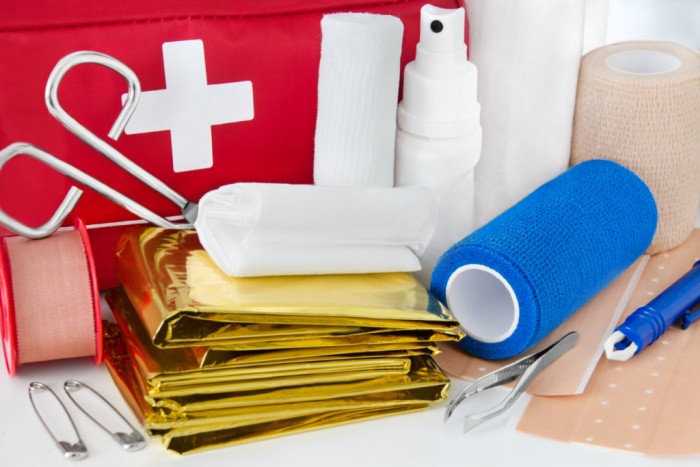
First aid kit
N95 masks for smoke protection
Extra glasses or contact lenses
Any medical devices such as hearing aids, CPAP machines, or mobility aids, along with their chargers
Food, water, and light
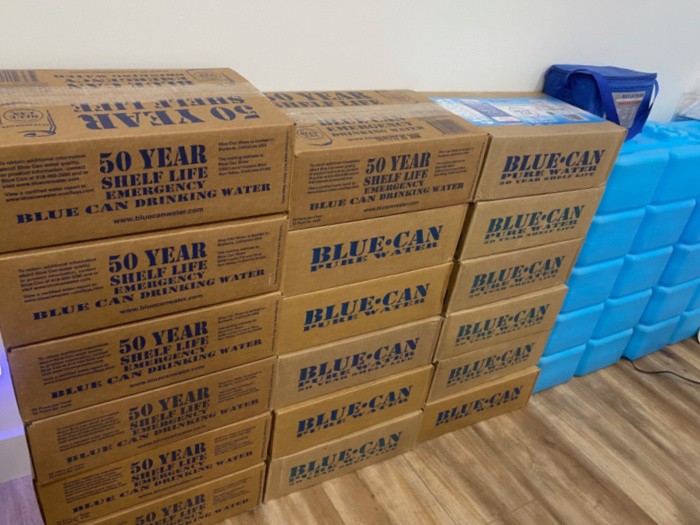
Water, at least one gallon per person per day for three days
Shelf-stable food and a manual can opener
Flashlights and extra batteries
A battery-powered or hand-crank radio
Other family needs
Diapers, formula, and comfort items for babies and toddlers
Pet food, leash, carrier, and vaccination records for pets
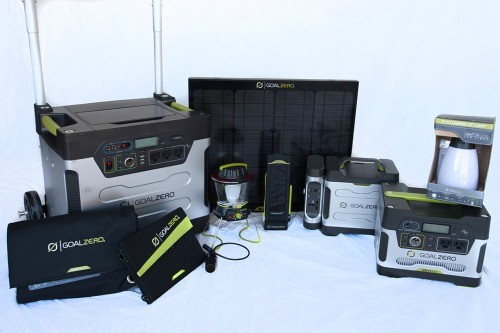
Phone chargers and a portable battery pack
A change of clothes and sturdy shoes for each person
A small toy, book, or comfort item for young children
Sentimental and irreplaceable items
Photo albums or a backup drive of digital photos
Jewelry or small heirlooms
A list of items you’d grab if you had five more minutes, so you’re not deciding under pressure
Vehicle readiness
Keep your gas tank at least half full at all times during fire season. Back your car into the driveway so you can leave quickly without having to turn around. Keep a car charger, blanket, and extra water in the vehicle year-round, along with a paper map of your area in case GPS becomes unreliable due to road closures.
Planning for pets and larger animals
Pets and livestock need their own plan since they can’t pack themselves. Keep a carrier or leash by the door for every animal in your home, and know in advance which hotels or shelters in your evacuation area accept pets. Families with horses, goats, or other larger animals should identify a fairground, ranch, or animal-friendly campground or trailer park well in advance, since loading and transporting animals takes far more time than most people expect. Practicing a loading drill once a year can make a real emergency go much more smoothly.
A note for older family members or those with mobility needs
If you have a parent, grandparent, or family member who needs extra time or assistance to evacuate, build that extra time directly into your plan rather than assuming you’ll figure it out in the moment. Keep a list of their medications, medical equipment, and any mobility aids together in one place, and assign a specific family member to be responsible for helping them so there’s no confusion about who’s doing what when an order comes.
A note for families with children
Practice your evacuation plan the same way you’d practice a fire drill at home. Let your children help pack their own small bag with a favorite toy or book. This gives them a sense of control during a scary situation and can make the actual evacuation calmer for everyone. Talk with them ahead of time, in simple, calm language, about what an evacuation is, so the idea isn’t brand-new and frightening if the day ever comes.
After the evacuation order, what happens next
Once you’re safely away from the area, stay tuned to official channels rather than social media rumors for updates on containment and when it may be safe to return. Don’t attempt to return home until officials say the area is open, even if you see on the news that the fire seems to be slowing down, since roads may still be closed for firefighting equipment and downed power lines can be a hidden danger. When you’re cleared to return, be cautious of hot spots, weakened trees, and damaged utility lines, and photograph any damage to your property right away for your insurance claim.
Helpful resources to bookmark now
Your county emergency management website and social media accounts.
The Red Cross app for shelter locations.
A wildfire tracking app or website for real-time perimeter maps.
Your insurance company’s claims contact information saved in your phone.
How Many Fires Has the US Had In 2026?
Final Word
The families near Reno who are watching the Hawk Fire tonight didn’t expect to be evacuating this week. None of us ever do. The best gift you can give your family is a plan that’s already made, a home that’s been prepared in advance, and a bag that’s already packed, so if the order to go now ever reaches your street, you’re ready. May God bless this world, Linda
Copyright Images: Reno Nevada Hawk Wildfire Depositphotos_745926648_S, Wildfire In Reno Nevada Depositphotos_745926670_S









Yet another advantage of having a below ground storm shelter to store documents in as well as a few other things.
Hi Matt, oh, yes, this is so true! Great comment, Linda
There are 2 “sides” of the mountain with this fire. The Somersett area has their evac restrictions lifted but the North Valley’s side doesn’t have all of them lifted. Hwy 395 runs right in between and everything on the N. Virginia St. side is still evacuated. The other side (where the fire did jump the freeway) has partial restrictions but most of the area has been reopened. Walmart was still closed but I was able to make my PT appt. Walgreens is in total chaos so no picking up that Rx anytime soon! The news admitted to 32 houses destroyed but expect more. My grandson’s friend, Crystal, lost her home to a fire back in 2019 and AGAIN over the weekend! What are the odds? Tragic, to say the least. There are some injuries but luckily no fatalities. We’re expected to have 40mph winds this afternoon so it’s gonna get ugly again. I think the fire is around 10,500+ acres and 27% contained. It’s been a real bad fire season for us in the Reno area.
This taught me something…our GoBags are NOT go-ready! They’re outdated and we need to seriously rethink them. I need to make lists, too. One for if we have a little bit of time to pack up and other for “go immediately.” I’ve always planned to bug-in so having to leave will be traumatic for me. Too much “stuff” I won’t be able to take or will forget to take.
Again, excellent posting, Linda!
Hi Robbie, I was so happy you are okay for the moment. You mentioned arborvitae trees and how flammable they are. I can see several next door. They are very similar to Christmas trees. Very scary. I kept thinking we are safe where we are, but we have a few DEAD tall trees next door to us; they will explode if hit by lightning or from a spark. No one is safe from wildfires if you look around. There are way too many fires everywhere. I will keep checking with you. Hang on, my sweet friend; I am praying for your community and your family. Linda
This is so good. We will take a hurricane (I’ve been in about 25…3 were cat 5…one I worked out in and was home for 185 gusts to 203) over a wildfire any time. Husband was a fire captain, paramedic, and wildfire/forest trained.
Few died or lose everything in hurricanes. Many do in fires.
Please pay attention to Linda.
Hi CAddison, I LOVE LOVE LOVE this comment. I wanted your thoughts about wildfires versus hurricanes. Thank you! You nailed it. I DO NOT feel safe where I live; there are some dead trees standing that could ignite if hit by lightning. Our home was hit by lightning in Southern Utah. We lost two TV’s and two pool pumps. I keep looking at the lightning in our Monsoon storms; we are in a very dangerous situation. People are letting off fireworks when the Governor asked all homeowners to refrain from setting them off this year. Many people do die in fires; we have seen it. Linda
What people also do not realize is the effect on the first responders who have to deal with the dead bodies. I worked the ValuJet airplane crash out in the Florida Everglades. 110 souls were lost. I was on the recovery team – spent 2 months wading through the swamp in almost waist deep water picking body parts out of the water…and metal airplane parts. And, personal effects.
I know the families are devastated, but what about US? Try picking up a part and it is a baby’s foot. What about the psychological effects on the people who are risking their lives and then dealing with the death and destruction? We all learn to compartmentalize, but we are all forever altered. I can’t stand to be in groups of women. Certain women, but few. Mostly, we all stick with other memebers of “the brotherhood.” police, fire, ems, and military. It’s far more than the physical work we do out on scenes. Any scenes.
As to your home. We have pine trees. When we built, Dan cleared a fire lane behind the fence on our property and the woods behind. We have NO bushes or shrubbery up near the house. Our siding is Hardy board (cement based). We have a metal roof. It’s built for Cat 5 hurricanes, but also for fires. The trees are far enough from the house that they will not fall onto it on fire or blow down.
This is not a cheery feel good piece. This is REALITY. And, I fear a lot of people are soon to lose their innocence. “We have lived in the glory years of this world and it is coming to an end.” Quotation from the old farmer across the road from my Dad’s place. WE will be ok, but it is going to be interesting.
Thank you for what you do.
Hi CAddison, I often think about the first responders like you. You quietly do your job without glory and attention. You are salvaging body parts and personal items after a traffic accident or plane crash. No one hears about that on the news. The pictures in your mind will never go away. I’m really glad your home is built for a Cat 5 hurricane. That is a blessing that you do not take lightly. I remember working in the ICU at a children’s hospital in Salt Lake City, Utah. My youngest was 18 months old, and I worked weekends. I took the first call for “Life Flight” when the helicopter landed with a child under 18 years old who was hurt. It was a red phone, and when it rang, I was the first one to take the call about a child coming by helicopter. I will never forget those days and what I saw. Doctors doing surgery inside a child’s chest in the room because he wouldn’t make it to surgery. I experienced things I will never get out of my head. I helped hold the drill to release the pressure off of another young child’s skull. You do the work because you must and not get emotional; it was hard. You are never the same person after that shift. We will be okay, but it will be interesting, Linda
We will be better than ok. That which doesn’t kill us makes us stronger. Those who have never been challenged will crumple when they get hit without psychological preparation.
I had a Lt once. He was useless. “when in trouble. When in doubt. Run in circles. Scream and shout.”
For me it’s lead, follow, or get out of my way.
Once you have been involved in the underbelly, you are forever changed for the better. It’s called becoming an adult. Bless you.
Hi CAddison, I love this; you nailed it again! Linda
We are fortunate to not live in areas with wildfires or major flooding. I’ll stick with our snow storms and blizzards. Please everyone stay safe and healthy.
Hi Chris, at least with snow and blizzards, you can stay home. And light a candle for the Fall. Linda