
What Is Bioengineered Food? A Simple Guide for Families
This post may contain affiliate links. We may earn a commission if you purchase via our links. See the disclosure page for more info.

What is bioengineered food? If you’ve walked through a grocery store lately, you may have noticed a small label on certain foods that reads “bioengineered” or “BE.” For many families, this label raises questions. What does it mean? Is it safe? Should I be concerned? In this post, we’re going to break it all down in plain, easy-to-understand language so you can feel confident making food choices for your family. Ingredients to Avoid
What Is Bioengineered Food? A Simple Guide for Families
What Does Bioengineered Food Mean?
Bioengineered food, sometimes called genetically modified food or GMO food, is food whose genetic material has been altered in a laboratory. Scientists take a tiny piece of DNA from one living thing and add it to a plant or animal to give it a new trait. Think of it as giving a plant a new instruction in its recipe so it can do something it couldn’t do on its own before.
For example, a corn plant might be given a trait that helps it resist insects, so farmers don’t need to use as many pesticides. Or a soybean might be changed so it can survive a weed killer that farmers spray on their fields.
Why Is It Called Bioengineered and Not GMO?
You may have heard both terms used. In 2016, the United States government passed a law called the National Bioengineered Food Disclosure Standard. This law created an official term, “bioengineered,” for use on food labels. So both words mean essentially the same thing. When you see a bioengineered label at the store, it simply means that the food contains genetically modified ingredients.
What Foods Are Commonly Bioengineered?
The United States Department of Agriculture maintains a list of crops that are commercially available in bioengineered form. Some of the most common ones you’ll find in everyday grocery items are:
Corn is one of the most widely grown bioengineered crops in the United States and shows up in many processed foods as corn syrup, cornstarch, and corn oil.
Soybeans are found in countless products, including cooking oils, protein powders, and many packaged snacks.
Sugar beets are used to produce much of the white granulated sugar sold in the United States.
Canola is commonly used in vegetable and canola oils.
Papaya grown in Hawaii was bioengineered to resist a virus that was threatening to wipe out the entire crop.
Cotton is used to produce cottonseed oil, found in many cooking and frying oils.
Is Bioengineered Food Safe to Eat?
This is the question most families want answered first. According to the National Academies of Sciences, Engineering, and Medicine, after reviewing hundreds of studies over many years, there’s no credible evidence that currently available bioengineered foods are unsafe for human health. Major health organizations around the world, including the World Health Organization, share this position.
That said, many families prefer to avoid bioengineered foods for personal, environmental, or philosophical reasons, and that’s a completely understandable choice. Knowing what the label means gives you the power to decide what’s right for your household.
How Do I Know If My Food Is Bioengineered?
Since 2022, food manufacturers in the United States have been required by law to disclose when a product contains bioengineered ingredients. You can look for the label in one of three ways. Some packages display a small green symbol that says “bioengineered.” Others print text directly on the package. And some companies use a QR code you can scan with your phone to get more information. The QR code option has been a bit controversial because not everyone has easy access to a smartphone or reliable internet service while shopping. I’m fairly techy, and I’m still learning how to use this QR code approach to reading the label. It has several questions when the app opens up. In other words, you need a smartphone to scan the QR code, then follow additional links to obtain the ingredient information.
How Can I Avoid Bioengineered Foods If I Choose To?
If you prefer to keep bioengineered foods out of your kitchen, there are several straightforward steps you can take.
Look for the USDA Certified Organic label. Organic certification prohibits the use of bioengineered ingredients, so any product bearing that label is free of them.
Look for the Non-GMO Project Verified butterfly label. This is a third-party certification that tests products to verify they meet non-GMO standards.
Buy whole, unprocessed foods when possible. Fresh fruits, vegetables, and meats that aren’t on the list of commonly bioengineered crops are generally not a concern.
Read labels carefully. The new bioengineered disclosure law means more products will now be clearly labeled, making it easier than ever to spot them on the shelf.
The Most Popular Bioengineered Foods
The most popular bioengineered foods in the United States are ones that show up in kitchens and grocery carts every single day, often without families even realizing it.
Corn and soybeans are by far the most widely grown bioengineered crops in the country. In 2020, bioengineered soybeans alone accounted for 94 percent of all soybeans planted in the United States. These two crops quietly make their way into thousands of processed foods as ingredients such as corn syrup, cornstarch, soybean oil, and soy protein. Knowledge-sourcing.
The official USDA list of bioengineered foods currently includes alfalfa, apples, canola, corn, cotton, papaya, pink pineapple, potatoes, soybeans, summer squash, and sugar beets. Insect-resistant sugarcane varieties have also recently been added to the list. FDA Federal Register
A few of these are worth highlighting for families:
Sugar beets quietly affect almost every bag of white granulated sugar on store shelves, making them one of the most consumed bioengineered foods, even though most people never think about them.
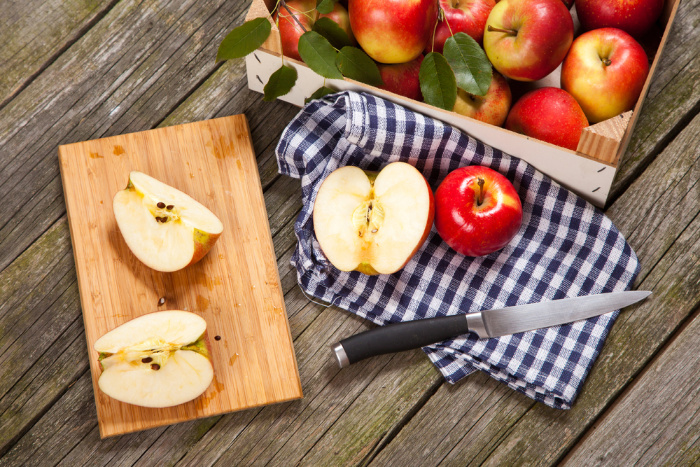
Bioengineered apples have become especially popular because the genetic modification prevents browning even after slicing, which appeals to parents packing lunches. Yahoo Finance
Cotton is also on the list and is used to produce cottonseed oil, which is found in processed foods and used as a cooking oil in many fast food restaurants. Homesteadontherange
It’s worth noting that very little bioengineered food is actually found in the fresh produce section of the grocery store. Most bioengineered ingredients show up in processed products rather than whole foods, which is why reading labels on packaged items matters so much. Homesteadontherange.
What About Bioengineered Ingredients in Your Food Storage?
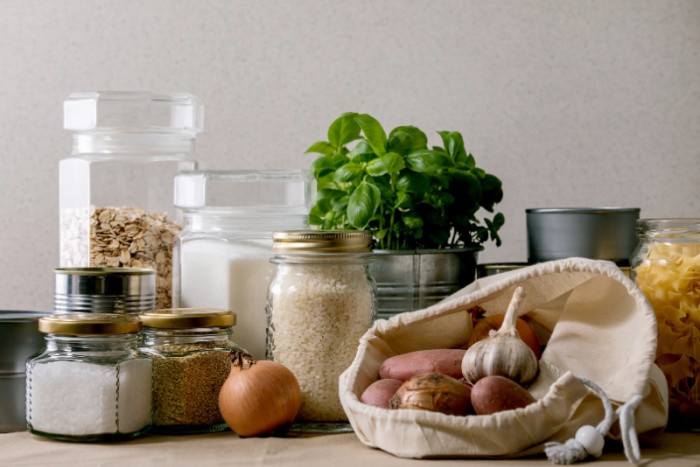
For families focused on emergency preparedness and building a home food supply, this is an important consideration. Many common food storage staples, such as white sugar, cooking oil, and canned goods made with corn or soy, may contain bioengineered ingredients. If avoiding them matters to your family, look for organic or non-GMO verified versions of these staples when stocking your pantry. They’re widely available at most grocery stores and online retailers, often at prices comparable to conventional options.
The Bottom Line for Your Family
Bioengineered food simply means food whose DNA has been altered in a lab to give it certain traits. These foods are now required by law to be labeled in the United States. Current scientific consensus holds that approved bioengineered foods are safe, but many families still prefer to avoid them for personal reasons. The good news is that you now have more information at your fingertips at the grocery store than ever before, and whether you choose to buy bioengineered foods or not, you can shop with confidence knowing exactly what that little label means.
Knowledge is one of the best tools in any prepared family’s toolkit. Keep reading, keep learning, and keep taking good care of your family.
GMO Foods: Everything You Need to Know
Final Word
Understanding what’s on your food labels is one of the most practical things you can do for your family. The bioengineered label doesn’t have to feel confusing or overwhelming. It’s simply information, and information is power. Whether you choose to embrace bioengineered foods, avoid them entirely, or land somewhere in the middle, what matters most is that you’re making an informed decision based on facts rather than fear. That’s what being a prepared, confident family is all about. Keep asking questions, keep reading labels, and keep doing the wonderful work of caring for the people around your table. May God bless this world, Linda
Copyright Images: GMO Fruits and Vegetables Depositphotos_332993552_S, GMO Vegetables Depositphotos_588361574_S






It has become impossible to avoid at this point.
About all you can do is raise what you can or buy direct. It also means you must cook.
There’s no grubhub solution
Hi Matt, I have come to the same conclusion. I have seen “organic” food recalled more often now than ever before. I buy what I can afford these days. Yes, we must all cook, and grow as much food as you can. Linda
Your link on ingredients to avoid went to some Amazon page.
Hi CAddison, it goes to a page on Amazon that has printouts available of how food is processed. Look at it again. Linda
My first shock was when I learned that Campbell’s soup (even cream of mushroom) has BE in it. I’m saving a lot now because it really is so easy and CHEAP to just make my own white sauce. If I want to have mushrooms in it, I open a little can of mushrooms.
I avoid all BE foods and GMO. A lot of the four on the shelf now is NON- GMO. What that means is that it wasn’t sprayed with the Round up chemical. Most corn is. Nasty stuff.
I’m even making my own no churn ice cream. Even whipping cream has chemicals now added, but nothing like ice cream.
By the way, I did buy some ice cream BOGO the other day (I’m not opposed to eating junk now and then!). I use these little cups to portion it out. Otherwise we eat way too much. Anyway, the 1.5 quart of ice cream used to make 11 of those little cups. NOW I can barely get 8. They are whipping a lot more air into the product.
I have used Bigelow green tea, shipped from Sam’s, for years. 160 bags in a box. Just ordered a new supply. Same price. I thought WOW. 140 in a box now.
Shrinkflation.
I’m glad I learned to read recipes (thanks Mom). The only way to afford decent food now is scratch cooking. I mostly know what’s in my food.
By the way, a lot of meat is now injected with water/fluid to make it heavier. They’ve done this a long time, but it’s worse now.
Young people will never know the difference.
HI CAddison, I’m hoping to write about meat soon. I can’t even look at meat right now. Is it a cow steak or is it produced in a lab. Your Mom was smart to give you that sewing machine and cookbook for graduation. More mothers need to do that. Linda
Linda, this is an excellent post, and the knowledge that fresh foods usually aren’t bioengineered is good to have. But I think there is a difference between bioengineered and genetically modified, though I suppose both can happen in labs. Ever since the first farmer planted saved seed from their first crop, we’ve been genetically modifying food crops to be more productive, more disease and insect resistant, more drought tolerant, etc. I do this myself every time I select a plant I want to let go to seed.
You know I grow a lot of my own food, but I don’t grow everything–wheat for example. I do read labels and try to avoid bioengineered food because some of it, corn and soybeans in particular have genes from animals or insects spliced into them and I prefer to avoid that. Still, Matt and you both make a good point that avoiding them entirely is all but impossible. Oh, I believe most wheat is GMO now too as a response to armyworm and locust swarms.
HI Ray, you are blessed that you had the desire to grow so much of your own food. Growing food in the desert takes work, we both know that. The amendments are needed but the payoff is big time. I hope to do one on meat. What I’m researching is not good. I want to know the truth about the meat we are consuming. I haven’t bought red meat for months, except some rotisserie chickens. Armyworms, locust swarms and now the screwworm is infesting beef. We all need a break. Linda
We could always get rabbits. So long as you keep them fed they’ll outbreed your capacity to eat them, leaving open the possibility of trade. You just have to be okay with butchering your own food. Same with chickens, if you have a rooster and learn how to brood the eggs through hatching.
Speaking of chickens, it’s beginning to look like none of my latest batch is a rooster. Too bad, as I sort of hoped one would have slipped by the inspectors who “sex” them.
Hi Ray, my neighbor got hers and was hoping the same thing. I love going over there and watching them run around. It brings me so much joy. She went to Texas for a week and we were asked to feed and water them and the rabbits. Mark had the pleasure of doing it because I can’t even walk a straight line. My balance issues from that tidbit in 2017 (I can’t drive either). Add oxygen to that and it’s not fun. But it could be so much worse. I couldn’t butcher an animal. I will be a vegetarian. LOL! Linda
Hi Ray, dang, I wish you had gotten a rooster! Those rabbits are so cute, but I couldn’t butcher them or eat them. I do not like the taste. I know if I was starving I could do it. I hope I’m dead before that happens! LOL! Linda
The tame rabbits I had tasted a lot like chicken, but like most other animals we eat the food they eat can influence their flavor. I grew up eating wild rabbits and they always tasted fine to me. The deer in Kansas when I was a kid were mostly corn fed and tasted great, but when I moved to Colorado I discovered the mule deer had feasted on sage and scrub oak–likely the acorns and their venison was bitter and awful. So I started hunting elk and was never again disappointed.
Hi Ray, I have heard elk is one of the better wild animals to eat. Utah is a big hunting state. I have the cutest nephew that man he hunts and eats everything. His wife and kids all love hunting and fishing together. Mark got a deer one year, nope, last one. I can still smell it cooking in the crockpot. Not good! LOL! Of course we dragged the deer inside to cut it up ourselves in our kitchen, that didn’t help. Fun memories. LOL! Linda
I’ve been trying my best to avoid bioengineered food (aka processed foods [my opinion])!!
Something else that concerns me in addition to the bioengineered foods are the lab grown ingredients like cocoa – naturally grown is losing due to drought in many areas. Happy that I have a stock of cocoa powder.
And what about things like Apeel – anything with Bill Gates involvement scares the daylights out of me. And apparently those fruits and vegetables don’t have to be labeled!
Our food industry is messed up! Grow as much as you can, cook from scratch and whenever possible, buy locally.
Hi Leanne, you nailed it, we must grow our own food or at least as much as we can. If you can buy locally, do it. We must save our Farmers! Linda