
Propane Tanks: Do They Expire?
This post may contain affiliate links. We may earn a commission if you purchase via our links. See the disclosure page for more info.

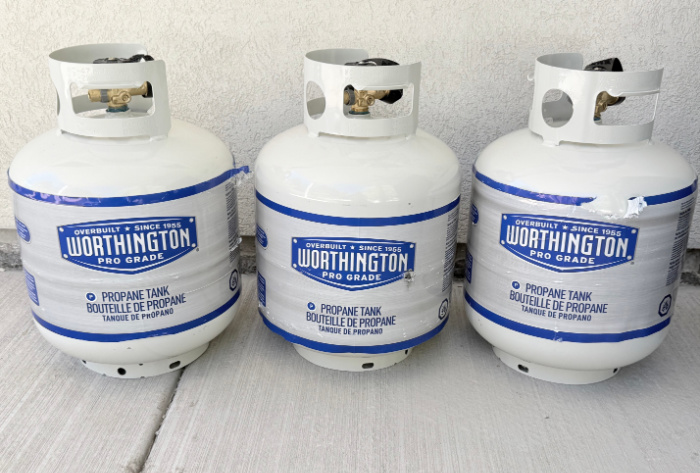
Propane Tanks: Do They Expire? What Every Prepared Family Should Know. Propane is one of the most reliable fuels a family can store for emergencies, camping trips, or everyday grilling. But if you’ve looked closely at the collar of your propane tank, you may have noticed a stamped date and wondered what it means. Does propane go bad? Does the tank itself expire? Today I want to walk you through exactly what that date means, why your propane will last indefinitely, and why the tank it sits in doesn’t last forever.
Propane itself never goes bad. Here’s the good news. Propane is a stable fuel. Unlike gasoline, which breaks down and loses effectiveness over time, propane doesn’t degrade, separate, or spoil. A tank of propane you filled five years ago is chemically just as good today as the day it was filled. The fuel itself has no shelf life, which makes propane one of the best fuels for long-term emergency storage.
Outside Cooking Pans
- Dutch Oven
- Cast Iron Pans
- Cast Iron Griddle
- Outside Double Grill
- Kidde Carbon Monoxide + Explosive Gas, Natural Gas & Propane Alarm
So if propane never expires, why do so many people say propane tanks expire?
Tank Certification Date, not an Expiration Date
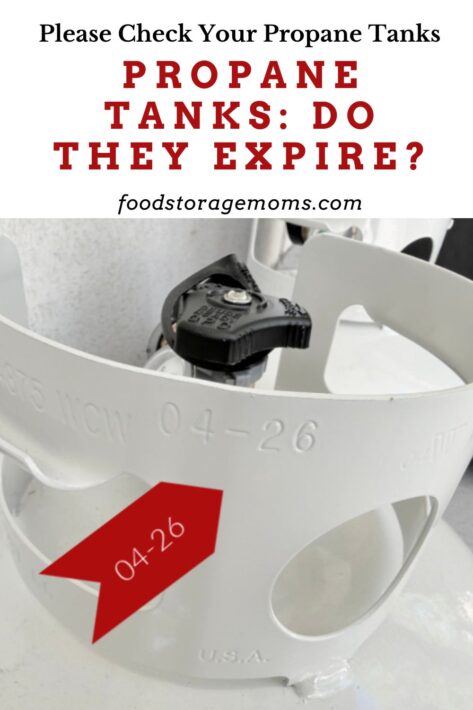
The tank has a certification date, not an expiration date. The confusion comes from the tank, not the fuel inside it. Portable propane cylinders, like the standard twenty-pound tank you use for your grill, are stamped by the manufacturer with a date. That date is not an expiration date for the propane. It marks the starting benchmark so you can tell when the tank needs to be inspected again to ensure it’s still safe to pressurize.
Most portable propane tanks are certified to be filled for 12 years from their date of manufacture. Once that twelve-year mark passes, federal transportation regulations require the tank to be recertified, sometimes called requalified, before any propane supplier can legally refill it. This isn’t a suggestion. It’s a safety regulation, and reputable fill stations will check that date every single time.
After Twelve Years
What happens after twelve years? Once your tank reaches its twelve-year mark, you have two options. The first option is to have the tank inspected by a qualified technician. If it passes a visual inspection for rust, dents, corrosion, and valve condition, it can be recertified for another five years. The second option is simply to exchange the old tank for a new or already certified one, which many hardware stores and propane exchange programs make very easy.
What you can’t do is walk into a fill station with an expired tank and expect them to fill it. No responsible propane dealer will fill a tank past its certification date. The tank may look perfectly fine on the outside, and it very well might be, but the law requires that inspection before it can be trusted with pressurized fuel again.
How To Read A Tank’s Date Stamp
How to read your tank’s date stamp. Look at the collar of your propane tank, near the handle or valve. You’ll find a stamped code in a month-and-year format, such as zero seven dash twenty two for July of 2022. If the tank has already been recertified once, you may also see a letter next to a two-digit number, indicating the quarter and year the recertification took place. When in doubt, ask your local propane supplier to check the stamp for you. It only takes a moment.
Why this matters for preparedness-minded families. For those of us who like to be prepared, propane is often part of the plan. It can power a camp stove, a backup heater, a small generator, or emergency lighting. Because propane itself lasts indefinitely, it’s one of the easiest supplies to rotate into your preparedness plan without worrying about spoilage, unlike stored food or water.
City Limits
Even if you live within city limits, there are still good reasons to keep propane on hand. A small grill-sized tank or two lets you cook a hot meal during a power outage without needing a permit or a special storage setup. Propane also works well for backup lighting with a propane lantern, and it can run a small heater safely when used with proper ventilation. Many families keep a couple of extra tanks specifically for these situations, rotating them through normal grilling use so nothing sits forgotten in the garage for twelve years.
If you’re considering a larger tank, it’s worth checking with your city about local ordinances. Many cities allow tanks up to a certain size, often around one hundred pounds, without a special permit, but larger stationary tanks may have distance requirements from your home or property line. A quick call to your city planning office or local fire department can save you a headache later.
Propane Doesn’t Go Bad
The bottom line, propane doesn’t go bad. What ages is the tank that holds it, and that aging is measured in a twelve-year certification window followed by five-year recertification windows after that. Keep an eye on your tank’s date stamp, exchange or recertify it when the time comes, and enjoy the peace of mind that comes from having a reliable, long-lasting fuel source ready for your family.
Why Propane Matters for Emergency Cooking
Storing propane for cooking is one of the smartest and most practical steps a family can take when preparing for the unexpected, because it gives you a reliable way to feed your family hot meals no matter what’s happening around you. When the power goes out during a storm, a wildfire evacuation warning arrives, or a winter freeze knocks out your utilities for days, your electric stove and oven become useless, but a propane camp stove or a propane grill will still light right up and get dinner on the table.
A Fuel You Can Trust Without Worrying About Spoilage
Unlike food that can spoil or batteries that slowly lose their charge sitting on a shelf, propane simply waits patiently in its tank for as long as you need it, ready to perform exactly the same way on the day you use it as it did the day it was filled. This makes it one of the few emergency supplies you can truly set aside and trust without worrying about rotation, unlike canned goods or dry staples.
Cooking Outside Keeps Your Family Safer
Cooking outside with propane also solves a safety problem that trips up many families during emergencies, because it keeps an open flame and carbon monoxide-producing appliance away from the inside of your home, where ventilation may already be limited if windows and doors are sealed against cold or smoke. A portable propane stove set up on a porch or patio lets you boil water, cook rice and beans, warm soup, or fry up whatever protein you have stored, all without needing electricity or risking a fire hazard indoors. For families with children, this also means you can keep familiar, comforting food on the table even when everything else feels uncertain, which matters more than people often realize when little ones are scared or confused by a disruption to normal life.
Everyday Versatility Keeps Your Supply Fresh
Propane is also incredibly versatile for cooking beyond just emergencies. It powers turkey fryers, griddles, camp stoves for family trips, and backyard grills for everyday dinners, so the tanks you store for preparedness do double duty as ones you already use and refill throughout the year, which keeps your supply fresh and your operating skills sharp when using the equipment.
Easy and Practical to Store
Because propane tanks are widely available, relatively inexpensive to fill, and easy to store safely outside in a shaded, ventilated spot away from direct heat sources, building up a small reserve of two or three extra tanks doesn’t take much effort or money, yet it can make an enormous difference during a multi-day outage.
The Bottom Line
Whether you’re cooking a simple pot of oatmeal for breakfast during a snowstorm or feeding a whole family after a hurricane has knocked out the grid for a week, having propane on hand for cooking is one of those quiet, unglamorous preparedness steps that pays off exactly when you need it most, and it’s well worth making part of your family’s preparedness plan.
How To Heat Your Home In An Emergency
Final Word
Propane has earned its place in our preparedness plans because it simply doesn’t let us down. It sits quietly in the tank, ready whenever we need it, whether that’s for a Sunday cookout or an unexpected power outage. The only thing that asks for our attention is the tank itself, and now you know exactly what to look for and when. Take a minute this week to check the date stamp on your tanks. It’s such a small step, and it makes sure your family’s fuel supply is always ready when you need it most. May God bless this world. Linda











Is propane more deadly than natural gas?
Every preparedness site or blog I read leaves me wondering why the fear porn?
When I was a kid it was a normal thing (specially on holidays) the gas stove & oven in the kitchen would be doing extra duty and there was not a thought about deadly fumes… and no one ever died (or was sickened) by running gas appliances in the house.
Why has it become such a fearful talking point over the last 10 or so years?
I could see if you were to go sit in a closet with the door shut there might be due concern but I remember all 6 burners on the range going all day and both ovens working to make a fabulous meal for the whole family – while heating the whole house …
Hi Bruce, this is a very good question. I am not an expert on fuel, but I do know the “government” was talking about not letting families purchase gas stoves for their homes. I prefer cooking on gas, and we were in the middle of building a home with an upstairs apartment along with an oversized shop for a family member. I was nervous about getting a gas stove; I had the house vented for one, and all that goes with it for safety. It took 3 years to get permits and build it. Luckily, the law, if there was one, was not passed, as far as I know. I believe everyone should have a propane, natural gas, and carbon monoxide detector in every home. Possibly three to four of them. Over the last 3-4 years, several homes have exploded due to natural gas leaks from decayed, 48-year-old underground gas lines. My friend’s son was killed in this one. ABC NEWS South Jordan, Utah.. Propane in a trailer killed another friend’s son. They did not have a carbon monoxide detector. I tried to call the Fire Department last week to get some answers, but no one picked up. EVERYONE should have one of these: https://amzn.to/4y3dWgv. I’m not sure I’m the best person to answer your question. I use both. I make sure things are installed and connected properly. Linda
We have not only smoke detectors all over the house and garage, but also carbon monoxide detectors. We have a natural gas furnace and I cook on a gas stove, so we try to be as safe as possible.
Hi Paula, I love hearing that you have smoke detectors and a carbon monoxide detector. The city of South Jordan, Utah, has asked all families to get detectors that cover natural gas, propane, and carbon monoxide. There have been three deaths in the last 2 years or so from the city’s leaking underground natural gas lines. They are 48 years old and need to be replaced. It is really scary if you think about it. We will never know when the next leak happens until it’s too late. Linda
My large tanks I take over to the city and there’s a place that’ll rebuild n certify. My small ones just go to Walmart and get exchanged.
I know a place that refills no questions asked too.
Hi Matt, that’s awesome to know. We ended up buying new tanks at Costco (just three) and got them filled at a propane station. It was slick; I’m glad I talked Mark into finally getting some. We always had at least 8 in Southern Utah. The small 20-pound ones. We have one hooked up already to the grill, so that gives us four. Thanks for the tip on the city. I tried to call the fire department to see where to get my readers’ tanks recertified, if they had any. Thank you, Linda
I always worried about propane tanks. I always felt they were unstable. Even our grill is connected to the house natural gas. Thank you for teaching me I was wrong.
Hi Chris, we have had our grills attached to the natural gas lines in several houses. We actually have a natural gas line ready to hook up to a grill, but where the builder put it isn’t in a good spot. Plus, with all the natural gas explosions in our city, we will stick with the propane tank for now. They are both good options. Linda
We have a household 500 propane gallon tank, several grill size tanks, and bigger one. The grill sized ones, we exchange. The household one is filled when the propane company comes to fill it. The bigger one for the generator dual fuel one is taken by my husband’s son to have refilled. So far, it’s only been filled once.
Hi Deborah, It’s nice to have so many options on your property. I love it. Linda
Yes ma’am it is. We also have a propane fireplace and cook stove and on demand water heater. Love them all!
Hi Deborah, I love it! Linda