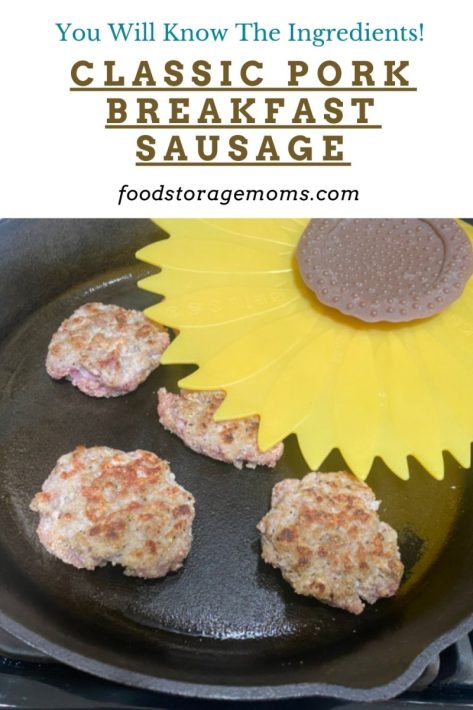
Classic Pork Breakfast Sausage
This post may contain affiliate links. We may earn a commission if you purchase via our links. See the disclosure page for more info.

When I wake up in the morning, it’s nice to have something savory and filling on the menu. While I do enjoy having a pastry for breakfast, it’s so nice to enjoy something a little different. Mark and I love this Pork Breakfast Sausage. It’s easy enough for anyone to make, but delicious enough for everyone to enjoy. Let me walk you through how to make this breakfast sausage so you can enjoy it with your family, too!
The History of Pork Breakfast Sausage
Breakfast sausage has deep roots in rural and agrarian traditions, long before it became a staple of modern American breakfasts. Sausage-making originated as a practical way to preserve meat before refrigeration. After fall hog butchering, families needed to use every part of the animal, and grinding the pork with salt and spices helped it last longer and be used more efficiently.
In Europe—particularly in England, Germany, and Ireland, herb-seasoned fresh pork sausages were ordinary morning fare. These early sausages were typically made from pork shoulder, salt, pepper, and locally available herbs such as sage or thyme. They were cooked fresh rather than cured, making them ideal for breakfast.
When European settlers arrived in North America, they brought these sausage-making traditions with them. Sage quickly became the defining herb in American breakfast sausage, mainly because it thrived in colonial gardens and paired well with pork. By the 18th and 19th centuries, sage-seasoned pork sausage had become a typical breakfast food on farms, especially in the Southern and Appalachian regions.
Breakfast sausage was often made at home, mixed by hand, and shaped into patties or left loose to cook in a skillet. It was typically served alongside eggs, biscuits, or griddle cakes, providing a hearty, protein-rich start to a long day of physical labor. Sweeteners like brown sugar or maple syrup were sometimes added, reflecting regional tastes and access to ingredients.
By the early 20th century, commercial meat processors began producing packaged breakfast sausage, standardizing flavors and making it widely available. Despite this shift, homemade breakfast sausage remains popular today, especially among home cooks who value traditional flavors, simple ingredients, and control over seasoning.
Today’s classic pork breakfast sausage, made with ground pork, sage, salt, pepper, and optional sweet or spicy accents, remains remarkably close to its historical roots. It stands as a reminder of thrift, self-sufficiency, and the enduring comfort of a simple, well-seasoned meal shared at the breakfast table.
Pork Breakfast Sausage
Kitchen Tools You Will Need
- Meat Grinder or Food Processor
- Mixing Bowl
- Freezer Paper for Patties
- Patty Molder (optional)
- Freezer Bags
- Measuring Cups and Spoons
- Meat Thermometer
- Silicone Grease Splatter (they must be sold out of my sunflower ones)
Pork Breakfast Sausage Ingredients
Ground Pork (Shoulder or Butt)
Pork shoulder (also called pork butt) is the best cut for breakfast sausage because it has the ideal fat-to-meat ratio—usually around 70/30 or 80/20. The fat keeps the sausage juicy and flavorful as it cooks. Lean pork can result in dry, crumbly sausage, so a little fat is essential for authentic texture and taste.
Sage
Sage is the signature herb in traditional breakfast sausage. It provides an earthy, slightly peppery flavor that balances the richness of the pork. Dried sage is most commonly used, but it should be fresh and aromatic—old sage loses potency. The amount can be adjusted depending on how herb-forward you like your sausage.
Salt
Salt enhances all the other flavors and helps bind the meat mixture together. It also draws out moisture, improving texture and juiciness. Using the correct amount is crucial, too little makes the sausage bland, while too much can overpower the pork’s natural flavor.
Black Pepper
Black pepper adds gentle heat and depth without overwhelming the sausage. It complements the sage and pork, creating a well-rounded seasoning profile. Freshly ground pepper offers the best flavor, but pre-ground works fine for everyday cooking.
Bread Crumbs
Bread crumbs act as a binder, helping the sausage hold its shape and retain moisture. They soften as the sausage cooks, creating a tender bite instead of a dense or greasy texture. Plain bread crumbs are best, so they don’t compete with the seasoning.
Brown Sugar (Optional)
Brown sugar adds a subtle sweetness that balances the salt and savory spices. It also helps with browning during cooking, giving the sausage a lightly caramelized exterior. This ingredient is optional but popular in classic American breakfast sausage recipes.
Crushed Red Pepper Flakes (Optional)
Red pepper flakes introduce a mild heat that lingers without overpowering the sausage. They’re perfect for those who enjoy a little spice in the morning. The amount can easily be adjusted—or omitted entirely—for mild or spicy preferences.
Pork Breakfast Sausage
Please note: I quadrupled the original recipe, as in 4 times the ingredients. The pork shoulder was just over 4 pounds, so I wanted to use it up. When I went to talk to the butcher about what “cut” to purchase, he said I needed a pork shoulder or pork butt to make sausage. Pork tenderloins have very little, if any, fat, so they wouldn’t have the flavor I want. He was so right! These pork breakfast sausage patties are awesome!
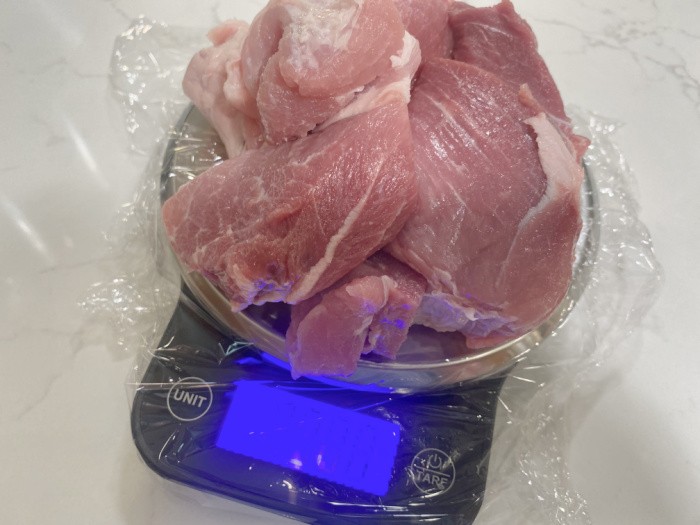
Step One: Trim Fat
Trim as much fat as you can off the meat, and make sure there are no bones attached to the pork. Carefully cut the pork into pieces before placing them in your food processor or meat grinder. I weighed the meat to ensure the recipe would be accurate with the added spices.
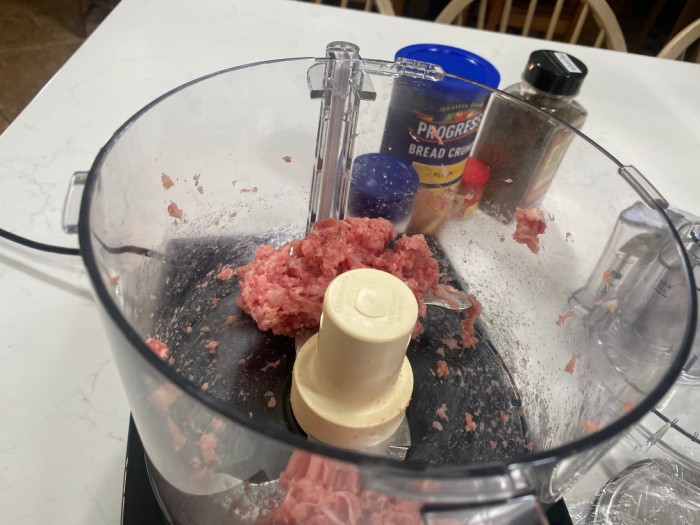
Step Two: Pork Pieces in Processor
I placed small amounts of the pork into the Food Processor and used the “pulse” button several times until it looked like what I wanted.
Step Three: Add The Other Ingredients
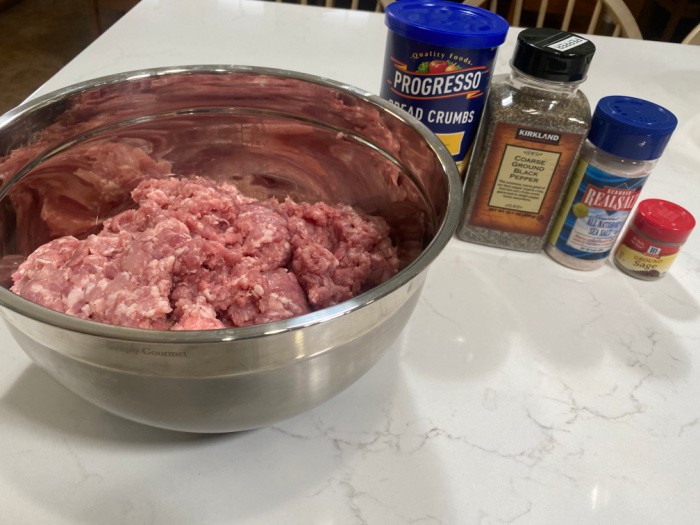
What I love about making my own pork breakfast sausage is knowing what’s in it. There are zero weird ingredients. What you see below is what I added to the ground pork. After grinding the pork, add the sage, salt, pepper, and bread crumbs.
Step Four: Mix Thoroughly
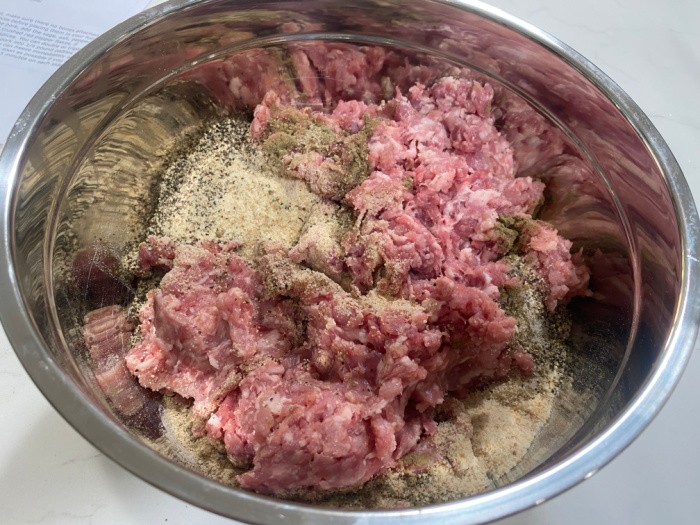
I used my hands to mix it thoroughly, or at least as well as I could. It reminds me of making ground beef meatloaf. After mixing, form the pork into 1/4-pound patties and fry them in a frying pan. I didn’t add any oil when I fried them.
If you plan to freeze them for later cooking, you will want to place waxed paper between each patty. Place the patties in a freezer bag.
Step Five: Cook the Patties
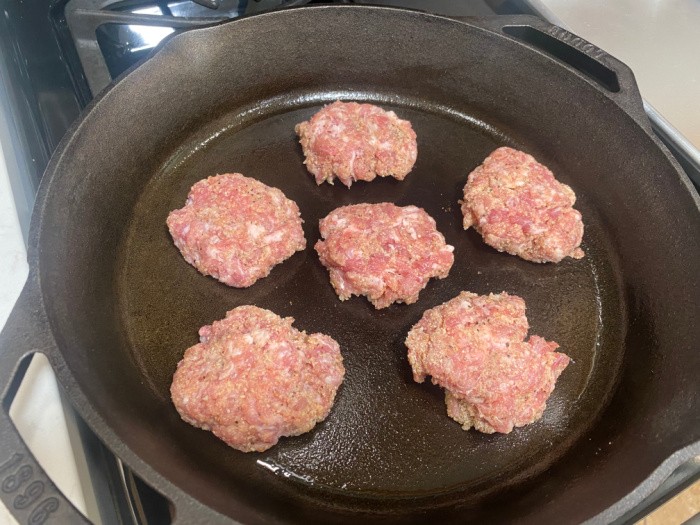
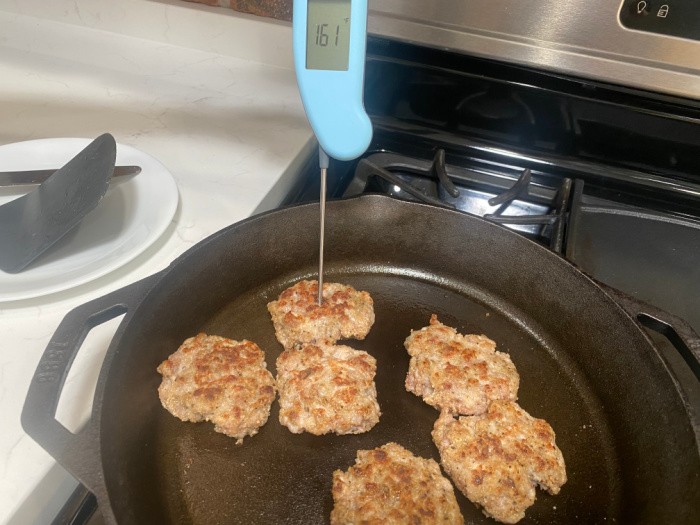
Cook over medium-high heat for 5 minutes on each side, until the center reaches at least 160°F (71 °C). Cook them as soon as possible if you aren’t freezing them.
Finished Product
Pork Breakfast Sausage Recipe

- 1 pound pork shoulder/butt (boneless)
- 1/8 teaspoon dried sage
- 1 teaspoon salt
- 1 teaspoon pepper
- 1/4 cup bread crumbs
- 1 tablespoon brown sugar, optional
- 1/8 teaspoon crushed red pepper flakes, optional
-
Trim as much fat as you can off the meat, and make sure there are no bones attached to the pork. Carefully cut the pork into pieces before placing them in your food processor or meat grinder.
-
Carefully cut the pork into pieces before placing them in your food processor or meat grinder.
-
After grinding the pork, add the sage, salt, pepper, and bread crumbs.
-
Add the brown sugar and crushed red pepper flakes, if desired. Combine until mixed evenly with the spices.
-
You can easily double or triple the recipe. After mixing, mound the pork into 1/4-pound patties and place waxed paper between each patty.
-
You can freeze immediately after molding the patties to your desired shape.
-
Cook as soon as possible if you are not freezing them. Cook over medium-high heat for 5 minutes on each side, until the center reaches 160°F (71 °C). They should be golden brown. Serve warm.
-
Another Cooking Option: Preheat the oven to 400°F (204 °C). Spray a 1/4 cookie sheet (depending on how much sausage you make). Spread the sausage mixture on the cookie sheet as evenly as possible. Or you can make patties and spread them evenly on the cookie sheet. Bake for 25-45 minutes, or until the internal temperature reaches 160°F (71 °C), using a thermometer. They should be golden brown. Serve warm.
What can I serve with pork sausage patties?
- Fried eggs
- Scrambled eggs
- Omelets
- Hashbrowns
- Toast
- English Muffins
- Egg Bake
- Bagels and cream cheese
- Fresh fruit
- Pancakes
- Waffles
- Mac & Cheese
Could I buy ground pork instead of grinding it myself?
When it comes to ground pork, you’ll see it in packages similar to ground beef. All you have to do is look for it in the meat section; it will have a label that says “ground pork.” If you don’t see any on the display rack, go to a butcher and ask them to grind the pork for you. You have to ask.
How long can I store fresh pork in the refrigerator?
When you store fresh pork in the refrigerator, the temperature should be 40 °F or less. Pork roast and pork chops in the meat counter wrapping should be stored for only 2-3 days in the store, or less if the packaging states a specific date. I know Costco sells pork tenderloin in vacuum-sealed packages that last about 5-7 days, typically refrigerated.
How long can I keep ground pork in the refrigerator?
As mentioned before, you can store ground pork in the refrigerator, but you need to pay attention to the expiration date; it’s typically 1-2 days.
How many months can I store the frozen pork patties?
Frozen foods are safe indefinitely. However, it is best to use pork within 6 months!
What is the safe temperature when cooking pork?
When you are cooking pork, it must be cooked from 160 ºF to 165 ºF, then rested for 3 minutes.
Final Word
If you’re excited to change up your breakfast, you need to give this recipe a try. Pork Sausage Breakfast is good any time of the week, but it’s especially yummy on the weekends. It’s filling and delicious on so many levels! The next time you want to make a unique breakfast for the family, give this recipe a try. This is a great recipe to teach your kids and grandkids to make since they’ll learn the basics of grinding meat and matching it with your favorite spices. May God bless this world, Linda.










Oh my, Linda. My mouth is watering for pork sausage. We had a friend that had a shop where he made pork sausage. He used MSG in his. I think yours sounds much better. Now to go to the store for the ingredients I don’t have. Great post! I do remember my grandparents and other family members getting together and butchering pigs in February. They split the meat while doing this. My grandmother did have a manual meat grinder. I never got to see the process. Not sure I wanted to though.
Hi Deborah, I’m not sure I could watch a pig being slaughtered either!! I bought a hand grinder but it wouldn’t fit on my countertops to clamp. I’m trying to figure out where I can put it. I will add it to the post later. Linda
Hi Linda! Have you tried your dining room table? Is your counter too thick or too thin? I have a grinder for my Kitchen Aid Mixer. But . . . If we have no power, it’s useless. I do have a hand grain mill. Now I need a meat grinder. Or, we could use the generator.
I do remember living without AC and Central heat. It wasn’t so bad back then. LOL We didn’t know any different. We can get used to it again if necessary. We do have oil lamps, and candles and flash lights with batteries. I hope it doesn’t come to that, but, there’s a strong possibility it will in our lifetime. I’m trying to be prepared for whatever.
Hi Deborah, my dining room table has a glass top. One granddaughter used a magic marker on it years ago. YIKES! I have my desk I may try to use. I’m trying to be prepared for whatever as well. It’s not looking good. Linda
No ma’am it isn’t looking too good. Not everyone sees it though. My daughter got 6 chicks for Easter, and just got a bee hive. They had a swarm in their pontoon boat. They’ve been moved into the hive. She should get honey by fall. She’s been wanting bees for a good while.
Linda, excellent recipe. My wife and I have used an identical recipe for years, with the exception of using a bit less sage and sometimes adding a bit of Lipton’s French Onion Soup mix . We have a manual meat grinder as well as an antique electric one my wife got from her grandmother.
I add an extra step when freezing the meat. After the patties are formed and layered with wax paper I place them in a vacuum sealer bag and put them in the freezer for a couple of hours (I do the same when freezing any ground meat). Then I pull the bags out and vacuum seal them. Doing this pre-freezing means my vacuum sealer doesn’t suck a bunch of blood and other moisture out of the bag, which can sometimes ruin the seal.
In addition to the food you listed we love pork sausage with pancakes, waffles and mac and cheese.
One last thing. What would it take for me to be able to promote my Prepper book, “Bugging In: What To Do When TSHTF and You Live in Suburbia” on your website? The revised, expanded and updated 2d Edition is now available in both ebook and print on Amazon and I was thinking if you posted a link and maybe did a review you could collect an affiliate commission. BTW: Your own book and website are recommended in my book.
Hi Ray, thank you for the 5 stars! Thank you for reminding me about pancakes, waffles, and mac & cheese! I just added them to the post. I like your idea about the FoodSaver. I’m going to go buy your book because then I’m a verified buyer and my review will be better. Stay tuned! Linda
Hi Ray, I just ordered the 2nd Edition one!!!! Linda
Thank you, Linda. I’ll be very interested to hear what you think about it.
Thanks you, Linda. The ebook version has tons of useful links to good products, and other sources of information–not to mention other great books on Prepping. The print version would stand you in good stead if the grid goes down and you can’t get a charge on an ereader, but it’s much more expensive, of course. Amazon sets the minimum allowed price and that’s what I have it set at.
I hope you get some good, useful information from the book and please let me know what you think about it.
Hi Ray, I only like hard books because if the power goes down, which we know it will, I will have your book to read!! I can’t wait! LINDA
Linda, If you’ll let me know when you get the print version, send you the ebook version as there are hundreds of links in the ebook I think you may want to check out.
Hi Ray, I will for sure. I want to do a review as a verified buyer. Linda
Looking forward to getting your book. It’s in my Amazon wish list for hubby to order for me. He’s a prime member. I’m not.
Thank you Deborah. Please read my replies to Linda as they would apply to you too. Oh, and while I’m thinking about it, tell your daughter she might NOT want to harvest honey this Fall. Sometimes it’s a good idea to let a new hive rest until the following year. The bees will be less stressed then and she won’t have to worry about harvesting too much honey and leaving them short of food this coming winter. (Or so I’ve been told by other beekeepers.) Good on her for relocating the hive though.
Ray,
I don’t know what kind of vacuum sealer you have, but it should be able to use Foodsaver brand bags even if it is not a Foodsaver vacuum sealer. Foodsaver now has vacuum bags that have an absorbent pad inside of the sealing end of the bag. This will soak up and retain any blood or other moisture when sealing keeping it away from the seal. That way, you can go ahead and seal right away and not have to put them in the freezer ahead of time. Just a suggestion. I have used these with ground beef and ground chicken and they work great.
Harry, it’s been several years since i used Foodsaver bags. They didn’t keep a good seal back then so I switched to bags from FoodVacBags and Sorbent Systems which worked better. Based on your recommendation I may give Foodsaver bags another try–though the prefreezing has worked well for me for years. Thanks for the tip. I also use vacuum seal bags from MylarBagsDirect and they’ve been a very good value.
Hi Harry, I only use FoodSaver bags and love them! I did not know they sold some with absorbent pads! I’m looking for those right now! Great tip! Linda
Linda,
I have used only the quart size bags. They are called Liquid Block bags. Here is the UPC code for those-053891105927. They have worked great for me.
Hi Harry, I just ordered some, I had no idea we could buy these! Thank you so much! Linda
Ah Jeez! I forgot to mention how good it is in homemade sausage gravy.
I cannot wait to try this recipe! I love the smell of sausage cooking in the morning too. I love all of your recipes
Hi Alli, I love the smell of sausage cooking too!!! Life is so good with a hot breakfast! Linda
This looks amazing! I can’t wait to try it! I can already smell the sausage cooking! And what a healthier version than the sausage you buy at the store. You actually know what ingredients it’s made with! Love it! Thank you sooo much for sharing!❤️
Hi Camille, I know right? We know what’s in our sausage! Life is so good with a hot breakfast! Linda
Again, I am reminded how much the generations before us gave up in the name of convenience. As recipes like this one surface I see no reason to buy most products that are processed outside my own home. I also wonder what the coming generations will think about what we gave up. Thank You again for doing what you do for all of us.
God Bless!
Hi Josal, thank you for your kind words! I’m trying really hard to show the world how fun it is to cook at home! Life is awesome when it’s homemade! Linda
I was so excited to see this recipe. We have a family member who cannot eat processed pork due to the nitrates and nitrites. With our crazy work days, I sometimes forget things like this can be made at home from scratch. I have a local butcher who carries non-processed meats, so this gives me a new project! Thank you! BTW, I am looking for a mayo recipe that does not use processed vegetable oils. Any suggestions?
Hi Terry, thank you for your kind words! I do not know a recipe for mayo without processed vegetable oils. I better think about this one, a great idea! Linda
I love making my own pork sausage patties and this recipe is great. It’s so nice knowing exactly what’s in your food and you can adjust the taste just the way you like it. A friend adds chopped apple to hers, which I do too now and then. Sometimes I get a marked down package of ground pork which has to be cooked that day so I freeze the cooked patties.
Hi Alice, oh my gosh, I vaguely remember hearing about adding chopped apples to sausage. If you think about it, the possibilities are endless. The bonus is we know what’s in our sausage!!! Love it! Linda
I am an English Butcher. I make a 1000 LBs of sausage a week,and most is sold for English breakfasts.Ours is put into skins,I think you call them links?
Your recipe is interesting. Mine would exclude the sugar and chilli,but would have white pepper.
Hi Paul, oh my gosh, 1000 pounds a week! I love hearing this! I like the idea of white pepper, great tip! Linda
As most of you know if you have read my comments, I was raised on a large farm. We processed our own meat from animals we raised on the farm. Dad never let us girls watch the slaughtering process though – he didn’t think girls should have to watch that! I do remember the process of making our own sausage – we had only a manual grinder so we girls built our muscles grinding the pork. Not sure now what all Mom put in the sausage but it was great! We also used casings to make sausage links as well as made patties.
One of the things I do recall, however, was that if all the pork from one butchering was not gone when the next butchering was to take place, we always took out the frozen “old” pork and made sausage out of most of it.
Thank you Ray White for the pre-freezing method. I will use that next time I am getting ready to freeze meat.
Hi Leanne, you had so many experiences growing up on a large farm! I love hearing your stories. My mom had a manual grinder, not sure who go it. I love making sausage patties! Linda
Leanne,
If you can use Foodsaver brand bags in your vacuum sealer, as mentioned in my reply to Ray above, Foodsaver has bags that have an absorbent pad inside of the sealing edge of the bag. It absorbs any blood or other moisture that could spoil getting a good seal. I have used these and they work great.
Perfection – making our own sausage means no yucky additives. Thank you!
Hi Tiffany, I know, right? It’s so good! Linda
This is a fantastic recipe for when you want to make sausage for your family.
Hi Jess, thank you! I love cooking from scratch and this is one more way to know what’s in our food! Linda
Ray, she has an stablished bee keeper helping her. When she of the hive, there was already honey and all. They moved everything they could. The bee keeper told her that she had real docile bees. I will tell her your suggestion..
Hi Deborah, wow, what a great experience with bees! Linda
She’s wanted bees for several years now. A Queen can cost about $60 each. She was lucky that she got them all.
Still love this recipe. Since this was posted first time, I’ve found ground pork at our grocery store. Good to know. Long, long ago, they used to sell a seasoning package for sausage. I used it in ground beef. It was so so good. This was in the early 70’s. Yes, I’m dating myself. I’m old, and proud of it. Better old than dead. No, wait, if I was dead, I’d be with my Jesus! Sorry for the religion. Not sorry for believing though.
Hi Deborah, I don’t want you dead yet, we are close in age!! LOL! Thank you for the 5 stars, my sweet friend! Religion is good, we never have to apologize over religion. You are awesome, Linda