
How Many Gallons Of Water You Use In A Day
This post may contain affiliate links. We may earn a commission if you purchase via our links. See the disclosure page for more info.

Have you thought about how many gallons of water you use in a day? Here is a realistic breakdown for a family of four. Water is something most of us take for granted, until there’s a shortage, boil notice, drought, or emergency. Understanding how many gallons of water you use in a day is eye-opening and essential for budgeting, conservation, preparedness, and sustainability.
In this article, we’ll break down daily household water usage for a family of four, covering the kitchen sink, two bathroom sinks, two toilets, the shower, the bathtub, the washing machine, the dishwasher, and cooking needs. By the end, you’ll have a clear picture of where your water goes—and how quickly it adds up.
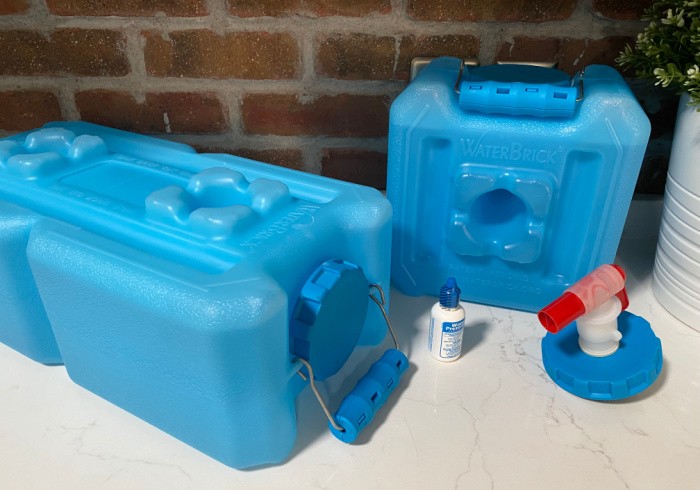
Please Store Water:
Why Knowing Your Daily Water Usage Matters
Understanding daily water use helps you:
- Prepare for emergencies and water outages
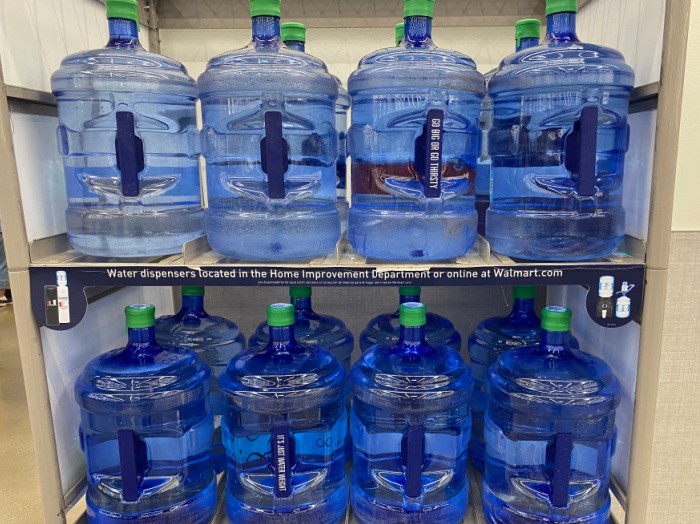
- Plan water storage for disasters
- Reduce water bills
- Identify waste and inefficiencies
- Practice sustainable living
The average American household uses far more water than most people realize.
Average Daily Water Use Per Person
According to general household usage data, the average person uses 80–100 gallons of water per day. That means a family of four can easily use 320–400 gallons of water every single day and often more. Let’s break it down fixture by fixture.
Daily Water Usage Breakdown: Family of Four
Kitchen Sink
Average use:
- 1.5–2.5 gallons per minute
Daily activities include:
- Washing hands
- Rinsing produce
- Washing dishes (by hand)
- Cleaning surfaces
Estimated daily use:
- ~25 gallons per day
The kitchen sink is one of the most frequently used water sources in the home.
Bathroom Sinks (2)
Average use:
- 1–2 gallons per minute
Used for:
- Brushing teeth
- Washing hands
- Shaving
- Face washing
Estimated daily use:
- ~30 gallons per day total
Leaving the faucet running while brushing teeth alone can waste several gallons each time.
Toilets (2)
Average flush:
- Older toilets: 3–5 gallons per flush
- Newer toilets: 1.28–1.6 gallons per flush
Average flushes:
- 5 flushes per person per day (Have you heard the saying, “if it’s yellow, let it mellow, if it’s brown, flush it down?).
Estimated daily use:
- ~100–120 gallons per day
Toilets are often the largest single source of indoor water use.
Shower
Average flow rate:
- 2–2.5 gallons per minute
Average shower length:
- 8–10 minutes
Estimated daily use:
- ~80–100 gallons per day
Longer showers dramatically increase daily water consumption.
Bathtub
Average full bath:
- 35–50 gallons
Assumption:
- Used occasionally (not daily by all family members)
Estimated daily average:
- ~20 gallons per day
Bathtubs use significantly more water than short showers.
Washing Machine
Average load:
- Standard washer: 30–40 gallons
- High-efficiency washer: 15–25 gallons
Average loads per day:
- 1 load
Estimated daily use:
- ~30 gallons per day
Laundry water use adds up quickly, especially with multiple children.
Dishwasher
Average use per cycle:
- Standard dishwasher: 6–10 gallons
- High-efficiency model: 3–5 gallons
Estimated daily use:
- ~6 gallons per day
Dishwashers are often more water-efficient than handwashing dishes.
Cooking & Drinking Water
Includes:
- Drinking water
- Coffee and tea
- Cooking pasta, rice, and soups
- Washing food during prep
Estimated daily use:
- 5 gallons per day. This is one of the smallest, but most critical categories.
Total Daily Water Use for a Family of Four
Estimated Daily Total:
| Water Source | Gallons per Day |
|---|---|
| Kitchen Sink | 25 |
| Bathroom Sinks | 30 |
| Toilets | 110 |
| Shower | 90 |
| Bathtub | 20 |
| Washing Machine | 30 |
| Dishwasher | 6 |
| Cooking & Drinking | 5 |
| Total | 316 gallons per day |
That’s over 2,200 gallons per week. Over 115,000 gallons per year.
How This Impacts Emergency Preparedness
In an emergency, FEMA recommends 1 gallon of water per person per day only for drinking and minimal sanitation. As you know, I recommend 4 gallons of water per person per day. That means:
- Normal daily use: 300+ gallons
- Emergency survival use: 4 gallons
This dramatic difference shows how dependent modern households are on running water.
Ways to Reduce Daily Water Usage
Simple changes can significantly reduce consumption:
- Install low-flow showerheads and faucets
- Fix leaking toilets immediately
- Turn off taps while brushing teeth
- Run full loads of laundry and dishes
- Take shorter showers
- Upgrade to water-efficient appliances
Even small changes can save thousands of gallons per year.
13 Tips for Saving Money on Your Electric Bill
How To Calculate Your Water Needs For Survival
Final Word
Most families are shocked when they realize just how much water they use in a single day. For a family of four, 300+ gallons daily is normal, but in a crisis, that level of use would be impossible.
Understanding your water usage is the first step toward conservation, preparedness, and resilience, especially in a time when water shortages and infrastructure issues are becoming more common.
Water isn’t just a utility. It’s a lifeline. You know, I’ve been talking about storing water for years. Many of my readers have stocked water, and used some of it after a disaster. We can’t possibly store the amounts I have listed today, but you can see why I suggest a minimum of 4 gallons per person per day for a period of days, in hopes the emergency will be resolved soon. It’s all about being prepared for the unexpected. Remember, the government will not immediately deliver water or food to you and your family after an unforeseen disaster. May God bless this world, Linda



As the guy in the army who hauled water to the field we used 300gl every other day for less than 100 soldiers. No baths. So yeah way more than the government recommended gallon a day per person which is what I drink daily.
I maintain 600gl fresh split in 3 areas. They are outside in the IBC totes and open topped barrels, jugs in the storm shelter and jugs in the house.
Hi Matt, great comment, you have lived the experience with how much water is used or could be used. Thanks my friend. That’s awesome to have that much water stored. Be safe this weekend, the once in a life time storm is hitting many areas. I hope people understand how bad it is going to be. Linda
Not all water stored needs to be drinkable. We use empty laundry detergent containers for toilet flushing water and hand laundry. Snow can be melted ( not the yellow stuff.. lol) Right now we can’t see out the door, so we have plenty of snow.
Hi Chris, I was going to text you to see how you are, this storm is going to be bad. Stay safe and stay home. Linda
This is appropriate timing considering the winter storm that is going to be hitting so many Americans.
Hi Dawn, I hope people are aware of what’s coming, this is a once in a lifetime storm coming. They are predicting it hitting 175 million people. I hope they have their gas tanks full, water and food stored. Linda
When you have no water coming in or are on limited rations (as you know we are VERY used to this), you never EVER flush your toilet with good water. You save ALL your “grey water” in buckets. Even from dish washing. EVERYTHING goes into a bucket.
This assumes you have sewage available. We have septic. We try not to put much food into the septic, but you aren’t wasting your coffee filters on grey water particulate filtering in this situation.
VERY important. NO toilet paper goes into the toilet. Have a baggie and bury or put it into the composter (don’t get me started on that being a no-no! There’s not much icky on TP ). The point is to reduce the amount of water needed to flush.
So, you only flush for #2. Flush by dumping your grey water into the toilet bowl. NOT into the tank first. Zip-zap- down it goes. Our last big hurricane found us with no water for 2 weeks. We were fine. As long as we had grey water, we could use the toilets.
Snow melt would work very well for those in that situation.
Hi CAddison, great reminder on the grey water. We will have to be adaptable to what happens in our location. I’m worried about this storm coming this weekend. I’m seeing empty grocery stores sent to me continually. I hope people have their gas tanks full, have water, food and a snow shovel. At the very least. Two weeks without water, yep you know how to live through it. Great comment as always, Linda
I didn’t realize that much water was used daily. Well, we don’t use that much. There’s only 2 of us.
I have read that older people only need to bathe 2-3 times a week. If you aren’t dirty, or sweaty, all you need between baths is a spit bath. Not literally spit, but a wash cloth, water and soap. Wash with soap, rinse. Repeat. At least it’s more than seasonally like it was long ago, and it does save precious water.
Hi Deborah, water is water and if its scarce, we will all be taking spit baths! LOL! It will save precious water. Linda
That is what I thought as well. And why I try to keep baby wipes on hand. I also have a large spray bottle for spraying if needed. And a hand held bidet. Just warm the water and wash away. LOL
Hi Deborah, oh yeah the bidet, I need one of those! LOL! I keep forgetting! Smart! Linda