Government Shutdown And Snap Benefits
This post may contain affiliate links. We may earn a commission if you purchase via our links. See the disclosure page for more info.

Today, I conducted extensive research on the government shutdown and SNAP benefits. Here’s a breakdown of how the current federal government shutdown is affecting the Supplemental Nutrition Assistance Program (SNAP) and what it means for beneficiaries.
What’s At Risk
- Funding for November 2025 SNAP benefits is in jeopardy if the shutdown continues. TIME+2CBS News+2
- The United States Department of Agriculture (USDA) has warned states that “there will be insufficient funds to pay full November SNAP benefits” if the lapse in appropriations persists. Axios+1
- Some states have already issued alerts to recipients that, unless the federal government reopens, benefits may be delayed or halted. ABC News
What’s happening at the legal/policy level
- Two federal judges have ordered the USDA to use contingency/emergency funds to continue at least partial SNAP payments during the shutdown. AP News+1
- These rulings mean the government may proceed with benefits payments, but there is still uncertainty about timing, amounts, or whether full amounts will be paid. The Washington Post+1
- Some states are taking their own emergency steps (e.g., declaring food emergencies, allocating state funds to help food banks) because they anticipate gaps. The Guardian
What this means in practice
- If you currently receive SNAP, you should continue to use the benefits already issued. If you’re approved and already enrolled, you’re likely safe for the current month.
- However, for the upcoming months (starting in November), your benefit load-out may be delayed, reduced, or uncertain, depending on the state where you live and the duration of the shutdown.
- If you’re applying for SNAP for the first time, the application process remains open in many states. Still, if the funding gap persists, even approved applications may not receive benefits until the funding issue is resolved. NY State OTDA+1
- If you live in a state that indicates they will try to provide assistance, you’ll want to keep an eye on notifications from your state human services agency about timing and issuance of benefits, as each state administers SNAP differently.
What you can do
- Make sure your address/contact info is up to date with your state SNAP agency so you’ll receive any important notices.
- Continue complying with all SNAP rules (recertifications, reporting changes) so you don’t lose eligibility while waiting for funding. NY State OTDA+1
- If you anticipate a delay of benefits (or experience one), consider connecting with local food banks/charities in your area, as many are preparing for increased demand.
- Follow news from your state’s human services department and the USDA for updates on when and how SNAP benefits will be paid.
How Much Money Is Going Out Every Month For SNAP
Key Figures
- In FY 2024, the average monthly benefit per participant was about $187.20. USDA Food and Nutrition Service+3Economic Research Service+3Center on Budget and Policy Priorities+3 (not updated at the moment).
- The average household receiving SNAP had a monthly benefit of about $332 (with the average household size being about 1.9 people) in FY 2023. USDA Food and Nutrition Service
- The total number of people receiving SNAP benefits averaged about 41.7 million per month in FY 2024. USAFacts+1
- Using those figures: 41.7 million × ~$187 = ~ $7.8 billion in benefits per month (on average).
- Other sources indicate a program cost of around $8.5–9 billion per month in recent months. Reuters+1
Who Qualifies For SNAP Benefits
Here’s a clear breakdown of who qualifies for SNAP benefits (food stamps) in 2025:
1. Basic Eligibility
To qualify for SNAP, you must meet three main tests — income, assets, and citizenship/residency.
Income Test
SNAP is designed for low-income individuals and families.
Your income must fall below certain limits based on your household size.
- Gross income (before taxes) must be ≤ 130% of the federal poverty level (FPL).
- Net income (after deductions for things like housing or childcare) must be ≤ 100% of the FPL.
Example (2025 limits):
| Household Size | Max Gross Monthly Income | Max Net Monthly Income |
|---|---|---|
| 1 person | $1,630 | $1,255 |
| 2 people | $2,215 | $1,703 |
| 3 people | $2,800 | $2,151 |
| 4 people | $3,385 | $2,600 |
| Each additional person | +$585 | +$448 |
(These vary slightly by state and are adjusted annually.)
Asset Limits
SNAP also considers your countable resources (such as savings).
You usually qualify if your assets are below:
- $2,750 for most households
- $4,250 if someone in your household is 60+ or has a disability
Certain things don’t count as assets, for example:
- Your home
- One car
- Retirement accounts (401(k), IRA, etc.)
Citizenship and Residency
You must:
- Be a U.S. citizen or a lawful permanent resident (green card holder).
- Live in the state where you apply.
- Some non-citizens may qualify (e.g., refugees, asylees, or those lawfully present for over 5 years).
2. Special Groups
Certain people have extra rules or exceptions:
- OLDER (60+): may have higher deduction allowances and easier recertification.
- Disabled persons: can qualify even if their income is slightly higher.
- College students: generally must work at least 20 hours/week or have dependents to qualify.
- Unemployed adults (ABAWDs), ages 18–52, may have to meet work requirements (20 hrs/week or job training) to continue benefits beyond 3 months.
3. What SNAP Considers
SNAP takes into account:
- Household size
- Income (earned and unearned)
- Rent/mortgage & utility costs
- Childcare costs
- Medical expenses (for elderly/disabled members)
4. How to Apply
Apply through your state’s Department of Human Services or online SNAP portal.
For Utah: https://jobs.utah.gov/mycase/
You’ll need:
- ID
- Proof of income
- Rent and utility bills
- Social Security numbers for all household members
Where Does Section 8 Housing Come In?
Excellent question. Here’s how Section 8 housing fits with SNAP (food stamps) and other government aid.
What Section 8 Is
Section 8, officially the Housing Choice Voucher Program, helps low-income families, older adults, and people with disabilities afford safe housing.
It’s run by HUD (the U.S. Department of Housing and Urban Development) and managed locally by public housing authorities (PHAs).
The government pays a portion of your rent directly to your landlord, and you pay the rest, usually around 30% of your adjusted income.
How Section 8 and SNAP Connect
Although they’re different programs, they often work together to help stabilize a household’s finances.
| Topic | Section 8 | SNAP (Food Stamps) |
|---|---|---|
| Agency | HUD / Local Housing Authority | USDA / State Human Services Dept |
| Goal | Help with rent/housing costs | Help with food costs |
| Eligibility | Based on income ≤ 50% of area median income (AMI) | Based on income ≤ 50% of the area median income (AMI) |
| What Counts as Income | Wages, SSI, SSDI, child support, etc. | Based on income ≤ 130% of the federal poverty level |
| Effect on Each Other | Getting SNAP does not affect Section 8 eligibility | Having Section 8 does not disqualify you for SNAP — but it may lower your SNAP amount since rent is cheaper |
| Funding Source | Federal (HUD) | Same types of income are considered |
How They Interact Financially
When you receive Section 8:
- Your housing costs are reduced, so your out-of-pocket rent is smaller.
- SNAP uses that lower rent to calculate your “shelter deduction.”
This means your SNAP benefits might decrease slightly because the program sees you have fewer housing expenses.
Still, you can receive both at the same time, and millions of Americans do.
Example
Let’s say a single mother with two kids earns $2,000 per month.
- With Section 8, her rent drops from $1,200 → $600.
- Because her rent is lower, her SNAP deduction for housing decreases.
- Her SNAP benefits might drop from $600 → $500 — but her total monthly savings are still better, because of the rent help.
Other Programs Often Combined
Many households receive a mix of:
- SNAP (food)
- Section 8 (housing)
- Medicaid (healthcare)
- TANF (cash assistance)
- LIHEAP (heating/utility aid)
These programs are designed to complement each other, not replace one another.
Summary
So: roughly speaking, SNAP pays out around $8 billion per month in benefits across the U.S., depending on participation, household sizes, and benefit levels. After doing this research, it has opened my eyes to where our tax dollars are going. I do believe we MUST help our Veterans and First Responders who served our Country and those locally who protect all of us.
Final Word
We must also help those in need for a limited period of time. I’m not judging anyone for receiving benefits they deserve. I disagree with those who keep having children to benefit from food stamps. Let me tell you, I know for a fact that many families are doing this. I was sitting at a church-sponsored meeting, and 3 or 4 young women were talking among themselves around a large circular table.
We were having a nice dinner prepared by the local leaders. Each one of them mentioned that if they had more kids, they would qualify for more $$$$ from the government. All four women were living in Section 8 housing. Enough said, I want my taxes lowered. May God bless this world, Linda
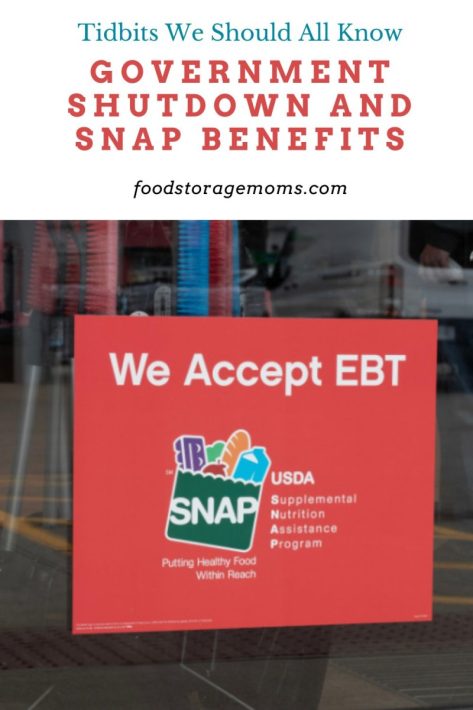
Copyright Images: SNAP SIGN ON DOOR AdobeStock_791942176_Editorial_Use_Only By jetcityimage, SNAP Assistance Program AdobeStock_1566972058 By Andrii










Great post today, Linda! So many people need this. Luckily, we aren’t one of them, yet. At one time, when I was a single mom of 3, I needed it, but was too proud to apply. Luckily, I had family that helped out. Sometimes we are too stubborn for our own good.
Hi Deborah, thank you for your kind words. I wanted to know more about SNAP so I spent the day researching what I didn’t already know. Living in Southern Utah many families abuse it but there is a need for it for families in need. I’m hoping the new administration will chisel down those who are just living off the government with our tax dollars. We have more homeless people than I have ever seen but yet the SNAP program increases every day. Something doesn’t add up. We need a REAL audit on those benefits. I better get off my soapbox. Linda
My concern is that SNAP is supposed to SUPPLEMENT the food budget, not replace it. Plus, at least in New York State, kids in school receive free breakfast, lunch, snacks and backpacks are sent home full of food for the weekend. When you add numerous pantries, it’s hard to believe people were without food even before November 1st. I am a compassionate person who knows there are people who need our help, but when I see SNAP benefits accepted at McDonald’s I don’t think we doing anyone any good. We canned and froze food for decades. At one point I offered to teach canning to local mothers on foodstamps and was told there was no interest. Sometimes people have to help themselves.
Hi Chris, you nailed it! I totally agree with you. We are all compassionate but there must be limits! Great comment! Linda
Sometimes the rules for receiving benefits are too restrictive. I had two students who’s mother was working 30 hours a week and going to a community college part time. The family did well until the father decided that he no longer needed to pay child support. Within a couple of months the family was homeless and living by moving from park to park to camp for 2 weeks at each. No-one knew this until someone reported the dogs the kids had in their car. Then it all came out. The social worker tried to get them on SNAP, emergency housing, TANF and other aids. The mother was working 30 hours a week and each of the teens working 20 hours a week. They just couldn’t find a place to live. They were denied all assistace because the mother was in college. She had 8 weeks to finish her program and graduate. My opinion is this is the perfect family to help out, they had a short term need, maybe 3 or 4 months for her to finish college, find a job and get her first paycheck. Then she would be able to support her family without assistance.
The families that keep popping out babies to get more money need to be required to either go to school to learn a trade, most community colleges have many programs that will take less than 18 months and result in a livable wage. Or they can start a daycare in their home to care for the kids’ who parents are learning a trade. In a time where no state has an apartment that can be rented for a person/family making minimum wage, we need these government programs and some of them will be long term until people can find jobs paying enough for someone to support a family. Even then we will need the programs for disabled people and the elderly who don’t have enough social security to live only on that.
I firmly believe that in any government shutdown, all military, first responders and their support staff should continue to be paid. I also believe that in any shutdown, all elected politicians and their support staff should continue to work without pay. If a congressman had to drive all his younger staff to a food pantry, I believe that it would get the two opposing parties to talk. If both come to the table with the objective to find a solution that would work for people, then they will find one. Right now they are not even talking or trying to find a compromise. That is bad for all of us.
We usually give a small amount each month to an organization that feeds the homeless. This month, we are giving that money plus I made packets of a shelf stable dinner in a ziplock bag to donate to a food pantry. Our local food pantries are down to bare shelves and serving more people than ever before.
We have a lot of companies in our area that are government contractors. Their employees are off work without pay until the shutdown is over. Unlike government workers who will be paid backpay for the shutdown when it ends, the contractor employees will not be paid. Because everyone affected by the shutdown are spending less, this causes a rippling effect throughout the community are are hitting the small local businesses hard. It’s like throwing a pebble into a pond and watching all the rings of waves that causes.
HI Topaz, that is exactly why I wrote this. I didn’t bring in politics but I wanted people to understand what I learned when I did the research. Here is a mother working 30 hours a week her two sone are working 20 hours a week and she has 8 weeks left in college. Oh my gosh, this family was homeless because they didn’t qualify, this is so wrong. Yes, we have food banks but they are running out of food. Home prices and rentals are so expensive right now, generalization living will become the normal. God bless her for going to school to improve her life situation. Thank you for sharing, great comment, Linda