What to Plant in January
This post may contain affiliate links. We may earn a commission if you purchase via our links. See the disclosure page for more info.

I know what you’re thinking: Who plants things in January?! January isn’t considered a prime planting and gardening month, but gardeners in frost-free zones know this is the perfect time for cool-season vegetables. Knowing what to plant in January is the key. In case you missed this post, What Flowers to Plant in January
If you live in an area with frost, you can always plant indoors and move your stuff outdoors as the season temperatures warm up. I highly recommend CowPots and Organic Seedling Soil for seedlings. This way, you can plant your seeds and place the CowPots in your garden when the temperatures are correct.
It has been harder to determine the optimal time to plant outside over the last few years because the weather has changed, unlike at any other time in history. I believe regular planting zone times will have to be changed very soon due to the uncertainty of the weather. We’ve been having temps in the mid 60’s for much of December here in Utah. Records have been set for high daily temperatures multiple times during the month.
What to Plant in January
When gardening, it’s essential to know your zone. Check here to find your zone. All you need to do to find your zone is type in your zip code. Below, you’ll see what you can plant in your zone in January!
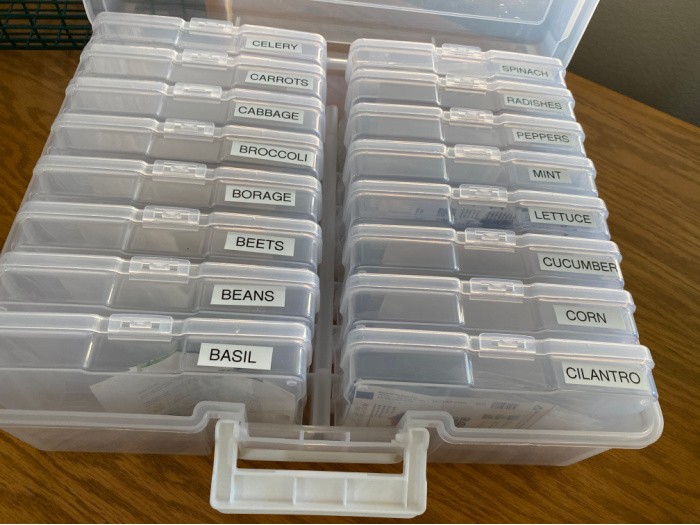
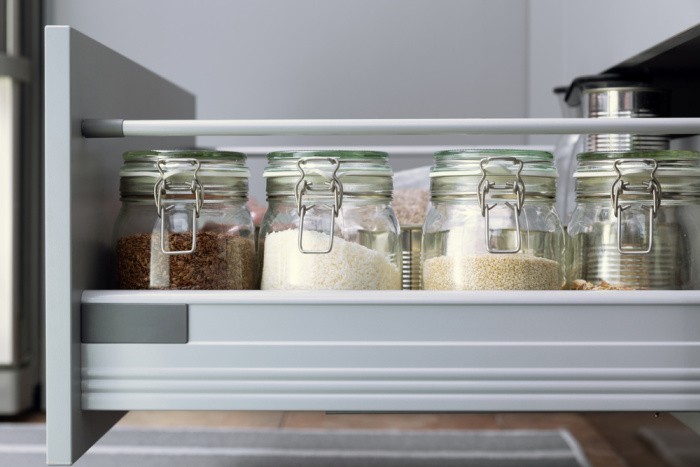
How I store my garden seeds:
Plastic Photo Container and Label Maker
What to Plant in January 1-5
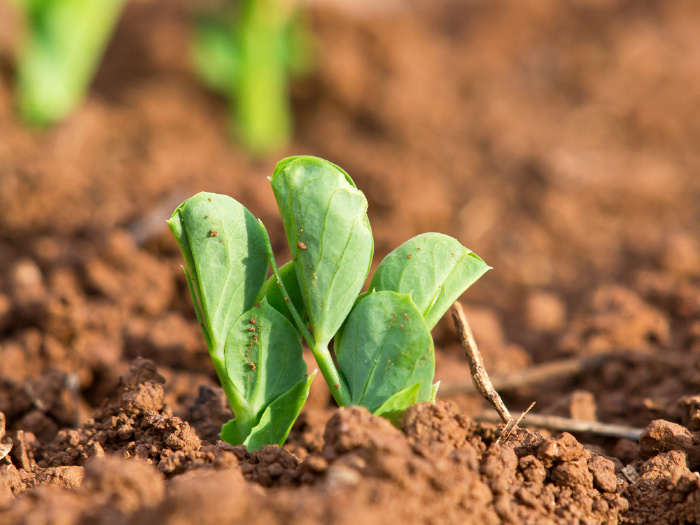
If you live in zones 1-5, it’s cold outside in January. This means that you must stick to growing things indoors.
Some vegetables, called microgreens, can be planted indoors and harvested when they are young. In addition to microgreens, here are some other plants you can try:
- Arugula
- Beet greens
- Mizuna
- Pea shoots
Zone 6
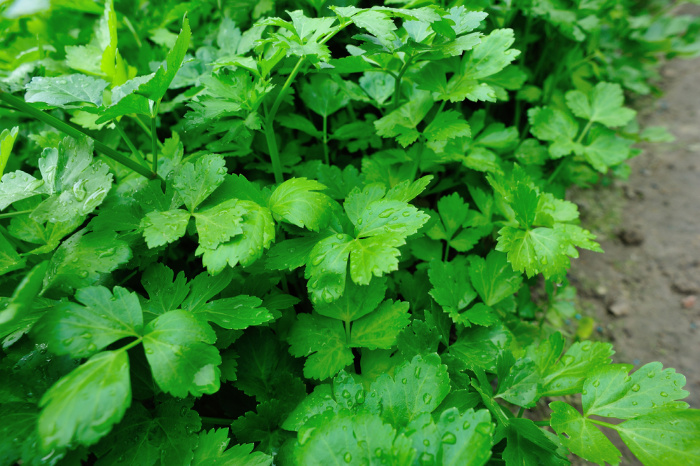
In zone 6, you can start your plants inside because you can transplant them outside in 8-10 more weeks. You have more options in this zone than in zones 1-5. Some seeds you can start inside to transplant later include:
- Celery
- Parsley
- Onions
- Leeks
Zone 7
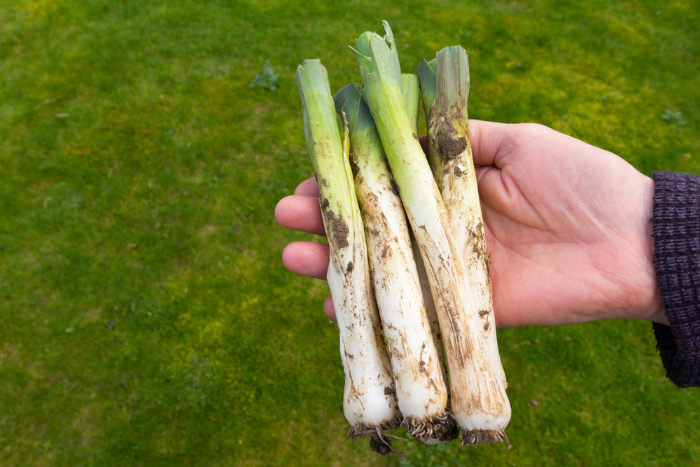
You know how tricky the weather is to predict if you live in Zone 7. However, in this zone, you can plant things inside and transplant them outside when the weather warms up. Some things that do well inside Zone 7 include:
- Celery
- Parsley
- Onions
- Leeks
Start these at the end of the month:
- Broccoli
- Cabbage
- Cauliflower
- Kale
- Lettuce
What to Plant in January in Zone 8
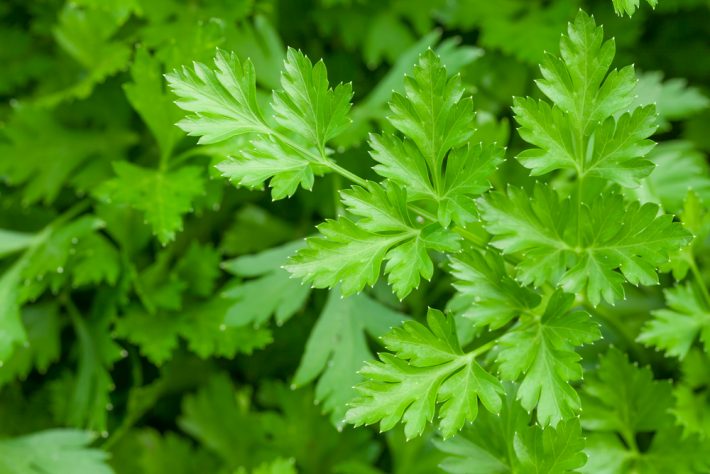
If you live in Zone 8, you’re in luck because you can plant things indoors and outdoors. Many indoor seeds can be transplanted in 8-10 weeks. Here is what you can plant both indoors and outdoors in Zone 8:
Indoors
Plants you can start indoors in January include:
- Celery
- Leeks
- Parsley
- Onions
These will need extra time to grow indoors before being transplanted outside. Start them early in the month.
Outdoors
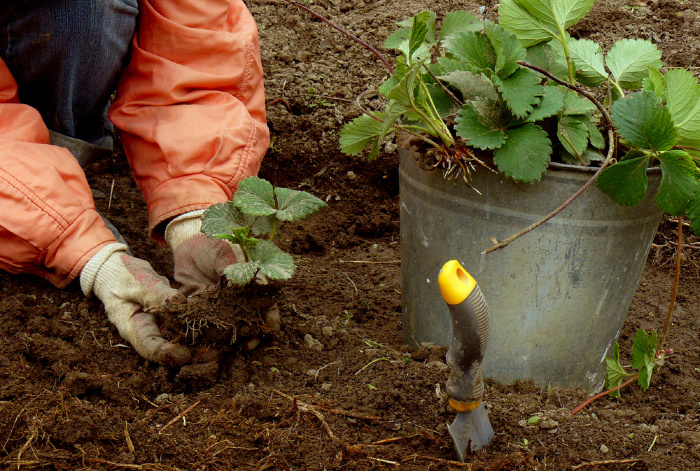
Before planting outdoors, you want to check your soil and make sure it can be worked. If it’s workable, then you can plant the following outside in January:
- Bare-root asparagus
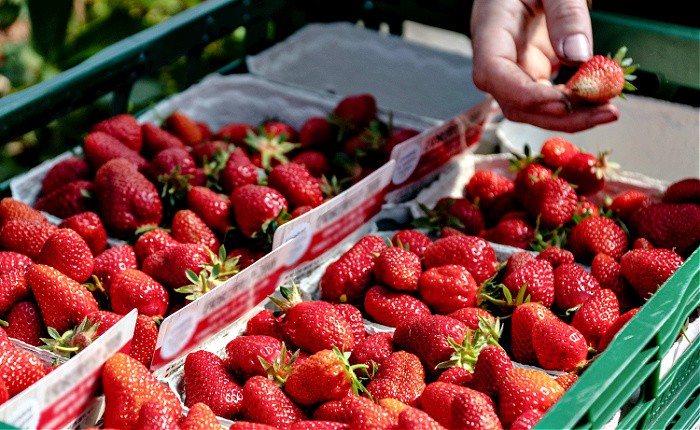
- Strawberry plants
- Fruit trees
If the ground is not still saturated from winter, you can also plant the following:
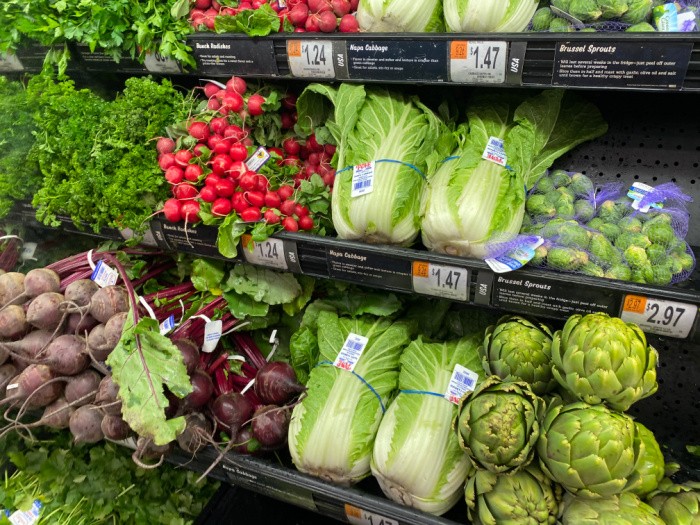
- Beets
- Bok Choy
- Carrots
- Radishes
- Peas
Zone 9-10
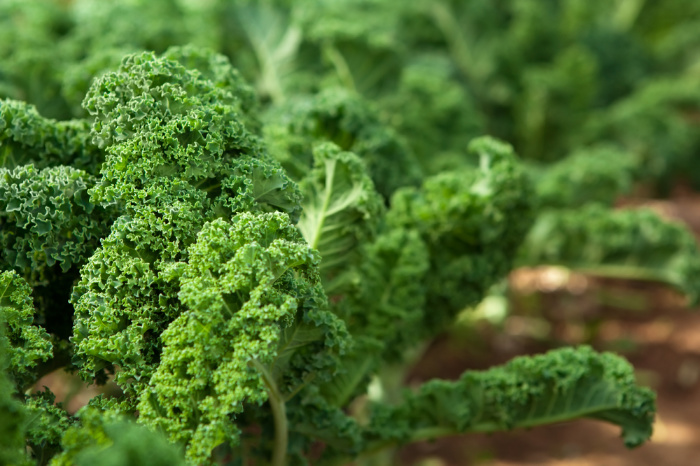
If you want to know what to plant in January in Zones 9-10, remember that gardening is in full swing.
The incredible growing season is ideal for many herbs and vegetables indoors and outdoors. If you live in these zones, you have a lot of possibilities.
Indoors
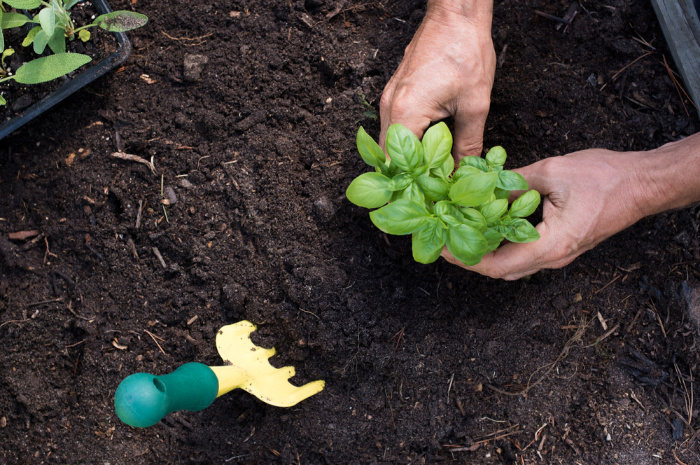
In January, you can start seeds of vegetables and herbs inside and transplant them outside later. Here is what you can begin to:
- Eggplants
- Kale
- Lettuce
- Melon
- Peppers
- Squash
- Tomatoes
- Basil
As the weather heats up, these seedlings can be transplanted outside.
Outdoors
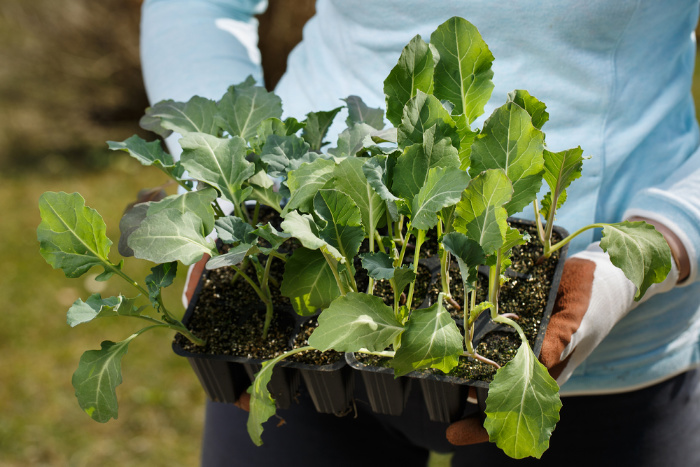
In Zones 9-10, you also have quite a few options for planting outdoors. Here’s what you can transplant outdoors:
- Broccoli
- Cabbage, cauliflower
- Chard
- Asian Greens
Here is what you can directly sow outside during January:
- Arugula
- Cabbage
- Carrots
- Kale
- Lettuce
- Onions
- Peas
- Radishes
- Spinach
- Turnips
- Chives
- Cilantro
- Parsley
How to Start Seeds Indoors
Because most zones are still cold in January, you may have to start many of your plants indoors.
Some plants, such as tomatoes, eggplants, and peppers, require much longer growing seasons than your zone may offer. To ensure healthy growth, many gardeners start their plants indoors.
If you are new to gardening, you may not know the best way to do this. Follow the instructions below to learn how to start your seeds indoors!
Buy Your Seeds
Before you begin, you have to buy your seeds. You don’t want to buy any old seeds, however.
You want your seeds to come from a trusted source. Fresher, higher-quality seeds have a higher germination rate.
This means you’ll have more seeds sprouting, giving you a head start in growing delicious, nutritious veggies.
Pot Seeds with Seed-Starting Mix
The seed-starting mix isn’t soil. However, it provides near-perfect conditions for sprouting seeds. It does this by providing a good balance of drainage and water-holding capacity while minimizing disease.
Most garden soil is unsuitable for starting seeds because it doesn’t drain well and may contain plant disease spores.
Use Pots with Drainage Holes
You can plant your seeds in whatever you want, as long as you poke some holes in the container to allow water to drain. Without water drainage, you can drown your plants or cause the roots to become diseased. Here are some pot ideas you can try:
- Empty yogurt containers
- Plastic six-packs
- Flats
- Biodegradable pots
Plant Your Seeds Deep Enough
One thing that many tend to do is plant their seeds too deeply. If you plant them too deeply, they won’t sprout. The rule of thumb is to plant your seeds 2-3 times as deep as the seed is wide. For example, a bean would be sewn about an inch deep.
Place Seeds in a Warm Location
After you sow your seeds, you will want to place the pots in a warm location. Some good ideas would be on the refrigerator or near a radiator.
Keep Seed Starting Mix Moist
Your seedlings will need both air and water. Therefore, you should keep the mix moist but not completely saturated. To do this, think of a damp sponge containing air and water.
Place Sprouts in a Bright Spot
You will want to move your seedlings to a bright or sunny location as soon as they begin to sprout. You can place them in a sunny window.
However, if you aren’t getting much sunlight, adding consistent light from supplemental fluorescent bulbs does the trick. Be sure to suspend the lights an inch or two over the plants.
Fertilize Weekly
Once your seedlings have sprouted one or two sets of leaves, it is time to start fertilizing. Use a half-strength fertilizer. Organic fertilizers are the best choice because they provide nutrients and micronutrients your plants need to thrive.
Make Sure You Only Have One Seedling In Each One
You may notice two or more seedlings popping up. You only want one seedling per pot. Then, choose the healthiest and strongest-looking seedlings to keep. Cut the other seedlings off in the soil and discard them.
Planting and growing your seedlings is a fun and rewarding way to kick off the gardening season.
How To Hand Pollinate If You Need To
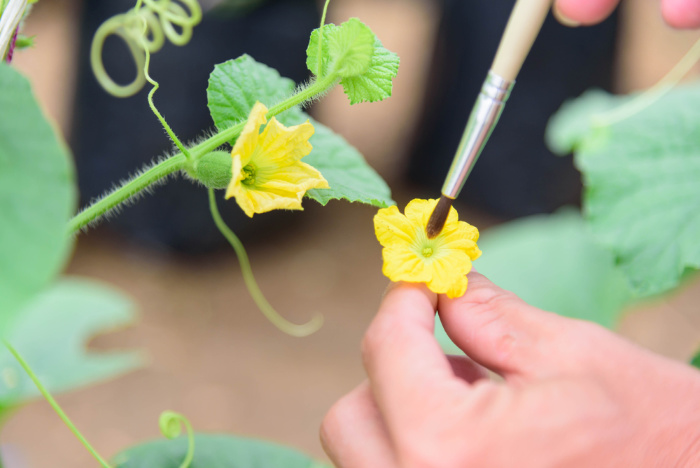
Depending on your location, being able to pollinate the plants may be an issue. You can do this by hand. All you need is a paintbrush or cotton swab (see above). If you need to hand-pollinate because you’re not seeing any fruit develop, here is something to try. You do this by removing the male blossom (male blossoms don’t have fruit behind them).
They produce pollen, leaving the center covered in pollen to collect with the brush or swab. Use a brush or swab to apply the pollen you collected to the center of the female flower. This works for squash, melons, and cucumbers every time.
Please Check Out What To Plant Each Month:
- What To Plant In January
- What To Plant In February
- What To Plant In March
- What To Plant In April
- What To Plant In May
- What To Plant In June
- What To Plant In July
- What To Plant In August
- What To Plant In September
- What To Plant In October
Garden Gloves
These are my favorite garden gloves: DIGZ Garden Gloves. They come in different sizes, which I love the most. These are the best rose bush gloves: Rose Bush Garden Gloves. I have to get a large size for my hands. These are awesome!
Final Word
As you can see, what you plant in January depends on your zone. If you live in zones 9-10, you have many more options for planting in January than other zones, particularly in zones 1-5. Check out our other posts to find out what to plant each month of the year! May God bless this world, Linda
Copyright Images: Lettuce Deposit photos_229581018_s-2019, Pollination Depositphotos_303237778_S by rukawajung, Broccoli Depositphotos_256183770_S by z Author zlikovec, Basil Depositphotos_109353736_S by ridofranz, Kale Depositphotos_11167868_S MonaMakela, Strawberries Depositphotos_55743949_S DLeonis, Celery Depositphotos_177873386_S l Author lzf, Green Peas Depositphotos_9652114_S nevenm, Green Parsley Depositphotos_81961194_S karandaev,

Linda, Thanks for the reminder. It’s time for me to do a succession planting of cool weather crops and start my tomato seeds indoors. My hoop houses make my Zone 8b area more like Zone 9b, so I can grow cool weather crops all winter long. Some of my Bok Choi plants are starting to bolt and I will allow the best to grow and bolt so I can save the seed. By this time next month I’ll be eating fresh asparagus, along with the other cool weather crops I’m currently harvesting. My snow peas have been producing like crazy since last October and will continue through April barring a disaster.
Hi Ray, this is so awesome about your garden!! I forgot I was going to get some BokChoy seeds! I want to grow that so badly! It feels sogood going outside to pick fresh veggies year-round. I LOVE hearing this! Linda
Linda,
Here is is 2024 and I just harvested what will probably be the last of my tomatoes, bell and banana peppers, and chard (since we are supposed to get a hard freeze tonight and I haven’t covered anything yet). My summer plants have hung around and been productive for so long I haven’t even started my winter stuff–except for bok choi (which is bolting), peas, (which the quail and other birds got because I didn’t put up the bird netting), lettuce (which is doing nicely), and carrots (most of which were also eaten by the quail). My own fault for not getting the netting put up in time. But sometimes life interferes.
I will cover the bok choi so it can finish off and give me fresh seeds for replanting.
I will be planting more peas, cabbage, carrots, broccoli and other cool weather crops in a few days. Also, I’ll be starting my tomatoes and squash (inside) next week. Since my Mortgage Lifter and Gardener’s Delight tomatoes did so well I’ll plant them again from saved seeds. Same with my banana peppers, Hopi Gray Squash and Black Beauty Zucchini.
My asparagus is already coming up so I’m getting a very early crop this year–hope it lasts.
My apple trees have already broken bud and leafed out (not good if we get a serious freeze).
Oh, and the chickens are all still laying despite temps down in the 30’s at night so I think the mash and crimped oats supplement to their feed is working.
Hi Ray, oh my gosh, you know I love hearing about your garden! In Southern Utah we would not have tomatoes right now, you are rocking! Great tip on the supplement feed for the chickens, that’s so awesome! I can almost take the the vegetables you talk about! Man, I miss gardening! Hopefully this year!! Linda
Linda,
I’m still picking tomatoes. Tomorrow is Jan 1, 2025 and it still hasn’t got cold enough to kill my tomato plants. The cherry tomatoes, Gardener’s Delight, and small slicer yellow tomato Wapsipinicon Peach are going strong. My Peacevine (the OP equivalent of Sweet 100 still has a few also). And that’s just the heirloom types. My Sugar Rush and Super Sweet 100 tomatoes are doing really well–still flowering and reddening fruits.
Super Sioux and Artisan Bumble Bee also have green tomatoes reddening up.
Lettuce, Bok Choi, Spinach and Chard are thriving. Snow peas are flowering and setting pods.
Inside I’m starting tomato seeds, squash and cantaloupe near the end of this month. Broccoli and celery next week. The warm weather stuff usually goes out in late March or early April. The broccoli and celery will go out in late February or early March.
My asparagus stalks finally died back so I have to cut them down very soon as I could get new stalks appearing at any time.
My hens still aren’t laying but I expect that will change within the next two weeks, and with the exorbitant price of eggs I can’t wait.
Here’s wishing you and yours a Happy, Healthy and Prosperous New Year.
Hi Ray, you know I love hearing how your garden is doing! There’s nothing better than fresh grown veggies and fruit. I’m going to try and grow some vegetables when the ground is leveled out. The builder left it a mess so, we need to hire someone to come clear the debris. Fibgers crossed we can get a vegetable garden growing in May. Happy New Year to you annd Jane and everyone else in our forum! Linda
I’m not willing to dig thru 2 feet of snow to plant anything…lol…. I do wish we lived down south, but this has been the coldest December in decades. I’m just glad my husband added more daffodils to our spring garden.
Hi Chris, oh I love Daffodils! It’s so fun to see the little green peaks poke through the dirt! Love it! You really have had a lot of snow! WOW! Linda