
Wasps: What You Need To Know
This post may contain affiliate links. We may earn a commission if you purchase via our links. See the disclosure page for more info.

Today, it’s all about Wasps: What You Need To Know. I have pictures from my new backyard below to help illustrate what you might be up against in your own backyard. Yikes! Wasps are giant insects with similarities to both bees and ants, although they’re not classified as either because they’re different from both of those insects in other ways. The closest relatives to regular wasps are hornets, yellow jackets, and paper wasps.
These insects can fly at fast speeds! It’s not uncommon to see them zipping around at about 25 mph. If you’ve ever come in contact with a wasp, there’s a good chance that you were scared of it because of how big it looks and how fast it moves when flying through the air.
However, there are many things you may not know about wasps. Whether you’re dealing with them in your backyard garden or anywhere else around your property or in the wild, continue reading to learn more about these insects than ever before.
Wasps: What You Need To Know
Honey Bees: Everything You Should Know
These Insects Live Short Lives
While some people don’t like wasps because of their size, appearance, and speed, these insects typically don’t live long lives. The average wasp will live for a minimum of 12 days and a maximum of 22 days. However, it’s essential to know that there are queen wasps that live significantly longer.
The queen wasps tend to live for up to 12 months before dying, while the workers have a lifespan of less than a month! So, while these insects are annoying to some, it’s helpful to know that they don’t have a long lifespan like many of the other insects out there.
They’re Good to Have Around Crops
When you see wasps in your garden, you may naturally worry that they’re going to attack some of your crops and destroy them. However, that isn’t the case. Although they’re a sight to see, and some people are scared of them, there’s much more to these wasps than what meets the eye.
Wasps are predatory insects that feast on other small insects that can destroy your crops. For that reason, some people choose to keep wasps around as a form of natural pest control.
If you have small insects feasting on your crops, having wasps around could stop that, as the wasps will begin eating those insects in no time.
You’re probably wondering what types of insects they’ll eat. Wasps will often feast on caterpillars, aphids, and arthropods, all of which can eat plant leaves and destroy the crops that you’ve worked hard to maintain and grow.
Another reason to have wasps in your garden area is that they also eat parasites that can prey on your flowers, fruits, and other plants growing in the garden. Wasps can make a real difference in whether you end up having a successful crop to harvest.
So, if you’re dealing with such a problem in your backyard and worry that the wasps may harm you or one of your pets, you may want to reconsider hiring pest control experts to get rid of the wasps. On the other hand, having them around could do your garden some good.
It’s something to consider if you’re having a serious caterpillar problem or problem with other insects that the wasps will eat and take care of for you.
Probably the most important reason to attract wasps to your garden area is so they can help pollinate those desirable plants, particularly flowers and fruit trees, early in the growing season. We need these helpers!
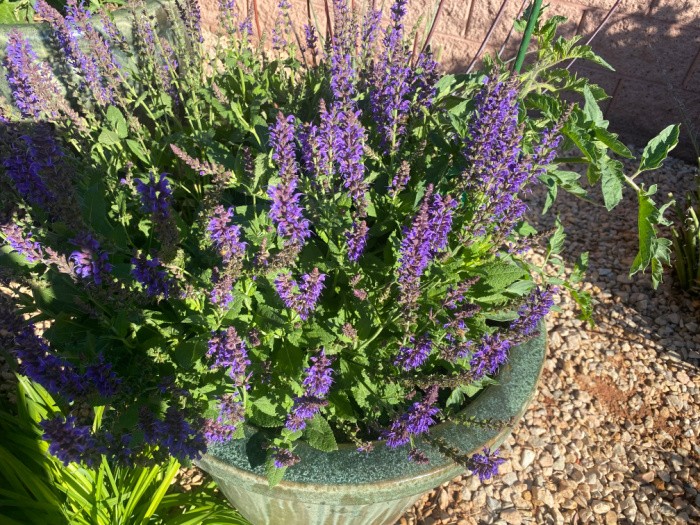
Solar Powered Wasp Trap (I plant Perennial Salvia to attract bees, so put these far away from your flowers)
The Wasps Have a Four-Stage Life Cycle
The life cycle of a wasp is relatively simple. The wasps lay eggs that will eventually hatch and turn into larvae. The larva then forms into a pupa that will ultimately transform into the adult wasp.
The life cycle takes place relatively quickly. The process begins with a queen wasp that mates and then flies off to start the next colony in a new area that will support her offspring.
It’s not uncommon for the queen wasps to start their new colonies on tree trunks and in other heavily forested areas surrounded by trees, plants, and shrubs. It may be the reason you’re spotting wasps in your backyard.
If you have plenty of trees, plants, and shrubs, it provides the perfect opportunity for the queen wasp to start the colony by laying eggs that will eventually hatch and transform into adult wasps.
There Are Different Types of Wasps
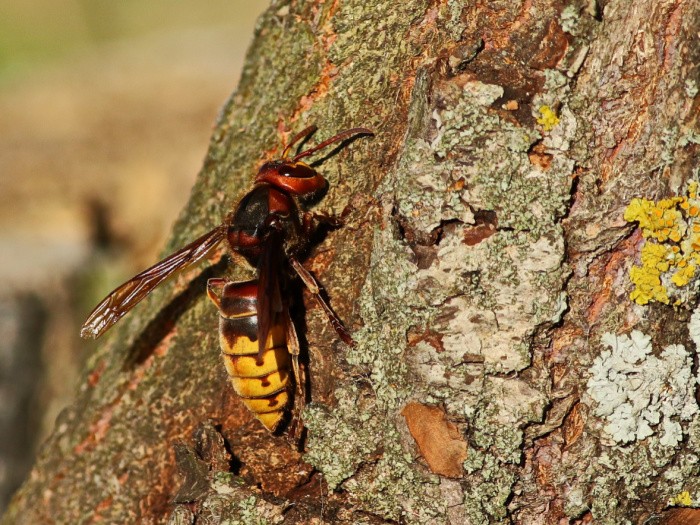
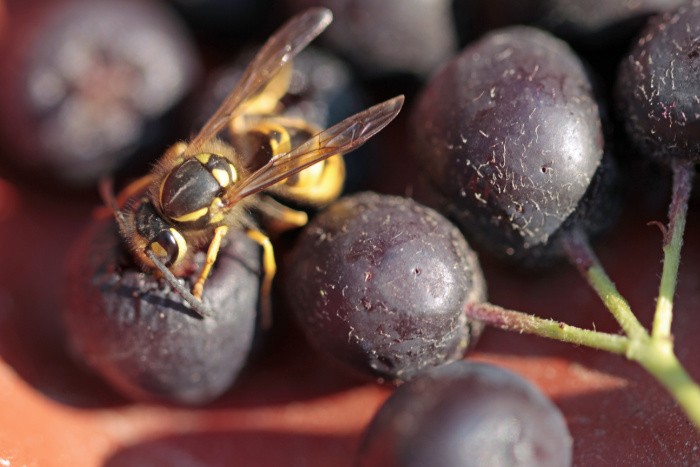
Believe it or not, there are many types of wasps you might experience. When you see a wasp flying over your garden, you never know which type of wasp it might be. Some of the different types include the Asian Giant Hornet, German Wasp, and Red Paper Wasp.
Asian Giant Hornet
German Wasp
Red Paper Wasp
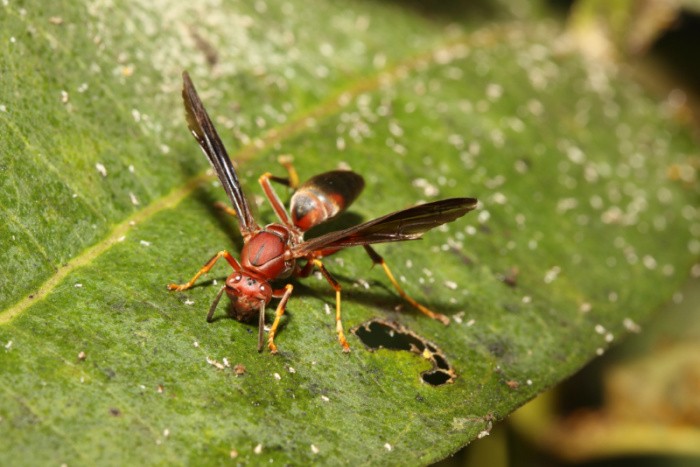
- These wasps are all relatively big in size and fast in flying speed, but may differ in color. Some have a red tint to them, while others are brown, black, and even yellow.
- There are times when these wasps get confused with other insects, including bees, that can readily sting people.
- While bees can sting people, so can wasps, which is another reason people often confuse the two different insects.
- Most wasps won’t sting humans. However, if they feel threatened, they’ll go for it. The wasp’s stinger exists for protection.
- It uses the stinger to protect itself from prey. If the insect feels like it’s in danger, it’s going to try to sting anything that gets in its way, so be sure to be careful when you’re spending time around these giant insects.
- Wasps are known to pass wild yeast from the queen to her offspring when she feeds them. This yeast is then deposited on the flowers of grape plants, which helps the grapes generate the delicious taste and other characteristics of fine wines. Who would have guessed?
Much like humans, these insects can get annoyed with people and other insects around them. If they get agitated, they’re more likely to start stinging.
One tip to remember: if you want the wasps to leave you alone when eating outside, about 15 minutes before your mealtime, take a small plate of food, such as fruit slices, and place it outside, about 20-30 feet from where you plan to eat your meal. This should attract the wasps and keep them busy enjoying their own meal while you have a peaceful meal yourself.
Most Wasp Species Only Sting When the Nest is Threatened
Because there are many different types of wasps, it helps to know that not all of them will sting humans. The ones that don’t sting are easier to be around because you don’t have to worry so much about the possibility of dealing with a painful sting that can leave you with pain, irritation, and swelling on the body.
If you feel like a wasp is chasing you, it’s likely because you’re close to its nest. The wasp will try to sting if it feels like someone could potentially disturb the nest and cause harm to the eggs, and other stages of wasp development, and also other adult wasps living in the colony.
European Yellow Jacket Wasp (My Backyard)
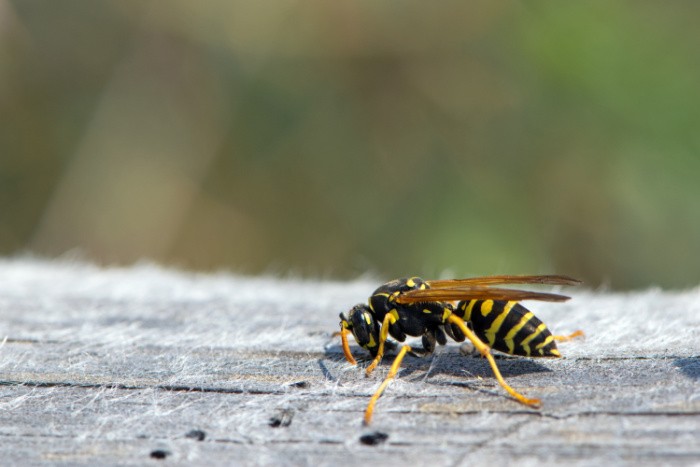
Last year, we noticed insects flying around our backyard, particularly near some flowers and a fence. We saw that they were coming and going from a hole in the ground. As the summer grew warmer, there seemed to be more activity. Since it was close to the artificial turf dog run we had for our little dog, Stella, we were concerned she might get stung.
We called Orkin (Professional Pest Control Company) and asked them to come and investigate the situation and apply a treatment to kill or remove the insects. They determined we had wasps and said a spray really wouldn’t do the trick. The fellow dug down a few inches and found part of the nest.
My Backyard Where We Dug Up The Nest
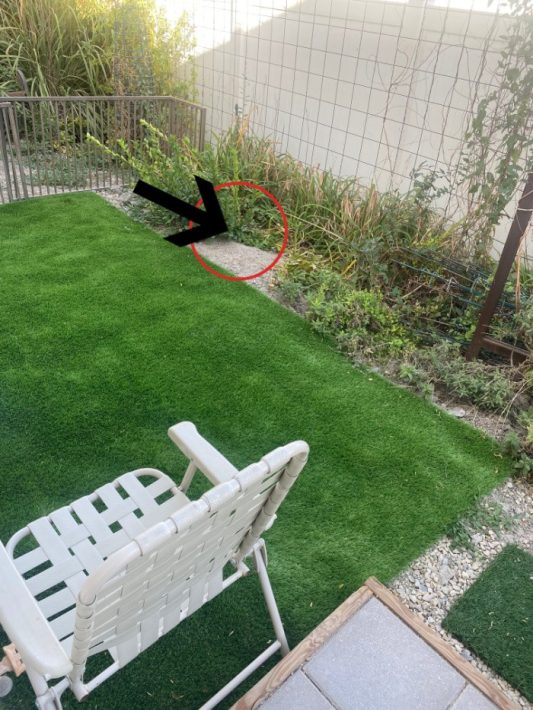
You can see the spot I’ve circled in red where the wasps were active, right next to the turf where our dog did her “thing.” The technician indicated that the best time to remove the nest would be early in the morning, before they became most active. We scheduled a second visit for later in the week, shortly after sunrise.
European Yellow Jacket Nest 1
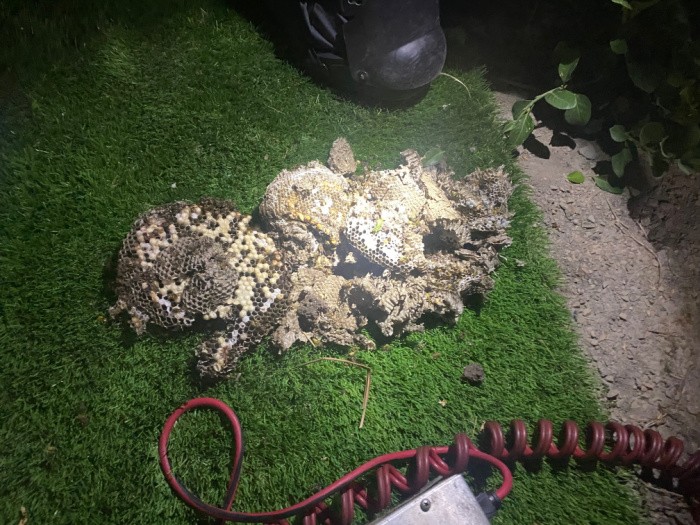
You can see from a distance the size of the nest he was able to dig down and remove. Note that he looked like a beekeeper with his outfit, so he wouldn’t get stung if attacked by the wasps. Based on what we saw him do, I highly recommend that you don’t try to remove a nest like this yourself. It could prove to be pretty scary and harmful to your health!
Wasp Nest European Yellow Jacket
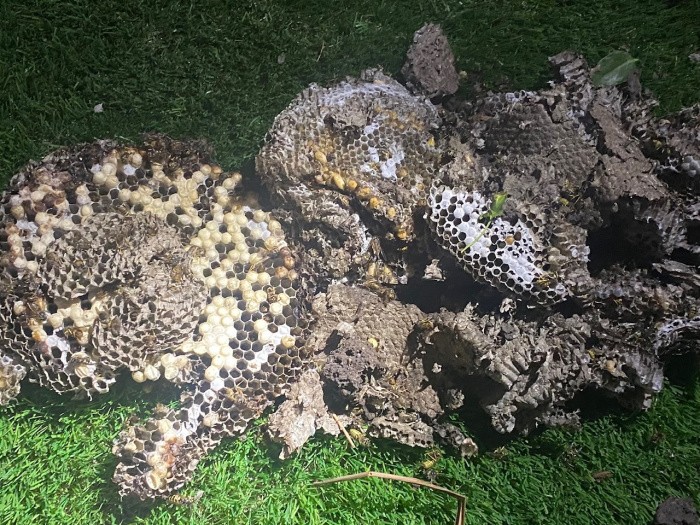
In the close-up picture above, you can see the sections of the nest for the European Yellow Jacket wasps. The nest proved to be much bigger than we ever expected. The Orkin fellow felt it was pretty standard in size and had been there a while. He bagged up the nest and took the bag to his truck, after he had sprayed the area around the hole just in case the queen might have remained in the hole.
We have not seen any wasps return since they were professionally removed. Thank goodness!
Final Word
Wasps are large flying creatures known for their fast speeds and ability to sting if they feel like they’re in danger. You might find these insects flying above your garden.
If you were worried that they might destroy your crops, it’s good to know that they’re great at pest control because they prey on caterpillars and other insects that can cause damage to your crops. They are one insect you should want in the garden since they help reduce the other insect populations.
Now that you know more about these wasps, including what they prey on and how long they live, you can decide if you’d like to keep them in your garden or not. May God bless this world, Linda
Copyright Images: Asian Giant Hornet AdobeStock_113008758 by dule964, German Wasp AdobeStock_372334412 by TwilightArtPictures, Red Paper Wasp AdobeStock_223915383 by Brittney, Spring Daisy with Wasp AdobeStock_200878758 by Yahdi, AdobeStock_1132640179 Vespula germanica, European wasp by Oleksandr Filatov










Yellow Jackets have to go. They are just too aggressive.
I got too close to the nest and took 9 to the hand. It swoll up like a cartoon. I had to go in for that one.
Mud Dabers can be a pain to clean up after.
Hi Matt, oh my gosh, yellow jackets are the worst. Wow, 9 stings that’s bad!!! I can’t even imagine the pain after 9 stings! Yikes! Linda
I’ve been stung by a yellow jacket. They hurt big time. I was also stung by a black wasp while mowing. My foot swoll up twice the size. Not sure if it was a wasp or what, but it did hurt. I also had a smallish hole in my leg for a while. I try to respect all critters, but, some are vicious.
Hi Deborah, oh my gosh!! It’s crazy what those stings can do!! Linda
We have mud daubers out here where we are. We keep after them because they want to build nests on the front and back porches. They leave a mess where they’re working, so are easy for us to find. I’ve been stung by a couple of black wasps. Once when I was in a hurry to get my muck boots on and it was in the toe of my boot. That hurt like the devil, but I’ve never had any kind of reaction or swelling to any kind of sting (yet)! The honey bees follow me around when I’m outside. Husband says it’s because I’m so sweet! However, they don’t get close enough to sting me. I leave them alone and that seems to work.
Hi Paula, oh my gosh, a wasp in the boot!! YIKES! I’m glad you haven’t had a reaction to any of the stings. Great comment! You are sweet! Linda
My hubby keeps bees. We have hives within a few yards of our little garden. If you’re going out in your garden, make sure you’re not wearing fragrance of any kind. That includes deodorant, lotion, hair spray, and fabric softeners. Bees can’t see well at all, so they rely heavily on scents. Just stay calm around them and move slowly. They are really quite docile unless they feel physical pressure on their bodies or perceive a dire threat directly to their hive. Bees only sting once. The stinger stays in the intruder and rips out of the bee, killing it. Wasps do not lose their stingers, so they can attack as much as necessary. They are predatory, unlike bees, so they are naturally far more aggressive. Best advice is to be mindful of where wasps are feeding and absolutely where there nests are.
Hi Terry, oh my gosh thank you for this informative comment! I plant Perennial Salvia in my yard to attract bees and I have never been stung, yet. I pull weeds around them but I am mindful they are there on the flowers while I work. I LOVE LOVE LOVE your comment! It helps all of us. Thank you, Linda
Linda, I agree that many, if not most, wasps are beneficial. We have a slew of tarantula wasps around and they are HUGE, but not aggressive. When we lived in Colorado Springs, we came back from a vacation to find hundreds of Yellow Jackets had invaded our basement via a gas pipe penetration. Welcome home! They had actually made a nest between the interior and exterior walls of our home. Bet I used three cans of spray before I got them all. Nasty, aggressive critters. We kept the basement door closed for a week while I dealt with them–took forever to kill the queen. Needless to say I double checked and caulked and foamed every home penetration after that.
In my garden beds here in AZ I try to attract Braconid wasps. These are tiny parasitic wasps that lay their eggs on tomato hornworms, borers, beetles and other harmful insects. They do not sting people or pets. Planting nasturtiums and marigolds (which also discourage harmful insects) seems to attract them.
Hi Ray, oh my gosh, that Yellow Jacket invasion would have been a nightmare so to speak! The queen, oh my gosh!! Luckily you got her. I need to look those Braconoid wasps up on Google, wow! Great tip! Glad you got the cans of foam and caulk to seal off your basement, oh my gosh!! Linda
Up where I live we have 2 types of wasps. One has a shorter, heavier body and is extremely aggressive. The extension office said these will often invade honeybee combs and will even prey on baby bees. They advised to kill. The second wasp is longer, quite sleek. Incredibly fast! They are what my extension office calls a beneficial wasp and I should Never kill them. These eat mosquitoes and yes, the mean wasps too. Great for pollination. Quite docile even when a person disturbs their nest. The only problem is if they put their nest under the roof over hang. The nest can end up weighing up to 20 lbs. Yep, pulling down the soffit. I had to teach my kids the difference as the beneficials will often fly into the house. The Mean ones Love to set up house under grill lids. I’ve learned to take a stick to open my grill lid and have a can of wasp killer in my other hand. It only takes a couple of days for them to move in, oh because they are rather lazy, want somebody else to put a roof over their head. My Beneficial wasps prefer to make hanging nests from my soffits or in my poplars. I have a back door without a separate screen door and that’s a fave place also for them. It’s pretty easy to tell the difference between nests: the meanies make their little comb in a humans area . The nice guys actually build their cone (the comb is inside) from scratch. I did have to remove a Huge cone hanging from my soffit one year. My oldest son was panicking, wanting to spray it with killer, and I was like, “no way”. I did have to spray the top with water to loosen it but then just climbed on my step ladder to yank it down, carried it over to one of my poplars, and wedged it in the branches. There were a lot of wasps around me as they followed their nest. I did not get stung. My kids did take note of this. Oh, but near that time, the Meanies had made a comb in my chicken coop. Oh, both my oldest and I got stung just going in by it! My chickens had refused going into the coop for a week. I had to bring my son to urgent care for a shot as he swoll up. To this day, he hesitates going into this small bldg. He looks first and sometimes will ask me to set off a ‘bomb’ beforehand. We no longer have chickens so use it for storage. Folks, familiarize yourself with the wasps around your property. Don’t kill the beneficial but be dang careful around the meanies.
HI Wendy, oh how I LOVE LOVE LOVE all this information via a story. It brought back memories about me finding a wasp nest in my BBQ! I remember we always had to watch the soffits of the roof because we would have nests every year. I love hearing about the good and the mean ones! Love it! Linda
Um, have I been removed from your Emergency Preparedness fb page? Please let me know. Thanks
Hi Wendy, I archived the Food Storage Moms Facebook group. I’m trying to sell my home and need a few months away from the group. I would never remove YOU from anything, my friend, Linda
Thanks for letting me know. Hey, if you and Mark want to try up north, let me know. You know I live in Preppers Paradise, lol? Please keep us old-timers up to date with you and maybe even your admin’s? ✌️
Hi Wendy, we are building a home in South Jordan, Utah. Where is Preppers Paradise??? Oh my gosh, I love it! Linda
We have called the Waspers since my oldest boy was young. He got close to a wasp and was stung and we had to get him to the doctor because he was allergic to them. From then on he called them waspers and would come crying to me saying the waspers were after him and wanted to hurt him. I still miss his humor over things.
Hi Jackie, I love hearing memories like this, my friend. I feel sad he got stung but the “waspers” are the best!! Linda
Lol, what I call Preppers Paradise is any property near my homestead. Um for anyone who couldn’t deal with cold, it wouldn’t be. To me, our cold is a resting, rejuvenation time. For my friends who live in year round warmer climes, I ask how many clothes they can take off and do biz, giggle. I can put on a lot of clothes or shed a few and do biz, even outdoors. As to a perfect place, my property happens to have underground springs for easily accessible fresh water only about 20-30 ft below grade. I don’t ever get flooding since my lake feeds 3 other lakes. My field where my house sits is also about 30 ft higher than my lake. My lake is considered to be potable water as it has no run-off from farm or animal compounds. Um, I regularly test it. Potable up here means a person can drink it with no bad effects. Pretty sure I’d want to strain it, lol. I have very sandy soil which is easy to garden in, but needs some compost or ‘tea’. I have trees in my forest that constantly need trimming just the right size for my stoves
Hey, no place is perfect. But, dang, I sure did land in a good place for long-term stuff.
Hi Wendy, yes, that sounds like a Prepper Paradise for sure! Water and firewood work for me! Life is good! Linda
Oh yes–this is the time of year the yellow-jackets get mean. We figure it’s because they know there’s not much time left… They tend to make nests on the trails where we hunt (horses and hounds). The first few horses get by no problem, but they “wake up” the yellow-jackets, and then they swarm up after the rest. Everyone yells “BEES!” and we gallop far enough that we’re out of their territory. Quite a few of us carry a couple of children’s liquid doses of antihistamine, and I also carry homeopathic Apis Mel. for the horse (a friend in my past used to carry an injectable horse dose of adrenaline–basically an epipen–after a horse died out hunting, dropped dead after being badly stung).
I just discovered them going in and out at the side of the wheel-chair ramp. How lovely… Also a nest in the well-composted manure pile I’ve been spreading–been loading from the other side of the pile, but pretty soon I’ll have to deal with them…
Hi Rhonda, oh my gosh, that’s terrible about the horse who died hunting from the yellow jackets. I’m so glad you shared this story, everyone kept telling me they were fine in the backyard. I couldn’t go out there and they scared me while sitting with my small dog. THANK YOU for sharing this story! You are the best!! Thanks for the tips on the antihistamines!! Linda
I probably should add to my suggestion about antihistamines That is mainly to buy you some time, NOT a cure-all. Another one to keep in mind is plain old dooryard plantain–yes, the weed, doesn’t matter if it’s the narrow-leaf or broad-leaf. If you’re stung, grab a couple of leaves, chew them up (won’t taste great but perfectly safe if clean), and slap the pulp onto the sting.
I had to do this once when we were walking hounds, and one of them stirred up a ground nest. I put the plantain pulp on several stings–skipped one because I really didn’t want to whip off my shirt in the park! By the time I got home, the treated stings were fine, just tiny red dots, no pain or swelling—but the one I hadn’t treated, under my shirt, was hot, red, and swollen (and itched for days!) I assume the saliva is probably part of the “cure,” because back in the days of real silver coins the “be prepared” idea was to always carry a (silver) dime—if stung, spit on the dime and put it on the sting… That worked, too!
Hi Rhonda, thank you for the tip on the “remedy” that works for stings! I do remember the silver coins and spit! It’s all about the memories! Thank you, Linda