

Mental Health During Emergencies: How to Cope
This post may contain affiliate links. We may earn a commission if you purchase via our links. See the disclosure page for more info.

Mental Health During Emergencies: How to cope and help your community. Life has a way of throwing us off course when we least expect it. Whether a loved one is rushed to the hospital in the middle of the night, a natural disaster strikes your neighborhood, or a neighbor is recovering from surgery, these moments carry a weight that can feel overwhelming. The good news is that there are practical, time-tested ways to protect your mental health during a crisis and show up for the people around you in meaningful ways.
Understanding the Stress of Emergencies
When an emergency happens, your body responds instantly. Your heart races, your thoughts scatter, and the world feels uncertain. This is a completely normal reaction. The human nervous system is wired to respond to threats, which is why even a loved one’s planned surgery can leave you feeling anxious and on edge.
The most important thing to understand is that your feelings are valid. Fear, helplessness, sadness, and even anger are all common responses to crisis situations. Naming those emotions is actually the first step toward managing them.
Common emotional responses during emergencies include disbelief or shock in the early hours, difficulty sleeping or concentrating, irritability or mood swings, physical symptoms such as headaches or an upset stomach, and a feeling of wanting to do something but not knowing what.
If these feelings persist for several weeks or begin to interfere with your daily life, consider reaching out to a mental health professional. Many offer telehealth appointments, which can be especially helpful when you can’t leave home.
Coping When Someone You Love Is in the Hospital
Waiting rooms are some of the hardest places to sit. The combination of fluorescent lighting, uncertain timelines, and unanswered questions creates a stressful environment unlike almost any other. Here are strategies that can help you hold yourself together during those long hours.
Stay anchored to the present moment. When your mind starts spiraling into worst-case scenarios, gently bring yourself back to right now. Take ten slow breaths. Notice what you can see, hear, and feel in the room around you. This is a simple grounding technique that can interrupt the anxiety cycle.
Keep your blood sugar stable. Hospital stress often means skipped meals. Bring snacks from home or the gift shop, eat regularly, and stay hydrated. A granola bar and a bottle of water can do more for your mental state than you might expect.
Accept help when it’s offered. Many people instinctively say they’re fine and turn down assistance. During a hospital stay, let others help you. Let someone bring you a meal. Let a friend sit with you. Let someone watch the kids and/or the pets. Accepting support isn’t a weakness; it’s wisdom.
Limit information overload. During a medical crisis, well-meaning family members often text constantly for updates. It’s okay to designate one person as the point of contact for communication and step away from your phone for periods of time. Constant notifications add to stress rather than reduce it.
Permit yourself to step outside. Fresh air, even for five minutes in a hospital parking lot, can reset your nervous system. Walk around the block, sit in the sun, or simply breathe deeply away from the waiting room.
Coping After a Neighborhood Disaster
When a disaster strikes your community, whether it’s flooding, a house fire, a tornado, or any sudden event, the emotional aftermath can linger long after the immediate danger’s passed. Many people are surprised to find that the stress doesn’t go away once the crisis is over. In fact, it often intensifies as the adrenaline fades and reality sets in.
Give yourself time to process. There’s no set timeline for recovery. Some people feel okay within days; others carry the weight of a disaster for months, particularly in regard to the financial challenges that often follow. Both are normal. Allow yourself to move through the experience without judging your pace.
Create small routines. When the world feels chaotic, routine provides comfort. Even simple routines, like making coffee in the morning, taking an evening walk, or reading before bed, signal to your nervous system that safety is possible.
Stay connected to people. Isolation after a disaster is common but counterproductive. Reach out to neighbors, friends, and family. Talk about what you experienced. Shared stories help everyone process what happened and build community resilience.
Limit media consumption. In the days following a local disaster, news coverage and social media can keep your nervous system in a constant state of alarm. Check in once or twice a day rather than watching coverage on a loop.
Recognize trauma in children. Children often express distress differently from adults. Watch for changes in sleep patterns, regression to earlier behaviors, clinginess, or increased irritability. Reassure them with calm, age-appropriate explanations and maintain their normal routines as much as possible.
How to Help a Neighbor in a Medical Crisis
One of the most meaningful things you can do during a neighbor’s medical emergency is show up in concrete, practical ways. Vague offers like “let me know if you need anything” are well-intentioned but rarely acted upon. Instead, offer specific help.
Meals are one of the greatest gifts you can give a family in crisis. A warm dinner delivered to the door removes one enormous burden from a caregiver’s shoulders. You don’t need to be a gourmet cook. A pot of soup, a pan of lasagna, or even a rotisserie chicken with a bag of salad counts as a tremendous act of love.
Consider organizing a meal train with other neighbors. Online tools make it easy to coordinate who brings food and when, so the family receives consistent support over several days or weeks rather than ten casseroles on the first day and nothing after that.
Other practical ways to help include offering to pick up children from school or watch them for an afternoon, taking care of a neighbor’s pet while they are at the hospital, mowing the lawn or shoveling snow so they don’t come home to more stress, running errands or picking up prescriptions, and sitting with the patient at the hospital so the primary caregiver can go home to rest.
Welcoming a New Baby
A new baby is a joyful event, but it’s also one of the most physically and emotionally demanding transitions a family can face. Sleep deprivation alone can make new parents feel like they are barely surviving.
The best thing you can do for a family with a newborn is reduce their mental load. Bring meals that are easy to reheat. Offer to hold the baby for an hour so parents can sleep. If you’re close to the family, offer to help with laundry or light housekeeping. These acts of service speak volumes.
Be mindful not to overstay your welcome. A short, purposeful visit is far more helpful than a long social call that leaves an already exhausted parent struggling to stay awake out of politeness.
Also watch for signs of postpartum depression in new mothers, which affects a significant number of women. Symptoms can include persistent sadness, difficulty bonding with the baby, extreme fatigue beyond typical newborn exhaustion, and feelings of worthlessness or hopelessness. Encourage the mother to speak with her doctor, and let her know she isn’t alone.
Supporting a Neighbor Recovering from Surgery
Surgical recovery is often longer and harder than people expect. The first few weeks can be particularly isolating, especially if mobility is limited.
Check in regularly, even with a simple text. Knowing someone is thinking of you makes an enormous difference during recovery. Offer to pick up groceries or run to the pharmacy. Bring over an audiobook or a puzzle if the person enjoys those things. Offer to drive them to follow-up appointments.
Respect their need for rest. Recovery requires energy, and that energy is best spent healing. Keep visits short and cheerful, and follow the patient’s cues about when they’re getting tired.
Building a Resilient Neighborhood
Emergencies reveal the character of a community. When neighbors know and care for one another, the burden of any one person’s crisis becomes lighter because it’s shared. This kind of community resilience doesn’t happen overnight; it’s built through small, consistent acts of connection long before a crisis arrives.
Introduce yourself to the people on your street. Learn their names. Know who lives alone, who has small children, and who might need extra help in an emergency. Share your contact information. These small investments in relationships pay enormous dividends when hard times come. Emergency preparedness and emotional preparedness go hand in hand. A connected neighborhood is a strong neighborhood.
Utah Suicide Stats
Since I live in Utah, I wanted to research local mental health issues and how they present themselves in real statistics. Here are the key Utah suicide statistics, all sourced from the Utah Department of Health and Human Services and the CDC:
Overall Rate
There were 665 deaths by suicide in Utah in 2024, a rate of about 19.5 per 100,000 people. USAFacts
From 2021 to 2023, the age-adjusted suicide rate was 20.93 per 100,000 persons, with an average of 685 suicides per year. There were 696 suicide deaths in 2023. Overall, suicide was the ninth leading cause of death for Utahns. utah
Cause of Death by Age Group
In 2023, suicide was the second leading cause of death for Utahns ages 10 to 17, 18 to 24, and 25 to 44. It was the fifth leading cause of death for ages 45 to 64. utah
Youth Statistics
According to the 2023 Youth Risk Behavior Survey, in the 12 months preceding the survey, Utah high school students reported the following: 37% felt sad or hopeless, 22.9% seriously considered attempting suicide, 18.5% made a suicide plan, 9% attempted suicide one or more times, and 3.2% had a suicide attempt that required medical attention. utah
Rural vs. Urban
In 2023, the suicide death rate in rural counties hit its highest level in a decade at 26.0 per 100,000 population, compared to 18.6 per 100,000 in urban counties. utah
Daily Impact
In 2022, 14 Utahns were treated for self-inflicted injuries every day, accounting for 3,816 treat-and-release emergency department visits plus 1,311 total hospitalizations. utah
If this research is for a blog post or content piece and you or anyone you know is personally struggling, the 988 Suicide and Crisis Lifeline is available by call or text, 24 hours a day.
Final Word
Crises will always be part of life. But the way we face them, with compassion for ourselves and care for those around us, is entirely within our power. Whether you’re sitting in a hospital waiting room, cleaning up after a storm, or dropping a casserole on a neighbor’s porch, you’re doing something that matters. You’re showing up. And in the middle of an emergency, showing up is everything. May God bless this world, Linda
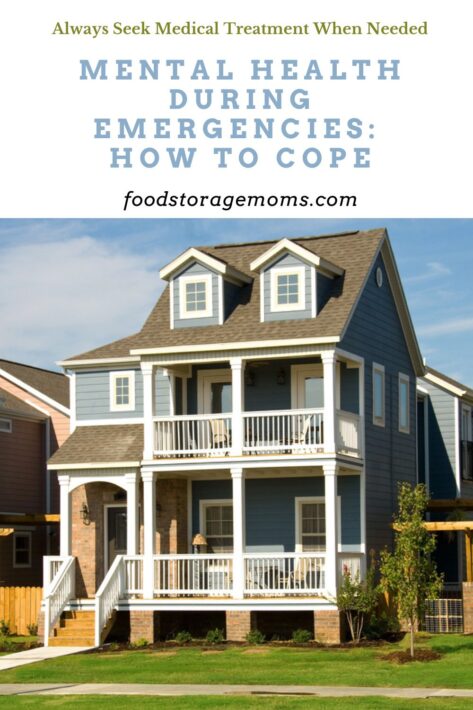
Copyright Images: Suburban Neighborhood Depositphotos_8716775_S, Traditional Styled Homes Depositphotos_13632272_S

















I have been very depressed in my life, but never enough to do anything about it. That being said, I do understand why people take their own life. It’s so sad that people get to that state of mind. I guess I was never quite that weak. Or strong, or whatever the word should be. I’m glad to still be alive. God still has something for me to do. There have been several times in my life that I could have died. Birth being the first time. Mother was bleeding out and I was born emergency cesarian. They cut my face, and my head was misshapen. It was a miracle both of us lived. My appendix ruptures at home with 4 children 15 and under with no phone. Luckily the 15 year old could drive and went and got my sister. Like I said so lucky to still be here.
Hi Deborah, I agree with you, I had a rough childhood. What a blessing your mother and you survived your birth. Wow! When your appendix ruptured with 4 kids, oh my gosh. Thankfully, your son could drive to get your sisters. My goal today was really to reassure people that right now so many people are having stress in their lives. It’s very easy to say, breathe deeper”, that doesn’t work for me. Telling me everything will be okay doesn’t always help when someones extremely worried about their loved ones. Then I think about seeing the empty grocery shelves, how much more can we handle. I picture sitting outside looking at a lake sipping my coffee, that sounds awesome but it’s not going to happen! LOL! Let’s have a great day! Hugs, Linda
I know it can always be better, but I also know it can be worse. That is what I always try to remember. It does help me.
Hi Deborah, I totally agree. Linda
Anyone who’s in “the business” and deals with such things knows positivity will determine resilience.
To have that there must be hope.
Hi Matt, great point. I totally agree. I sleep every night, knowing I have no control over certain things. My husband taught me that. There must be hope or we have nothing. Great comment, Linda
Right now, my grandson is having surgery for a broken femur after an accident with his e bike and a car. My husband is recovering from gallbladder surgery with assorted complications. Son-in-law #1 is having a MRI tomorrow for a fractured vertebrae. Son-in-law #2 is having shoulder surgery Tuesday because of work related injuries. My inmobility makes helping any of them difficult. Prayers would be welcomed.
Hi Chris, oh my gosh, this is so much to take in, my sweet friend. We will all pray for your family and you as well. May God bless all of you. Hugs, Linda