
Can’t Grow Potatoes? Buy Freeze-Dried or Dehydrated
This post may contain affiliate links. We may earn a commission if you purchase via our links. See the disclosure page for more info.

Can’t grow potatoes? Buy freeze-dried or dehydrated. If you’ve ever wanted to stock your pantry with one of the most versatile and nutritious foods on the planet but simply don’t have the space, time, or growing conditions to raise your own, you’re not alone. Millions of families find themselves in exactly the same situation. The good news is that you don’t need a garden, a farm, or even a backyard to enjoy the incredible benefits of potatoes. Freeze-dried and dehydrated potatoes make it possible for anyone to keep this powerhouse food on hand for everyday cooking and long-term emergency storage. Potato Peelers
Why Potatoes Belong in Every Kitchen
Before we talk about the best ways to store potatoes without growing them, it helps to understand just how valuable this humble vegetable really is. Potatoes have been feeding families around the world for thousands of years, and for good reason.
A single medium potato contains a remarkable collection of nutrients. You get a solid dose of vitamin C, which supports your immune system and helps your body absorb iron. Potatoes are also rich in potassium, a mineral that most Americans don’t get enough of and that plays a key role in heart health and healthy blood pressure. They provide vitamin B6, which supports brain development and helps your body make the hormones serotonin and norepinephrine. They even contain folate, magnesium, and a range of antioxidants.
Potatoes are also one of the most satisfying foods you can eat. They contain a type of fiber called resistant starch, especially when cooked and cooled, that feeds the beneficial bacteria in your gut and helps you feel full longer. For families trying to stretch a food budget without sacrificing nutrition, potatoes are one of the best tools available. They’re naturally gluten-free, making them a safe staple for people with celiac disease or gluten sensitivities.
Perhaps most importantly, potatoes are endlessly adaptable. Soups, stews, casseroles, side dishes, breakfast hashes, and even some baked goods all welcome potatoes with open arms. When you have potatoes in the pantry, you always have the foundation for a satisfying meal. How To Make Donuts.
The Challenge of Growing Your Own Potatoes
Growing potatoes sounds straightforward enough. You plant seed potatoes, water them, and eventually you dig up a harvest. In practice, though, it isn’t always that simple.
Potatoes need well-draining, loose soil that is free from diseases like blight and scab. They require a consistent water supply, plenty of sunlight, and enough space for the plants to spread out underground. They’re also susceptible to a long list of pests, from Colorado potato beetles to wireworms, that can devastate a crop. For gardeners dealing with clay-heavy soil, limited outdoor space, drought, or short growing seasons, producing enough potatoes to meet your meal prep needs can feel like an uphill battle.
If you live in an apartment, a townhouse, or a home without usable garden space, growing potatoes may simply not be an option at all. And even for those who do garden, potatoes take up a lot of real estate relative to other vegetables and require specific storage conditions after harvest to keep them from sprouting or rotting.
The encouraging truth is that not growing your own potatoes doesn’t mean you have to go without them. The freeze-dried and dehydrated food industry has made it easier than ever to keep a substantial supply of potatoes on hand without ever touching a shovel.
What Are Freeze-Dried Potatoes?
Freeze-drying is a preservation process that removes nearly all the moisture from food while keeping the cellular structure largely intact. The food is first frozen solid, then placed in a vacuum chamber, where the ice sublimates directly to vapor without passing through the liquid phase. The result is a lightweight product that retains an impressive amount of its original nutrition, flavor, and texture.
Freeze-dried potatoes can be stored for an exceptionally long time, often 25 years or more, when kept in proper conditions, meaning a cool, dry location away from direct sunlight. When you’re ready to use them, simply add water and let them rehydrate. Many freeze-dried potato products rehydrate so well that they’re nearly indistinguishable from freshly cooked potatoes in dishes like mashed potatoes, soups, and stews.
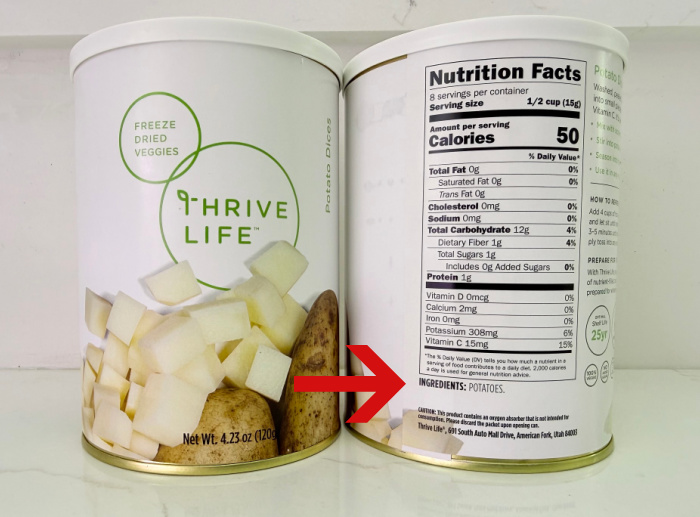
The main trade-off with freeze-dried potatoes is cost. The process is energy-intensive and requires specialized equipment, so freeze-dried products tend to be more expensive than dehydrated alternatives. However, given their extraordinary shelf life and the convenience they offer, many families find the investment worthwhile, particularly when building a long-term food storage supply. Check out the ingredients before you buy any long-term food storage. It’s sad Thrive Life has closed; they had the best food on the market.
What Are Dehydrated Potatoes?
Dehydrated potatoes are made through a different process. Heat and airflow are used to draw moisture out of the potato over several hours. You have almost certainly encountered dehydrated potatoes without realizing it. Instant mashed potato flakes and slices found in grocery stores across the country are forms of dehydrated potatoes.
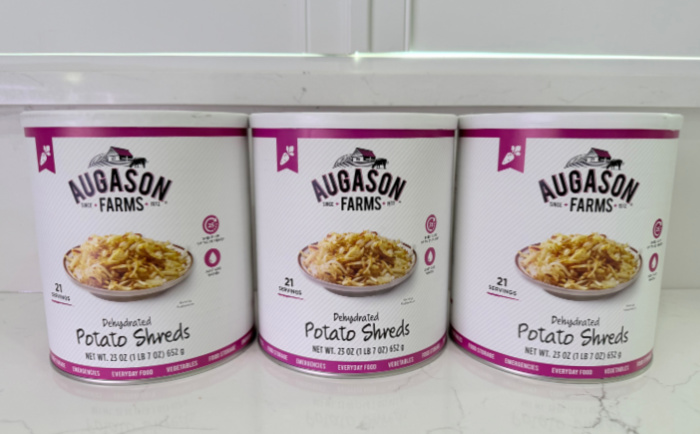
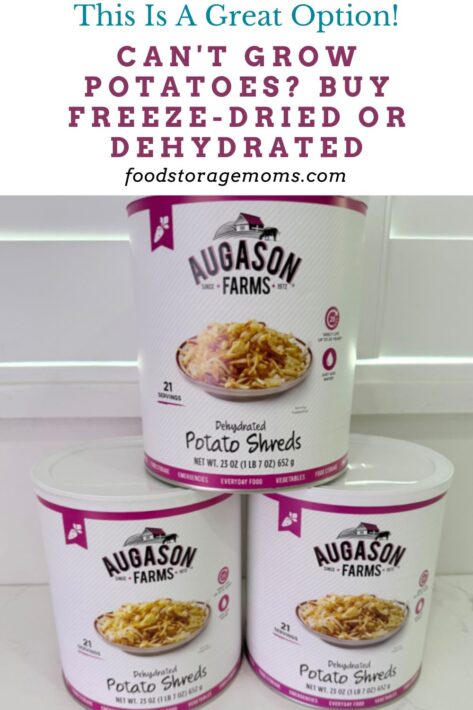
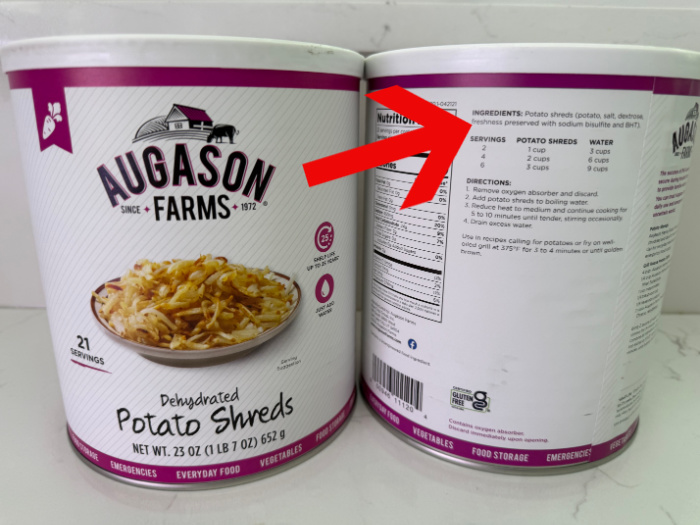
Dehydrated potatoes are more affordable than freeze-dried potatoes and still offer a respectable shelf life, typically 5 to 10 years when stored properly in sealed containers. They’re widely available and come in a variety of forms, including slices, dices, shreds, and flakes. Each form lends itself to different kinds of cooking. Augason Farms cans say 25 years under favorable conditions. I personally question the 25 years, but I have about 20 cans on my shelves and will use them before the 15-year mark. Augason Farm Dehydrated Sliced Potatoes. This product is potato slices with freshness preserved using sodium bisulfite.
Potato flakes, for example, are perfect for quick mashed potatoes and can also be used as a thickener in soups, a coating for meats, or an ingredient in bread and rolls. Slices and dices work well in casseroles and soups. Shreds are ideal for hash browns, potato pancakes, and breakfast dishes.
The nutritional profile of dehydrated potatoes remains solid, though some heat-sensitive nutrients, such as vitamin C, are reduced during processing compared with fresh or freeze-dried potatoes. They remain a good source of potassium, B vitamins, and fiber.
Freeze-Dried vs. Dehydrated: How to Choose
Both options have a real and important place in a well-rounded food storage plan. Here’s a simple way to think about the difference.
If your priority is maximum shelf life and the closest thing to fresh-tasting results, freeze-dried potatoes are worth the higher price. They are particularly valuable for long-term emergency preparedness, camping trips, and situations where access to fresh produce may be limited for extended periods.
If you’re focused on everyday use, building up a practical pantry on a budget, or getting started with food storage for the first time, dehydrated potatoes offer excellent value. Many families keep both on hand, using dehydrated products regularly in weekly cooking and reserving freeze-dried supplies for longer-term storage.
When shopping, look for products from reputable brands that use quality potatoes and minimal additives. Check sodium content, particularly on products that come pre-seasoned. Reading labels carefully ensures that what you’re buying aligns with your family’s nutritional needs. Emergency Essentials® Freeze-Dried Hash Browns (the can says “dehydrated” on Amazon, just giving you a heads-up).
Trusted Brands to Look For
Several well-known companies specialize in freeze-dried and dehydrated foods and have built strong reputations for quality and reliability. Augason Farms, Mountain House, and Wise Company are among the most widely recognized names in the long-term food storage space. Many of these brands offer potato products in bulk quantities, which can significantly reduce the per-serving cost. You can find their products online, at warehouse stores, and at emergency preparedness retailers.
For everyday dehydrated potato options, mainstream grocery brands and bulk food suppliers like Bob’s Red Mill also carry quality products that work well in your daily cooking.
How to Use Freeze-Dried and Dehydrated Potatoes in Everyday Cooking
One of the most common misconceptions about freeze-dried and dehydrated potatoes is that they’re only useful in emergencies. In reality, they’re a genuinely practical ingredient for busy families who cook regularly.
Potato flakes can be whipped up in minutes for a weeknight side dish. A handful stirred into soup adds body and thickness without any extra effort. Dehydrated potato slices can go straight into a slow cooker with broth and seasonings for a hearty meal that practically makes itself. Freeze-dried potato dices rehydrate quickly and can be added to scrambled eggs, frittatas, and breakfast burritos.
Keeping a well-stocked supply of these products means you always have the ingredients for a satisfying, nutritious meal, even when your refrigerator is running low on other food items, or a trip to the grocery store isn’t in the cards. Cheesy Potatoes aka Funeral Potatoes
Storing Your Potato Supply
Getting the most out of freeze-dried and dehydrated potatoes comes down to proper storage. Both products do best in cool, dry, dark conditions. Avoid storing them near heat sources such as ovens or water heaters, or in areas that experience significant temperature swings, such as garages or attics.
Oxygen and moisture are the main enemies of long-term food storage. Most high-quality freeze-dried and dehydrated products come in sealed cans or Mylar bags with oxygen absorbers already included to address oxygen exposure. Once opened, transfer any unused portions to airtight containers, use them within a few months for the best quality, and reduce the risk of oxygen and moisture issues.
Labeling your containers with the purchase date and the “best by” date makes rotation simple. The goal is always to use the oldest products first, so nothing goes to waste.
A Practical and Empowering Choice
Not being able to grow your own potatoes isn’t a gap in your preparedness or a shortfall in your family’s food security. It’s simply a reality that calls for a practical solution, and freeze-dried and dehydrated potatoes are exactly that. They give you access to one of the world’s most important foods in a form that is shelf-stable, convenient, affordable over time, and genuinely useful in everyday cooking.
Whether you’re building a three-month food supply, stocking a cabin pantry, or simply trying to make sure your family always has the foundation for a good meal, freeze-dried and dehydrated potatoes deserve a place in your home. They’re proof that you don’t have to grow your food to be prepared, nourished, and ready for whatever comes your way. As you know, I’m always promoting the idea that families should try to grow some of their own food. It teaches kids where the food products we eat come from, and they learn that with some planning and work, you can have fun and grow what we enjoy eating every day. But, for some families, that isn’t an option, for several reasons.
Final Word
You don’t need a garden to feed your family well. Freeze-dried and dehydrated potatoes put one of the most nutritious and versatile foods in the world right on your pantry shelf, ready whenever you need it. Whether you’re building a long-term food supply or simply making sure a good meal is always within reach, this is one of the smartest and most practical investments a family can make. May God bless this world, Linda











We’re lucky that we can grow potatoes. One year, we grew about 500 pounds, plus I canned 97 pints of green beans and I don’t remember how many peas and corn. Some okra and I don’t remember what all else. Oh onions. We had a huge garden that year. We also let family pick what they wanted from the garden. We did our version of a square foot garden. I loved it! Except I got so tired of canning. LOL
Hi Deborah, oh my gosh, you had a plentiful harvest, my friend! It feels so good to see those jars lined up on a shelf. What a blessing foor your family as well! Linda
They all loved it. I did help my mother pick. After all, she did raise me along with her parents, and my sister and brother. LOL She was 23 years old when I was born, and I was her 4th child. Her first born was moving an everything up until his birth. We think the cord was around his neck. He never drew a breath after birth. I can’t imagine!
Hi Deborah, my mother’s third child had the the same experience. I can’t imagine how our mothers felt. So sad. Linda
Not to step on any brand toes, but I buy Bob’s Redmill potatoes and love them. They come in more manageable packets. I just don’t have the ability to deal with or store big #10 cans. The small packets can be tucked away taking up much less space.
We live in a climate where there is no way to keep potatoes very long. Hot, humid, no basements.
There is no way to tell these potatoes from mashed “real” potatoes. I’ve used them for years. The packets don’t go bad for a long time. Same with my freeze dried onions.
They are probably not for people prepping for 10+ year time frames, but they are perfect for preppers who rotate pantries and are preparing for hurricanes and that sort of thing. For me they are just part of my pantry and great for the “what’s for dinner tonight?” question.
Hi CAddison, oh I buy packets of mashed potatoes as well. I will try the Bob’s Red Mill next times. Mine are from Idaho, they are delicious packets of mashed potatoes, just add water. Love those! Linda