
Measles Is Back: Signs, Symptoms, and How to Be Ready
This post may contain affiliate links. We may earn a commission if you purchase via our links. See the disclosure page for more info.

Measles Is Back: Signs, Symptoms, and How to Be Ready! I don’t remember my daughters getting measles, but they may have; it’s been too many years. I for sure remember all four getting ChickenPox. When I was growing up, we all got measles. I was born in 1950. Our parents and grandparents talked about it, but it felt like a problem that had been solved long ago. Sadly, that’s no longer the case. Measles outbreaks have been popping up across the country in recent years, and 2025 saw more cases in the United States than we had seen in decades. As moms, grandmas, and caregivers, it’s our job to be informed and prepared, not scared. Knowledge is one of the best tools we have for keeping our families safe.
In this post, I want to walk you through what measles is, the signs and symptoms to watch for, how it spreads, and the practical steps you can take right now to be ready. Please remember that I’m not a doctor, a nurse, or anyone in the medical field. And this post is meant to help you prepare and ask good questions. Always talk with your family’s healthcare provider about your specific situation.
What Is Measles?
Measles is a highly contagious illness caused by a virus. It’s one of the most contagious diseases known to man. According to the CDC, if one person has measles, up to 9 out of 10 unprotected people close to that person will also become infected. That’s a staggering number, and it’s the main reason health officials take outbreaks so seriously.
Measles is spread through the air when an infected person coughs, sneezes, or even just breathes. What surprises many people is that the virus can linger in a room’s air for up to two hours after the sick person has left. That means your child could catch measles in a doctor’s office waiting room, a grocery store, or a church hallway without ever coming face to face with the person who was sick.
Another tricky part is that people with measles are contagious for about four days before the rash appears and about four days after. So someone can be spreading the virus before they even know they have it.
Signs and Symptoms of Measles
Symptoms usually begin about 7 to 14 days after exposure, though they can take as long as 21 days. Measles tends to follow a pattern, and knowing that pattern can help you recognize it early.
The first stage looks a lot like a bad cold or the flu. You may notice a high fever that can reach 104°F or higher. Along with the fever, doctors often talk about the “three Cs”: a cough, a runny nose (coryza), and red, watery eyes (conjunctivitis). Your child may also be very tired, cranky, and sensitive to bright light.
About two to three days after these first symptoms begin, tiny white spots may appear inside the mouth, on the inner lining of the cheeks. These are called Koplik spots, and they look a bit like grains of salt on a red background. Not everyone notices them, but if you see them, it’s a strong clue.
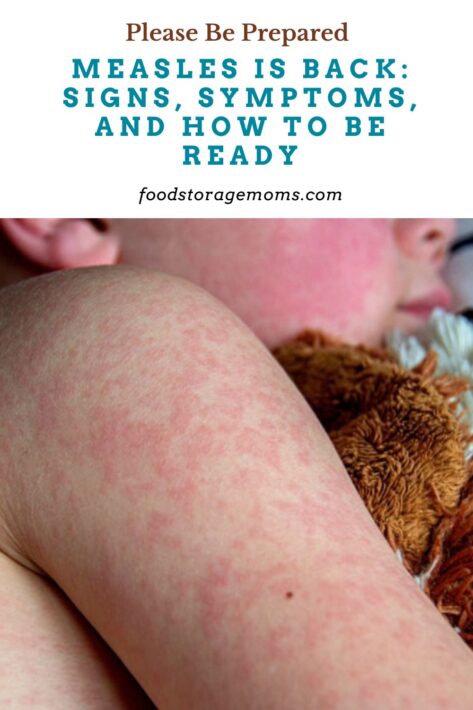
Three to five days after symptoms start, the telltale rash appears. It usually begins as flat red spots along the hairline and face, then spreads down the neck, trunk, arms, legs, and feet. Small raised bumps may appear on top of the flat spots, and the spots can run together as the rash spreads. The fever often spikes again when the rash shows up.
For most people, the rash fades after several days in the same order it appeared, and recovery begins. But that’s not the whole story.
Why Measles Is More Than Just a Rash
Many folks think of measles as an uncomfortable but harmless childhood illness. Unfortunately, it can cause serious complications, especially in children under five, adults over twenty, and anyone with a weakened immune system.
Common complications include ear infections, which can sometimes lead to permanent hearing loss, and diarrhea, which can cause dehydration. More serious complications include pneumonia, which is the most common cause of measles-related death in young children. About 1 in every 1,000 children with measles develops encephalitis, which is swelling of the brain that can lead to lasting disability. The CDC reports that nearly 1 to 3 of every 1,000 children who get measles in the United States will die from it, even with the best care.
Researchers have also found that measles can weaken the immune system for months or even years afterward, making it harder for the body to fight off other infections it had already learned to handle. Doctors sometimes call this “immune amnesia.”
I share these facts not to frighten you, but because I believe being prepared means knowing the full picture.
How to Protect Your Family
The Measles Vaccine
(Please note I’m not an advocate for or against vaccines; this is a personal choice)
The most effective protection against measles is the MMR vaccine, which protects against measles, mumps, and rubella. According to the CDC, two doses are about 97 percent effective at preventing measles, and one dose is about 93 percent effective. Now that I think about it, my girls did, in fact, get the MMR vaccine twice.
Children typically receive the first dose between 12 and 15 months of age and the second dose between 4 and 6 years old. Babies between 6 and 11 months who’ll be traveling internationally are usually advised to get an early dose. Adults who aren’t sure about their vaccination status should talk with their doctor, since a simple blood test can check for immunity, and getting another dose is considered safe if records can’t be found.
If your family has questions or concerns, I encourage you to sit down with a trusted doctor and talk through them. A good provider will take the time to listen and help you make an informed decision.
Check Your Records Now
One of the easiest preparedness steps you can take today is to gather your family’s vaccination records. Many of us have no idea where those old yellow cards ended up! Call your pediatrician’s office or check your state’s immunization registry. Once you have the records, make copies and store them in your emergency binder along with birth certificates, insurance cards, and medication lists. If an outbreak hits your area, you’ll know right away where your family stands.
Stock Your Sick Room Supplies
I always say it’s much easier to prepare before someone is sick than to run to the store with a feverish child in the car. Here’s what I recommend keeping on hand for any contagious illness, including measles.
A reliable thermometer, along with extra batteries if needed. Fever reducers such as acetaminophen or ibuprofen are available in both adult and children’s formulas; be sure to follow the dosing instructions for your child’s age and weight. Plenty of fluids, including water, broth, and electrolyte drinks or powders, to help prevent dehydration. Easy foods like crackers, applesauce, soup, rice, and popsicles. Tissues, lip balm, and a gentle moisturizer for dry, irritated skin. A cool mist humidifier to soothe a cough. Soft washcloths for cleaning crusty or watery eyes. Room-darkening curtains or a blanket to cover a window, since light sensitivity is common with measles. Disposable gloves, face masks, and disinfecting supplies for caregivers.
Plan for Quarantine
Here’s where our food storage really shines. If someone in your family is exposed to measles and isn’t immune, your local health department may ask them to stay home for up to 21 days. That’s three full weeks! And if someone in your home gets sick, the rest of the family may be limited in where they can go as well.
This is exactly why I encourage families to keep at least a few weeks of food and household supplies on hand. Think about your everyday meals and make sure you have the ingredients to make them without running to the store. Stock up on toilet paper, laundry detergent, dish soap, pet food, diapers, and any prescription medications the family needs on a regular schedule. When you’re caring for a sick little one, the last thing you want to worry about is what’s for dinner.
It’s also wise to think ahead about which room could serve as a sick room, ideally one with its own bathroom if possible, so you can help limit the spread to others in the home.
Know When and How to Call the Doctor
If you suspect measles, call your doctor’s office before you show up. This is so important. Because measles is so contagious, the office may want to meet you at a side door, schedule you at the end of the day, or give you other instructions so that other patients, including tiny babies and people with fragile health, aren’t exposed in the waiting room.
Seek emergency care right away if your child or family member has trouble breathing, a stiff neck, extreme drowsiness or confusion, seizures, signs of dehydration such as very little urine or no tears, or a fever that won’t come down. Trust your instincts, mom. You know your family better than anyone.
Stay Informed Without Worrying
Keep an eye on your local and state health department websites during outbreak season. Many of their posts update where exposures have occurred, such as a specific store, clinic, or airport, on a certain date and time. If you learn you were at one of those places, call your doctor for guidance.
If you’re planning to travel, especially overseas, check the CDC travel health notices in advance and make sure everyone in your family is protected before you leave.
Final Word from My Heart
I know news about outbreaks can make our hearts race. But being prepared is the opposite of living in fear. When we take small, steady steps like checking our records, stocking our cupboards, and knowing the warning signs, we’re better equipped to care for the people we love most. Preparation gives us peace, and that peace allows us to focus on what truly matters: our families, our neighbors, and our faith. Please share this post with a friend, a young mom, or a grandparent who may need this information. We are all in this together. May God bless this world, Linda
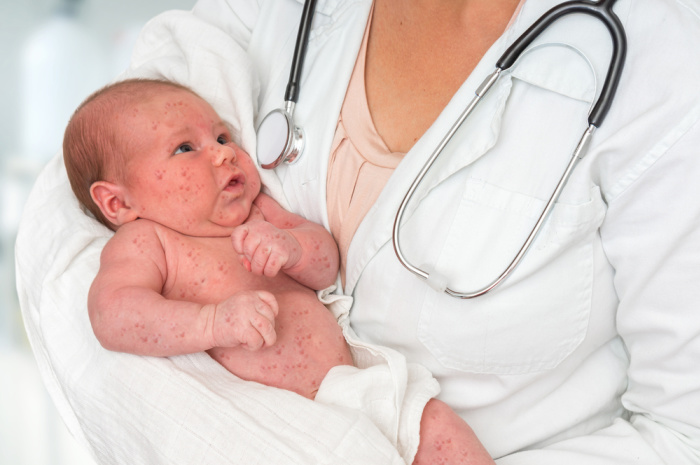
Copyright Images: Doctor With Stethoscope Holding Baby Depositphotos_234804706_S, Measles Viral Disease Rash On A Child Depositphotos_705713736_S
















I will jump in here and be the bad guy to advocate for the MMR vaccine. When I was 7, my sister and I both came down with the measles. This was before any vaccine was available. My sister got over it with no complications, but I developed encephalitis and nearly died. I don’t remember much about it except thinking that I would go to heaven if I died, but my parents and doctor were very worried about me. Now, decades later, I’m completely deaf and wear digital hearing aids so I can live a normal life. That was one thing the doctor told my parents, is that I would lose some or all of my hearing at some point and that happened when I was 30. I’m 70 now, so have dealt with this for years. I cannot imagine allowing my children go through what I went through, so they were vaccinated against this. Just my two cents worth.
Hi Paula, I totally agree with you on this vaccination. The MMR was given to my girls; right now, the state of Utah is # 3 in measles, with 535 cases reported as of today. That might not seem like a lot, but we have many people who may not be vaccinated (their choice), and these are only the reported cases. I know there are many more. I do remember a child in the neighborhood who went blind from measles when I was growing up. I would not want my child to go through what you endured, my sweet friend. Hugs, Linda
I agree as well! My children were vaccinated for all they needed. I wasn’t, but luckily had no complications from getting the things my siblings brought home from school. I got most of my vaccinations at school. Yep, they used to do that. I have a great grandchild that hasn’t been vaccinated. His mom doesn’t believe in them. I feel that this is why there are outbreaks. I also got Scarlet Fever at 28 years old. According to the internet, children 15 and younger are the ones that get it. That either makes me weird or young at heart. I am now almost 75, and loving life as much as possible. Thank God for vaccines.
Hi Deborah, I remember Scarlet Fever, oh my gosh!! You get it from strep throat; I think some of my girls got that. I forgot about that!! You are young at heart; you are only 75! I love living life with you as well. Hugs, Linda
I hope this doesn’t sound like a silly question. But if you get the vaccine or measles itself, can you get it decades later? I assume Tom and I both had the vaccines, although neither of our parents were good at retaining records. My concern lies with shingles. Tom’s brother had a terrible case of shingles. He and his wife continued to argue with us that there wasn’t a vaccine even after we had both gotten it. Please everyone stay safe and healthy.
Hi Chris, I doubt Mark and I got the vaccines because we both got measles. We’re both too old to remember. LOL! This sounds crazy, but I think we all lined up like ducks in elementary school and got smallpox shots, no questions asked. The schools gave us polio sugar cubes or liquid in a cup, here again, no parents around. Girl, that would not happen today! LOL! As far as the shingles shot, it is a two-part series, and I am not interested in getting shingles or the shot. I may regret it. But I saw elderly people in our last neighborhood get reactions from the shingles shot. Coincidence, I do not know. I would check with your medical professional. Linda
Im 70 yrs old and I had it all as a child. I had mumps multiple times til my tonsils and adenoids were removed. I had chicken pox and therefore did opt for the shingles vaccinations. Hurt like the dickens but no side effects. I distinctly remember having the measles but not the German measles. I’ve always been told that once having had the measles you can’t get them again. Not so much the mumps and the chicken pox. All of my kids had chicken pox but I didn’t come down with them again. So, at 68 I was diagnosed with CLL- leukemia. Who knows why I developed that but tge only childhood vaccination I had was polio. Im still a believer in childhood vaccinations. Im still not sure about these newer ones tho like covid and flu.
Hi Robbie, I forgot about the German Measles; great reminder. I will have to talk to you about the shingles vaccine. I’m nervous about it. It’s a two-shot vaccine. I don’t think I ever got the mumps. My father got polio, and so did my older sister. My father was in an iron lung most of my childhood. My mom had a rough time raising three little girls alone, basically. I know she farmed us all out just so she could work. Life was hard on her. Linda
Linda, I believe you have to be concerned with getting shingles if you had chicken pox as a kid (or adult). At least that’s what my doctor told me. I didn’t get the vaccine for shingles until I was 65 and that was after a very good friend of mine lost vision in one eye due to the shingles. It came up her neck and wrapped around one side of her head and she was miserable. Her doctor was concerned about her vision and sure enough, she’s blind in that eye. So she told everyone to get the vaccine for shingles. I did get the two-part vaccine and had no complications. There are many vaccines I refuse to get, but I thought if I could stop this one thing, I would be ahead of the game. Again, my two-cents worth! 🙂
Hi Paula, thank you, my sweet friend. I do not want to get shingles. I will look into getting the two shots. Thank you so much, Linda
Linda, I hadn’t considered getting the shingles vaccine but when my friend lost sight in her eye, that scared me. Otherwise, she’s a very healthy person!