Grocery Stores: How To Stay Out Of Them
This post may contain affiliate links. We may earn a commission if you purchase via our links. See the disclosure page for more info.

Grocery Stores: How To Stay Out Of Them. Do you ever feel like you’re at the grocery store three or four times a week and wonder why? You run in for milk, then you’re back the next day for bread, then somehow you’re there again because you forgot the one thing you actually needed the first time. I know this feeling well, and I also know how much money slips out of your wallet every single time you walk through those doors. Grocery stores and their marketing approach are designed to get you to buy more than you came for.
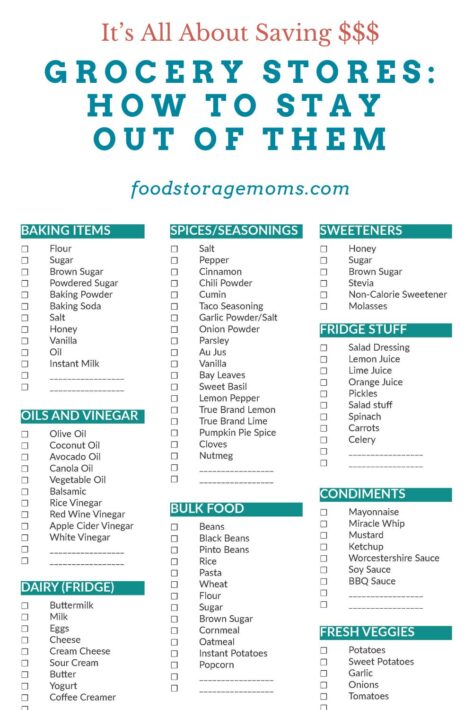
The bright displays, the smell of fresh bakery items, the endcaps loaded with sale signs- all of it is built to loosen your grip on your budget. The good news is that with a little planning, you can cut your grocery store visits down to once every week or two, or even less, and save real money in the process. Today I want to walk you through how to stock your pantry and freezer, learn to cook from scratch, and make your own bread, so you can avoid the grocery store as much as possible and keep more money in your pocket. FREE PRINTABLES: FoodStorageMoms Meal-Planning Chart or Grocery Shopping List.
Kitchen Items I recommend:
- Souper Cubes
- OXO Containers
- Stainless Steel Whisk
- Brod & Taylor Dough Whisk
- Mixing Bowls
- Bread Pans
- No-Knead Bread Bowl
- Bread Scrapers
Why fewer trips save you money
Every trip to the grocery store costs you more than the total on the receipt. It costs you gas. It costs you time. And most importantly, it often costs you impulse purchases. Studies on shopping behavior consistently show that the more often you shop, the more you spend overall, because each trip is another opportunity for something unplanned to land in your cart. When you shop once a week or once every two weeks with a solid list, you naturally spend less. You’re buying with intention instead of buying because something looked good on the shelf. Staying out of the store isn’t about deprivation. It’s about being prepared enough that you don’t need to run out for one more thing.
Stock your pantry
The foundation of staying out of the grocery store is a well-stocked pantry. I always tell people to think of their pantry as their own small grocery store at home. When you have the basics on hand, you can make dozens of meals without ever leaving your house.
Start With These Basics
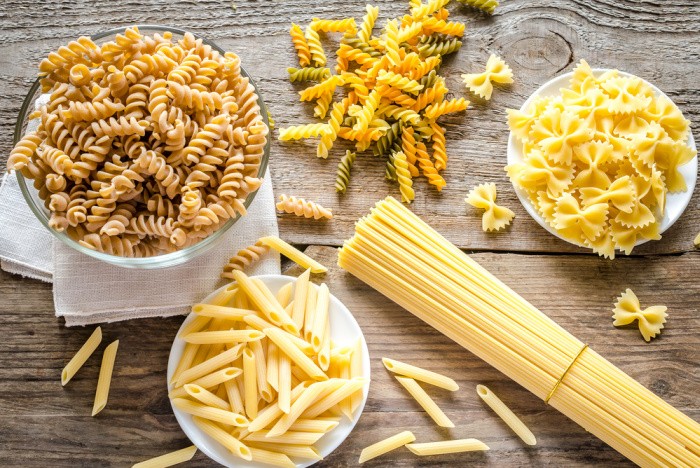
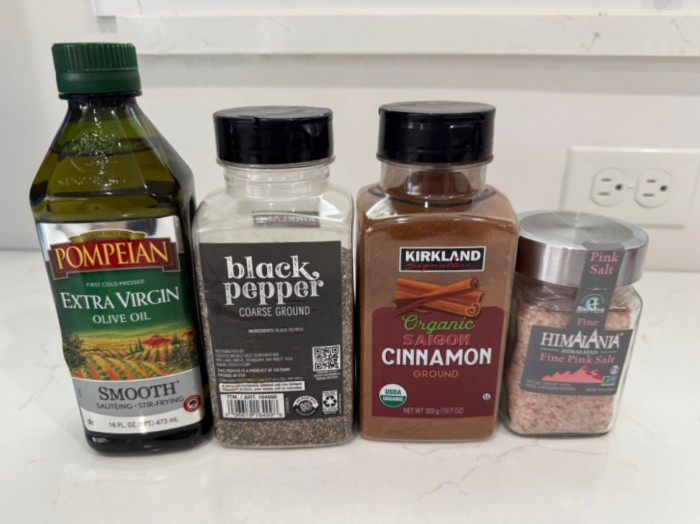
Start with the essentials. Flour, sugar, salt, baking powder, baking soda, and yeast are the backbone of baking and cooking. Rice, pasta, and dried or canned beans give you filling bases for countless meals. Canned tomatoes, tomato paste, and canned vegetables round out soups, stews, and sauces. Cooking oils, vinegar, and a good rotation of spices make everything taste like a real meal instead of something thrown together.
Buy In Bulk
Buy these items in bulk when they go on sale, and rotate your stock so nothing expires before you use it. This is the old-fashioned idea of first-in, first-out. Write the purchase date on cans and bags with a marker so you always know what to use first. A well-organized pantry with a few months’ worth of staples on hand means that when you’re missing one ingredient for dinner, you almost always have a substitute already on the shelf.
I also recommend keeping a running inventory list on your refrigerator door or in a notebook. Every time you use the last of something, write it down. That way your next shopping trip is planned around what you actually need, not a guessing game while you wander the aisles.
Stock your freezer
Your freezer is just as important as your pantry when it comes to staying out of the store. Meat, bread, butter, cheese, and even milk can all be frozen and used later, which means you can buy in bulk when prices are low and skip the store when they aren’t.
Buy Meat On Sale
When meat goes on sale, buy extra and freeze it in meal-sized portions. Ground beef, chicken breasts, and pork chops all freeze beautifully if you wrap them well and remove as much air as possible. Cooked meals freeze well too. Soups, casseroles, and shredded meat for tacos or sandwiches can be made in a big batch and frozen in smaller containers for quick dinners later.
Buy Frozen Fruits and Vegetables
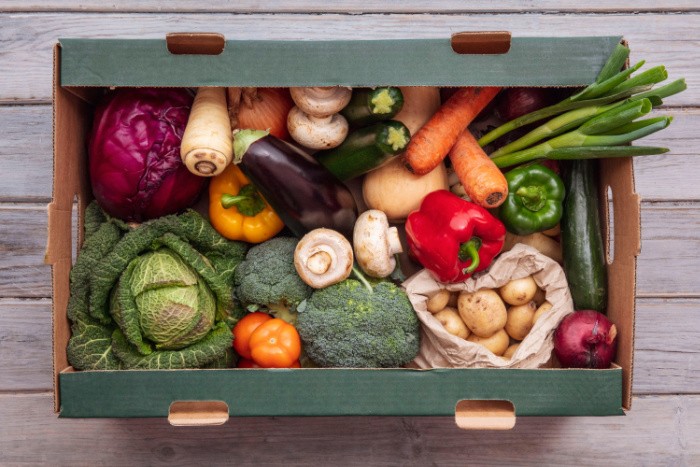
Vegetables and fruits are another great freezer investment. Buy them fresh when they’re in season and cheap, then wash, chop, and freeze them yourself, or stock up on frozen vegetables when they go on sale. Frozen produce keeps its nutrition and is often more budget-friendly than fresh produce that goes bad before you can use it.
Don’t forget bread and butter. Both freeze wonderfully. If you find bread on a great sale, or if you make your own, freeze extra loaves so you always have some on hand.
A chest freezer or an extra upright freezer in the garage or basement is one of the best investments a family can make for saving money. It lets you take advantage of sales and bulk pricing instead of buying small amounts at full price every week.
Don’t Rely On Convenience Foods
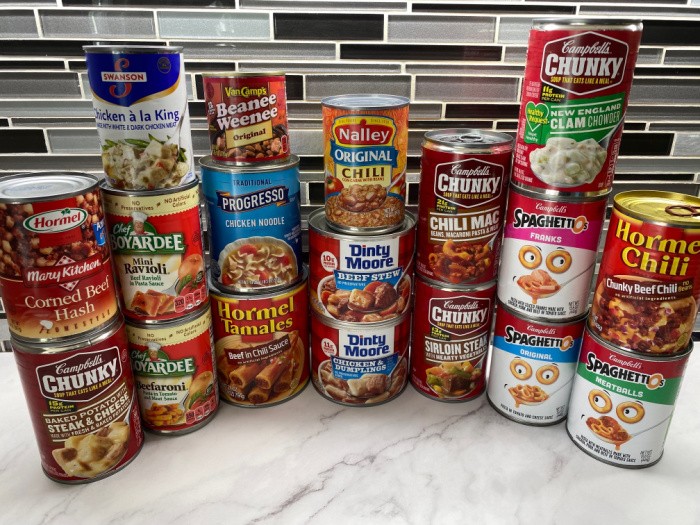
One of the biggest reasons families end up at the grocery store so often is that they rely on convenience foods that run out quickly and need to be replaced constantly. Learning to cook from scratch changes that completely. When you know how to make a meal from basic pantry and freezer ingredients, you’re no longer dependent on a specific packaged product being in stock or on sale.
Start Simple
Start simple. Learn to make a basic white sauce, which becomes the base for countless casseroles and pasta dishes. Learn to make your own taco seasoning instead of buying packets. Learn to make soup from scratch using broth, vegetables, and whatever meat you have on hand. These skills don’t require fancy equipment or culinary school training. They require practice and a willingness to try.
Cooking From Scratch
Cooking from scratch also stretches your food storage further. A pound of dried beans costs a fraction of canned beans and can be cooked in big batches and frozen for later use. A whole chicken can be roasted, then the meat used for dinner, and the bones simmered into broth for soup. Nothing goes to waste, and every ingredient works harder for your family.
I encourage you to pick one new from-scratch recipe each week and add it to your rotation. Before long, you’ll have a whole collection of meals you can make with what’s already in your home, without a special trip to the store.
Learn to make bread
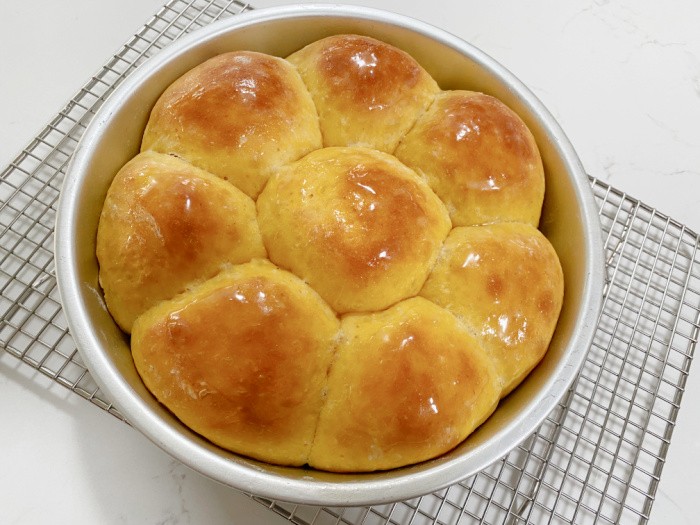
Bread is one of the most expensive items to keep buying at the store, and it’s also one of the most rewarding things to learn to make yourself. A basic loaf of bread requires only flour, water, yeast, salt, and a little fat, such as butter or oil. Once you understand the basic process, you can make sandwich bread, dinner rolls, pizza dough, and more, all from the same handful of pantry staples.
If you’re new to bread baking, start with a simple no-knead recipe. These recipes rely on time rather than intense kneading to develop the dough, and they’re nearly foolproof for beginners. Once you feel comfortable, branch out into shaped loaves, rolls, and even sweet breads. Linda’s No-Knead Bread.
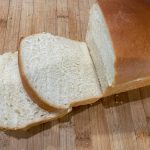
Baking your own bread means you always have fresh bread on hand without a special trip to the store, and it means you control exactly what goes into it. You can freeze extra loaves, so even bread baking becomes part of your stock-the-pantry-and-stock-the-freezer strategy. No-Fail Bread Recipe: all you need are fresh ingredients.
- 1 cup warm milk
- 2 tsp. SAF instant yeast
- 2 tsp. dough enhancer (optional)
- 1 egg
- 1/8 cup oil-I use olive oil
- 3/4 tsp. sea salt
- 1/4 cup sugar
- 1/4 cup warm water
- 3 to 3-1/2 cups white bread flour
-
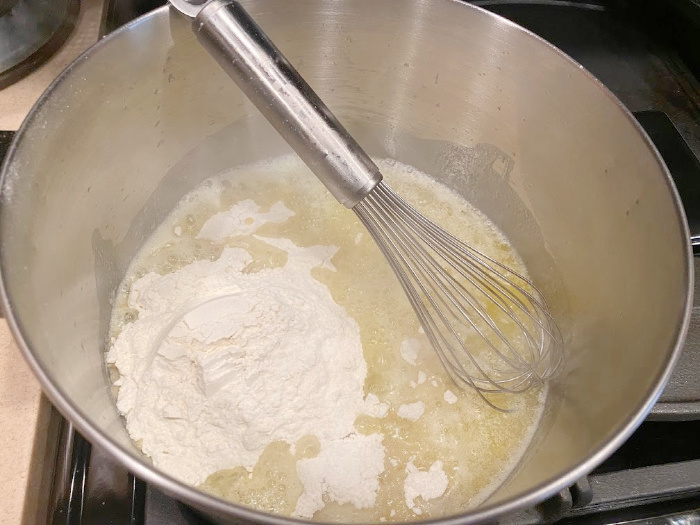
I start with a Bosch bread mixer, although you could make this in a bowl. I put the yeast, warm water, salt, oil, and sugar in the bowl.
-
I then add the eggs and lightly mix them in the Bosch so the egg does not “cook”.
-
Then I slowly add the warm milk and flour. I continue to add flour until the bread dough pulls away from the sides of the Bosch bowl.
-
Then knead the dough for about 7-8 minutes. I place the dough in a greased bowl and cover it with plastic wrap.
-
Let the dough rise until it's doubled in size. Then punch down the dough, make it into loaves, and place these in greased pans (this recipe makes two 1-pound loaves).
-
I let it rise once again (using the same plastic wrap) until doubled in size.
-
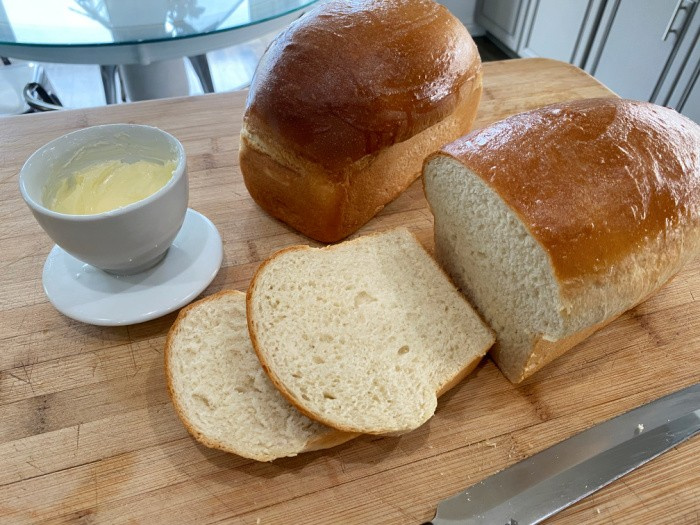
Remove the plastic wrap and bake them at 350°F (176°C) for 27-30 minutes. I lightly butter the tops of each loaf after baking and remove them from the pans.
HOW TO MAKE SCONES aka Fry Bread
- I start with a very large skillet and heat the oil one to two inches deep until I can spritz a few drops of water into the oil ever so carefully; then I know it’s hot enough.
2. You will start with one ball of dough about the size of a tennis ball, maybe a little smaller, but bigger than a golf ball.
3. Then mash the dough with the palm of your hand on a greased countertop and use a rolling pin to roll the dough from the center out. You keep rolling from the center out until they are very thin.
4. Then place them in the hot oil really carefully because the oil will splatter. Here’s the deal: yes, it’s a big mess, but I’m talking about memories right now.
5. Adults and kids always love hot scones. Fry them until golden brown, then turn them over and cook the other side until golden brown too.
Bringing it all together
Staying out of the grocery store is really about shifting your mindset from reactive shopping to proactive stocking. When your pantry is full of staples, your freezer is full of meat, bread, and vegetables, and you know how to turn those ingredients into real meals from scratch, you simply don’t need to run to the store as often. You save money on gas, on impulse purchases, and gain the peace of mind that comes from knowing your family is fed, no matter what happens outside your front door.
Start small if this feels overwhelming. Pick one area, maybe your pantry inventory or your first loaf of homemade bread, and build from there. Before you know it, weeks will go by between grocery store trips, and your budget will thank you for it.
Final Word
Staying out of the grocery store isn’t about cutting corners or eating less well. It’s about being ready. A stocked pantry, a full freezer, a few scratch-cooking skills, and a loaf of homemade bread cooling on the counter give your family security and your budget room to breathe. Start with one small step this week and let the habit grow from there. May God bless this world, Linda
Copyright Images: Grocery Store With Someone Holding A Cell Phone AdobeStock_2019613503, Shopping Cart With Woman Holding Receipt AdobeStock_1976838814



The way you’re writing about stocking the pantry and freezer is how we have lived for the last 45 years. I hate driving or even going out in the winter so we shop the sales all summer and fall and then burrow in most of the winter. A order placed with a local butcher gets me an added discount, meat vacuum sealed, frozen and ready for the freezer. Bulky things bought in the fall don’t have to be carried through the snow.
Hi Chris, thank you for the 5 stars, my sweet friend. You are a smart woman; you know how to shop! We were preppers before that word became a word. LOL! Love your comment, Linda
Chris, this is what we do at our house also. I got into the habit when my kids were little because I didn’t want to juggle them and groceries, especially big, heavy things.
As a side note, the storms we had here last night knocked out the power at the water treatment plant. NO WATER was coming out of faucets at all and it affects over 500,000 people. At our house, we were prepared! So if you haven’t thought about water storage or how to treat it for drinking and cooking, now is the time. I’ve had young neighbors call me asking for advice. Water is back on for now with a boil water advisory.
Linda, I received your reply. I’m glad you’re listening to the book I recommended. It’s certainly food for thought and those poor people! They didn’t have all the warnings that we have now concerning weather.
What book Paula??
Chris
Hi Chris, I had someone working on my website yesterday, and it looked like Jazmin was answering your question (it was me). Paula’s family grows wheat, and she told me about this book called “The Children’s Blizzard” by David Laskin. I bought the Audible version. This is what the book looks like: https://link.amazon/B0bn8mwkA
Hi Paula, I didn’t realize that my Norwegian ancestors, or at least some of them, were Mennonites. I was thrilled to hear that. I told my sister; she is getting the book. It’s a great book; I’m so glad you recommended it. Linda
So interesting to learn about our ancestors! My husband is the Mennonite – I married into it! Fortunately, I come from a long line of women who could cook, so that was very helpful. I’ve been told I make excellent verenika, which isn’t hard to make, but labor intensive. That’s a compliment coming from Mennonite women who grew up cooking and eating this way.
Hi Paula, I have never heard of verenika, but I bet it’s delicious. That’s a real compliment from the Mennonite women! I just Googled it. They look yummy! Linda