
Super El Niño vs. El Niño: How to Prepare Your Home and Pantry
This post may contain affiliate links. We may earn a commission if you purchase via our links. See the disclosure page for more info.

Super El Niño vs. El Niño: How to Prepare Your Home and Pantry! If you’ve been hearing the words “Super El Niño” on the news lately, you’re not alone. Weather forecasters have been talking about it for months, and for good reason. Government forecasters now say El Niño is already here and growing stronger, and they give it a better-than-90-percent chance of becoming a very strong event this fall and winter. That’s a big deal, and it’s exactly the kind of news that reminds me why we prepare in advance rather than scrambling at the last minute.
Today I want to walk you through the difference between a regular El Niño and a Super El Niño, what each one can mean for your family, and the practical steps you can take right now to get your home and pantry ready. No panic, no fear, just calm and steady preparation.
What Is El Niño?
El Niño is a natural climate pattern that starts in the Pacific Ocean. It happens when the water near the equator in the Pacific becomes warmer than usual. That warm water changes how air moves around the globe, which in turn shifts where storms go, where rain falls, and where droughts settle in.
The name comes from Spanish and means “little boy.” Scientists officially call it an El Niño when that stretch of ocean remains about half a degree Celsius warmer than normal for several consecutive months. El Niño events usually occur every few years and can last anywhere from 9 months to 2 years.
A typical El Niño might bring your area a slightly wetter winter or even a milder winter. Many families barely notice it. That’s where a Super El Niño is very different.
What Makes an El Niño “Super”?
A Super El Niño is simply a very strong El Niño. Scientists measure El Niño strength by how much warmer-than-normal the ocean water is. When the water climbs about 2 degrees Celsius or more above average, the event moves into the top category, which forecasters officially call “very strong.”
You might be surprised to learn that “Super El Niño” isn’t an official scientific label. International weather agencies don’t use it in their formal classifications. It’s more of a nickname that meteorologists and reporters use to describe these rare, powerful events.
And they truly are rare. The most famous Super El Niño events in modern history happened in 1982 and 1983, 1997 and 1998, and 2015 and 2016. Some of you may remember the flooding, mudslides, and wild winter storms from the late 1990s. Those memories are a good reminder that a strong El Niño isn’t just a weather headline. It can affect homes, roads, crops, and grocery prices.
Why This Year Matters
The El Niño building right now is not ordinary. By the middle of September, ocean temperatures in the key monitoring area had reached about 3 degrees Celsius above normal, and they’re still climbing. Some forecasters believe there’s a real chance this could become the strongest El Niño ever recorded.
Forecasters also expect it to hang around for a while. Current outlooks show it staying firmly in place through the end of this year and lasting into spring of next year. That means we’re looking at a full winter season, and possibly more, of unusual weather.
Super El Niño vs. El Niño: The Key Differences
Here’s the simplest way to think about it. A regular El Niño nudges the weather. A Super El Niño pushes it hard.
With a regular El Niño, weather shifts are often mild and patchy. Some areas get a little extra rain, others stay a bit warmer, and plenty of places see no real change at all.
With a Super El Niño, those same patterns become stronger and more reliable. The more powerful the El Niño, the more likely the typical weather patterns are to actually show up. Instead of a slightly wetter winter, some regions may see repeated heavy storms, flooding, and mudslides. Instead of a slightly milder winter, other regions may see very little snow and a dry spring that stresses water supplies and gardens.
What a Super El Niño Could Mean for Your Region
Every El Niño is a little different, but most follow a familiar pattern across the United States during the winter months.
The southern states often get wetter. Forecasters are most confident about additional rain along the Gulf Coast and across parts of the Southeast, with the potential to extend into the Mid-Atlantic. California and the Southwest have also historically seen heavy rain and flooding during strong El Niño winters.
The northern states often get warmer and drier. The Pacific Northwest, northern Rockies, Great Lakes, and Ohio Valley may see less snow than usual. The Northeast also tends to get less snow during strong El Niño winters. Less snow sounds nice until you realize that snowpack feeds rivers, reservoirs, and wells come spring and summer.
There can also be a silver lining. El Niño tends to make it harder for hurricanes to form in the Atlantic during the summer months. Still, a quieter hurricane season never means zero risk, so keep your hurricane plans in place if you live along the coast.
How a Super El Niño Can Affect Your Grocery Bill
This is the part that matters most to those of us who care about food storage. A Super El Niño doesn’t just affect your backyard. It affects farms all over the world.
Strong El Niño years have historically brought drought to places like Australia, India, Indonesia, and southern Africa, while other regions deal with flooding. Those areas produce much of the world’s rice, wheat, sugar, cocoa, coffee, and cooking oils. When crops struggle, prices tend to rise on store shelves a few months later.
Here at home, flooding can damage fields and disrupt trucking routes, and dry conditions in the northern states can affect next year’s harvest. None of this means empty shelves are guaranteed. It simply means this is a smart season to stock up while prices are steady.
How to Prepare Your Pantry for a Super El Niño
Here are the steps I recommend for every family, no matter where you live.
- Stock up on staples now. Rice, beans, oats, flour, sugar, pasta, and cooking oil store well and are the items most likely to go up in price. Buy a little extra each time you shop.
- Add comfort foods and treats. Coffee, cocoa, and chocolate have all been affected by weather problems in growing regions. If your family loves them, tuck a few extra away.
- Store water. Aim for at least 1 gallon per person per day for at least 2 weeks. Flooding can contaminate local water supplies, and drought can lead to restrictions. You know my thoughts: Consider storing 4 gallons per person per day to stay properly hydrated, provide for cooking, allow you water for personal hygiene, and leave some for limited laundry chores.
- Rotate what you have. Use the oldest items first and replace them as you go. Stored food only helps if it’s still good to eat.
- Plan for power outages. Heavy winter storms can knock out electricity for days. Keep foods on hand that require little or no cooking, such as canned meats, peanut butter, crackers, and canned fruit.
- Think about your garden. If your region may face a dry spring, start planning for drought-tolerant varieties, mulch, and water-saving methods now.
How to Prepare Your Home
Food is just one piece of the puzzle. A strong El Niño winter can test your home too.
- Clean your gutters and downspouts so heavy rain drains away from your foundation.
- Check your sump pump and consider a battery backup if you have a basement.
- Look into flood insurance. Most regular homeowner policies don’t cover flooding, and federal flood insurance policies usually have a 30-day waiting period before they take effect. Don’t wait until the storms arrive.
- Keep sandbags or flood barriers on hand if you live in a low area or near a creek.
- Gather important papers like birth certificates, insurance policies, and medical records in a waterproof container you can grab quickly.
- Refresh your emergency kit with flashlights, batteries, a weather radio, first aid supplies, medications, and phone chargers.
- Have an evacuation plan. Know two ways out of your neighborhood and where your family will meet if you get separated.
Keeping Kids Calm and Involved
Weather news can feel scary for little ones. I’ve found that giving children a job makes a world of difference. Let them help pack the emergency kit, count cans in the pantry, or pick out a favorite snack for the storage bin. Explain El Niño in simple terms, like “the ocean is extra warm this year, so our weather might act a little different.” When kids see that the grownups have a plan, they feel safe.
Dangerous Heat Dome With El Niño Brewing
Flooding: Everything You Need to Know
Prepping for When Flooding Strikes
Final Word
A regular El Niño is something most families can live through without much thought. A Super El Niño deserves a little more attention. The good news is that you don’t need to be afraid. You just need to be ready. Stock your pantry, store your water, protect your home, and talk with your family about your plans. Small steps taken today will bring great peace of mind when the storms come.
Remember, preparedness isn’t about fear. It’s about loving your family enough to take care of them before trouble arrives. Let’s use this season wisely. Please remember the government won’t be able to deliver water or food to everyone, including your family, but you probably know that by now. May God bless this world, Linda
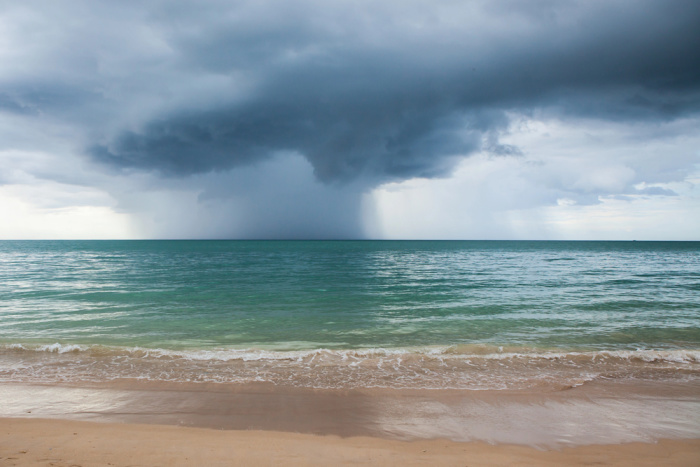
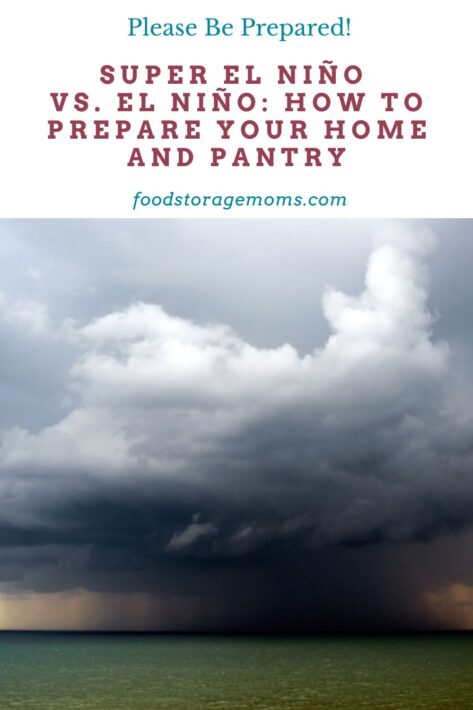
Copyright Images: Rain Storms Happening At Sea Depositphotos_119289166_S, Rain Over Sea Depositphotos_1179188_S









Great info as always, Linda. The enhanced weather is exceptionally serious business. Hope you and yours are weathering all the heavy wildfire smoke out your way. It bothers me that the media aren’t talking about the nationwide smoke issues and helping people learn about how to protect themselves. My son has been hyper-sensitive to the fine carbon and metallic oxides in it. It actually inflamed part of his heart. Our bees have had odd issues, too. The irregular El Nino activity changed the jet stream trajectory this year, forcing a lot of the worst smoke to accumulate over the lower Midwest. We need Atlantic hurricanes to push moisture our way. The whole country needs a good rinse!
Hi Terry, that is awful about your “My son has been hyper-sensitive to the fine carbon and metallic oxides in it. It actually inflamed part of his heart”. I have never heard of that. This is interesting to me because I am on oxygen 24/7, never smoked, or vaped, whatever. My heart was damaged from particles in my lungs. Lack of oxygen damaged my heart. My pulmonologist said I need to move from the elevation and the dirty air here in Salt Lake City, Utah. We lived close to a freeway in Southern Utah, and they kept widening the highway, I-15, the main thoroughfare in Utah. We had a swimming pool, and I swam every day for 2-4 hours for years. The exhaust from the semi-trucks was awful. It was fine until they expanded from 2 lanes to 5. Now your son is suffering from the smoke issues. Your bees, that worries me too. This worries me, thank you for bringing this to our attention. Linda
You had similar injuries. The ultra-fine particulants we’re being exposed to can be absorbed through skin as well. It ends up in fatty tissue as well as the blood. Very insidious stuff. We literally sealed off most of his house and added 2 large HEPA air scrubbing units from our work, just to control as much infiltration as possible. He can’t go outside right now, not until significant rain washes our part of the world clean. Water has become an even more critical item than before. You are right in forewarning everyone.
Hi. Terry, I never would have moved here had I known I needed oxygen. My doctors should have caught it in Southern Utah. Every time I went for my annual checkup, the oximeter showed 84-86. They always asked me if I was a smoker; NO WAY! So I had this issue in Southern Utah. One of my neighbors a few blocks over died from the same condition I had last year in our southern Utah neighborhood. She lived close to the freeway, and so did I. I need to look into those HEPA air scrubbing units. I feel like I can’t leave my house. The air is so bad. Stay safe, Linda
Hi Terry, did you see the comment from Ray, “Oh, and Terry should set out shallow plates and bowls of water for her bees”. Linda
We live on a barrier island off the Gulf Coast in S Florida. Hurricane “experts?” I’d say so. I’ve been in or worked about 25 of them.
Here is what we do instead of sand bags that has proven sucessfull…we had the tape over our downstairs doors and garage doors when there was a 5 1/2 foot flood. We’ve had 4 flooding events in the last 4 years.
Get some of that Flex Seal Tape. Enough to cover the bottom and up the sides of all doors. We are no longer using bags. Water can still get around them and a LOT can get through the edges of doors and windows.
Take a look at the El Nino of 1877-78. It caused the deaths of 50 Million people. Starvation. 3.3% of the population of the Earth at that time. That’s about 265,000,000 =/- in today’s numbers.
According to NOAA, El Nino has already started. Take a look at nightly news if you question that. My grocery company contact says their corporation cannot get their suppliers to agree to the amount of food they want next year. Shortages.
This post by Linda is another great one.
Hi Addison, you are for sure an expert on hurricanes. Is this the tape: https://link.amazon/A008CAlaG or this one: https://link.amazon/B0fmjpGzA
Thank you for the grocery store information. The sandbags did not work in the 1983 Farmington, Utah floods or the floods in Southern Utah. Our builder didn’t slope the concrete enough, and we had water coming through our door. The French drain is too small, and the water is running everywhere. I will buy what you tell me to buy. Thank you, Linda
Go with the flex seal product. That’s what we use. It’s the guy who does the goofy boat commercials to demonstrate. Run the tape up as high as you think you need to. Then go higher!
If you have window involved, I’d put it arount the bottom of them, too.
Indeed a LOT of water can get in around the sand bags. They may protect the integrity of the structure or door. Nothing to keep the leaks out.
Hi CAddison, thank you. I will buy that one; we had a lot of flooding in southern Utah. We had a few homes condemned due to the flooding. No flood insurance, and unable to sell the house unless someone pays cash, because no one would insure certain homes with a mortgage. Our house was struck by lightning once. We lost two TVs and two swimming pool pumps (very expensive). We just paid for them out of pocket because it’s hard to sell a home if there have been too many insurance claims. Plus, insurance companies will NOT insure your next house if you make too many claims. I owned my own mortgage company; that’s how I know. Yes, I believe in house, flood, and car insurance. It’s required to get loans in some areas. Some states require car insurance just to drive a car. As you know, flood insurance is a bit pricey. When I was a realtor, I would discourage a buyer from buying a home in a flood zone. Their payment would be higher and sometimes unnaffordable. Now, the water has diverted rivers and lakes, if they have water and that changes the flood zones. I bet more homes are now zoned “flood zones”! Linda
In Florida the car has to be insured. If the driver has a valid DL and the owner gives permission, then it’s lawful. No matter what, if the driver is impaired and causes an accident, the insurance will not cover. The vehicle must be used lawfully.
Mortgage companies in Florida require flood insurance for any structure in a flood zone. Outside of a flood zone, flood insurance is pretty cheap. They know the risk is low. It’s all Federal flood insurance.
I don’t know about multiple claims. We had 4 flooding and major hurricanes in 4 years. Everyone probably has multiple claims. Our state has an insurance company of last resort. We just learned today we are getting kicked out of that one next year. Next year “real insurance.” We’ve been in that one for years now.
We must have 3 different insurances. Wind (hurricane), flood, and home owners.
Indeed flood zones have enlarged and changed.
All those people in the US who have flooded homes are stuck. They can apply to FEMA knowing they will get rejected. This is just a step. When they are rejected, they can apply for lower cost FEMA loans.
There is no other flood insurance other than Federal.
There is no insurance for condo or renters for flooding.
If someone has a mortgage and makes a claim, the check gets made out to the mortgage company. The mortgage company then pays out for repairs. They’ve learned that doing another way often means the structure doesn’t get repaired and the “owner” spent the money on other things.
IF you have 2 homes (snow birds), then insurance is higher on both homes. They know that one is empty and empty homes are higher all risks. Flood insurance only covers the main residence. 2nd homes are on their own. There is private insurance available….VERY expensive. It’s complicated.
Hi CAddison, I love learning new things. We never had a problem with our insurance for our second home. The property taxes were double. That makes sense since the house will be vacant; I don’t remember a big difference. But we only have one home now. You have to have car insurance in Utah as well. I did not realize there is zero flood insurance on condos; rentals would have to be the landlord paying it. Utah requires flood insurance on homes in a flood zone to obtain a mortgage. Rules and regulations, gotta love them. LOL! Linda
Hi CAddison, I needed to elaborate more on the food shortages; they are real, and people need to stock up. Tomorrow, there may or may not be a truckers’ strike; we shall see. Hang on for the ride, Linda
I hadn’t heard about the trucker’s strike. “Perfect storm” comes to mind.
Connecting the dots on the food situation makes for a grim outlook no matter what.
I have friends who say “I don’t eat canned food.” Well, if you don’t eat canned food, you may not get any food…and the way things are going, there may not be sufficient canned food…so NO food. Wait until the word gets out that all the big grocery stores are being told by their suppliers that they can’t promise to fill the orders coming up pretty soon.
The Condo building itself would have flood insurance as would the owner of the Rental building/unit. BUT, the renter or occupant of the condo does not for their contents. As I understand it from my insurance contact, at least here in Florida NOBODY has flood insurance on anything unless they have a separate flood policy. So, condo/renters’ belongings are not covered from external flooding. Broken pipes and such are. Same for home owners’ policies in Florida. No external flooding – as in rivers or hurricanes.
No hurricane is declared a Cat 5 until after a time limit passes for making insurance claims. They have to pay out more/differently for Cat 5. And, no it isn’t retroactive.
Damage for wind goes up exponentially rather than arithmetically. So, a cat 5 is not 5 times greater than a 1. I forget the number. It’s huge, though.
Ian was a strong 5 where I live. We had winds 185 sustained with gusts to 203 on our street. And 3′ seas on the street. 5 1/2 ‘ flooding here. 16 feet or so elsewhere in our area. It was interesting. We watched it all from our house and porch. It’s still officially a 4.
Hi CAddison, that’s my understanding as well. We are on the loan with our daughter and SIL for this home, but we still bought renters insurance because I want control over that money to protect our items inside our little home. You have seen the worst of the worst; I can’t even imagine it, to be honest. In our last home, every time it would rain, I was afraid we would get flooded; it was crazy. Subdivisions in Utah are only expected to prepare for a 100-year flood. We had two 500-year floods. No one in our subdivision had flood insurance, that I know of. A few homes were condemned; our pool filled with red muddy water, not fun. You learned what had to be built to be safe; others should do the same if their budget allows. Crazy weather. I haven’t heard about any truckers’ strike today. Linda
I try to keep a stocked pantry! Year round! We never know what the weather will bring. And if and when we will lose electric power. That’s why we have a generator and keep a good supply of propane. We fill the big house tank about twice a year, depending on the weather.
Hi Deborah, you are so prepared; you are awesome! I love hearing this, Linda
Great article Linda!
Hi Paula, thank you, my friend. We must all be ready if, in fact, this is as big as they say it will be. Linda
This El Nino has already brought unusual amounts of rain to my place. It’s rare for us to get any rain at all in September. Anyhow, we were under flash flood watches for the past two days. I don’t know for sure how much rain we go but it was substantial. I had 4″+ standing in a wheelbarrow–which means we probably got around 2″. And we normally get less than 10″ per year.
There was some flooding going across roads near us but the diversion ditch I dug a few years ago just uphill from the back of our house took all the water and drained it off to the South end of our property into the wash that runs along there.
Since we are in a desert, with very rocky “soil,” any rainfall that comes down fast just runs off quickly. These past two days the rain would hit hard, then pause for a breather before the next wave hit. That gave some of it a chance to soak in–for which me and my gardens and fruit trees are grateful.
I guess my point is, this El Nino will hurt some people and help others, and there’s no knowing which “gift” you’ll get, so be prepared. (I need to get some of that Flex Seal Tape CAddison recommended).
Oh, and Terry should set out shallow plates and bowls of water for her bees.
Hi Ray, what a blessing you dug that ditch when you did, before you needed it. There is such extreme weather in Southern Utah and the middle of Utah; houses, cars, and camping trailers are buried in mud. Near Mt. Carmel. It’s not just Utah; it’s California and so many places. I sure wouldn’t be taking a road trip right now because of gas prices and the unstable weather. I will add your message to Terry about the shallow water plates. Linda
Hi, Ray. Yes, we always have shallow water dishes with pebbles and rocks set out for “the girls”, usually refilled with collected rainwater, but this airborne stuff causes slimy green algae growth, and when we were still getting rain, washed into my collection buckets, so we have to constantly hose their dishes out and can now only use bottled water to fill. Appreciate the advice, though!
I have been trying to understand how this will affect our area. We get Lake effect snow until the Lake Erie freezes. If the temperatures stay warmer and it takes longer for the Lake to freeze it could be more snow I think.
We have flooding all around us but our neighborhood is not near a water source and on slightly higher ground so we are fine. On Monday, the local news said we had had more rain in any month since March 1960. Whatever that amount was I’m sure we passed it since it was raining when the news was on and everyday since. Then last night a thunderstorm dumped 5″ of rain onto saturated ground. So many places are flooded. My daughter said her friend may have lost her house. I don’t know if she had flood insurance or not. Her detached garage was at the back of the lot and down from the house and it is off the foundation. It’s possible the house is also off the foundation. She is probably the most financially responsible of my daughter’s friends, so I hope she has flood insurance. There are going to be a lot of people in similar circumstances today and over the weekend since the river has not crested. One of the problems is that most of the people who live in the neighborhoods impacted are the lower income families and if they don’t have flood insurance they will be hurting.
I think I may place a pick up order from Sam’s club and get a 25 lb bags of flour, rice, and pinto beans. I’d love to get other types of beans but pinto is the only one in the large bags. I ran across a guy who talks about prepping for those of us over 60 and one of the things he said is that we should not be lifting and carrying the 5 gallon buckets of food. He recommends find 2 to 2.5 gallon ones. So I’m going to be searching for those and mylar bags to go in them today.
With all the controversy around the upcoming election, I’m getting nervous about what could happen. Plus, in my area we are hearing almost daily on the news about how farmers are being impacted by tariffs and the Iran conflict. Most potash, used to make fertilizer, comes from Canada and right now they are selling to Europe, China and Russia instead of the US. Add in the cost of diesel and the farmers are hurting. All this is going to be reflected in our grocery costs this winter and next spring. Of course, this could be worse because the ground is too wet for the farmers to harvest the crops. And if they can, wet crops can develop toxic molds and if that is found, the whole crop has to be trashed. I worry about the family-owned farms and if they will be able to survive all this.
HI Topaz, I have been writing about this for weeks, if not months. I am extremely worried about our food supply. When you search for containers, be sure they can stack, how many can be stacked on top of each other. All of my wheat is stored in 6 gallon buckets, my flour, sugar, salt and several types of beans are in 5 gallons containers, stacked two high. All of them have Gamma lids. I stack them so the handle is out so I can slide them on the floor and transfer what I need to two gallon buckets. I hope this helps, They are all lined up along a 16 foot wall. I’m 76 and my husband is 80. Bulk is the name of the game here. I’m glad you are stocking up. Water will be like GOLD, stock water as well. Walmart.com had some Non-Gmo beans I purchased a few years ago. You can do this, Linda
Hi Topaz, oh my gosh, I just looked at NON-GMO black beans and pinto beans in bulk 25 pounds and they are 4 times the price I paid a of couple years ago. They deliver, or pick up possibly, the prices are $60-100.00 for 25 pounds at Walmart.com. I am shocked. Linda
Hi Topaz, check out Azure Standard, they prices are somewhat reasonable, Not sure on shipping costs. https://www.azurestandard.com/shop/product/food/beans-peas/black/dry/black-beans-organic/6625?package=BE006 Linda
Hi Topaz, here is another great place I use a lot: https://www.webstaurantstore.com/dried-pinto-beans-50-lb/111PINTOBN50.html Linda