
33 Essential Spices I Recommend Stocking Up On
This post may contain affiliate links. We may earn a commission if you purchase via our links. See the disclosure page for more info.

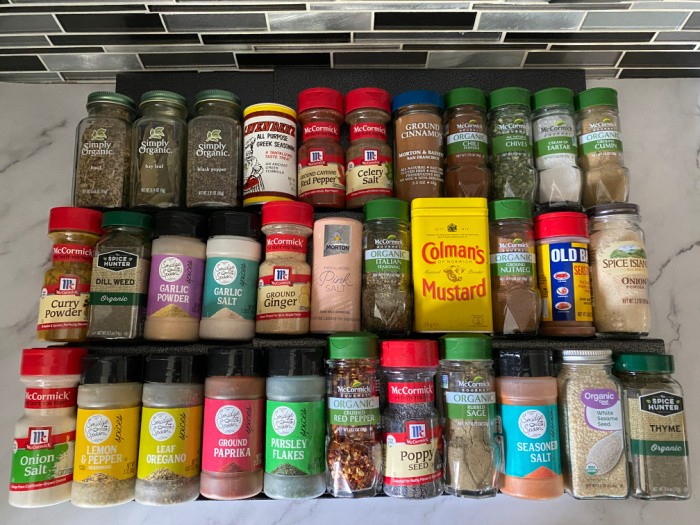
Here are a few of my favorite 33 essential spices I recommend stocking. I decided to put them in alphabetical order because that’s how I roll.
Adding our favorite spices to any meal can make a significant difference in the taste of our frequently made recipes.
I received an email from a reader asking how to stock spices for long-term storage. She wondered if she should put them in Mylar bags, etc. One thing I want to mention is that I haven’t stocked my spices long-term. They are not fresh to me and, in most cases, have lost the flavor I need when cooking or baking. It’s a personal preference.
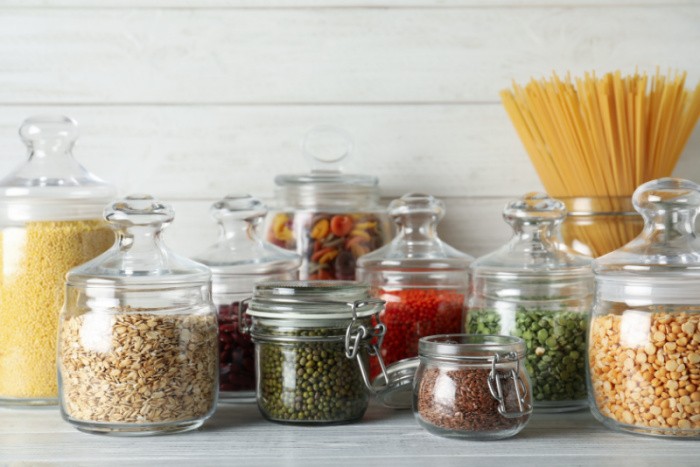
I may have told you that I taught cooking and baking classes in a fancy kitchen store. I learned a lot when I worked there. If you want the spices to have the flavor you expect and want, please leave them in the small glass jars they come in or transfer them to airtight glass containers. That way, they’ll maintain their flavor much longer.
Bags don’t keep them fresh, and plastic containers don’t work well either. My motto is fresh or fresher is best. If you have a large family, you’ll likely be tempted to buy larger containers. I get it, they’re cheaper, but the flavor diminishes over time. Yes, I used to buy a larger container of cinnamon and Lawry’s Salt. Not anymore.
Please store them in a dark location away from bright lights, open air, and sunshine.
My immediate family is now two people, so I won’t use those larger containers of spices fast enough to keep them as fresh and flavorful as I’d like. In case you missed this post, 10 Cooking from Scratch Tips, or this one, Cooking From Scratch Is It A Thing Of The Past?
Some of My Favorite Kitchen Tools:
33 Essential Spices I Recommend To Stock
What Are These Things We Call Spices?
The word spice comes from a Latin word, species, which translates to merchandise or wares. For centuries, spices were used much like currency or bartering. Many early trade routes were established for the spice merchants to travel.
Spices come from the parts of various plants. They could come in the form of bark, seeds, rhizomes (underground stems), fruits, and other plant parts. We think of them as flavorings with a unique aromatic presence. They have been known to be used to preserve and flavor/season food, make holistic medicines, dye fabric, and be mixed into perfumes, among other uses.
We all tend to have our favorite spice flavors. My list isn’t all-inclusive, but it does include some of the most common spices I’ve used over the years to make my meals memorable for the family. I hope you find the list helpful in your meal prep efforts. Note that a few items listed are not authentic spices as defined, but are a combination of herbs and/or seasonings we’ve all grown to enjoy.
33 Essential Spices I Recommend To Stock
1. Basil:
Used as a special addition for soups, sandwiches, pasta, and stews, basil is an herb with a unique earthy aroma. This is one of the spices that proves to be very versatile, and the good thing is it’s widely available in grocery stores everywhere. It comes in dried and fresh forms, allowing for immediate use or storage for extended periods.
Since basil contains needed nutrients like vitamins C and K, iron, potassium, and calcium, this spice is good for your health too.
2. Bay Leaf:
This is a prevalent spice commonly added to soups, stews, and marinades, but it’s one that you remove from the entree before serving. This spice is usually sold in bulk form, making it relatively inexpensive. Don’t worry about buying too much, as you can freeze any extra stock and have it available for years.
3. Black Pepper:
Often referred to as black peppercorns, it is one of the most widely used spices throughout the world. You can expect to find it in any kitchen where the cook knows their stuff. This spice comes in many forms and colors, with white, red, green, and pink being the most common, besides the black variety, which you find in a ground-up form in almost every pantry.
Black peppercorns are very aromatic and have a mildly hot taste. You may want to purchase a good quality grinder and grind up your own from fresh offerings, since they prove to be the most flavorful.
4. Cavender’s Greek Seasoning:
As mentioned earlier, not all the items listed and discussed here are individual spices. I’ve included a few of my favorite flavorings that I wanted to share with my readers, hoping they’ll try them and discover the unique flavors I’ve grown to love.
A family-owned business manufactures Cavender’s All Purpose Greek Seasoning, S-C Seasoning Co. Inc., located in the Ozark Mountains in Harrison, Arkansas. They’ve been around for over 50 years, and their products continue to grow in popularity.
This seasoning is made up of 13 ingredients, including salt, black pepper, corn starch, garlic, oregano, sugar, onion powder, parsley, and a few others. I love to use it on steaks, fish, poultry, hamburgers, veggies, soups, and salads.
To see if it meets any health benefit goals you may have, you’ll have to check these ingredients and then evaluate what I’ve written here for most of them.
5. Cayenne Red Pepper:
If you like hot-flavored foods, you’re probably eating entrees made with cayenne pepper as a seasoning. It is very common in Mexican, Chinese, and Korean meal prep, which is why many of their entrees have a spicy “kick” to them.
This spice is found in beef tacos, most taco seasonings, and homemade chili recipes. If you like spicy food, you’ll want cayenne pepper in your pantry.
6. Celery Salt:
Celery salt is made from ground celery seeds, which are found in the plants we enjoy as celery stalks. It has the same strong celery taste we know. It is an excellent addition to pickles, sausage meat, soups, and stews. Try blending it with table salt to make a different version called celery finishing salt.
7. Cinnamon (Ground):
Cinnamon is a very popular flavoring often found in candies and other sweet treats. You can find it in stick form or as a ground powder. Of course, when cooking, the powder is most often used. I like cinnamon in entrees as diverse as stews with all kinds of meat, but I’ll usually have it ready to use in my dessert recipes like apple pie, morning toast, and hot cereal. And don’t forget Mexican food!
Cinnamon offers several health benefits, including its anti-inflammatory properties, a reduced risk of certain cancers, potential help in fighting diabetes, and the ability to combat fungus and viral infections.
8. Chili Powder:
Just like with other spice powders, chili powder is made by grinding the seeds from the various varieties of chili fruits. The burning and pungent chemical capsaicin protects the seeds from these fruits. This spice is the most popular and widely used spice you’ll ever use. There are at least 25 different species of Capsicum, the chili plant, but few have been developed for domestic use.
You’ll see dried chipotle and ancho chiles used in most Mexican foods, particularly stews and soups. In Korean culture, you see dried chiles crushed into flakes and put to use in their famous kimchi. Some European countries are known for grinding chiles into paprika pepper.
Chili powder is rich in vitamin C, which helps reduce the risk of heart disease, inflammation, and appetite, and promotes weight loss. It has vitamin A, iron, and a fair amount of dietary fiber, which we all need.
9. Chives:
It’s interesting to know that chives aren’t part of the herb family of plants. This is a plant that produces both edible leaves and flowers. Some ordinary family members are onions and garlic plants.
Chives are an easy addition to any garden, adding a fun and fancy purple color when the flowers are in bloom. They come back each year, so they are one garden item you can count on as your growing season starts.
Chives are great in dressings, pasta, scones, muffins, potatoes, and eggs. I didn’t realize it, but chives have some definite health benefits. I haven’t tested these out, but chives are known to fight certain cancers, boost skin health, protect the heart, help with sleep, strengthen bones, boost vision and immunity, and more.
10. Cream of Tartar:
Some time ago, I wrote a post about the cream of tartar product and the ways you can use this special baking ingredient in the kitchen and throughout the house. This great powder is a byproduct of the winemaking process. It is rich in potassium (20%) and other nutrients. It has been known to help relieve migraine headaches, reduce the urge to smoke, treat urinary tract infections, serve as an acne treatment, soothe the pain from arthritis, and much more.
It has also shown it can be used as a cleaning agent throughout your home, such as cleaning toilets, removing laundry stains, unclogging drain pipes, keeping ants out of your kitchen, and cleaning and polishing pots and pans. It is thought that the alkaline-promoting properties make all these household chores much simpler.
Cream of tartar is an excellent addition to cookies and sweetbreads, cakes, and to stabilize your egg whites, particularly when making a meringue-based topping and other desserts.
11. Cumin (Ground):
This spice is well known worldwide, particularly in Mexican culture. Cumin comes as a seed and also as ground from those seeds. I’ve always used the grounds since I find them consistently flavored and easier to use. If you want to grind your own, which many people do, be sure the seeds are fresh so you get the best flavor results.
People enjoy cumin’s unique flavor due to its peppery and nutty taste. It is most often used in chili, stews, soups, and curry dishes. It contains a lot of vitamin E, iron, potassium, manganese, and zinc, all essential nutrients for staying healthy.
12. Curry Powder:
Curry is a combination of other common spices that include turmeric, coriander, and cumin. That blend makes for a beautiful yellow spice that tastes both sweet and spicy.
13. Dill Weed:
I have generally used dill weed when “dill” is referenced in a recipe. I’ve had people ask me what the difference is between dill weed and dill seed. They both come from the same dill plant, but the weed portion of the plant is comprised of the fern-like leaves and stems, and the dill seed refers to the flowers and “fruit” of the plant.
From a flavor standpoint, dill weed is lighter in flavor, much like other herbs, with some people stating it is more like grass with a lemony tang. On the other hand, dill seed is more pungent and bitter. I don’t suggest swapping one out for the other, as the result of your recipe’s flavor will be significantly different from what you would expect.
Dill weed is often found in fish entrees, lean meats, pasta, and potato dishes. You usually add dill weed later in the food preparation steps, rather than early, like with dill seeds.
For generations, people have been using dill for insomnia, inflammation, and indigestion.
14. Garlic Powder:
Garlic comes in a variety of forms. My daughter loves to use fresh garlic bulbs and uses her press to make a mushy texture she adds to recipes. I’ve always used salt or powder products to add flavor to the entrees I make, including stews, soups, pizza, BBQ sauce, pasta, and more. It is also great in dressings and as a topping for roasts. As you can see, it is very versatile in a wide range of meals.
I have to be a little careful about how much garlic I use in my recipes since we have family members whose tummies don’t deal well with this spice. It can be a bit upsetting to their stomach, so I usually go light when it’s listed as a recipe ingredient.
15. Garlic Salt:
Garlic salt is made by blending crushed garlic powder (mentioned in #14 above) with table salt. It has the same uses and benefits as the powder, but you may find that the addition of the salt changes the flavor from what you’re used to experiencing. Those on a restricted sodium diet may want to avoid this salt-based spice and opt for the powder instead.
16. Ginger (Ground):
Ginger is one of the spices that is made from the root of the plant, or rhizome, for those with a green thumb approach to food. Some people find that ginger has a stronger flavor than many other spices, and chefs will tell you that the powder is more potent in flavor than the fresh product since it’s more concentrated.
I love to cook with ginger, particularly when I make Gingerbread offerings like cookies. I appreciate the fact that it has some health benefits, such as relieving nausea and motion sickness, helping maintain a healthy bowel, and providing a ton of vitamins.
17. Himalayan Pink Salt:
Like some of the other items in this post, I’ve written about Himalayan Pink Salt before. As with different salts, this isn’t something you grow in your garden. The salts we use for culinary efforts are either mined or extracted through evaporation from the ocean or other salty water sources.
The Himalayan pink salt comes from the Salt Range mountains in the Punjab region of Pakistan. It is mined from salt deposits formed over thousands of years during geological changes in the makeup of the landscape in the area.
The spice has several reported health benefits, including a lower sodium content than other salts, and it contains trace amounts of zinc, iron, calcium, potassium, and magnesium.
In most of my recipes where salt is called for, I’ll use Himalayan pink salt. That includes baked goods, desserts, toppings for meats, and marinades. I always caution my readers to use salt as called for and not in excess. Consultation with your health professional is wise as you try to control your sodium intake at safe levels.
18. Italian Seasoning:
Italian seasoning is a blend of ground herbs. Several manufacturers include this product in their brand offerings, but most products with this name will consist of ingredients like basil, oregano, rosemary, thyme, garlic powder, sage, marjoram, or coriander.
Italian seasoning is in many Italian-American dishes like pizza, meatballs, and chicken Parmesan, with olive oil for dipping bread, and as a vinaigrette on salads. The health benefits would have to be researched based on each spice ingredient.
19. Mustard (Dry Powdered):
Dry Powdered mustard is made from mustard seeds. Those seeds can come from various mustard plants, including yellow and brown varieties.
Mustard can provide some health benefits for you and your family. It contains healthy minerals, like manganese, zinc, phosphorus, and iron. As a spice that tends to be acidic, it is also a good source of omega-3 fatty acids. Foods rich in omega-3 fatty acids have been shown to help manage conditions such as high cholesterol, high blood pressure, heart disease, arthritis, osteoporosis, and other health challenges. There are also antioxidant properties that help control the body’s free radicals.
Some common uses of mustard are as a dry rub, a special addition to salad dressings, in sauces with a cream or cheese base, on ham, added to ground beef, in deviled eggs, and, of course, on hot dogs.
Mustard Seed is great to stock for canning.
20. Nutmeg (Ground):
Nutmeg is often used in sauces and creamed entrees. It tends to have what some would consider an earthy, warm flavor, but can take on spicy tones depending on what other spices or food products it’s blended or served with. The word on the street is that you should use just small amounts of this spice since some people have experienced some toxic results if eaten in larger quantities. I’d suggest trying it in small doses to see how other family members receive it.
It is used in many confections, sausages, drinks like eggnog, dressings, and more. It is anti-inflammatory, helps with blood sugar control, can help maintain a healthy mood boost, and provides many antioxidants we all need.
21. Old Bay Seasoning:
Another blended seasoning with a wide variety of spices is Old Bay Seasoning from McCormick. Although McCormick states the product has 13 herbs and spices, they don’t provide a list of all the ingredients, but do show celery seed, paprika, mustard, salt, red pepper, and black pepper.
A food group where Old Bay Seasoning is often used with seafood. It can be found in stews, particularly if the soup includes red potatoes, sausage, corn, and a seafood favorite, shrimp. It is also popular in fish chowder, crab cakes, and baked fish entrees like tilapia and salmon.
Again, the health benefits can be looked at by reviewing the included spices and their listed individual health contributions.
22. Onion Powder:
Onion powder is made by taking dehydrated onions and crushing them into powder, much the same as with other spice powders discussed. As you know, there are numerous varieties of onions, so there can be a wide variety of onion powders too. Onions not only come in a wide range of sizes and colors, but their flavor can also vary a great deal.
If you’re going to make your onion powder, I’d suggest deciding which onions are your favorite and then putting them through the dehydrating process. Once dehydrated, you can crush the amount you feel you want. Keep in mind that powders are more potent and flavorful than the freshly cut from the store or garden cousins.
Onions are nutrient-dense plants that are very low in calorie content. They are high in vitamin C, vitamin B, and potassium, and contain antioxidants that I’ve mentioned promote good heart health.
23. Onion Salt:
Onion salt, like many other “salt” spices referenced here, is a mixture of onion powder mixed with table salt. It has the same usage and health benefits as the powdered form of onion.
24. Lemon Pepper:
Lemon pepper is a fun spice you make by combining lemon zest with ground black peppercorns. When you mash the lemon zest with the pepper, you’ll find that the citrus oil from the zest gets infused into the pepper, allowing the oil to be present for a more extended period.
There are several health benefits from this lemon-based spice, including supporting heart health, improving digestion, aiding in weight control, reducing cancer risk, preventing kidney stones, and protecting against anemia. Many of these benefits are from the large concentration of vitamin C.
I like to put lemon pepper on a wide variety of dishes, including alfredo pasta shells, roasted potatoes, crock pot chicken, baked catfish, grilled tilapia fish, and lemon pepper chicken. It goes great in salads too, like a pasta salad.
25. Oregano:
This is a popular spice made from the herb. It has a unique flavor, reminiscent of citrus, and can be found in many sauces, stews, and soups. The great thing about this spice is the nutritional value you get since it has minerals like manganese and iron, along with vitamin K. It’s one of the few spices that provide Omega-3 fatty acids, and also some antioxidants we all need.
26. Paprika (Ground)
Paprika is made from a variety of peppers, with the name Capsicum annum. It is popular in marinades, soups, stews, and other spices. Paprika is unique in that it is found to have different levels of spiciness, often a function of the brand you buy. I’d try different brands and see which flavor level you prefer, then stick with it.
Paprika is very colorful, adding a special red hue to various dishes where it’s used. Paprika may provide many health benefits, including helping maintain healthy blood based on the iron and vitamin E it contains; helping control levels of blood sugar; reducing the risk of certain cancers; lower cholesterol levels; reduce inflammation; with its nutrients of vitamin E, beta carotene, lutein, and others, it may help maintain healthy vision; and it’s low in calories, thus helping with weight control.
27. Parsley Flakes:
Parsley flakes are made by drying out and then crushing garden parsley, a beautiful flowering plant. Most of us use fresh parsley as a garnish on many dishes. You see this very versatile herb used in many entrees, including various types of meat, potatoes, soups, and sauces.
They have found several health benefits from using parsley in their food offerings. They would include being rich in antioxidants, having antibacterial properties, and containing many critical nutrients, which may improve your heart and bone health, strengthen vision, and reduce your chance of some cancers.
28. Red Pepper (Crushed):
The red pepper spice is made from red chili peppers that are dried and then crushed. It is a popular addition to soups, stews, and various pasta dishes. Much like many other spices, it can be found to have multiple levels of kick, so try a few brands and pick the one that suits your family’s taste buds.
They are an excellent source of vitamins A and C, both valuable nutrients for everyone’s daily diet.
29. Poppy Seed:
Poppy seeds, which come from the poppy plant, provide a wide and unique set of uses. Besides being used in cooking for things like cakes, glaze, fillings, pastries, salad dressings, sauces, and soups, its oil can be drawn out and used for varnish, paint, and soaps.
It provides some great health benefits based on the nutrients the seeds offer. This spice has a high percentage of manganese, with up to 26% needed daily. It also contains quality amounts of copper, calcium, phosphorus, zinc, thiamine, and magnesium.
It is believed that poppy seeds offer pain relief, improve skin health, aid digestion, and provide antioxidants that protect cells, potentially enhancing fertility.
Poppy seeds get a bad rap in some circles, but if used in moderation, particularly if a woman is pregnant, you should be fine. Any questions, check with your health professional.
30. Sage (Rubbed):
Sage is an excellent perennial herb plant in the evergreen family that has beautiful blue-purple flowers. This spice tends to have a woody flavor. You hear about it being used during Thanksgiving as a seasoning for both the turkey and the dressing. It is also popular in other poultry dishes and some baked goods like cornmeal bread.
Sage can be found as dried leaves, which are then rubbed and ground. You can make rubbed sage by taking the dried leaves and rubbing them together in your hand; the result is a light and fluffy mix. The ground version is made by grinding the whole leaf (some include the stem too). Since the rubbed sage is lighter in flavor, it does take a little more in your recipes than the ground variety, which can come off pretty intense.
There are several health benefits associated with the use of sage. They are a result of several factors, including the content of calcium, iron, magnesium, phosphorus, dietary fiber, and good protein concentration.
This spice may help boost cognition, reduce free radicals due to its antioxidant properties, aid in treating inflammations, strengthen immunity, improve teeth and bone health, support skin care, and offer numerous other benefits.
31. Seasoned Salt (Similar to Lawry’s Salt):
As the title suggests, many cooks are familiar with Lawry’s Salt and like to pattern their seasoned or seasoning salt after the Lawry’s they’ve used in the past. Although not originated by McCormick & Company, they now own Lawry’s product line.
Seasoned salt is a popular spice blend most often used to season cooked meat entrees, like steak, roast beef, hamburger, and prime rib. It can be used as an all-purpose seasoning and flavor agent if families find it to their liking. Lawry’s product is made from paprika, garlic and onion powders, salt, and sugar. Several variations might include other spices, like turmeric, thyme, and marjoram. Many people now make their seasoned salt and add spices based on personal preference.
Given the small amounts of any one ingredient, it’s challenging to conclude that seasoned salt offers many health benefits. As mentioned with most salts listed here, I would caution you to be careful how much salt you consume on any given day.
32. Sesame Seeds:
Sesame seeds are well known for their flavor, as produced by the oil contained in the seeds. The sesame seed oil is extracted and used throughout the world. That’s why the plant is often referred to as an oilseed. These small seeds come from the pods of a tall annual plant found in many tropical and subtropical areas.
These seeds do provide some health benefits. A few benefits include being a good source of fiber, potentially lowering cholesterol and triglyceride levels, containing a relatively high level of plant protein that our bodies can use, and may help lower blood pressure.
Sesame seeds are found in many dishes these days. A typical usage would be in stir-fries, salads, on-bread varieties, muffins, cookie batter, added to yogurt, and in smoothies, and several dressings and sauces. Some people like them on meat entrees and with the candied version of sweet potatoes. Yes, they are a very versatile spice choice.
33. Thyme:
Thyme is most often used as a garnish spice with various meat entrees, including poultry. It has been shown to provide antibacterial benefits and is often used as a cough remedy in some cultures. It tends to have a “woody” flavor that some people love.
34. Everything Bagel Seasoning:
Karl reminded me about this one. It’s perfect on bread dough and biscuits, among other items. It’s a combination of so many spices, it’s cheaper to buy the bottle than make it myself. Sure, we have these ingredients in our pantry, but I just bought the bottle. It has poppy seeds, some toasted sesame seeds, a little dried garlic, some dried onion, and salt.
Final Word
My list of 33 essential spices I recommend stocking up on is certainly not exhaustive. There are some I didn’t include that you have stored on your pantry shelves. They could be caraway, cardamom, cloves, coriander, mace, saffron, vanilla, allspice, rosemary, turmeric, and others. We all have our favorites, and we’ve learned to put many of them to use during our meal prep journey.
Let me know which spices you’ve made part of your “essentials” and how you use them most often. I’d like to hear from you. Isn’t it fun to spend some quality time in the kitchen sharing food and fun? May God bless this world. Linda




I don’t know if it is considered a spice, or just a flavoring, but I keep several bottles of vanilla on hand. Real vanilla can make everything from a mug cake to rice pudding.
Hi Janet, it’s so funny you would mention vanilla. I have to have vanilla, I almost added it but it didn’t fit on the tray I had! LOL! Great comment, Linda
Chile powder is important here, as well as mustard seeds for canning.
Hi Rebecca, I have chili powder listed, but you are right, we need mustard seed! Great reminder! Thank you, Linda
Like your list, but I skip all the salt mixes. I prefer more of the seasoning andadding my own pink salt or “Real Salt” from Utah to taste. Also makes for less spice containers in my tiny kitchen. I would also add Marjoram to the list as it is so good with meats. And nutmeg is great for custards and sour cream cookies as well!
Hi Jan, I have nutmeg on the list, I have never used Marjoram. I will check that out, thank you for the tip! Linda
I store a lot of these and grow some like basil.
They last longer then folks think.
Plain oatmeal and rice gets real old real fast
Linda,
Well, I just learned that I must not like coriander. Never have had it but according to your list, it is in curry powder along with turmeric and cumin. I have no problem with turmeric and cumin (comino to us South Texans) but cannot stand the taste of curry powder. So, I guess that means I will not ever be buying any coriander. Old folks learn something new every day. LOL!!
Hi Harry, oh, I love your comment! LOL! I had to “acquire ” a taste for curry powder. My family loves Thai food. Yes indeed, old folks, learn something new every day! LOL! Linda
Love this list and use almost all of these. New one to us is coriander. Had no idea that it is ground cilantro seed in recipe for salt free Rotel (very hard to find in stores). We made for 3 yr old grandson, who has Nephrotic disease that limits the amount of salt he can have.
Cloves. Whole and especially ground. Yum.
Hi Deb, oh my gosh, how did I miss cloves?? Thank you, my friend, I will be adding it now!! Linda
Never have tried Greek seasoning. I also do not use spices with added salt. I have all the spices listed other than that. I like to mix my own spice mixes. I grow and dehydrate several spices such as basil, dill, thyme,and oregano.
Hi Judy, oh, I love dehydrating spices, there is nothing better than making our own! Great reminder, thank you, Linda
Hello, everyone and Linda: Just a hint from what I learned from my old professor from the “Herbal Medicine Maker’ course I took as part of my Certified Natural Health Professional Certification awhile back.. You can store bulk herbs and spices “safely and to keep fresh” for up to five years by placing bulk herbs/spices in mason jars, vacuum seal them over the lid with the special jar attachment for many vacuum sealers. Mine is a Food Saver brand. You can buy the accessories/the jar sealer attachments in wide mouth and regular mouth sizes. Then place the sealed bottle in a small brown paper bag, label it with name and date, and store in a cool, dry place. This trick our professor told us has saved me tons of money!! He said that was how he was able to use bulk herbs when he was making his herbal medicines for sale. I have found that it works for spices, too.
When I have a ground spice that is powdery, I just place a small coffee filter on top of the product (inside the jar) and vac. seal the jar with lid again. Place canning ring on top and store as described above. I am told by friends that dry canning works, too, but I have not tried that yet. No need: I use my freeze-drier for other foods.
Hi Joyce, oh I love your professor’s ideas on how to extend the life of spices, bravo! Here is what Joyce is talking about: FoodSaverhttps://amzn.to/3ASuw7B and Jar Sealer Accessory Set
Never, never, never buy ground spices, especially a gem like nutmeg! They start losing flavor as soon as they are ground. Store them whole, in small jars or mylar bags, preferably vacuum-sealed or with oxygen absorbers. If in jars, keep them out of the light. Store in a cool-ish place. Grind the spices in small batches as you need them. Most spices are good for years this way, allowing you to buy in bulk and save.
For herbs, fresh is usually best, and many are very easy to grow even in tiny spaces. Harvest and dry or freeze-dry enough to last until next harvest. Whether you buy or grow, store sealed in small jars so that you don’t have too much opened and losing flavor, just like with spices.
Hi Ljgleason, oh I love to use my Microplane when using nutmeg!! I totally agree! I still buy the ground but Microplaned is my favorite! Great comment! Linda
Rosemary is a MUST for every poultry dish I make! I also use it in a mayo/mustard based dressing for meat salads.
Hi Barbara, oh thank you for the reminder on that one. I use it for my homemade bread as well. I will add it! Linda
Well about the only 2 things no one mentioned is Cardamom and Allspice If you cook anything Scandinavian you’ll need both 🙂
Hi Hazel, oh those would be needed. I know my mom always had Cardamom and Allspice!! I need to add those, thank you! Linda
For my wife and I, we include Everything Bagel Seasoning. It’s great on home made biscuits, roasted meats, sprinkle on bread dough before baking, on mac and cheese, etc. Sure we can mix own, but it’s easier to grab the seasoning and saving the individual spices for other recipes
Hi Karl, oh my gosh, I forgot that one. Yeah, it’s one of my favorites, too! I just buy the bottles!! I’m adding it, thank you!! Linda
If you stock things you can NOT use ,secure it as well as possible.. oxygen free and w/silica package from pharma goods./from light and labeled. Those will be good barter…we use greek seasoning rarely and Louisiana blends more often.
There are several on the list we will not use..CUMIN and Thyme(in Italian seasoning makes my family SICK).
There are blends we have found we can use.. mostly beef/steak/chicken seasoning blends.We use several things in extreme limited amounts.
I also use as seasonings-whole ground/prepared/dehydrated veggies- these include ROasted dried peppers,(removes enzymes from peel by roasting) carrots, onion flakes, parsley, celery(both bits and powder), cilantro, mushroom and potato powder-mostly made via home processing. Dill, chives..
We also use allspice when making apple butter, apple pie, and other sweet things like spiced apple jelly.
Cream of tarter and baking soda is in my spice rack. stored separately they are supposed to have extreme shelf life. sealed in oxygen limited containers , with pharma grade silica packs,even longer
Hi Denise, it’s fun to see the different spices people use and do not use as well. Linda
Love your list. But I have to tell you I only use about 17 of the spices you listed I use. Your list does not have Hungarian Sweet Paprika and I use Granulated Garlic and Granulated Onion because they do not have salt in them and with a family of diabetics the less salt the better. Most spice mixes contain items in them I can’t use so I make my own mixes. That way I know what is in them. Better for me and better for my family. I get unadulterated spice mixes that I can use.
HI Jackie, oh I love hearing this! I better get some Hungarian Sweet Paprika!! Linda
Great choices. Gets everyone thinking. I do recommend buying normal sized bottles/containers. Once opened they start losing efficacy. A big container won’t have much left by the bottom half.
Hi CAddison, I agree with you, just buy regular size jars. Fresher is best! Linda
As many here commented, I don’t do spices with added salt. I prefer to use salt individually aside from other spices/blends, otherwise you get too much salt. I also prefer to make my own blends, using organic herbs purchased through, mostly, Mountain Rose Herbs. (they are local for me). (Watch out, they carry a LOT of items sourced from China and India.) I keep all of my spices in glass jars with tight fitting lids, and use them a lot, so they usually don’t go bad or loose flavor. I mostly buy whole spices and grind as needed. Hopefully, I will soon have a garden and grow my own herbs and garlic/onion to make my own granulated.
Just FYI: NEVER buy garlic from China. They grow it in raw human sewage. Unfortunately, 75% of the WORLDS garlic comes from China and it is not always labeled. Here is a good post that gives signs for China grown garlic: https://deeprootsathome.com/us-groceries-sell-garlic-from-china-grown-in-raw-human-sewage/
Hi Carol, I look where everything is sourced. If it says China, I don’t buy it. It’s frustrating that food we purchase does not show where it came from, that’s scary to me. I grow my own garlic, when I have a garden. We moved so the garden is on hold for now. I have a neighbor who gave me some garlic. Yay! Linda
Unless I am able to find a ground or powered version of most of these seeds, I am currently unable to have them. Seeds and nuts of any kind are not on my eating plan.
Hi Chris, I think most spices you can find in powdered form. It’s the nuts, there’s no getting around those. I’m sorry you have to deal with this, life is hard sometimes, my sweet friend. Linda