Why Are Grocery Store Shelves So Empty Right Now?
This post may contain affiliate links. We may earn a commission if you purchase via our links. See the disclosure page for more info.

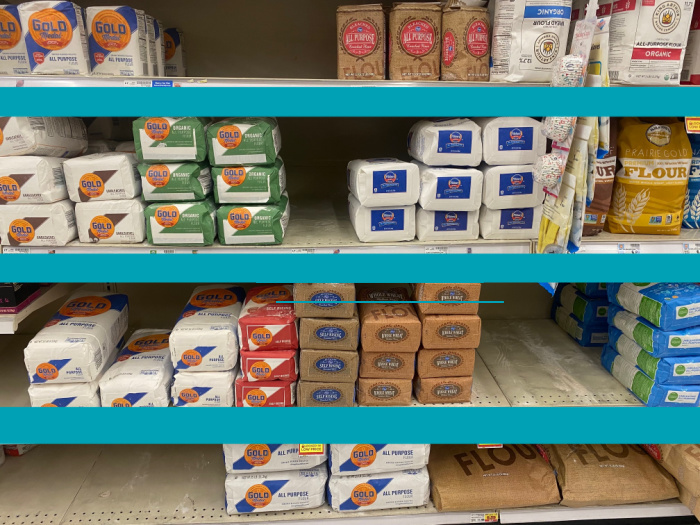
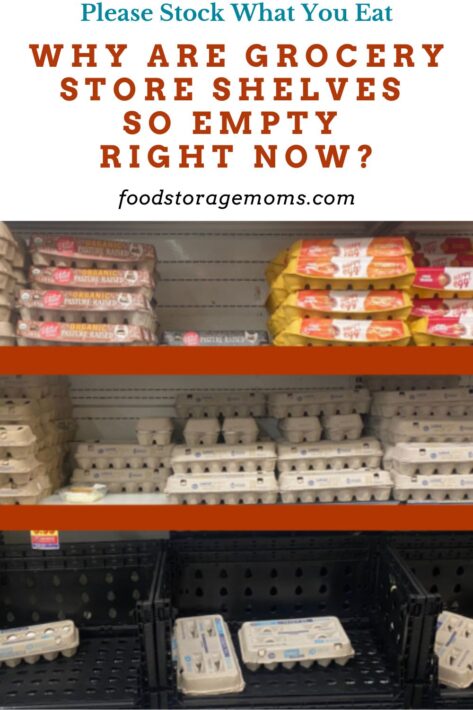
Why are grocery store shelves so empty right now? If you’ve walked into your local grocery store lately and noticed gaps on the shelves, you aren’t imagining things. Across the country, families are finding empty spots where their favorite products used to sit. Store employees are frustrated, too. Many staff members who purchase the products we want are reporting that the orders they placed are simply not arriving, or they’re receiving the wrong quantities of the wrong items. So what’s actually going on? Why does it feel like our food chain distribution system is struggling to keep up?
Tupperware Fix & Mix Bowl 1.7 Quart
The good news is that you aren’t alone in asking these questions, and understanding the reasons behind these shortages can help your family plan ahead and stay prepared. Let’s walk through the real reasons grocery store shelves are running low in 2026.
Our Food Supply Chain Is More Fragile Than We Realized
Most of us never thought much about how a box of cereal or a bag of frozen vegetables gets from a farm to our dinner table. The truth is, it involves a long, complicated chain of steps, including farmers, processors, packaging plants, shipping companies, distribution warehouses, and, finally, the store itself. When even one link in that chain breaks down, the whole system feels it.
The food distribution network that supplies your local store was already under pressure from years of pandemic-related disruptions and never fully recovered. According to research on supply chain risks, economic instability remains a top concern in 2026, with persistent uncertainty about inventory levels and the ability to scale up or down quickly in response to disruptions. Demand can shift faster than the logistics network can keep up, leaving stores exposed to sudden gaps in availability.
Smaller and regional grocery stores feel this the hardest. Unlike massive national chains, they lack the purchasing power to be at the top of a supplier’s priority list. When a manufacturer runs low on inventory, the big retailers get served first. Smaller community stores are often left waiting much longer for restocks, or they receive only partial shipments of what they ordered.
Tariffs Are Driving Up Costs and Disrupting Sourcing
One of the biggest factors affecting grocery shelves right now is trade policy. The United States imports a significant portion of its food supply from other countries, and new tariffs are creating real strain throughout the system.
Mexico alone supplies about 69 percent of U.S. vegetable imports and 51 percent of fresh fruit imports. With tariffs of up to 25 percent announced on certain goods from Mexico, the cost of bringing that produce to American shelves has gone up considerably. Those extra costs don’t disappear. They get passed along at every step, from importers to distributors to stores and ultimately to families at the checkout counter.
Industry experts report that tariff costs could add up to $1,300 per household in 2026 on goods, including food imports. Beyond raising prices, these tariffs are forcing grocery retailers and food manufacturers to scramble for alternative suppliers, a process that takes time and creates additional disruption. Grocery retailers are working to diversify their sourcing, expanding into other regions across Latin America and North America, but building new supplier relationships doesn’t happen overnight. In the meantime, your store may simply not have certain items it used to carry reliably.
Weather and Climate Are Hitting Farms Hard
Our food supply depends on good growing seasons, and those have become far less predictable. Extreme weather events are affecting crops around the world and right here at home.
Florida, for example, experienced some of its coldest temperatures on record in early 2026. Cold snaps like that damage or destroy crops that families across the country count on, including winter vegetables and citrus. Research estimates that global yields of barley, corn, and wheat are already four to thirteen percent lower than they would be without the climate trends of recent decades. These aren’t small numbers when you’re talking about the ingredients in bread, pasta, cereal, and dozens of other staple foods.
The avian flu outbreak that devastated the egg industry in 2025 is another example of how quickly a single agricultural crisis can empty a store shelf. One facility in Colorado alone lost 1.3 million egg-laying chickens to the disease in January 2026. The cattle industry is also facing pressure from shrinking herd sizes and disease concerns, which are making beef both more expensive and harder to find in some areas.
Labor Shortages Slow Down the Entire System
Even when food products exist, getting them to the store shelf requires people. Lots of them. Truck drivers are needed to move goods. Warehouse workers are needed to sort and load shipments. Store employees are needed to unpack and stock shelves. Labor shortages at every stage slow the system down.
Grocery stores have been especially hard hit by high employee turnover rates. When a store is understaffed, products can sit in a back room instead of making it to the shelf. Drivers who aren’t available mean shipments arrive late or not at all. Processing facilities running below capacity produce fewer goods per day. The result is the empty aisle that greets you when you head in for your weekly shopping trip.
Smaller stores struggle even more with this problem because they can’t compete with the wages offered by large national chains or major distribution centers. This creates a cycle in which stores serving local communities are least equipped to keep shelves stocked during a labor crunch.
Technology Disruptions Can Shut Down Ordering Systems
In the summer of 2025, one of the largest food distributors in North America suffered a cyberattack that shut down its entire ordering and distribution network. Grocery stores that relied on that distributor were suddenly unable to place orders through normal channels, and shipments stopped arriving. Employees were reporting that the orders they had requested were simply not coming through, and the products they did receive were mismatched with what they actually needed.
This incident was a sobering reminder of how dependent our food supply chain has become on digital systems. When those systems go down, even a well-stocked warehouse can’t get food to the stores that need it. The ripple effect of a single technology failure can leave shelves bare for days or even weeks.
What Can Your Family Do Right Now?
Understanding these challenges is the first step, but knowing how to respond is just as important. Here are some practical steps that can make a real difference for your family.
Build a rotating pantry. One of the smartest things you can do is keep a supply of shelf-stable foods your family regularly uses and rotates through on hand. When an item is available, buy a little extra. This protects you from short-term disruptions without requiring a huge upfront investment.
Shop early in the day. Deliveries to grocery stores typically occur in the early morning, and shelves are often restocked by 8 a.m. Shopping early gives you the best chance of finding what you need before items sell out again.
Warehouse Clubs
Consider warehouse clubs. Stores like Costco and Sam’s Club receive far more frequent deliveries from brand manufacturers than typical supermarkets do, making them more reliably stocked during shortage periods.
Diversify where you shop. Don’t rely on just one store for all of your family’s needs. Knowing the options in your area, including local farms, farmers’ markets, and smaller specialty stores, gives you more places to turn when your usual store is running low.
Learn to cook flexibly. Families who know how to cook with a variety of ingredients and can swap one protein or vegetable for another are far better positioned to put a good meal on the table, even when shelves are thin.
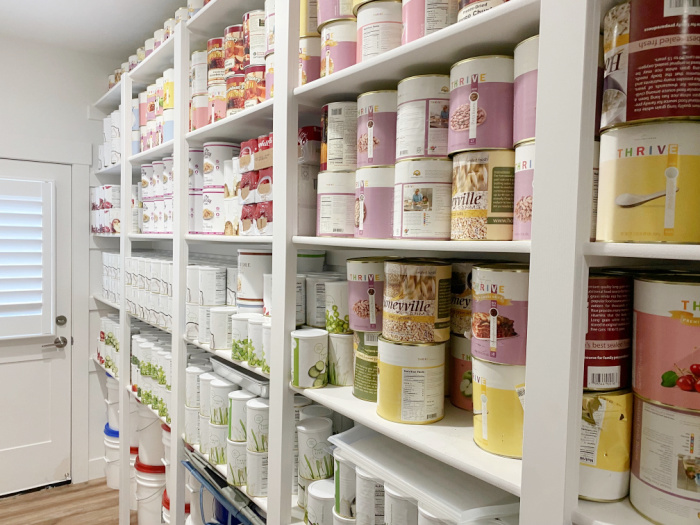
Consider long-term food storage. Freeze-dried foods, canned goods, and other long-shelf-life staples are a wise investment for any family that wants to feel secure, no matter what happens with the supply chain. Building up even a few weeks of emergency food gives you peace of mind and reduces the pressure you feel every time you walk into a half-empty store.
You’re Already Doing the Right Things
If you’re someone who thinks about food storage and preparedness, the current situation is a reminder of why that mindset matters so much. Supply chains are complex and can be disrupted by weather, economic conditions, disease, technology failures, or policy changes, sometimes all at once. Families who’ve taken steps to build up a pantry and think ahead are in a much stronger position than those who depend entirely on store shelves being full all the time.
Where Does Our Food Come From, Really?
Please Stock Up On Canned Goods ASAP
Final Word
The goal is never to panic or hoard. The goal is to be the kind of family that stays calm and cared for, no matter what the grocery store situation looks like. Keep learning, keep preparing, and keep encouraging the people around you to do the same. We are all in this together. May God bless this world, Linda




The family has had this discussion every week where something is missing on the shelf. Yesterday is was cheese and peanut butter snack crackers. Two different stores and just not there.
It’s getting worse. We are digressing.
Yep, and with fertilizer and diesel prices rising the squeeze will just keep getting worse. It’s why I’ve been packing in all the #10 cans I am able to afford into my LTS, and buying beans in bulk to package up in mylar and 5 gallon buckets. I’m afraid that these occasional outages may become the norm, if not blossom into something worse.
While I hope that the Straight of Hormuz can be reopened soon, we’re near a tipping point that none of us will enjoy. Here’s hoping the diplomats can find a way out of this situation.
Hi DMWalsh, great idea on stocking up bulk beans. Of course the #10 cans will be awesome. Linda
Hi Matt, oh wow, no cheese, that scares me. I had trouble getting peanut butter, so the peanut butter snacks is interesting. I need to go check the stores for cheese, I have plenty for right now. But, shortages of the mainstays is very scary. Thanks for the update on cheese and peanut butter snacks. Linda
Wow! I guess I’ve not been to the local grocery stores enough lately! Haven’t seen empty shelves at any of them…thankfully! We are just about done planting our Spring garden, and don’t anticipate empty raised beds, though. They are SUCH a blessing! The only thing I have repeatedly seen empty is Azure’s ordering system on Nancy’s organic fermented cottage cheese. I think the demand has gotten so high, the company cannot keep up with all the Azure orders, now that Azure has massively increased the no. of members all across the country!
Otherwise, we basically can get pretty much whatever we need every month…at least so far.
Hi Jess, that’s a blessing, I am hearing about shortages all over the US. Linda
The one thing I will say that is in short supply is all of the lovely gluten free and organic foods we used to order regularly from Vitacost.com. iHerb.com bought them out and has DEVASTATED our ability to buy certain products! I am so angry at iHerb, I could just SPIT!! Now, we do not have access to probably 40% of the foods and supplements we used to buy from Vitacost, to the tune of $250-$300/month, too!
Thankfully, those items are still available in the local grocery stores, but at 30% MORE! At this point, I am about ready to boycott iHerb FOREVER! They even discontinued my husband’s favorite vitamins of their OWN brand!!
The good news over here is that we celebrated our 45th Wedding Anniversary yesterday and had a WONDERFUL day! Even the pastor at church announced our day and many people in the congregation stood up, clapped and cheered! What a great way to know you are truly loved. 🙂
HI Jess, Happy 45th Wedding Anniversary! That is wonderful!!!! Linda
Just this weekend I commented to my husband that there are too many open spaces in the grocery. This just started happening. They can’t hide it anymore.
Most of the world’s shipping does NOT go through Hormuz or near it. Remember that. There are many other choke points. In 2019, all the major shipping/container companies conspired to create a supply chain crisis which would drive up prices. “Coincidentally” the Covid thing started a few months later.
You don’t want to be in my head with what my research reveals. I am a professional investor and look out a year or more into the future. I don’t really care what is happening now, investment wise. THAT is already baked into the markets.
There are plans afoot for more supply chain problems. Created problems. Coinciding with the Super El Nino. = Perfect storm. There are still plenty of sales at grocery stores and Costco/Sams are full. Your serious readers should already have a pantry going. Time to add to it. BOGO is a great way.
I now only buy white rice. Brown rice spoils too fast. I don’t buy in bulk. No room for that. Smaller packaging/storage spread out. I used to provision our sailboat for 4 months and always came home with some. So, figuring out how much TP and non–perishable food we need is routine.
Pick up a 5-10 lb bag of rice. Store it in the big peanut butter jars you should have been saving. It keeps a long time in glass with a screw top. Free storage container.
BOGO soup. Cook up rice, heat a can of soup, portion out the rice, portion out the soup and pour over the rice= Dinner for 2. Nourishing enough, belly full, and very low cost.
Leftover rice or other things? Beans and soup. The best deal around is the $4.98 rotisserie chicken at the big box stores. We can eat at least 5 dinners off one of those chickens AND have scraps for chicken salad. After you strip the meat off the bones, you slow cook the bones (and whatever other detris is left from the carcass) and have wonderful bone/chicken broth “free.” Freeze it. Put some in ice cube trays and then store the loose cubes in a plastic bag in your freezer….That way you have a small amount of good broth for things where you only need a little bit and don’t want to open a container. I make brown or white sauce for 2 all the time with them.
Linda, I agree 100% with you that it’s “time.”
Better to be a little early to whatever is coming than to be late. I know that big inflation is coming. I know that all the big governments in the world are in big financial trouble. I know that what they do is a combination of printing money (thank you Nixon for taking us off gold standard) and/or war. My Dad, a silver star recipient from battle of the Bulge lived long enough to find out what WWII was really about – MONEY/Oil(money). It broke his heart.
At least with President Trump we KNOW he is onto the money side of it. He just doesn’t want people/Americans killed for it. Business with dead bodies or business without them. Those are our choices. People don’t want to hear this but if we are in a big business relationship with – pick a country (Russia, China, India) it is to the country’s mutual interest to keep that business going. War would stop that business.
What we FEEL and what is true are often different.
In a divorce, death, – name the tragedy, we can be emotionally devastated, but we MUST still take care of the business.
IF we do not treat everything (including our personal lives) like a business…we go OUT of business. Ever thus was it so.
I’ve been on the front line of disasters like few have. I’ve worked an airplane crash where we were picking up body parts of 110 people and plane parts and that scene wasn’t the worst of the disasters.
Life is good. Take care of yourself. Nobody else will. Nobody else can.
Read “Lights Out” by Koppel and “Once Second After” by Forstchen Get them free at the libaray.
Hi CAddison, I love this: Life is good. Take care of yourself. Nobody else will. Nobody else can. It’s so true. I can’t imagine what you went through in your careers. My favorite book Is Lights Out by Ted Koppel. I love rotisserie chicken, we can get 5-6 meals out of depending on the size. I freeze bags for other meals. Works great. Great comment, my sweet friend. You are one smart cookie! I admire you! Linda
Thank you for all of this information, CAddison.
Hi Paula, I agree too! Linda
We love the rotisserie chicken we get at Sam’s. In fact, I made chicken salad with the leftover chicken. We will have 3 lunches out of it, so yes we got 6 meals out of that one chicken. I did notice some empty spaces on shelves at Walmart this morning. It was nothing I needed but covered a variety of food and non-food items.
Hi Paula, those chickens are the best! Luckily I was able to get peanut butter, I only buy the small jars. Last week they were out of my favorite brand. I’m glad we found some because I love P & J sandwiches sometimes. Life is good! Linda
Hubby read that the cost of Diesel fuel being so high, that trucking companies are charging for fuel cost now.
Hi Deborah, that doesn’t surprise me. The cost of fuel continues to go up. Everything is so expensive. Linda
Our saw $3.589 today for regular gas. I don’t check Diesel.
Hi Deborah, Mark goes to a Chevron place on Tuesday because they do 20 cents off. I think he said he paid $3.29. Linda
Still way too high! LOL I can remember “cheap” gas way back when! I don’t remember the price, but $1.00’s worth of gas lasted a long time! Our local grocery store has a members card and with 1000 points, you can get $1 a gallon off gas. You get so many points per $1 of groceries.
Hi Deborah, I remember the days of .26 cents a gallon. LOL! Those member cards save us so much money! Great reminder! Linda
Linda, I do our grocery shopping and really haven’t noticed any items missing that I need to buy.
Prices, especially for meats are way up. I get a family size rotisserie chicken once every week or so from our local Basha’s and it lasts Jane and I for at least 3 meals, with the final leftovers ending up as chicken croquettes or chicken salad and the bones going for broth.
Oh, the Chevron gas has some very good cleaning additives, but I usually buy gas at our local Smith’s since I can get up to a dollar and a nickel off per gallon.
We’re fairly frugal, though we have been eating out more often than usual. Between the fruit from our trees, produce from my garden beds and a well stocked freezer and pantry, we don’t spend a lot at the grocery stores.
Hi Ray, sometimes, one of my daughters will try and encourage me to go out to dinner just to get out of the house. I get it. We all have to be frugal now. I smell people barbecuing and it smells so good. Not us, meat is way to expensive. I love rotisserie chickens they are inexpensive and we can use them in so many way. Linda
Hi, Linda. Went to Costco this morning and was surprised at the lowered amount of bakery goods. Some empty spaces there and several tables were just not filled.We all knew that scary times were coming, but the evidences shows they are already here.
Hi Shirley, thank you for updating us especially on Costco. I keep seeing big box stores will be fine, but will they? Scary times are indeed coming. It’s already started. Linda
Minute Maid and Tropicana are both eliminating Frozen orange juice concentrate. Supposedly because todays consumer doesn’t want to mix it!!!
Hi Chris, you mentioned it was getting hard to get them. I will miss my occasion Limeade, it is so good! Linda